End-to-end demolition management means a single company takes care of the entire project: the survey and valuation, the licences, the dismantling and demolition, the transport and treatment of the waste, and the certificates that close the file. For the owner, it means one point of contact, one quote and one documentation chain, with no gaps between companies.
What does end-to-end demolition management include?
An industrial demolition has six phases. In an end-to-end service, they are all handled by the same company, and each one produces a result or a document that feeds into the next:
| Phase | What is done | What you get |
|---|---|---|
| 1. Survey and valuation | Site survey, measurements, inventory of materials and hazardous waste | Quote and schedule |
| 2. Design and licences | Demolition design, health and safety study, waste management study, municipal applications | Permits to start work |
| 3. Preparation | Disconnection of services, clearing, prior removal of hazardous materials | A facility ready to be dismantled |
| 4. Dismantling and demolition | Removal of machinery and installations, demolition of the structure | A cleared plot |
| 5. Waste and materials | Segregation at source, transport, treatment and recovery | Delivery documents for each fraction |
| 6. Close-out | Final clean-up and handover of the documentation | Waste management certificates and a closed file |
Phase 1. How is a demolition surveyed and valued before it is quoted?
It all starts with a visit to the facility. The structure, the access and the surroundings are checked (other industrial buildings, homes, a production line still running) and, above all, the materials: how many tonnes of steel there are in the structure, the tanks and the pipework, and whether there is stainless steel, copper in the cabling or aluminium in the window frames and roofing.
With metal analysers and thickness gauges, the weight and type of each material can be calculated quite accurately. That figure has two uses: sizing the job (machinery, containers, trips) and valuing what will be recovered, because metal has a market value and can offset a significant part of the cost of the demolition.
The hazardous waste is identified during the same visit. For demolition work, Royal Decree 105/2008, Spain’s regulation on construction and demolition waste, requires an inventory of it to be included in the waste management study and its selective removal to be planned, so that it does not get mixed with the rest.
Phase 2. What documents and licences have to be obtained?
Before a single machine moves, four main documents have to be in order. Each one is the responsibility of a different party, and in an end-to-end service the demolition company prepares or coordinates them:
| Document | What it is for | Reference regulation |
|---|---|---|
| Demolition design | Defines the method, sequence and resources for the demolition; signed by a qualified professional | Municipal by-laws |
| Health and safety study | Analyses the risks of the job; the contractor’s health and safety plan is based on it | Royal Decree 1627/1997 |
| Waste management study | Estimates quantities by EWC code (European List of Waste), plans separation and destinations, and puts a cost on it | Royal Decree 105/2008 and Law 7/2022 |
| Licence or municipal authorisation | Authorises the work; each town council sets its own procedure | Local planning regulations |
If there is asbestos, there is one more step: it is removed by a company registered on the RERA (Spain’s Register of Companies with Asbestos Risk), with a work plan approved by the labour authority, before the demolition begins.
Phases 3 to 6. How is the work carried out and closed out?
Dismantle first, then demolish
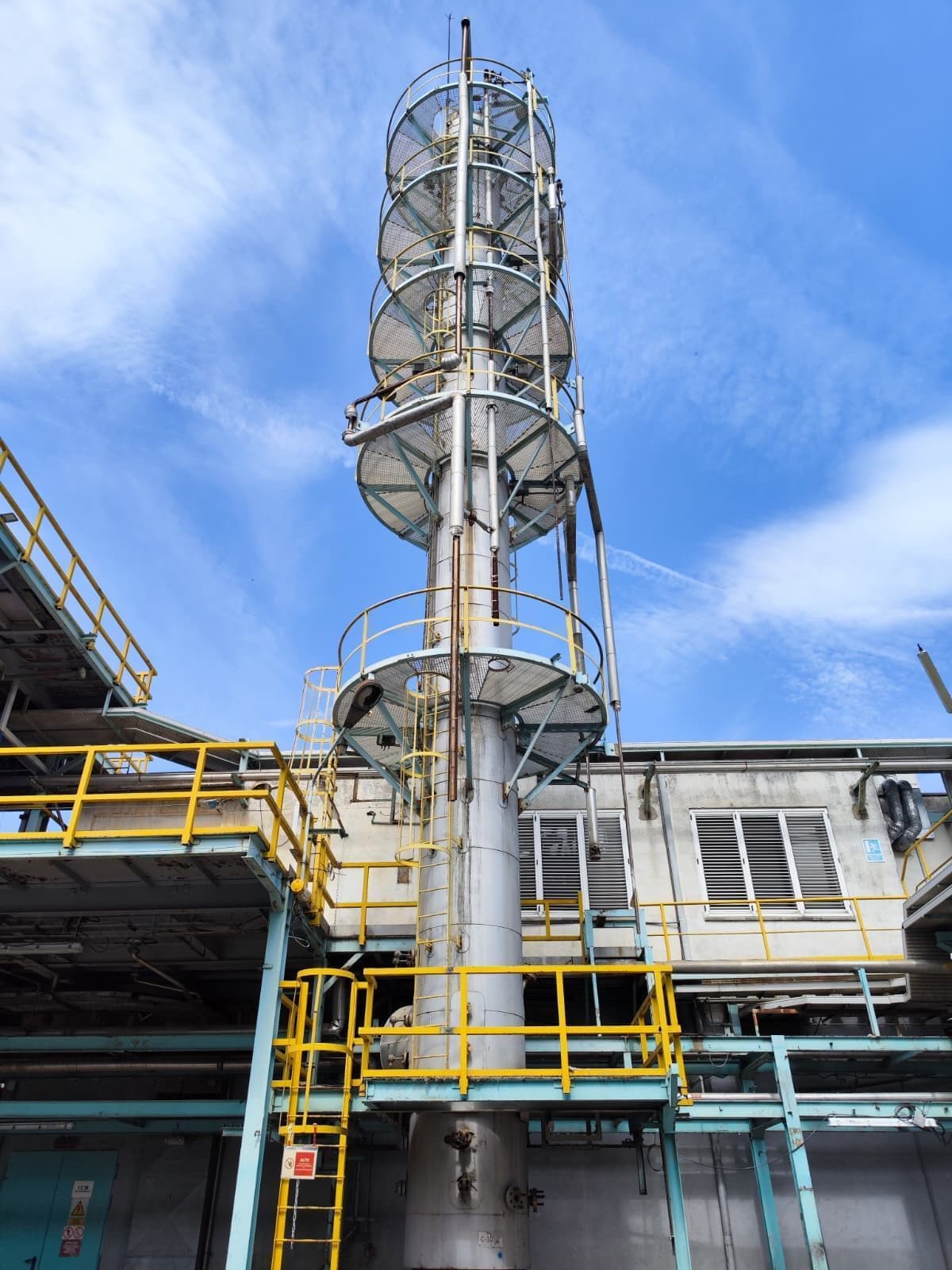
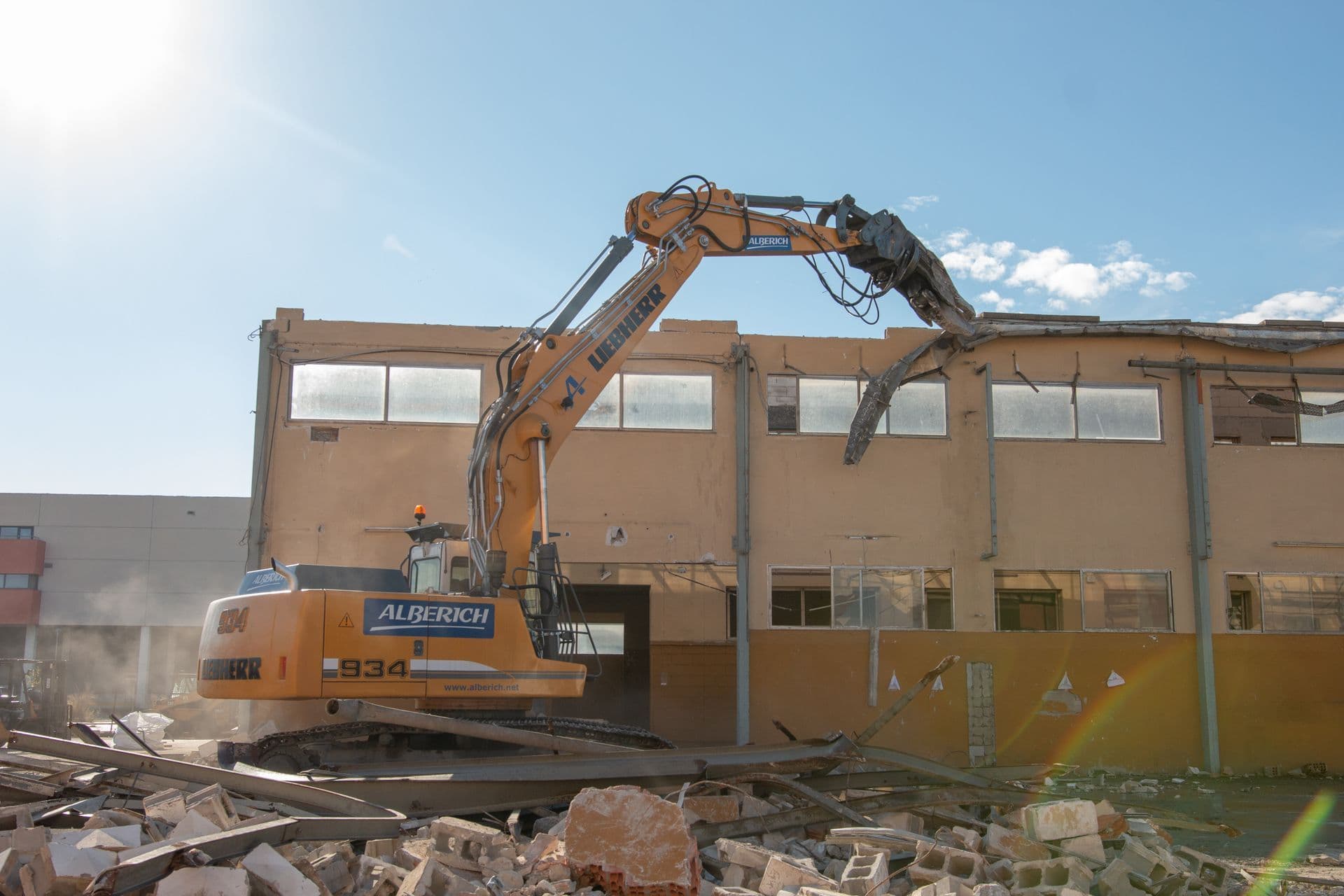
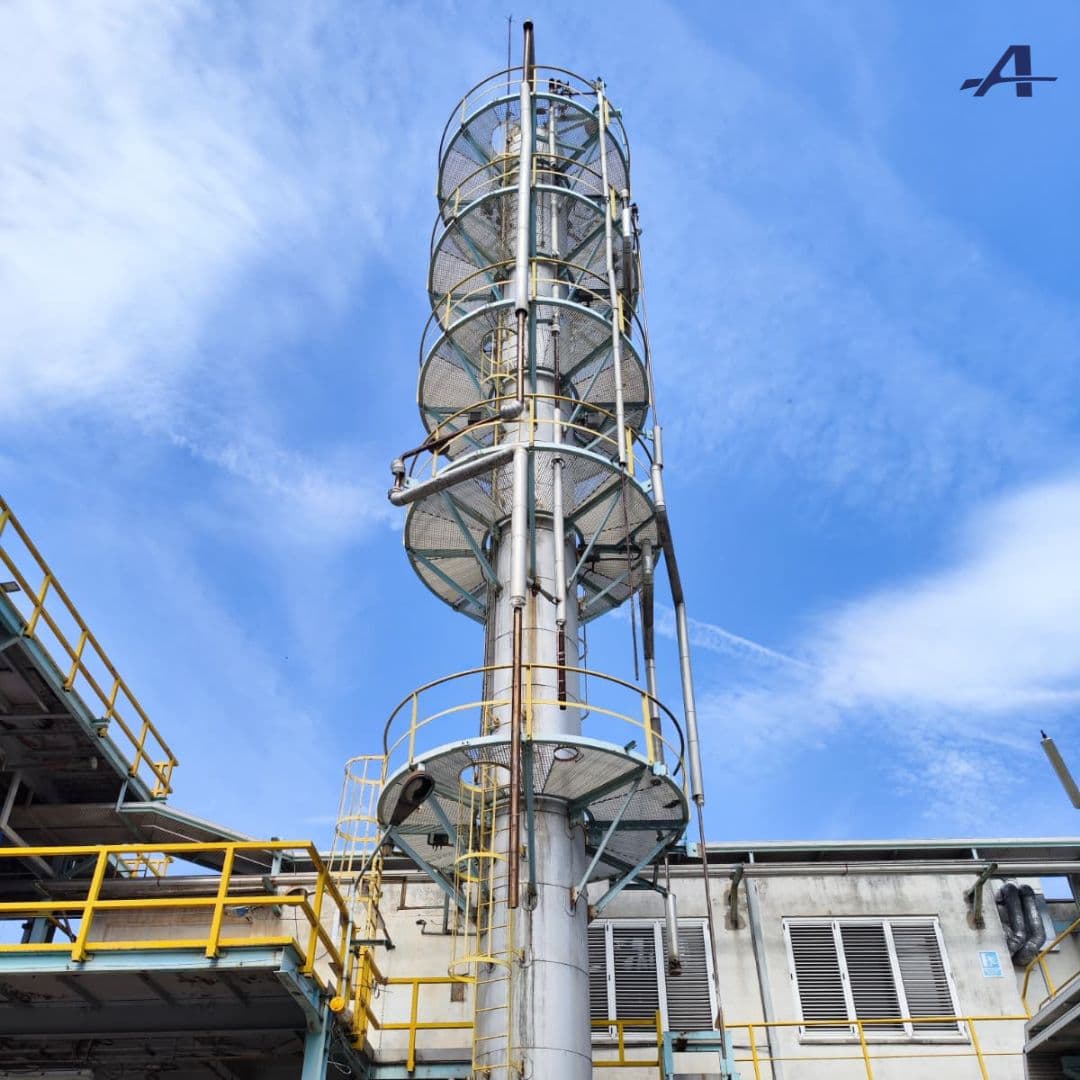
Dismantling before demolishing is the only way to recover materials properly and to work safely. First the services (electricity, gas, water, process lines) are disconnected and isolated, the facility is cleared and the hazardous waste is removed. Then the machinery, tanks, pipework, cabling and equipment are dismantled. Only then is the structure demolished.
This sequence is not a technical detail: since 2024 selective demolition has been mandatory, as we explain in our article on the new selective demolition law. You’ll find how it applies to an industrial building, element by element, in our guide to industrial building demolition, and the measures that keep the whole process safe in how a safe demolition is planned.
Waste and materials: each fraction to its destination
Since July 2022, non-hazardous construction and demolition waste has had to be sorted into at least wood, minerals (concrete, brick, ceramics and stone), metals, glass, plastic and plaster, preferably on site. Each fraction leaves in its own container and goes to its own destination:
- Metals: to a recycling plant, where they are cut, shredded and sorted to go back to steelworks and foundries.
- Concrete and ceramics: to authorised construction waste plants, which turn them into recycled aggregate.
- Hazardous waste: to final treatment facilities authorised for each type of waste.
Every delivery is documented with the site of origin, the quantity, the EWC code and the receiving waste management company. The types of waste and how they are treated are explained in our article on demolition waste, and what happens to the metal on its way back into industry in circular economy and industrial demolition.
The documentation you receive at the end
A demolition is closed out on paper. The owner, as the waste producer, needs to be able to prove that everything that left the plot was properly managed. At the end, you should receive the waste management certificates, the documents for each delivery and a summary of quantities by fraction. This is the documentation that the town council, an environmental audit or a buyer of the land will ask you for. We explain why it matters so much in our article on traceability in industrial waste management.
What are the advantages of end-to-end management over contracting it in parts?
When the demolition, the transport and the waste are handled by different companies, questions arise that nobody is quite sure who should answer: who is responsible if a container goes out mixed, who bears the delay if the lorry doesn’t turn up, who signs the final certificate. With a single party responsible, those questions have answers from the outset.
There is also a financial advantage. If the company that demolishes is also the one that recycles the metal, the value of that material can be factored into the quote from the initial survey onwards. If you want to look more closely at how a demolition quote is put together, see our guide to financial planning for demolition projects.
How we provide end-to-end management at Alberich
At Alberich we take on all six phases with our own machinery, transport and team. The technical survey is carried out with metal analysers and thickness gauges, and we use it to finalise the quote. We prepare the demolition design, the health and safety studies and the waste management plan, and handle the licence applications.
Transport is handled by our own fleet, with containers from 1 to 30 m³ to separate each fraction on site. The metal goes to our plants in Castellbisbal, La Llagosta and Constantí and, as an authorised waste management company (E-345.97), we issue the waste management certificates. For hazardous waste, we coordinate the operation and the authorised final treatment facility is named in the documentation.
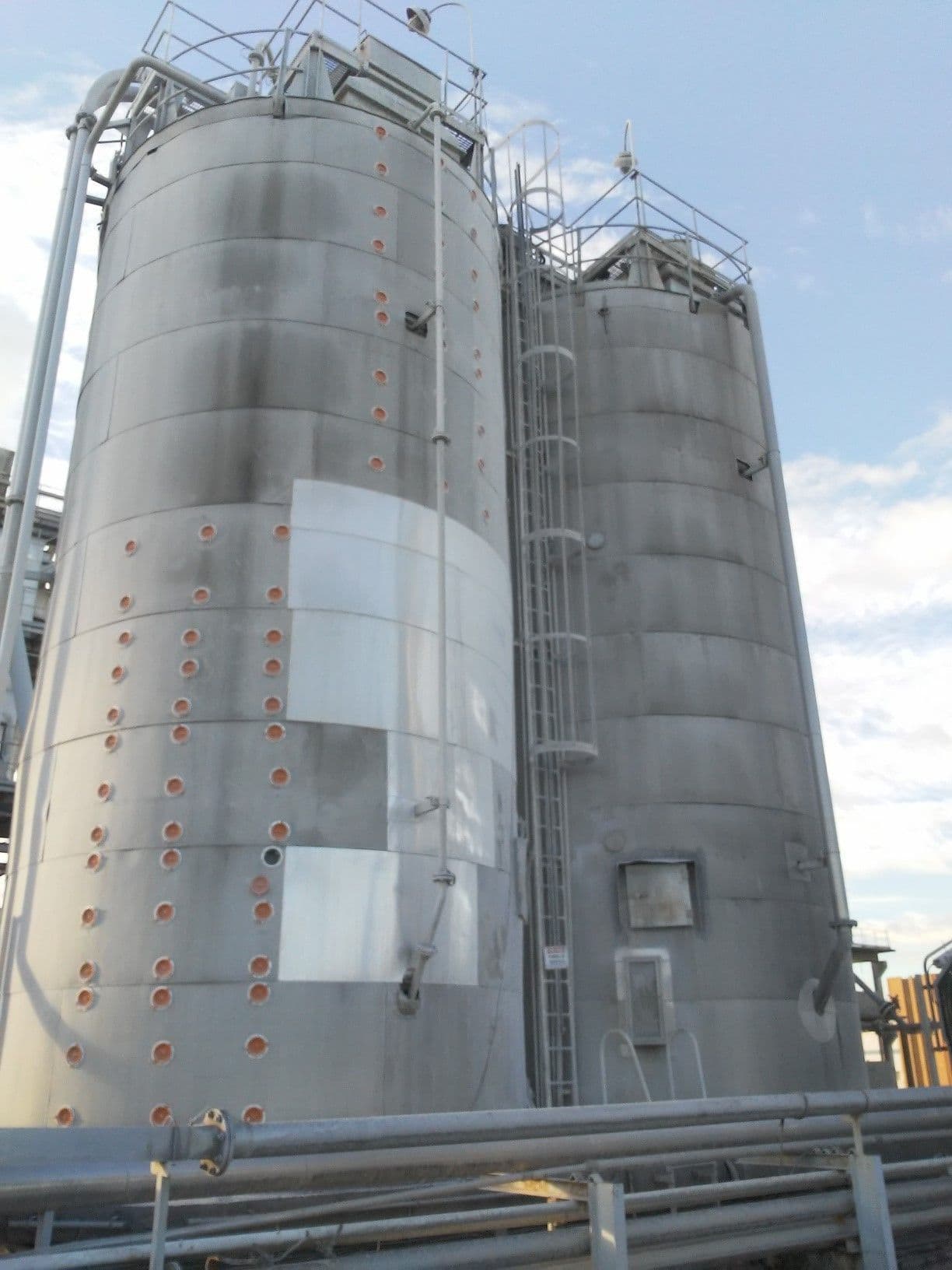
That is how we dismantled, for example, a 30-metre, 1,410 m³ industrial storage tank in 15 days with 100% of the metal recycled. You can see the rest of the service on our industrial demolition page.
Frequently asked questions
Who is the producer of demolition waste?
Under Royal Decree 105/2008, the producer is whoever holds the licence for the works or, if the works do not need a licence, the owner of the property. The company carrying out the demolition is the waste holder and must give the producer the certificates proving that the waste has been managed.
Can I contract just part of the service?
Yes. On some projects only a production line or a specific installation is dismantled, and on others the demolition is part of a larger job coordinated by a construction company or an engineering firm. The scope is defined in the initial survey.
Does end-to-end management include leaving the plot clean?
Yes, the job ends with the area cleared and free of waste. If the land has hosted a potentially contaminating activity and its use is going to change, a soil investigation may also be needed, carried out by specialist organisations.
How long does it take to receive the quote?
We reply to every enquiry within 48 working hours. The fixed-price quote follows the site survey, because the job cannot be properly priced without measuring the facility.
If you are considering demolishing an industrial building or dismantling a plant, start by requesting a site survey: it is the phase that has the biggest bearing on the cost, the timescale and what you will recover.