Industrial building demolition is carried out in the reverse order of construction: first the building is emptied and the services disconnected, then the hazardous materials, installations and roof are removed, followed by the walls, cladding and structure, and finally the ground slab and foundations if the project calls for it. That sequence protects the people doing the work and allows each material to be separated cleanly, which is what determines how much is recycled and how much the recovered material is worth.
What does an industrial building look like from a demolition point of view?
Before planning the demolition, you have to read the building layer by layer. Each layer has different materials and a different destination:
| Element | Typical materials | Typical destination |
|---|---|---|
| Structure | Steel portal frames, steel trusses or precast concrete columns and beams | Steel to recycling; concrete to an aggregates plant |
| Roof | Steel sheet, sandwich panels, polycarbonate rooflights; in older buildings, fibre cement sheets | Metal to recycling; asbestos cement to an authorised final treatment facility |
| Walls and cladding | Concrete panels, blockwork, brick or sheet metal | Recycled aggregate or metal recycling |
| Installations | Copper cabling, electrical switchboards, pipework, air conditioning, compressed air, overhead cranes | Non-ferrous and ferrous metals; reusable equipment |
| Ground slab and foundations | Reinforced concrete | Recycled aggregate and steel from the reinforcement |
In buildings used for chemical, food or energy activities, you also have to add whatever the process left behind: tanks with product residues, oils, transformers, insulation. All of this is identified in the preliminary survey.
In what order is an industrial building demolished?
- Preliminary survey. Inspection of the structure, the materials and the surroundings: party walls, other buildings in use, homes, access.
- Clearing and disconnection. Furniture, stock and waste from the business are removed, and the electricity, gas, water and process lines are isolated.
- Removal of hazardous materials. If the roof or the insulation contains asbestos, it is removed by a company registered on the RERA (Spain’s Register of Companies with Asbestos Risk), with a work plan approved by the labour authority, before any other task. Oils, fluorescent tubes and chemicals are also removed.
- Dismantling of installations and equipment. Overhead cranes, machinery, switchboards, cabling, pipework and air conditioning. This is the phase in which the most non-ferrous material is recovered.
- Roof. Sheets, purlins and rooflights, removed from the structure itself or using mobile elevating work platforms, depending on its condition.
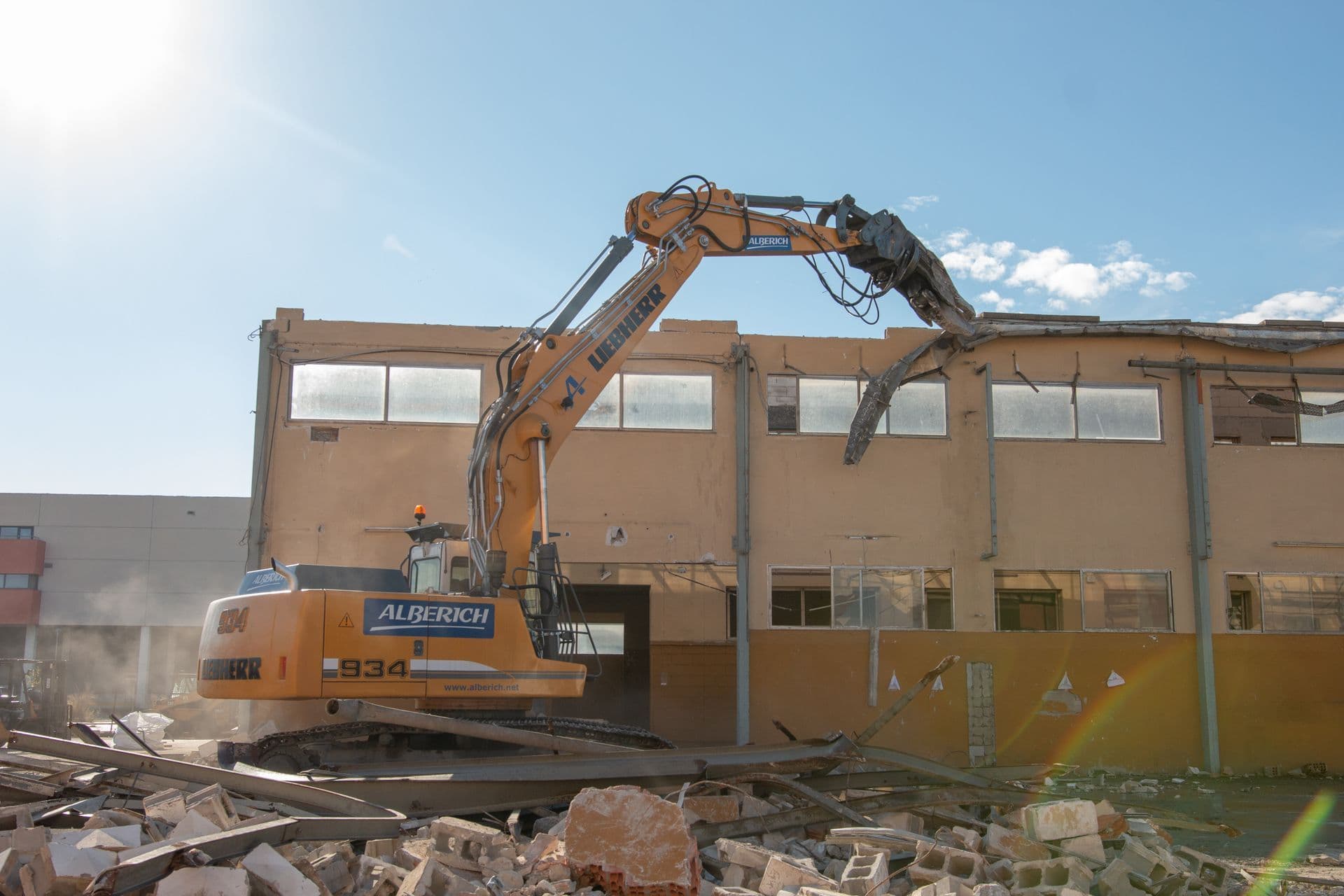
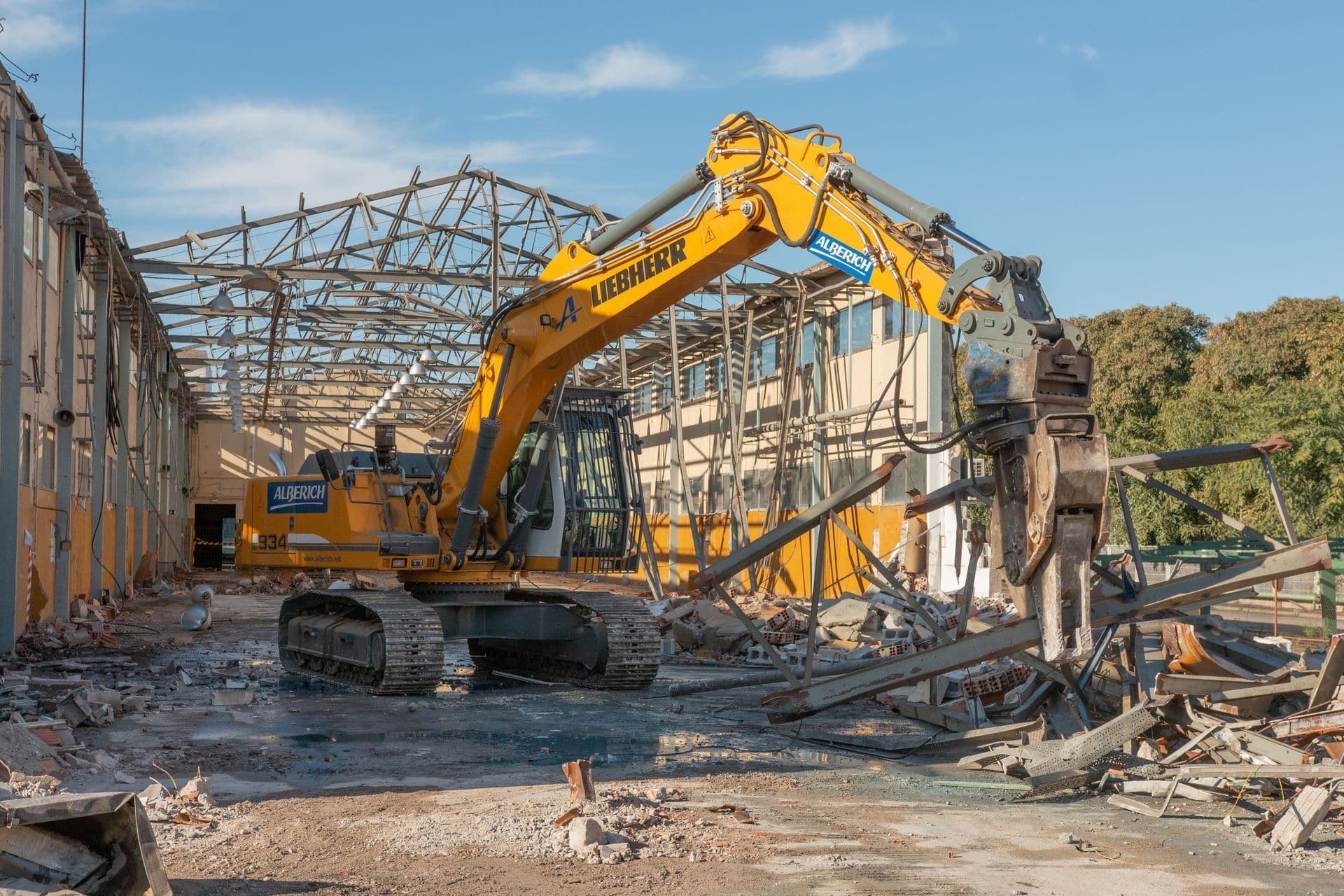
- Walls, cladding and structure. An excavator with demolition shears or a crusher, oxy-fuel cutting for the steel sections and a crane for large or precast pieces.
- Ground slab, foundations and clean-up. The final phase, which ends with the plot cleared and free of waste.
Each phase produces its own stream of material. That is why the sequence is not only about safety: it also reflects the legal obligation to separate waste, which we explain in our article on the new selective demolition law.
What techniques are used to demolish an industrial building?
There are many demolition techniques: blasting with explosives, pushing over, wrecking ball, hydraulic wedges or undermining. In industrial buildings they are hardly ever needed. The structure is relatively light, usually steel or precast, and can be taken down with more control by mechanical means:
| Technique | When it is used | What it offers |
|---|---|---|
| Mechanical demolition with an excavator | Structure, walls and slabs | Speed; the attachments (shears, crusher, breaker) are matched to each material |
| Oxy-fuel cutting | Steel sections, trusses, tanks and heavy pieces | Pieces cut to size for transport, and control over how each section comes down |
| Dismantling by crane | Precast elements, overhead cranes, tall structures or work next to sensitive areas | Each piece is lowered on the hook, with no free fall |
| Manual dismantling | Interiors, installations and reusable elements | Clean material and components that keep their value |
The choice also depends on the surroundings. Next to a party wall or a line in production, the adjoining part is dismantled piece by piece with a crane, even if the rest of the building is knocked down with an excavator. The safety measures for each technique are set out in how a safe demolition is planned.
What materials are recovered when an industrial building is demolished?
An industrial building is, to a large extent, a store of raw materials. What is recovered depends on how it has been dismantled:
- Steel from portal frames, trusses, purlins, sheeting and reinforcement, which becomes ferrous scrap for steelworks.
- Copper from cabling and motors, and aluminium from window frames and roofing, which are separated and remelted (see copper and aluminium).
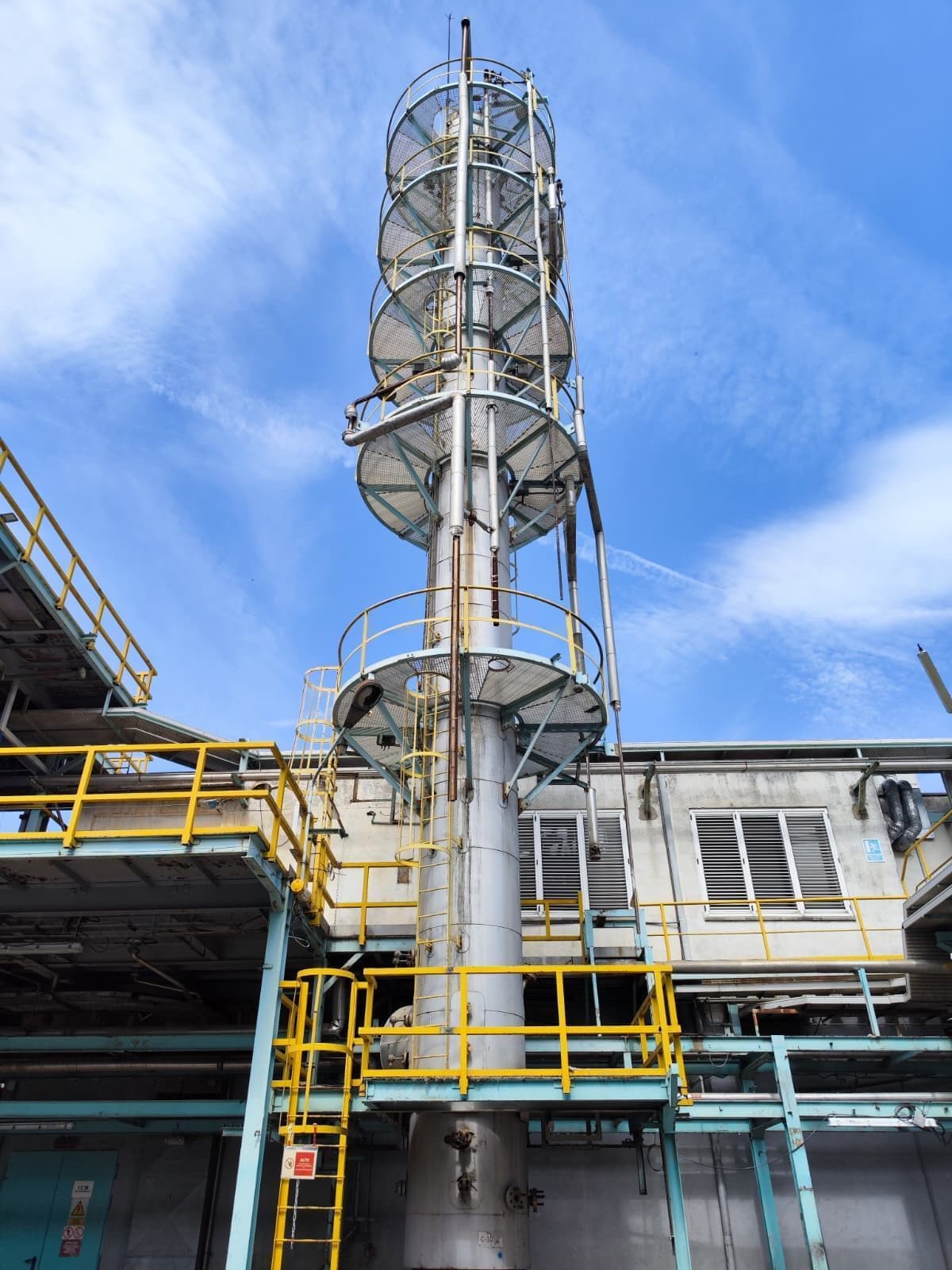
- Stainless steel from tanks and installations, common in food and chemical plants.
- Concrete and ceramics, which are crushed at an authorised plant to produce recycled aggregate.
- Reusable equipment: machinery or overhead cranes that still have a market and can have a second life before becoming waste.
We explain what happens to each material on its way back into industry in circular economy and industrial demolition, and the codes and destinations of each type of waste in demolition waste.
What changes when a multi-storey building is demolished?
An office or services building within an industrial site is demolished from the top down, floor by floor. The basic rule is not to overload the floor slabs with rubble and not to leave anything at the end of the working day that could fall or destabilise what is still standing.
Stairs and escape routes are kept clear until the end, openings are protected and rubble is sent down chutes or removed in a controlled way. When the building shares a wall with another, the last part is done with light equipment so as not to damage the party wall.
How we demolish industrial buildings at Alberich
At Alberich we demolish industrial and obsolete buildings, both as standalone jobs and as part of new-build projects coordinated with contractors and developers. We include the demolition design, the health and safety study under Royal Decree 1627/1997, Spain’s construction site health and safety regulation, and the waste management plan under Royal Decree 105/2008, on construction and demolition waste. We explain it phase by phase in our guide to end-to-end demolition management.
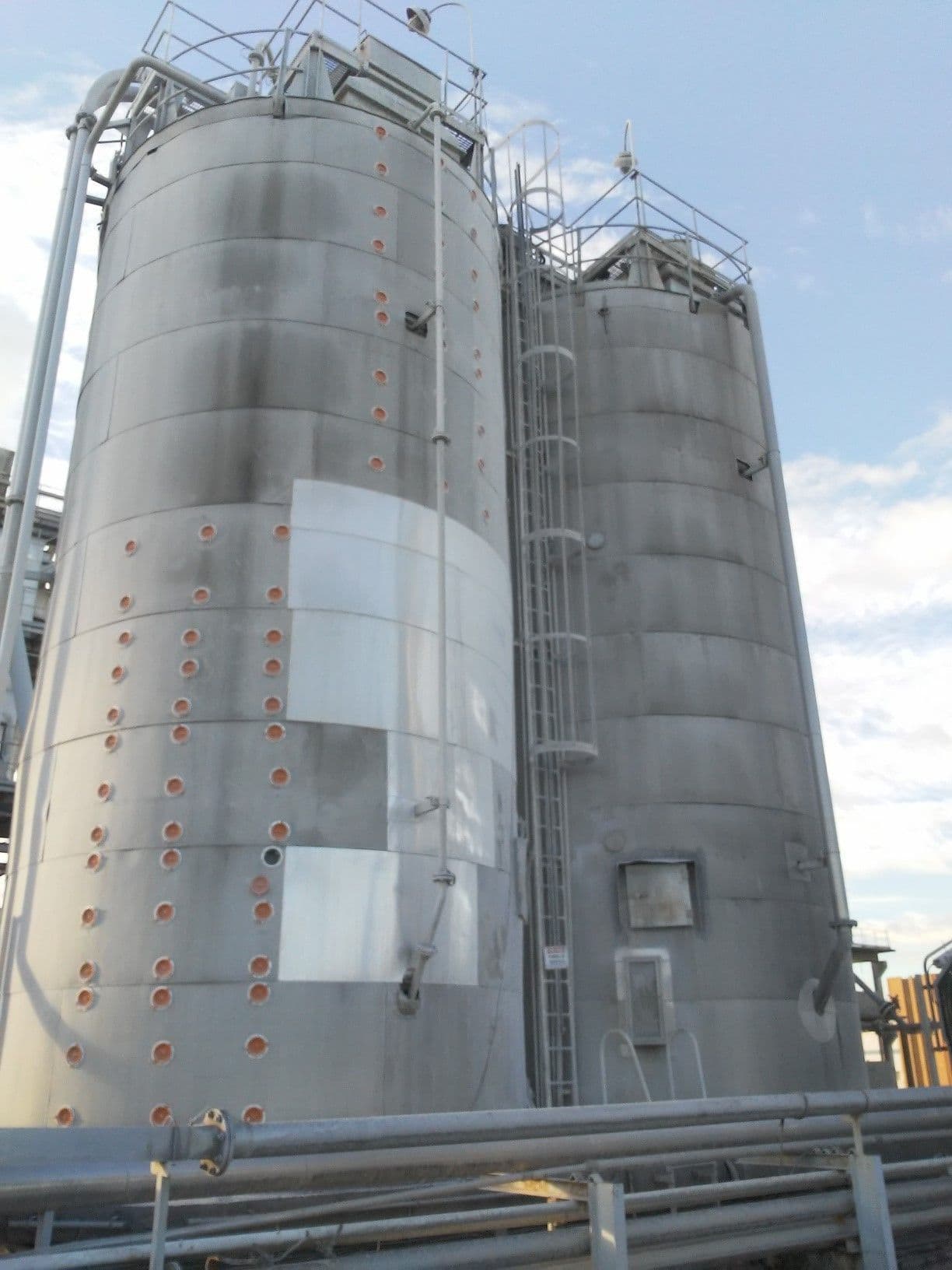
The machinery, transport and team are all our own, and the recovered metal goes straight to our plants for processing. One example: at a food production plant we dismantled processing lines, silos and ancillary machinery in 15 days, alongside areas that were still producing, with 95% of the material recycled. You can find out more about this sector under demolition of industrial units and buildings.
Frequently asked questions
How long does it take to demolish an industrial building?
It depends on the floor area, the type of structure, whether there is asbestos to remove first and what is around it. The work itself is usually measured in days or a few weeks, but before that you have to allow for the time it takes to obtain the licence and, if needed, to have the asbestos work plan approved.
Do the ground slab and foundations have to be removed?
Only if the next use of the land requires it. If something is going to be built on it, usually yes; if the plot is going to be sold or developed later, what stays and what goes is agreed with the owner.
How do I know if my building’s roof contains asbestos?
Fibre cement sheets installed before 2002 are suspect, but this cannot be confirmed by eye. The safe way is to take a sample and have it analysed in a laboratory before planning the demolition.
Can the steel structure of an industrial building be reused on another project?
Sometimes, if the sections are in good condition and there is a project that can use them. Law 7/2022 requires reusable structural elements to be sorted, preferably on site; when there is no outlet for them, the steel goes for recycling.
If you have an industrial building to demolish, the preliminary survey will tell you in what order it needs to be done, which hazardous materials have to be removed first and how much material can be recovered.