Traceability in industrial waste management is the ability to prove, with documents, what waste was produced, who transported it, where it ended up and what treatment it received. It is a legal obligation for the producer and, in practice, its best protection in an inspection or an audit. In an industrial demolition involving scrap metal management, it also shows how much metal has been recovered from the site and what it was worth.
What is industrial waste traceability?
It is the paper trail that links each batch of waste to its origin and its destination. Industrial waste passes through several hands: the company that produces it (the producer), whoever organises its management, the carrier and one or more treatment facilities. Each step leaves a document, and together those documents make it possible to reconstruct the whole journey.
Responsibility lies mainly with the producer. Spain’s Law 7/2022 on waste and contaminated soils ties that responsibility to the complete treatment of the waste being documented: it isn’t enough to hand it over to someone; you have to be able to prove what happened next. That is why traceability isn’t a formality for the waste management company, but a safeguard for the company that produces the waste.
Which documents make up waste traceability?
Waste shipments within Spain are governed by Royal Decree (RD) 553/2020, which, together with Law 7/2022, defines the paperwork for each waste stream:
| Document | What it is for | When |
|---|---|---|
| EWC code and characterisation | Identifies the waste under the European List of Waste and, if it is hazardous, its hazardous properties | Before any movement |
| Treatment contract | Agreement between the shipment operator and the receiving facility: which waste, how much and what treatment | Before the first shipment |
| Prior notification of shipment (NT) | Notice to the authorities that a waste is going to be shipped; mandatory for hazardous waste and in other cases set by the regulations | At least ten days before the shipment |
| Identification document (DI) | Accompanies the waste on every shipment: origin, carrier, destination, EWC code and quantity. It is closed when the receiving facility accepts the waste | On every shipment |
| Waste acceptance form | The waste management company confirms that it accepts that specific waste at its facility | Before the first consignment |
| Weighbridge ticket | Records the actual weight on arrival at the plant | At every delivery |
| Certificate of treatment or destruction | Certifies the final recovery or disposal operation | When the cycle is closed |
In Catalonia, these documents are processed electronically through the SDR (Sistema Documental de Residus), the Catalan Waste Agency’s online documentation system. Producers that must be entered in the waste register, such as producers of hazardous waste, must also keep a chronological record of the quantity, nature, origin, destination and treatment of the waste they produce.
Why does traceability protect your company?
Because it turns a vague responsibility into something you can prove. In practice, it protects you on five fronts:
- With the authorities. If waste ends up where it shouldn’t, a producer who can show the contract, the DI and the certificate has done their part. One who can’t has a problem.
- With auditors and customers. ISO 14001 audits, sustainability reports and questionnaires from large customers ask for waste data by type and destination.
- On the bottom line. With actual weights from a trade-approved weighbridge, you know how much metal you have sold and how much you have paid to have waste managed.
- For safety. Properly identified waste is packaged, labelled and transported as it should be. We cover this in the risks of transporting waste incorrectly.
- When closing out a job. In a demolition, the documentation for each fraction is what lets you close the file with no loose ends.
How is traceability guaranteed in an industrial demolition with scrap metal management?
An industrial demolition generates many tonnes of very different waste in just a few days: structural steel, scrap from machinery, cable, concrete, insulation and sometimes hazardous waste. Traceability is built up phase by phase:
- Preliminary study and inventory. Site survey, inventory of materials and hazardous waste (oils, chemical residues, asbestos if there is any) and an estimate of the recoverable metal. This is the basis for the waste management study required by Royal Decree 105/2008, together with the licences.
- Prior removal of hazardous waste. Decontamination is carried out before demolition, and hazardous waste leaves with its own documentation for the authorised final treatment facility.
- Selective demolition and segregation at source. Dismantling in phases makes it possible to separate steel, non-ferrous metals, cable, concrete and wood on site, as Law 7/2022 requires.
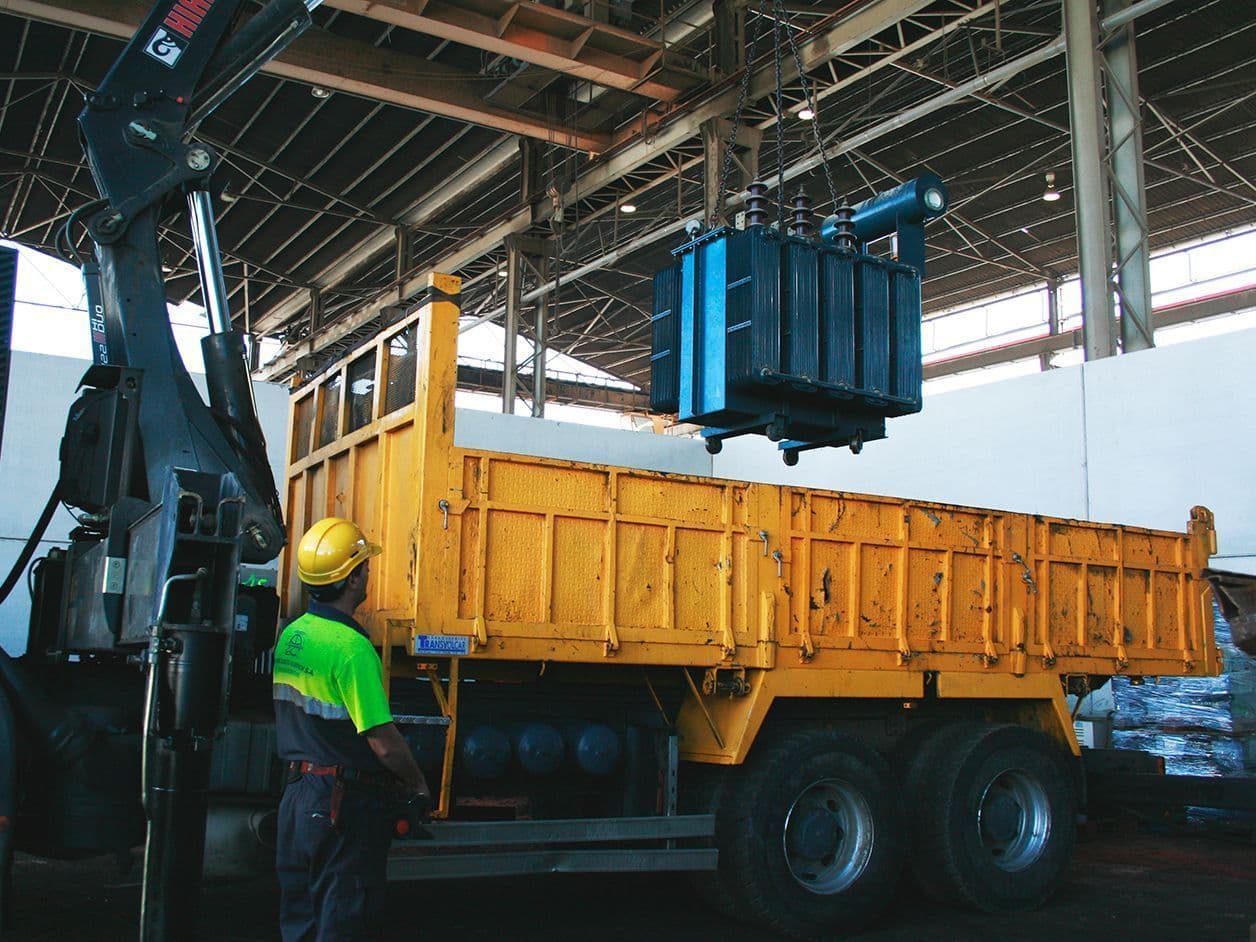
- Documented transport. Each load leaves the site with its identification document and is weighed on a trade-approved weighbridge when it arrives at the plant.
- Treatment and close-out. The metal is processed at the plant and the other fractions go to authorised waste management companies. When the job is finished, the customer receives the certificates and the shipment documentation with the quantities of each fraction.
The full service, from licences to waste management, is set out under industrial demolition. We explain the obligation to demolish selectively in the new selective demolition law.
What happens to scrap metal once it leaves the site?
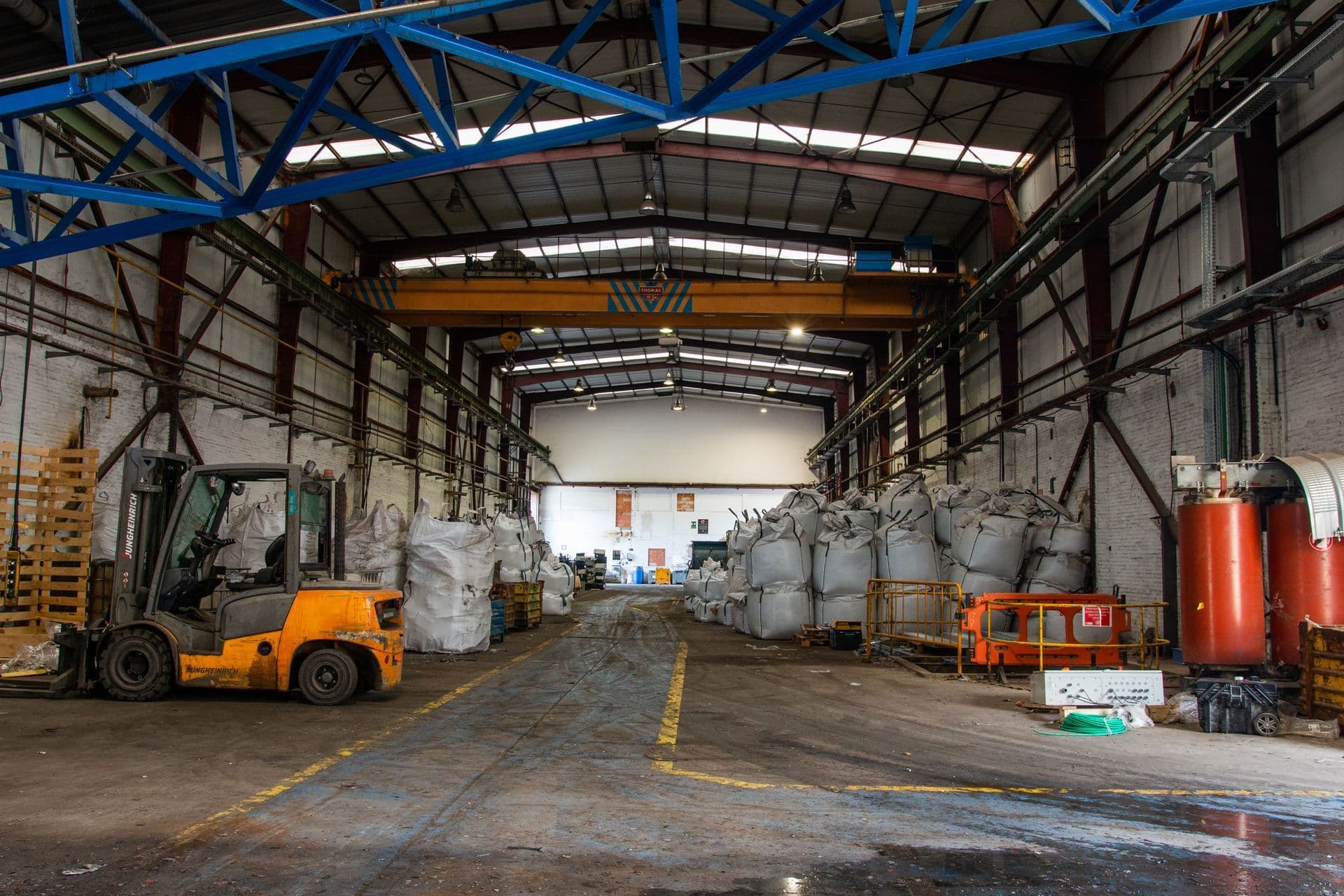
In a demolition, metal is usually the fraction with the highest market value, so its traceability serves two purposes: legal and financial. When a load arrives at our facilities, it is weighed on a trade-approved weighbridge, inspected and put through radiation monitoring. It is then sorted and sent to the right line: structures and heavy scrap to the 600–1,000 t shears; mixed scrap to the 4,000 hp shredder; cable to the cable granulation plant.
On the way out, the material goes through radiation monitoring again before it is sent to the steelworks or the foundry. When processed scrap meets the European end-of-waste criteria (Regulation (EU) No 333/2011 for iron, steel and aluminium, and Regulation (EU) No 715/2013 for copper), it is no longer waste and is sold as raw material.
We explain what happens to steel inside the plant in ferrous scrap: much more than waste.
Case studies: traceability in Alberich projects
These are some of the dismantling projects carried out with segregation at source and documentation for each fraction:
| Project | Sector | Details | Recycling |
|---|---|---|---|
| Industrial storage tank | Chemicals | 30 m high, 1,410 m³, 15 days | 100% |
| RTG port cranes | Ports | Two 25 m cranes, 10 days | 100% |
| Food production plant | Food | 15 m, 15 days | 95% |
| Railway footbridge | Rail | 10 m, 5 days | 100% |
| Distillation column | Chemicals (ATEX explosive-atmosphere zone) | 30 m, 5 days | 100% |
At the distillation column, for example, specialist companies carried out the prior decontamination, and the chemical waste followed its own documentation trail before the structure was dismantled in sections. There are more examples in industrial demolition case studies.
How does Alberich handle traceability?
It all starts with our authorisations from the Catalan Waste Agency (waste management authorisation no. E-345.97 and waste producer code P-07028.2) and our ISO 9001, 14001 and 45001 certifications. On that basis, traceability depends on three things.
Our own resources
In demolitions and collections we work with our own machinery, team and fleet, and the metal is processed at our plants. Between the site and the steelworks furnace, the material changes hands very few times, and each change is recorded.
A clear role for each type of waste
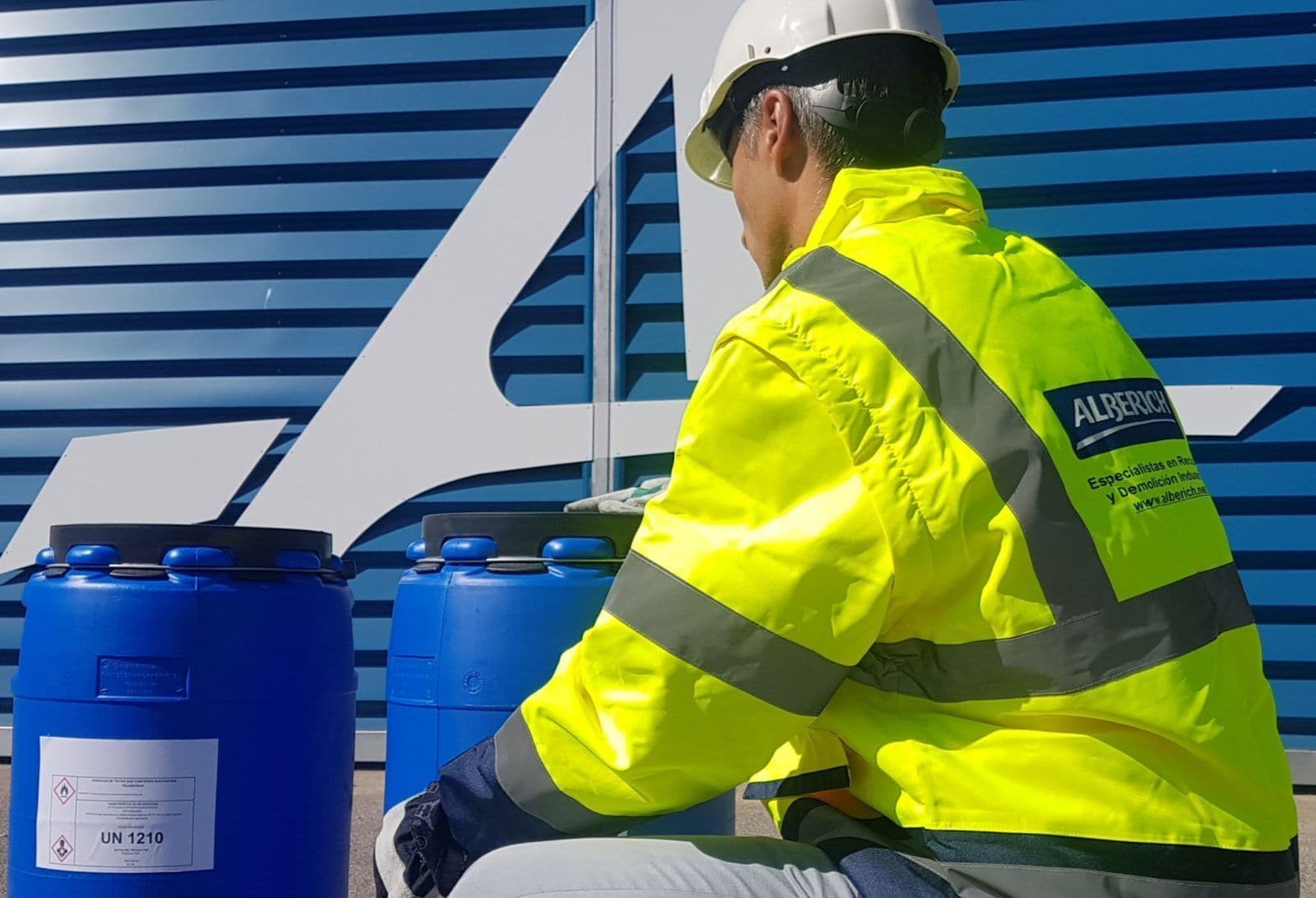
With metals, we are the waste management company that receives and processes them. With hazardous waste, we act as a broker: we coordinate the operation, the paperwork and the transport, and the documents name the authorised final treatment facility that carries out the treatment. We explain the advantages of that role in waste broker or final treatment facility, and how that waste is treated in hazardous waste treatment.
Complete documentation
Waste acceptance form, identification document for each shipment (what the industry still calls the waste tracking sheet), weighbridge ticket and certificates of treatment or destruction, all filed and linked to the customer’s case file. Our waste management service page sets it out by type of waste.
How can you avoid traceability failures in your company?
Common mistakes
Most problems don’t come from bad faith, but from the same oversights repeated over and over:
- Mixing hazardous and non-hazardous waste in the same container: the entire contents then have to be treated as hazardous.
- Assigning the wrong EWC code, so that the document describes a different waste from the one being shipped.
- Moving waste without an identification document or with a carrier who isn’t authorised.
- Not closing the cycle: handing the waste over and never asking for the certificate of treatment.
- Stockpiling waste at your plant for longer than the regulations allow.
What to ask whoever manages your waste
- Their authorisation number as a waste management company or broker, and that of the final treatment facility when it isn’t the same company.
- The treatment contract and the waste acceptance form before the first shipment.
- The identification document for each movement, with the actual weight from a trade-approved weighbridge.
- The certificate of treatment or destruction when the file for each waste stream is closed.
- For a demolition, the close-out documentation with the quantities of each fraction.
Frequently asked questions
Who is responsible for waste once it leaves my company?
The producer remains responsible until it can prove that the waste has received complete treatment at an authorised facility. That is why it is so important to keep the identification documents and the certificates.
What is the difference between the DI and the NT?
The prior notification (NT) tells the authorities that a shipment is going to take place and is submitted in advance. The identification document (DI) accompanies each individual shipment and is closed when the waste management company accepts the waste. The NT is only mandatory in certain cases, such as for hazardous waste.
Does scrap metal also need documentation?
Yes. While it is waste, its shipment is accompanied by the documentation the regulations require, and it is weighed on a trade-approved weighbridge when it arrives at the plant. Once it has been processed and meets the European end-of-waste criteria, it is sold as raw material.
What is a waste broker?
It is an authorised company that organises waste management on behalf of others without necessarily being the one that treats the waste. With hazardous waste, Alberich acts as a broker: it coordinates the operation and the paperwork, and the documents name the authorised final treatment facility.
What documentation do I receive at the end of a demolition?
The identification documents for the shipments, with the weights of each fraction, and the corresponding certificates of treatment. With them you can show the authorities, your auditors or your customer what was done with each type of waste from the job.
If you have a dismantling or demolition project in the pipeline, ask us for a preliminary study: we’ll tell you what waste to expect, how each type will be documented and what the recovered metal may be worth.