Small appliances
Small household appliances
- 01Hair dryers and toasters
- 02Microwaves and power tools
- 03Small vacuum cleaners
- 04Digital clocks and electronic toys
- 05Computer peripherals (keyboards, mice, phones)
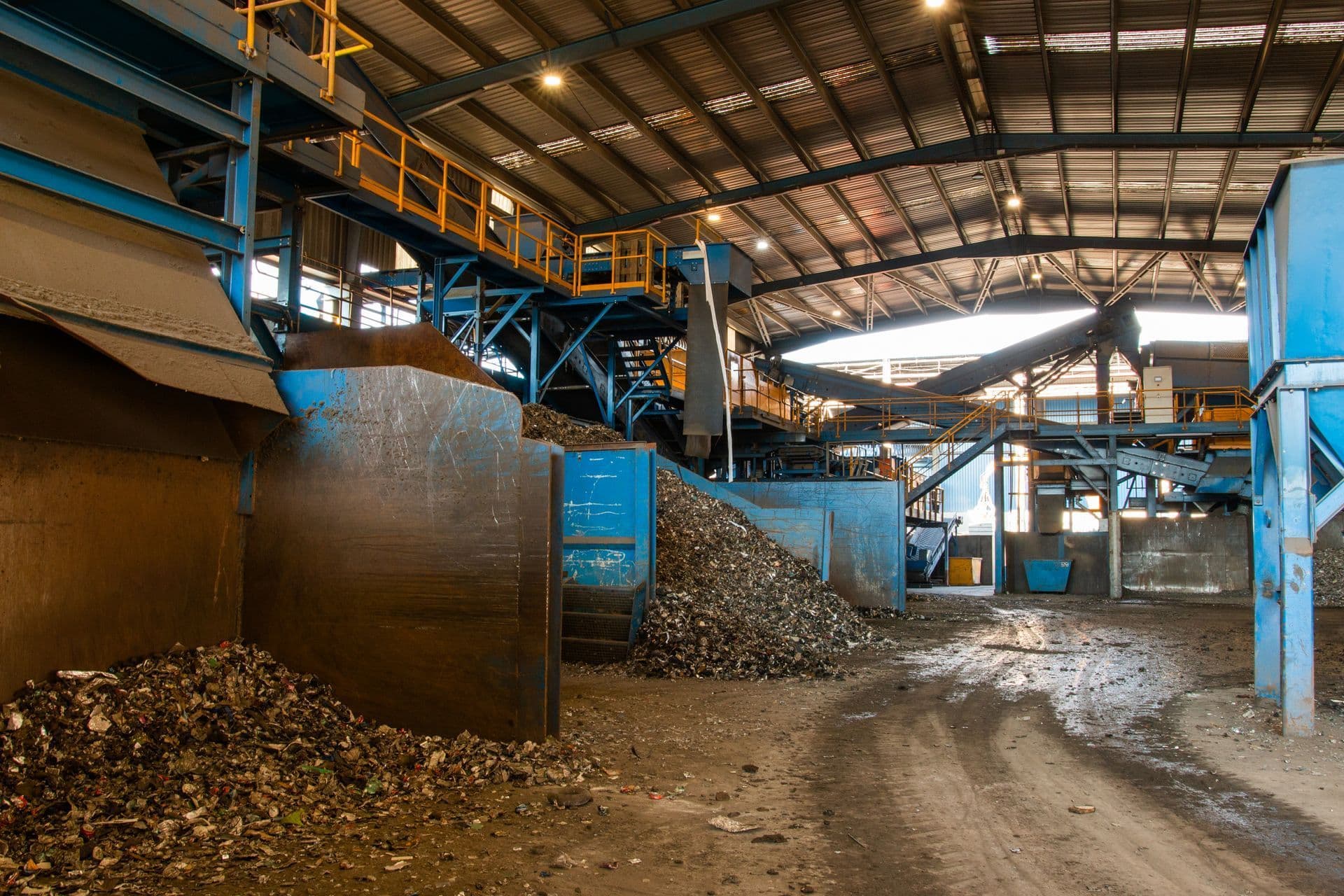
We’re an authorised final treatment facility for every category: small and large household appliances, cooling appliances, air-conditioning units and IT equipment. Paperwork in perfect order for producer compliance schemes (SCRAPs), Spain’s environment ministry and Catalonia’s SDR waste-tracking system.
‘Flawless documentation and three-way traceability are the reason compliance schemes keep trusting us with more and more waste.’
We take in WEEE from municipal household waste recycling centres, retailers’ distribution centres, industrial producers and the leading producer compliance schemes in the sector.
Our authorisation covers every WEEE category: small and large appliances, cooling appliances, air-conditioning units, IT equipment and installation equipment. We treat some in-house and transfer others to specialist operators. We don’t accept solar PV panels or electric water heaters.
We work both with producer compliance schemes (SCRAPs) and directly with producers and waste operators. Each route has its own paperwork and its own economics.
Compliance schemes bring together producers of electrical and electronic equipment so they can meet their collection and recycling targets. We work with the leading schemes in the sector: they send us waste from their distribution centres and partner retailers, and they also ask us to carry out collections, which we coordinate with our own fleet or external hauliers.
Industrial producers who bring their waste straight to our plant, and approved intermediate waste operators. Waste from municipal recycling centres and retail distribution centres also comes in this way. If they need it, we organise the collection.
Whichever route it comes through, if the waste is at your distribution centre or in one of your stores, we organise the collection. We coordinate it with our own fleet and, when the job calls for it, bring in external hauliers.
This is common with compliance schemes: they ask us to collect from a retailer or a distribution centre, and we handle the whole chain, paperwork included.
Every item of WEEE goes through the same seven operating stages. What sets an excellent waste operator apart from a good one is the paperwork, the technical depollution and recovering the maximum from every fraction.
‘A full lorryload of washing machines is about 300 labels. Each washing machine is an item of waste with its own digital traceability record.’
The lorry arrives and the supplier and producer are identified. Gross and tare weights are taken on a trade-approved weighbridge and the weighbridge ticket is issued.
A visual check for contaminants, and confirmation that the paperwork matches the material actually delivered. Everything comes in with a waste tracking sheet: if the load doesn’t have one, we produce it.
Hazardous WEEE (gases, oils, batteries and cells) is separated from non-hazardous. We assign the appropriate treatment route (R1202, R1203 or whichever applies) and decide whether it is treated in-house or transferred.
Safe removal of cables, plastics, washing-machine counterweights, glass, refrigerant gases, oils and batteries (with particular care over lithium).
Mechanical processing of the depolluted waste. The plastic and general waste fractions are separated out before the material is fed to the metals line.
Ferrous (magnetic), non-ferrous (eddy current, X-ray, colour sorting), plastics, cable and residual fluff. Each fraction goes to the best outlet for it.
Ferrous fraction to the steel mill, plastics to a specialist operator, cable to our own plant, batteries to a specialist operator and fluff to an inert waste landfill. Reporting on all three platforms.
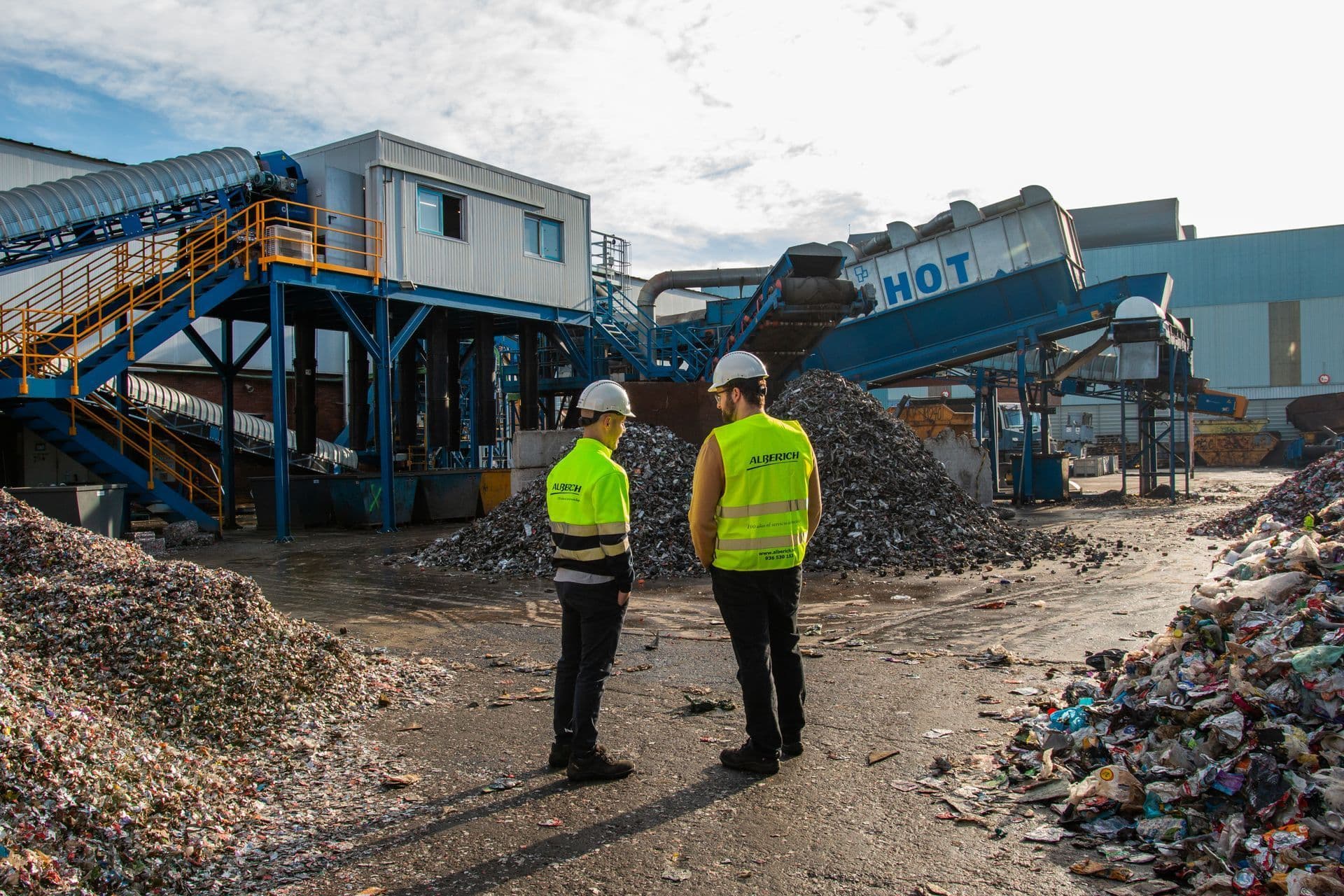
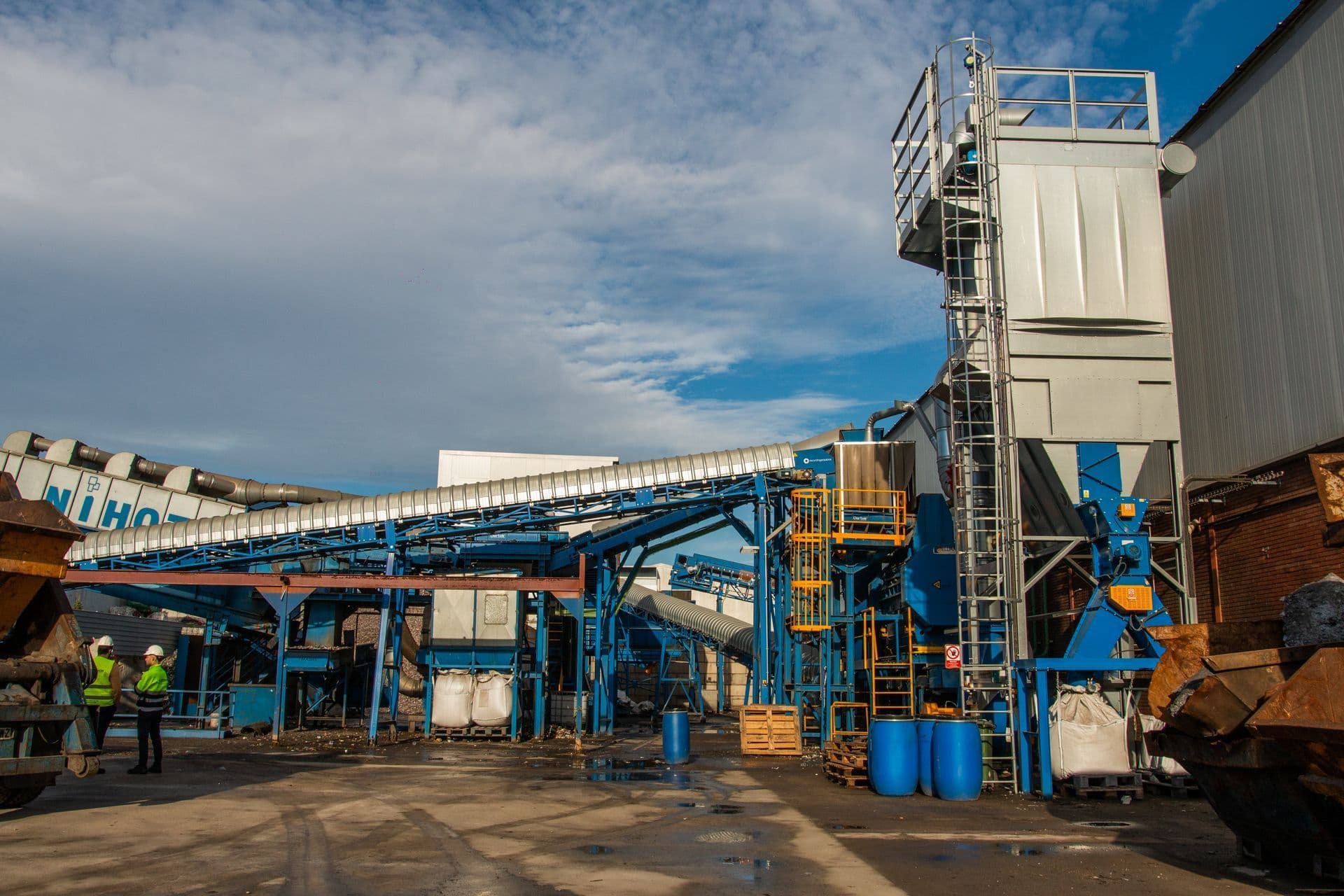
Every fraction of the waste passes through a separation cascade that maximises the final recovery rate. All with our own machinery and technology, on our own site.
The first fraction recovered is ferrous. High-strength magnets pull out iron and steel for the steel mills.
Separates light non-ferrous metals, mainly aluminium, by electromagnetic induction.
Detects any remaining metal in the non-magnetic fractions. A refining step after eddy current separation.
Sorts by atomic density, separating aluminium from stainless steel, copper and brass. Ensures high purity for each alloy.
Optical identification by colour and brightness. Useful for separating red metals (copper, brass, bronze) from the rest.
Fine detection by spectral signature. Picks out any remaining contaminants before the material goes to the foundry.
In Catalonia, three reporting systems run side by side, and they don’t talk to each other. We keep all three up to date by integrating Navision + Business Central with the WEEE platform.
Every item of WEEE carries a unique label, even if only a digital one, from the producer through to final treatment. A full lorryload of washing machines means roughly 300 labels, and each one has to be uploaded to three systems.
We automate the process through our ERP integration, so traceability is up to date on every platform. That’s why compliance schemes choose us.
Every incoming load reported with its WEEE EWC code (European List of Waste).
The Catalan regional platform. It isn’t integrated with the Ministry’s system, so it needs separate reporting.
Each compliance scheme in the sector has its own system for invoicing and tracking targets. We upload all the information on time.
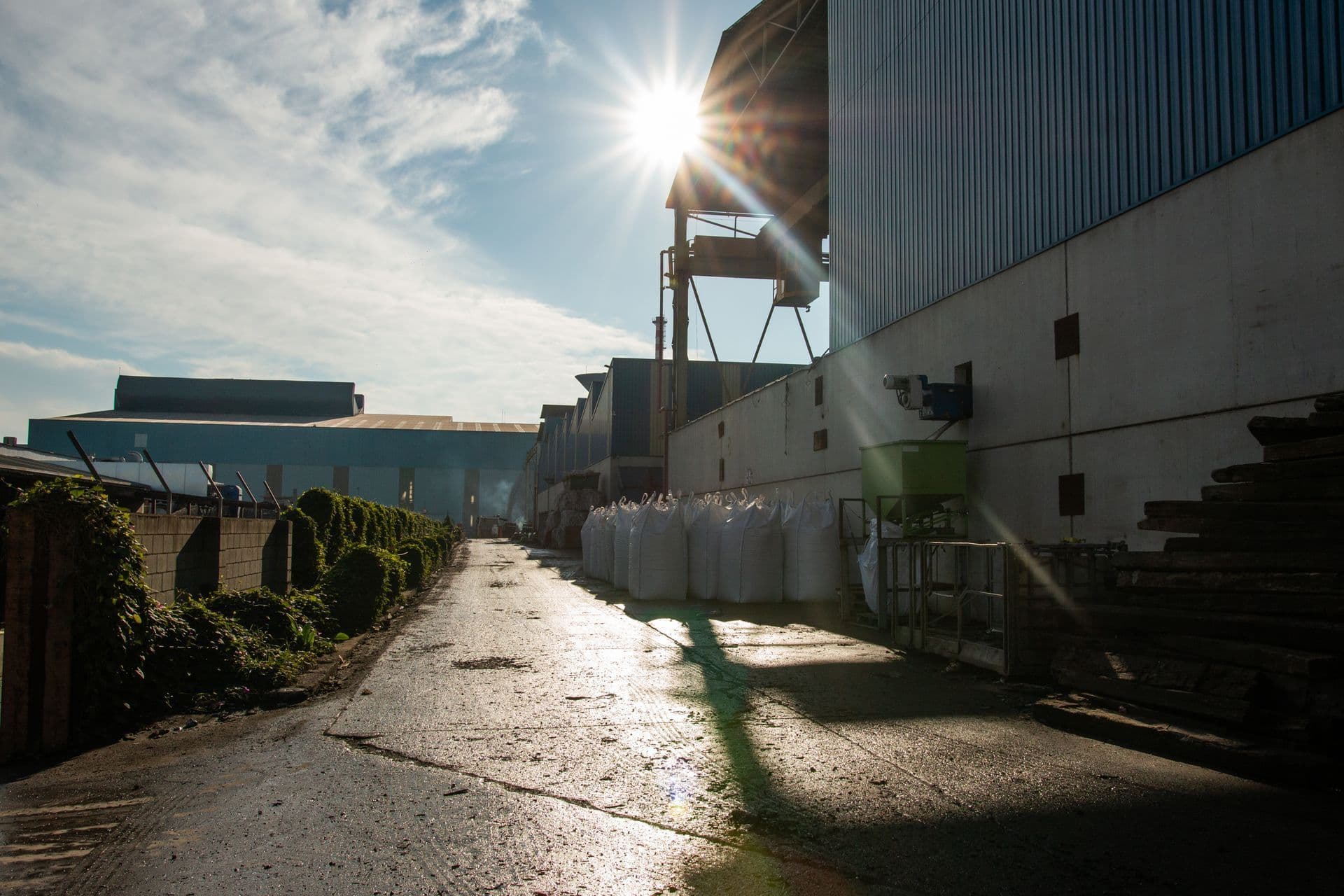
When waste reaches the plant, we assign it the right treatment route (R1202, R1203 or whichever the material calls for). Whatever the route, separating out components is always the first step: it maximises recovery and neutralises the risks.
Extracted with dedicated degassing equipment from air-conditioning and climate-control units, then handed over to an authorised specialist company.
Oils are drained from transformers, medical equipment and other devices, and sent to a specialist used-oil operator.
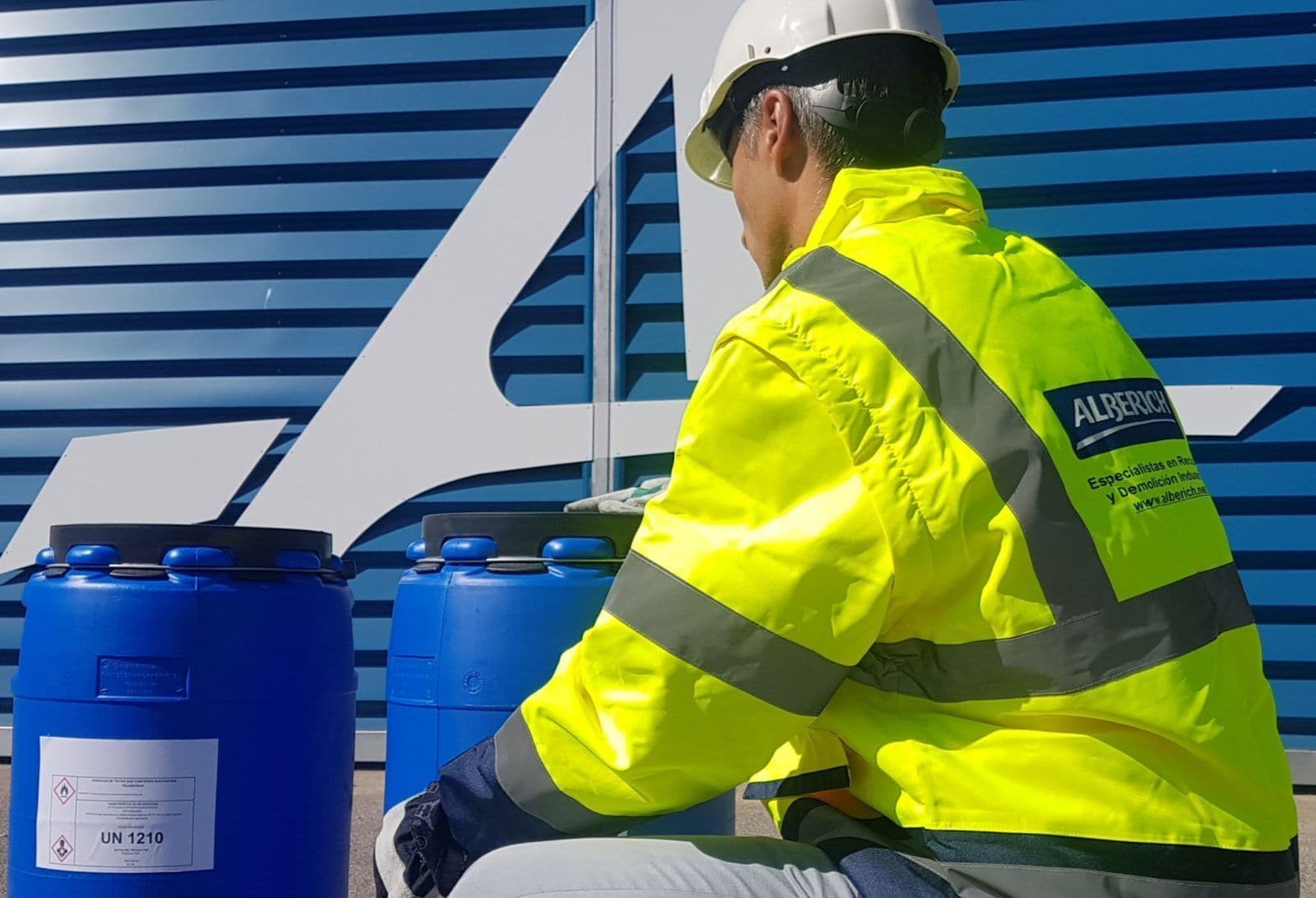
Lithium batteries get particular attention because of the hazard they can pose. Dedicated containers, strict handling protocols and dispatch to a final treatment facility that specialises in batteries.
Cables, plastic parts, washing-machine counterweights and glass. They are removed by hand so the material reaching the shredder is as clean as possible.
We’re obsessive about recovering as much as possible from every load: the more we recover, the less residual fluff ends up in landfill, and the greater the economic and environmental value of the process.
Iron and steel separated by magnet. They go straight to steel mills as high-grade raw material.
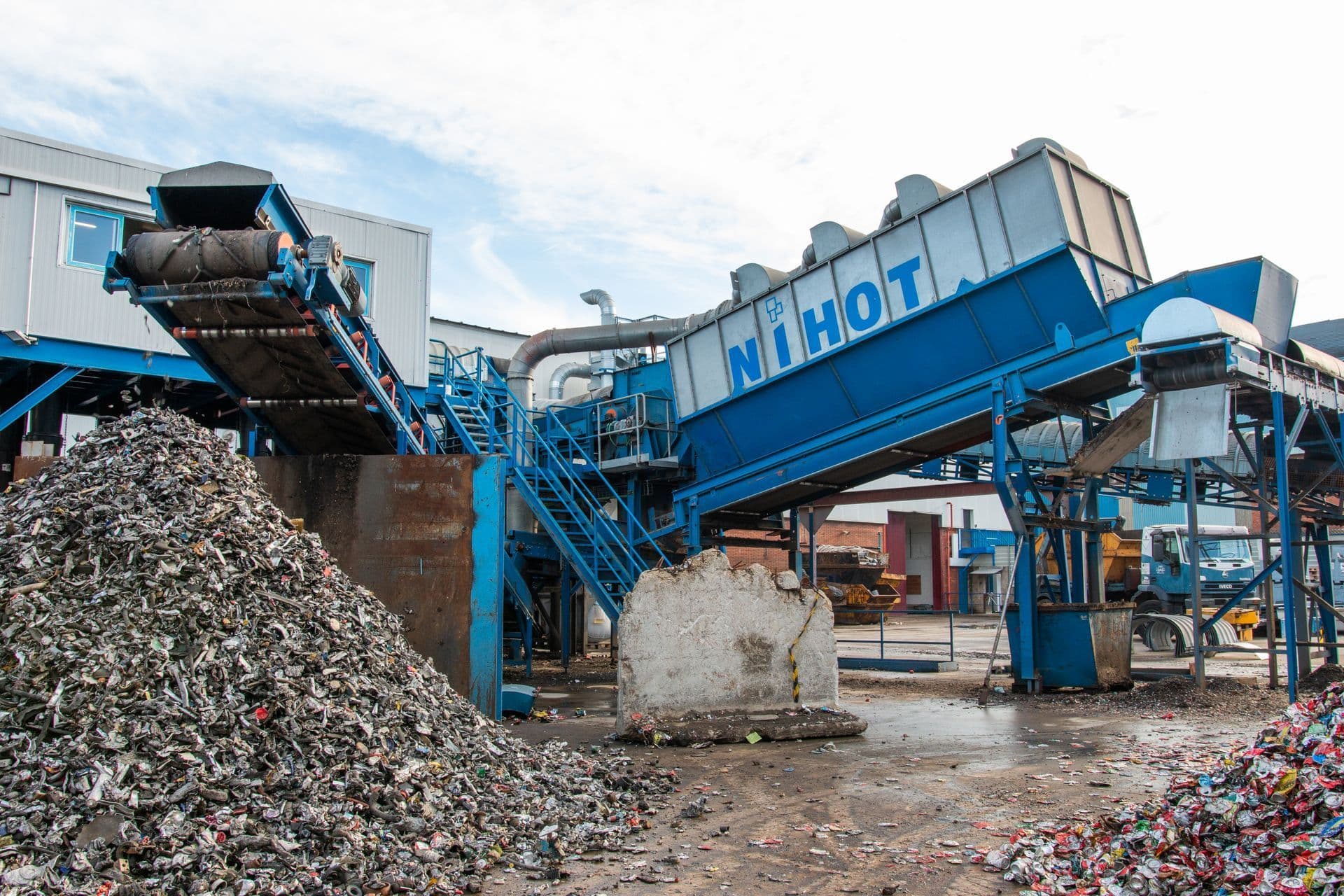
Aluminium, copper, brass, stainless steel and other metals recovered by post-shredder separation technology. Sold by alloy.
Plastics separated from the WEEE after depollution and shredding. They go to specialist plastics recyclers.
Cable goes to our dedicated granulation line, where the copper is separated from the plastic insulation.
The fraction that can’t be recovered: bits of rubber and inert mixtures. It goes to an inert waste landfill with the laboratory analysis the regulations require.
For more specific questions about your WEEE stream, your compliance scheme or particular reporting requirements, get in touch with our documentation team.
WEEE stands for waste electrical and electronic equipment: any electrical or electronic device at the end of its life, whether household or professional. We handle every authorised category: small and large appliances, cooling appliances, air-conditioning units, IT equipment and installation equipment. We don’t accept solar PV panels or electric water heaters.
Producer compliance schemes, known in Spain as SCRAPs, are not-for-profit organisations that bring together producers of electrical equipment so they can meet the annual collection and recycling targets set by European and Spanish law. They send us waste from their distribution centres. We work with the leading schemes in the sector, and around 50% of the waste we receive comes to us this way.
It’s the mandatory platform run by Spain’s environment ministry (MITECO) for reporting incoming WEEE. In Catalonia it isn’t integrated with the regional SDR system, so everything has to be reported twice. We keep both up to date by integrating Navision + Business Central with the WEEE platform.
Every item of waste carries a unique label code, digital or printed, from the moment the producer issues it until it reaches our site, including any intermediate waste operators along the way. A full lorryload of washing machines means roughly 300 labels, each fully traceable and linked to the incoming load and the treatment record.
They are the most hazardous component. We have strict protocols: dedicated containers, risk controls and individual traceability. They are never treated in-house; they always go to authorised waste management companies that specialise in batteries. This is one of the most critical parts of the manual depollution carried out before shredding.
The more metal (iron and non-ferrous metals) an appliance contains, the higher its recovery value; the more plastic and non-recoverable components, the lower. Every job is different, so we always value it case by case: tell us what kind of WEEE you have and how much, and we’ll put together a proposal.
Yes. We have ISO 9001 (quality) and 14001 (environment) in place, plus a certified health and safety system. Our environmental compliance covers emissions filters and laboratory analysis of the water from the settling tank and of the residual fluff, as current regulations require.
Yes. The producer can request a certificate of treatment once the recycling process is complete. Not every outgoing load comes with one automatically: it is issued on request and there is a charge for it. Many customers ask for one because they need it for their own ISO or compliance reporting.
Send us the details of your monthly volume, WEEE categories and collection frequency. We’ll come back with an operational and commercial proposal tailored to your case.