What the industry calls the new selective demolition law is not a separate law: it is Article 30 of Spain’s Law 7/2022 of 8 April on waste and contaminated soils for a circular economy. Since 1 July 2022 it has required non-hazardous construction and demolition (C&D) waste to be sorted into at least six fractions, and since 1 January 2024 it has made selective demolition mandatory to guarantee that separation. If you are going to demolish an industrial building or plant in Spain, it affects you directly.
What does Spain’s selective demolition law say?
Article 30 of Law 7/2022 has three sections. This is what they say, in summary:
| Section | What it requires | Since when |
|---|---|---|
| 30.1 | In demolition work, hazardous substances, asbestos in particular, must be removed without mixing them with other waste and handled safely | When the law came into force (10 April 2022) |
| 30.2 | Non-hazardous waste must be sorted into at least these fractions: wood, minerals (concrete, bricks, tiles, ceramics and stone), metals, glass, plastic and plaster. Reusable elements, such as roof tiles, sanitary ware or structural elements, must also be sorted. Preferably at the place where the waste is generated | 1 July 2022 |
| 30.3 | Selective demolition becomes mandatory, ensuring that at least those fractions are removed, with a prior study of the quantities of each where there is no obligation to have a waste management study | 1 January 2024 |
The same article announces two obligations that have yet to be developed in regulations: digital materials logbooks for new buildings and ecodesign requirements for construction projects. You can read the consolidated text of the law (in Spanish) in the Official State Gazette (BOE).
What is the difference between conventional and selective demolition?
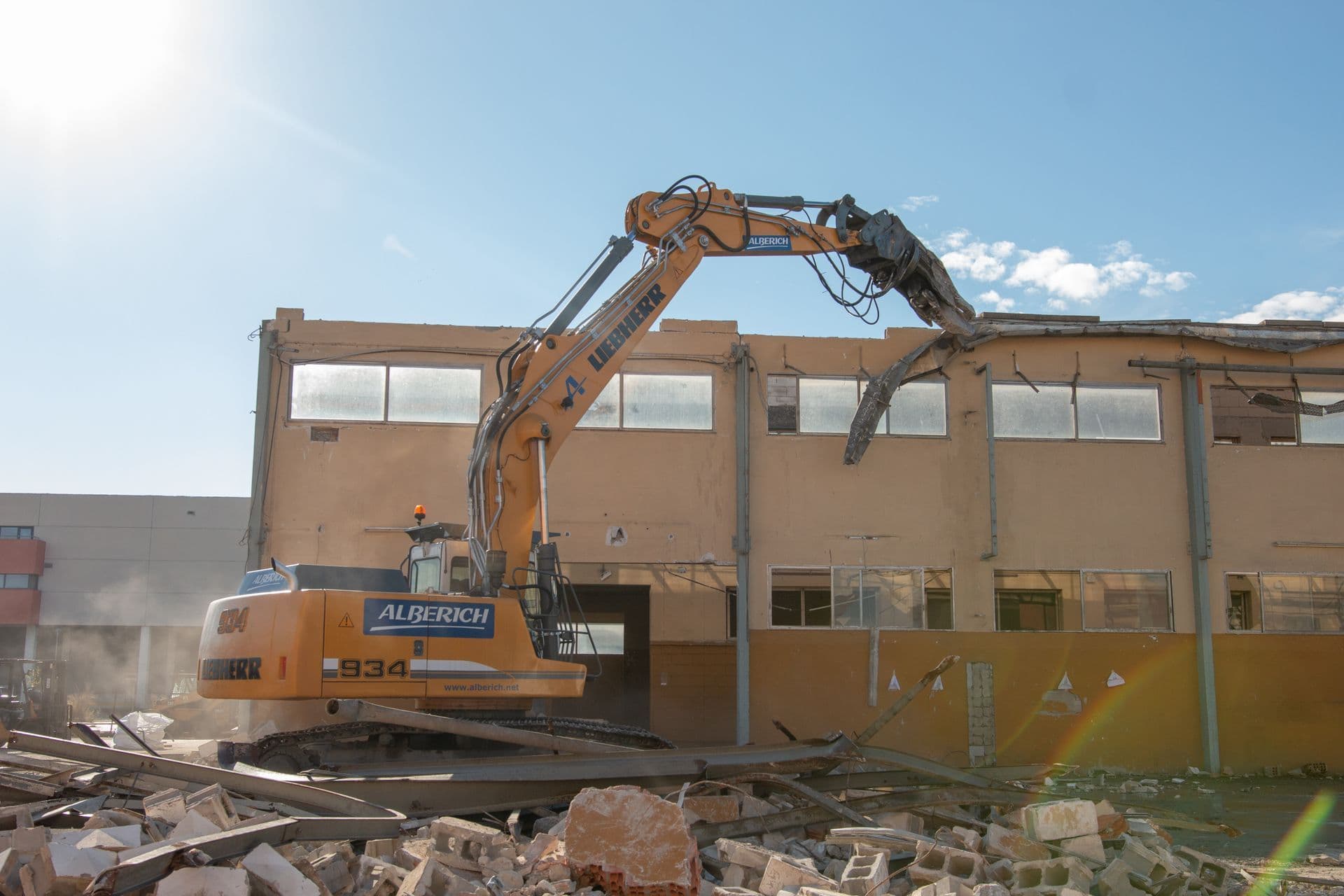
The difference lies in the order. In conventional demolition, the structure is knocked down and then whatever can be separated is picked out of the rubble. In selective demolition, the building is taken apart layer by layer, in the reverse order to how it was built, and each material comes out already separated:
| Aspect | Conventional demolition | Selective demolition |
|---|---|---|
| Order of work | The structure is knocked down and sorted afterwards | Hazardous materials, building services, finishes and, last of all, the structure |
| Resulting waste | Mixed and hard to separate | Clean fractions, each in its own container |
| Destination | Sorting plant or landfill | Recycling and reuse |
| Planning | Less | Requires a prior survey and a defined sequence |
| Cost | Less labour, higher landfill costs | More dismantling, less landfill, plus income from materials |
Since 2024, conventional demolition is no longer a legal option for the fractions set by the law. We explain how the selective sequence is applied to an industrial building, step by step, in our guide to industrial building demolition.
What changes in practice for the owner and for the demolition contractor?
For the owner
As the waste producer, the property owner already had to include a waste management study in the project under Royal Decree 105/2008, Spain’s regulation on construction and demolition waste, with an inventory of hazardous waste for demolition work. Under Law 7/2022, where a job does not require that study, a prior study identifying the quantities of each fraction is needed all the same. It is also worth allowing more time for planning and leaving space on the plot for stockpiles.
For the demolition contractor
The contractor carrying out the work has to dismantle in the right sequence, provide one container per fraction, document every load leaving the site with its EWC code (European List of Waste) and hand over the waste management certificates. Sorting can no longer be left until later: if the concrete comes out contaminated with plaster, wood or plastic, the fraction is lost.
An added financial incentive
Since 1 January 2023, the national landfill tax introduced by the same law has been in force. The more mixed waste there is, the more you pay; the better it is sorted, the more material is recycled and the less goes to landfill.
The types of waste, their codes and where each one goes are explained in our article on demolition waste.
Is selective demolition always feasible?
The law makes it mandatory, so the question is no longer whether to do it, but how to do it well. And that is where each job has to be looked at individually: the space available, the location, the timescale, the type of construction and the value of the materials all shape the sequence and the resources needed.
The key is to know the sequence of work before starting and, throughout the job, to keep a balance between the cost of separating and sorting and the benefits it brings: lower landfill charges, income from selling secondary raw materials and less reliance on virgin raw materials.
Alberich’s view in the AEDED 2024 Yearbook
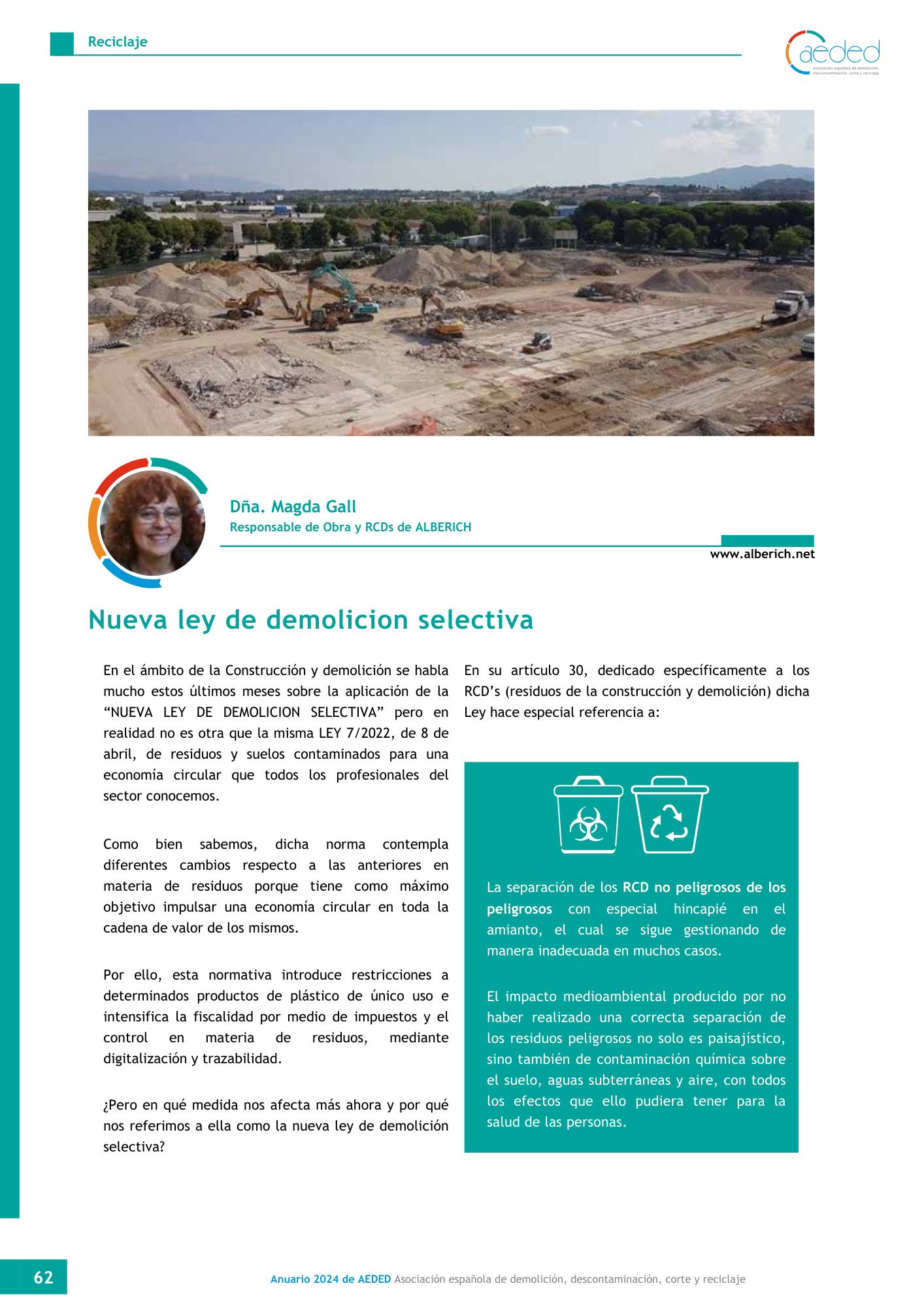
Alberich is a member of AEDED, the Spanish demolition association. In the AEDED 2024 Yearbook, our colleague Magda Gall, site and C&D waste manager in the industrial demolition division, published two articles on this legislation and its impact on sustainability. Some of her points are still entirely relevant:
- Hazardous waste, and asbestos in particular, is still badly separated in many cases, with effects on soil, groundwater and air.
- A great deal of mineral waste could be recovered, but it ends up contaminated by non-mineral waste that rules this out.
- Without orderly, planned demolition, waste cannot be properly separated on site.
In the 2025 Yearbook she returned to the subject with an article on decontamination and the circular economy, which we summarise in Magda Gall’s contribution to the AEDED 2025 Yearbook.
How we apply selective demolition at Alberich
On every job we plan the dismantling sequence from the initial technical survey, segregate at source with containers from 1 to 30 m³ and transport each fraction with our own fleet. The metal goes to our plants for recycling and, as an authorised waste management company (E-345.97), we issue the certificates that prove the waste has been properly managed.
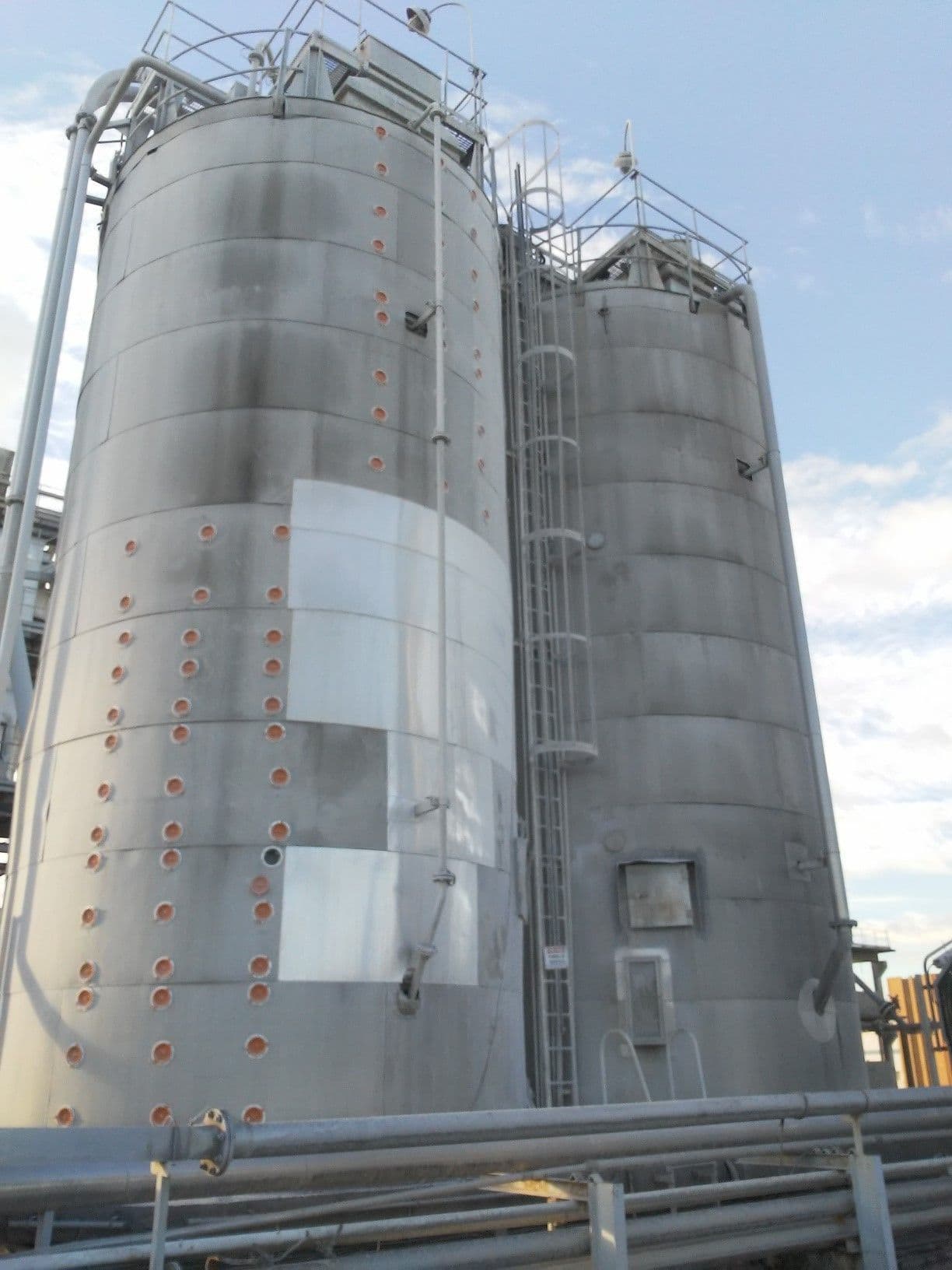
One example: in the selective demolition of two industrial silos in the food sector, we sorted the steel, concrete and other materials at source, controlled dust with continuous water spraying and achieved 95% recycling. The full service, phase by phase, is set out in end-to-end demolition management.
Frequently asked questions
Is selective demolition mandatory on every job?
Article 30 of Law 7/2022 does not set a size threshold: the obligation applies to demolition in general. On small jobs, what changes is how you comply, not the obligation to separate at least the fractions set by the law.
What if there is no room on site to separate the waste?
The law asks for separation preferably on site. Where this is not technically feasible for lack of space, Royal Decree 105/2008 allows the separation to be entrusted to an authorised waste management company at an off-site facility, which must confirm in writing that it has done so.
Does Law 7/2022 replace Law 22/2011?
Yes. Law 7/2022 repealed Law 22/2011 on waste and contaminated soils, which was the reference legislation until April 2022. Any document that still cites the 2011 law is out of date.
Are there penalties for not separating demolition waste?
Law 7/2022 has its own penalty regime, and failing to meet the separation and management obligations may constitute an infringement. How serious it is depends on the case, for example on whether hazardous waste has been mixed in.
If you are planning a demolition, ask for the preliminary survey to include the dismantling sequence and an estimate of the waste by fraction: these are the two documents that show the job complies with the law.