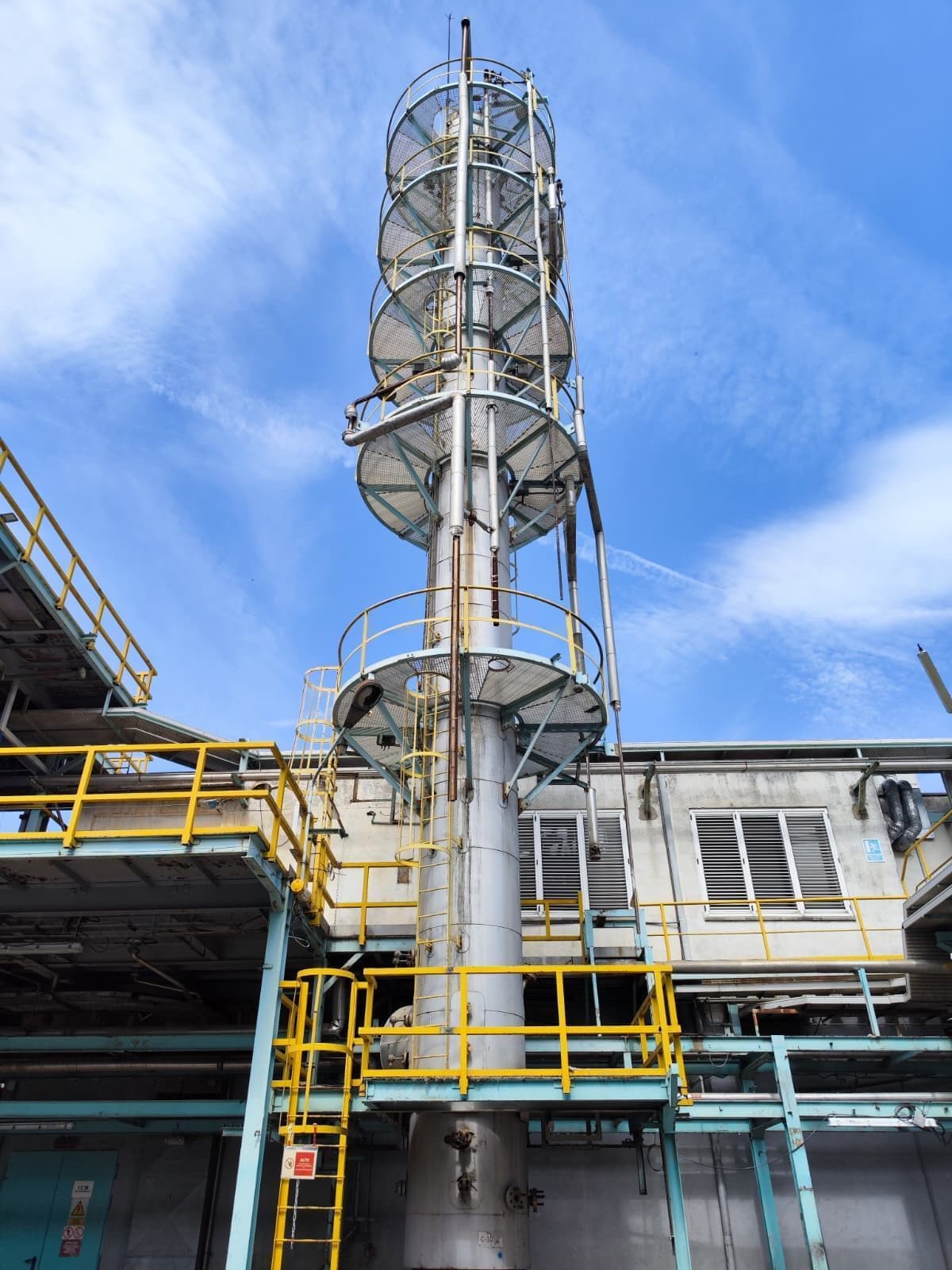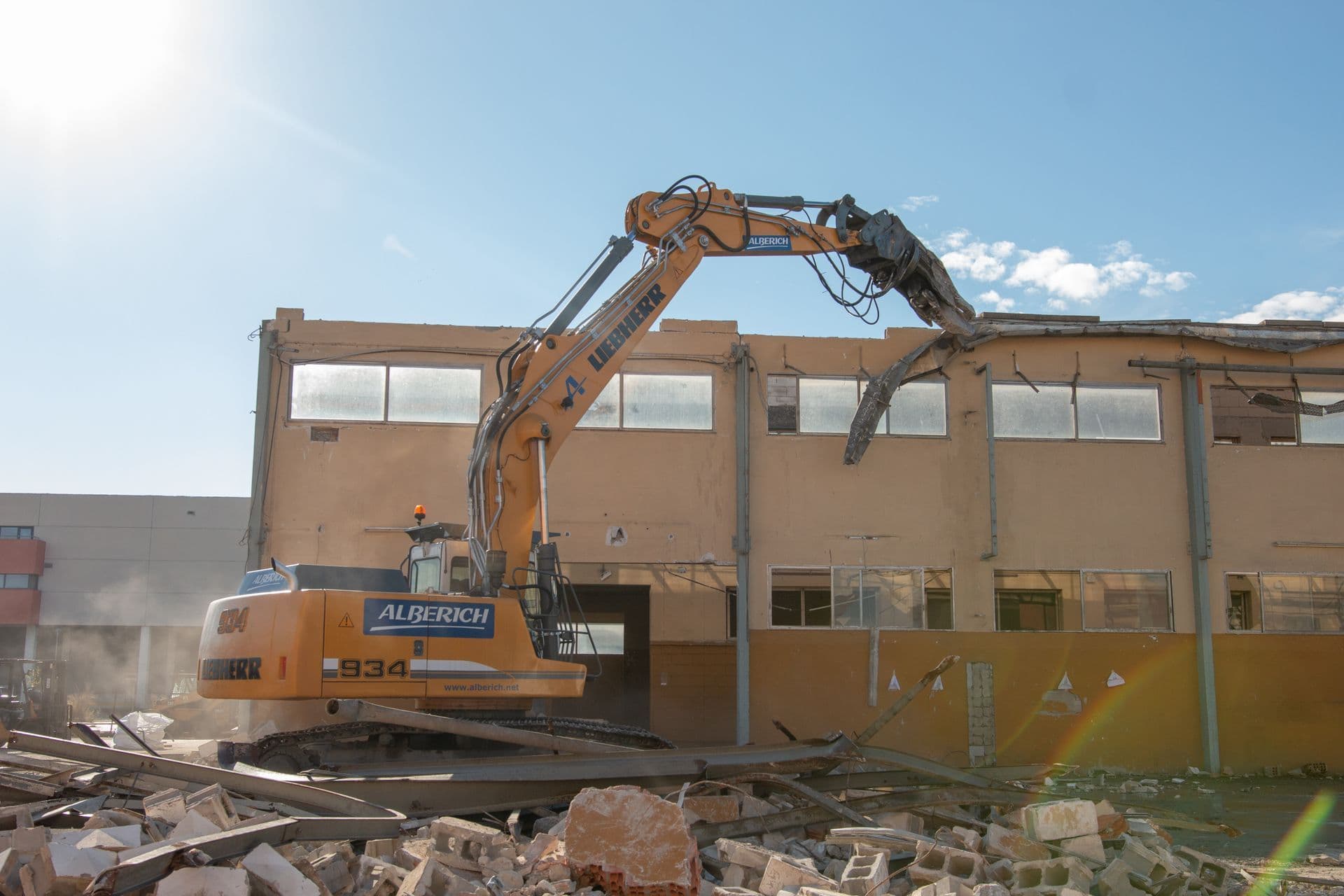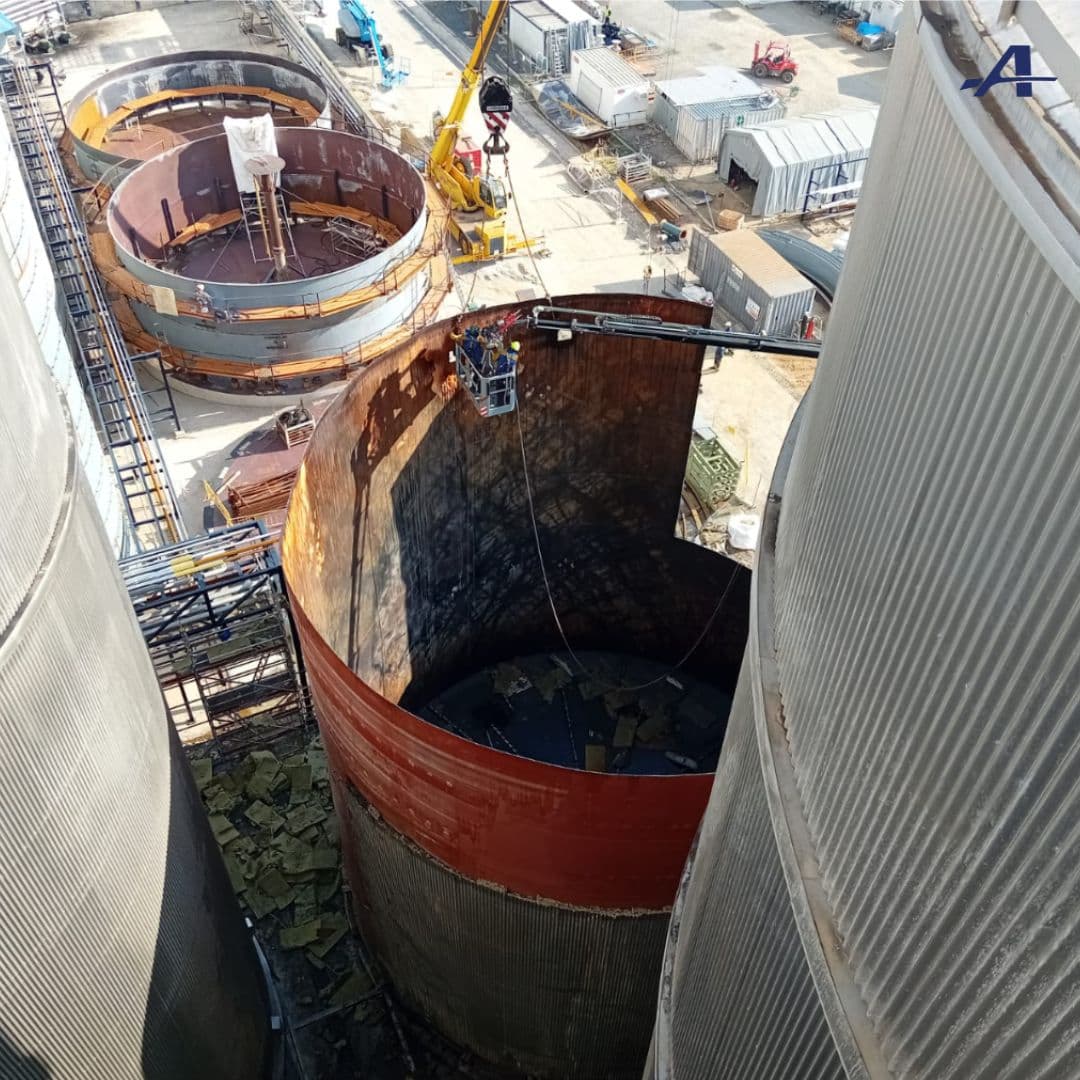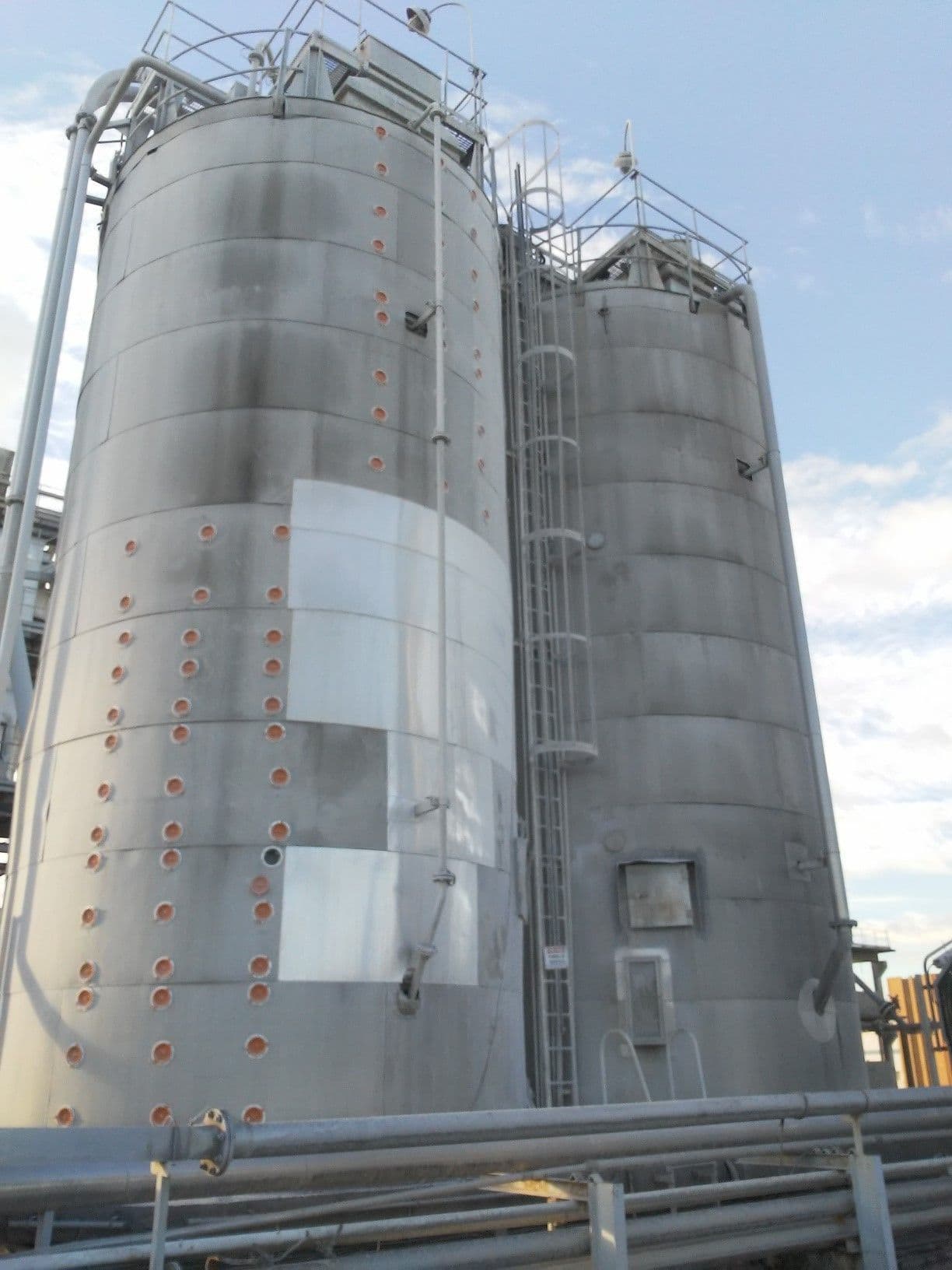
Alberich dismantled two obsolete metal silos at a food production plant without disrupting its operations, and 95% of the materials were recycled. The project sums up how we approach industrial silo demolition and dismantling in the food sector: measuring the metal beforehand, demolishing from the top down with high-reach machinery, controlling dust and sorting materials on site.
What did the client need?
To remove two raw material storage silos that had become obsolete, so that it could modernise its storage facilities. The condition was to do it without disrupting the plant’s production and while meeting the hygiene and safety requirements specific to the food industry.
The silos stood close to other facilities that were still running, so dust and vibration had to be kept to an absolute minimum and work at height had to be carried out safely.
| Item | Details |
|---|---|
| Sector | Food |
| Scope | 2 metal silos for raw materials |
| Setting | Live plant, with operational facilities nearby |
| Recycling | 95% of materials |
| Service | End-to-end: technical survey, execution, transport and recovery |
How were the silos demolished without stopping the plant?
1. Technical assessment
Before quoting, we inspected both silos with thickness gauges. This gives an accurate figure for the recoverable metal and lets us plan the dismantling sequence for each structure.
2. Top-down demolition
The silos were demolished from the top down with high-reach machinery, which makes it possible to work at height without putting operatives up on the structure. The work was carried out with our own machinery and team, who have experience in food plants.
3. Dust control
Throughout the demolition, continuous water spraying kept dust and particles from reaching the neighbouring facilities. In a food plant this is not a minor detail: it is part of the site’s hygiene requirements.
4. Sorting and recovery
Materials were segregated at source, with steel, concrete and other materials kept apart. Our own fleet took the metal to our plant for processing, and it went back into the production cycle as raw material. The result was a 95% recycling rate.
Why does the food sector demand extra care?
Because the work takes place alongside an activity governed by food hygiene regulations. Cross-contamination has to be avoided, each area cleaned and decontaminated, and the work coordinated with the lines that are still producing. When we carried out the full dismantling of another food plant, we applied the same approach to processing lines, silos and auxiliary machinery.
If you want to know how a site is organised next to a running line (isolating the work zone, working hours, access and coordination), we explain it in industrial demolition without stopping production. For what we do in this sector, see our page on demolition in the food sector.
What happens to the material from a silo?
The steel is processed at our Castellbisbal plant: it is cut or shredded to the sizes the steel industry requires, and steelworks then melt it down to make new steel. Stainless steel is also common in food plants; it is separated and recovered on its own because it is worth more. The other fractions, such as concrete, leave the site separately for the relevant authorised waste management company.
This project is one of our industrial demolition case studies with more than 90% recycling.
Frequently asked questions
Does a silo have to be emptied and cleaned before it is dismantled?
Yes. The silo must be empty and free of product residue before any cutting starts. Dust from some food raw materials can be combustible, so hot work is only planned once that risk has been assessed.
Is the value of the silo’s steel taken into account?
Yes. Measuring the wall thickness gives an estimate of how much metal there is and what it is worth, which can offset part of the cost of the work. How much depends on the market and on how clean the material comes out; we explain this in how to avoid cost overruns in a demolition.
How long does it take to dismantle an industrial silo?
It depends on the height, the material, access and the time windows production allows. On this project, the timescale was agreed with the client so as not to disrupt its operations, and it was met as agreed.