The circular economy in industrial demolition is measured in tonnes that go back into industry: the structural steel ends up at a steelworks as raw material, the copper from the cables is granulated and remelted, the concrete becomes recycled aggregate and some equipment is reused just as it is. To achieve this, the plant has to be dismantled with the destination of each material in mind, not simply knocked down. Here we explain what is recovered, how it is processed and how much has been achieved on real projects.
What is the circular economy in industrial demolition?
In the linear model, a plant is built, used and finally demolished, and its remains go to landfill. In the circular model, the materials from that plant are the starting point for other products. We explain the general concept in what is the circular economy; in demolition, it means applying the waste hierarchy set out in Spain’s Law 7/2022 on waste and contaminated soils:
| Priority | What it means in a demolition | Example |
|---|---|---|
| 1. Prevention | Generating less waste, starting from the design of the job | Dismantling, rather than crushing, anything that can come out whole |
| 2. Preparing for reuse | Giving equipment and components a second life without processing them | Machinery, motors, pumps or steel sections in good condition |
| 3. Recycling | Turning waste into raw material | Steel to steelworks, copper to foundries, concrete to aggregate |
| 4. Other recovery | Recovering value from what cannot be recycled, including energy recovery | Non-recyclable wood |
| 5. Disposal | Landfill, as a last resort | Mixed fractions with no other outlet |
What materials are recovered from an industrial plant, and what do they become?
An industrial plant contains far more metal than a conventional building, which is why its recovery potential is greater. This is the usual route for each material:
| Material | Where it comes from | Processing | Goes back as |
|---|---|---|---|
| Carbon steel | Structure, tanks, pipework, sheet | Cutting, shearing or shredding, and sorting | Ferrous scrap for steelworks |
| Stainless steel | Tanks and installations in the food, chemical and pharmaceutical industries | Sorting by alloy | Raw material for stainless steel |
| Copper | Cabling, motors, windings | Granulation and separation from the plastic | Copper granules for foundries |
| Aluminium | Windows and doors, roofing, extrusions, radiators | Sorting and separation from other metals | Feedstock for secondary aluminium |
| Concrete and ceramics | Structure, ground slabs, walls and cladding | Crushing at an authorised plant | Recycled aggregate |
| Equipment and components | Machinery, motors, pumps, overhead cranes | Careful dismantling and inspection | Reuse at another facility |
Metals have an advantage that few materials share: they can be remelted again and again without losing their properties. In the case of aluminium, recycling saves up to 95% of the energy needed to produce it from bauxite.
How does demolition scrap become raw material?
The metal that leaves a site cannot go straight to a steelworks: it has to meet specifications for size, cleanliness and composition. That is the job of a metal recycling plant:
- Inbound checks. Weighing, inspection and radiation monitoring of every load.
- Preparing heavy ferrous scrap. Large pieces, such as beams or thick plate, are cut in a shear to the size the steelworks require.
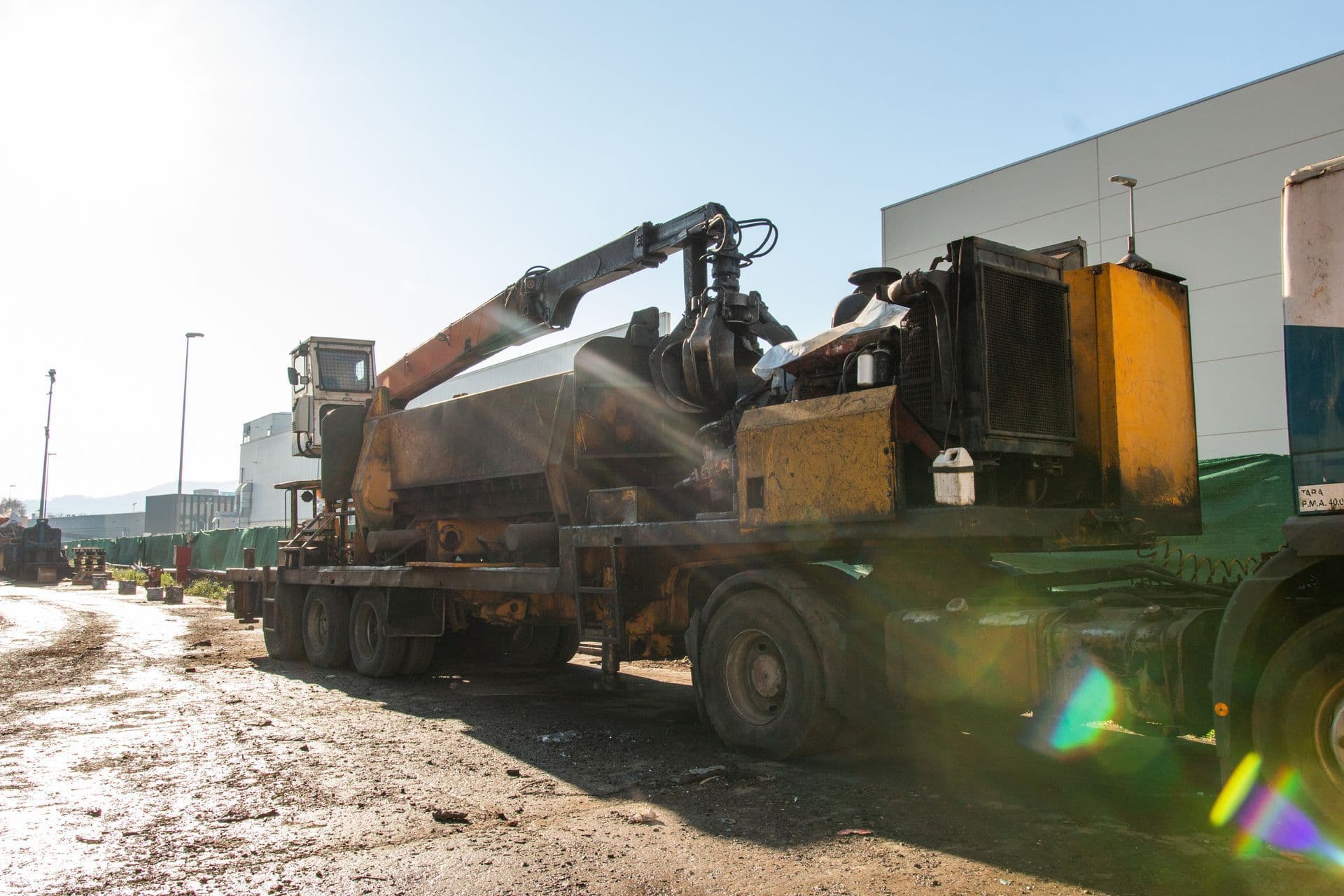
- Shredding. Light or mixed material is broken up in a shredder and the steel is separated out with magnetic drums.
- Non-ferrous separation. The non-magnetic material goes through eddy current, X-ray and colour sorting, which separate aluminium, copper, brass and other alloys. This is where mixes such as Zorba come from.
- Dispatch. Each grade goes to the steelworks or foundry that turns it into a new product.
The cleaner the material when it arrives, the less processing it needs and the more value it keeps. That is why separation on site matters so much: we explain it in our article on demolition waste, and its legal basis in the one on the new selective demolition law.
How much is recovered in an industrial demolition? Real cases
These are the figures for six Alberich projects published on our website:
| Project | Sector | Figures | Recycling |
|---|---|---|---|
| Industrial storage tank | Chemicals | 30 m high, 1,410 m³, 15 days | 100% of the metal |
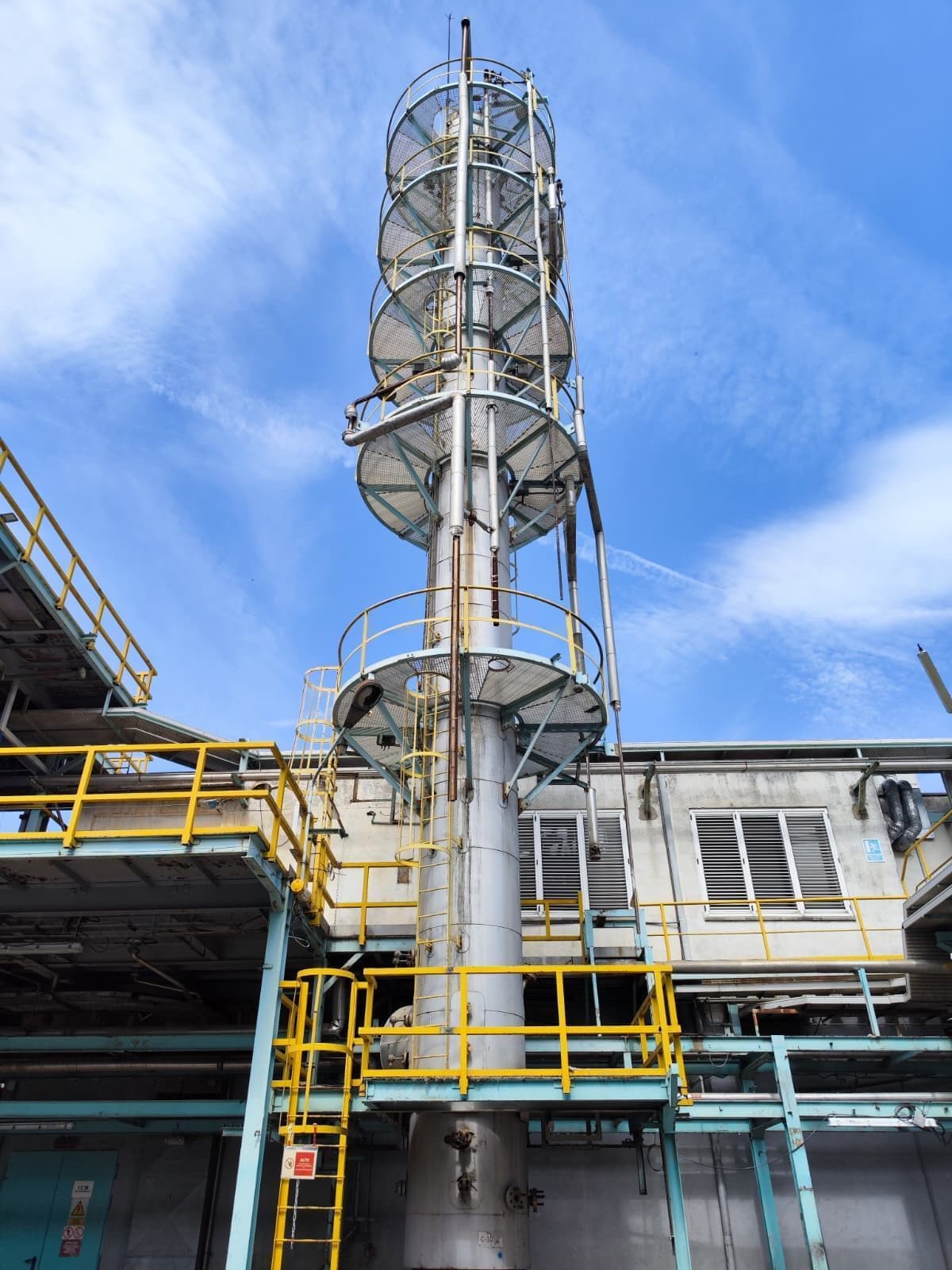
| Distillation column | Chemicals, ATEX zone | 30 m high, 5 days | 100% |
| RTG port cranes | Ports | 2 cranes of 25 m, 10 days | 100% of the structural steel |
| Railway footbridge | Rail | 10 m high, 5 days | 100% of the structural steel |
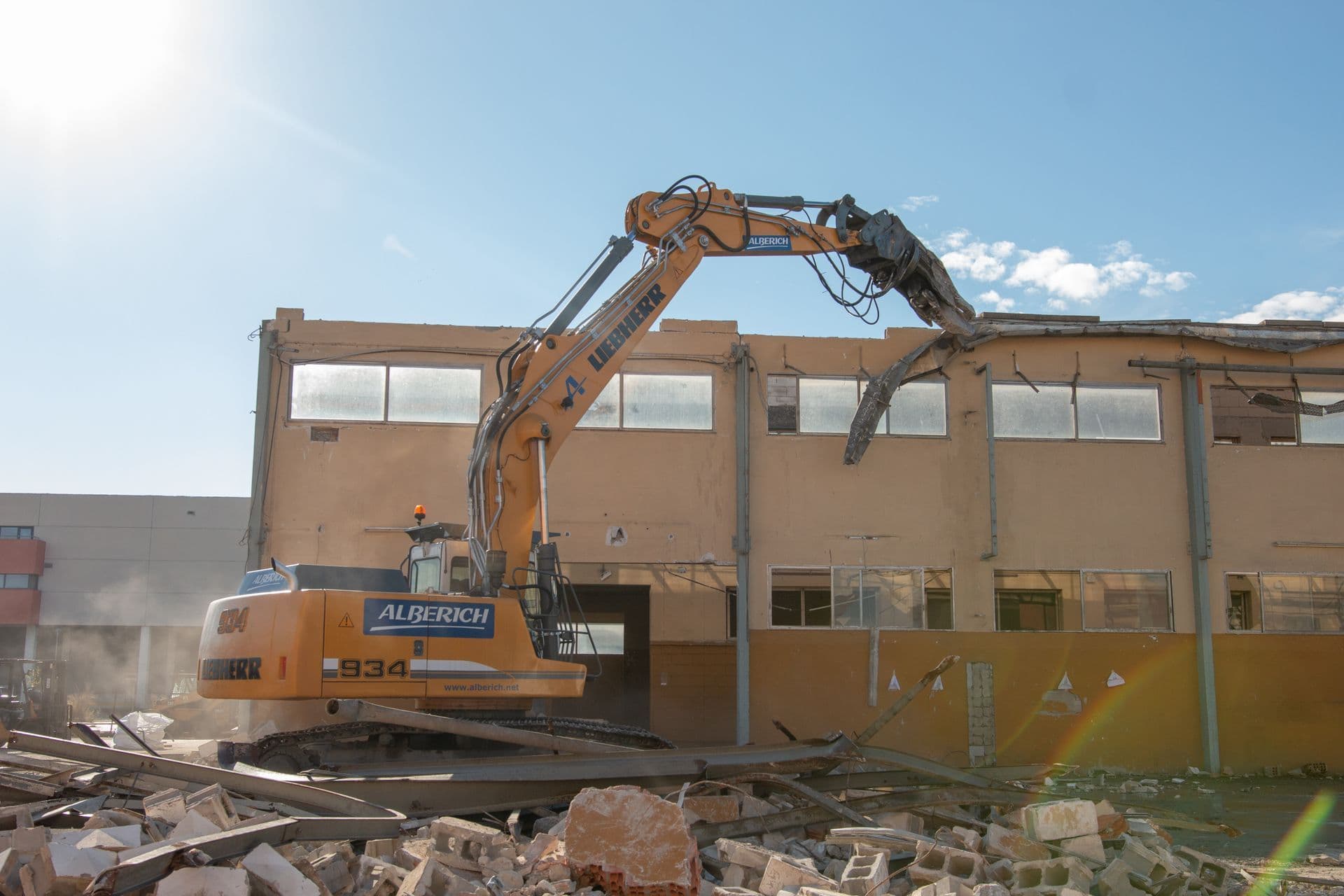
| Food production plant | Food | 15 m high, 15 days | 95% |
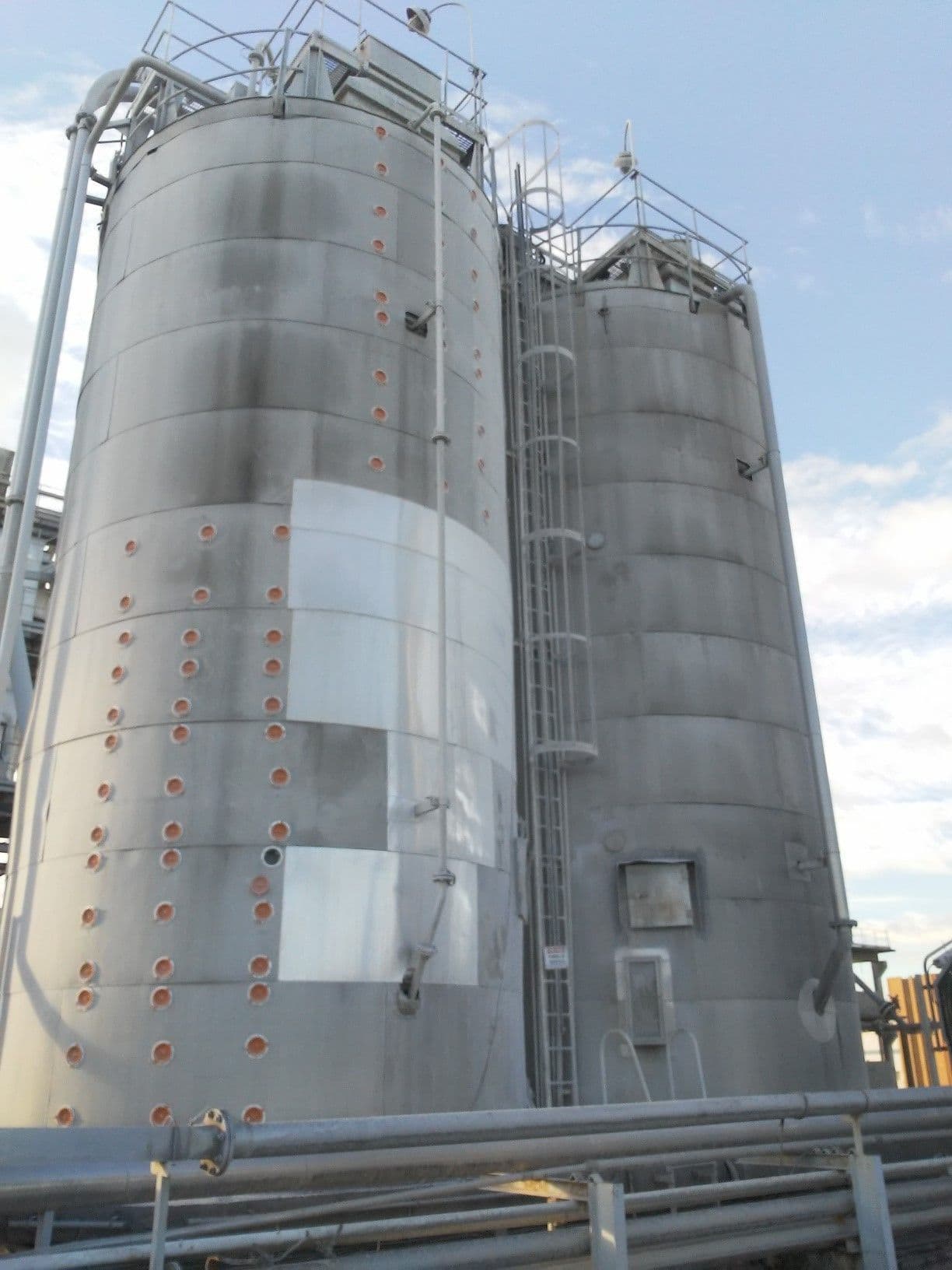
| Industrial silos | Food | 2 silos, selective demolition | 95% |
On metal structures such as tanks, columns or cranes, recovery can be total. On complete plants, with concrete, insulation and residues from the activity, the figure is slightly lower, but on most of our projects it is above 90%. You’ll find more detail on some of these jobs in our industrial demolition case studies.
What does the owner gain from a circular demolition?
- A lower net cost. Income from the recovered metals can offset a significant part of the cost of the demolition.
- Less landfill. Every tonne recycled is a tonne that pays neither landfill charges nor the national landfill tax, in force since 2023.
- Legal compliance. Separation into fractions and selective demolition have been mandatory since 2022 and 2024 respectively.
- Data for your reports. The waste management certificates record the quantities per fraction and where they went, which is useful for sustainability reports and environmental audits.
How we close the loop at Alberich
Alberich was founded in 1900 recovering materials and, in 1960, expanded into demolition and industrial dismantling, the same year it joined the BIR (Bureau of International Recycling). Today we process more than 300,000 tonnes a year at three sites of our own: Castellbisbal, La Llagosta and Constantí. That is why, on our demolition jobs, the metal that leaves the site goes straight into our own recycling lines.
The 600–1,000 t shears and the 4,000 hp shredder at Castellbisbal prepare the steel, and eddy current, X-ray and colour sorting recover the non-ferrous metals. The copper from cables goes through our cable granulation plant, with spectrographic analysis. All of it under ISO 14001 certification and as an authorised waste management company (E-345.97).
Before we quote, an on-site technical survey with metal analysers and thickness gauges allows us to quantify the recoverable material in the facility. You can see how this fits into the full service on our industrial demolition page, or see what we buy.
Frequently asked questions
Can 100% of a demolition be recycled?
For metal structures, yes: there are projects in which all the metal has been recycled. A complete demolition always leaves some fractions, such as certain mixtures or hazardous waste, that cannot be recycled and go to authorised treatment or disposal.
Can the concrete from a demolition be used on the same site?
It can be crushed and used as fill or as a sub-base, provided the aggregate meets the technical specifications for its intended use and the operation has the relevant authorisation. If not, it goes to an authorised construction waste plant.
Who keeps the value of the recovered metal?
On our demolition jobs, the value of the recoverable materials is quantified in the preliminary survey and taken into account in the quote we present to the owner. That way the saving is reflected in the price of the job from the start.
Does all dismantled machinery end up as scrap?
Not necessarily. If a machine, a motor or an overhead crane has a market, it can be resold or reused before it is recycled. The decision is made in the preliminary survey, because it determines how each item is dismantled.
If you are thinking of dismantling a plant, ask for the preliminary survey to quantify the recoverable materials: it is the figure that makes the biggest difference to the final cost of an industrial demolition.