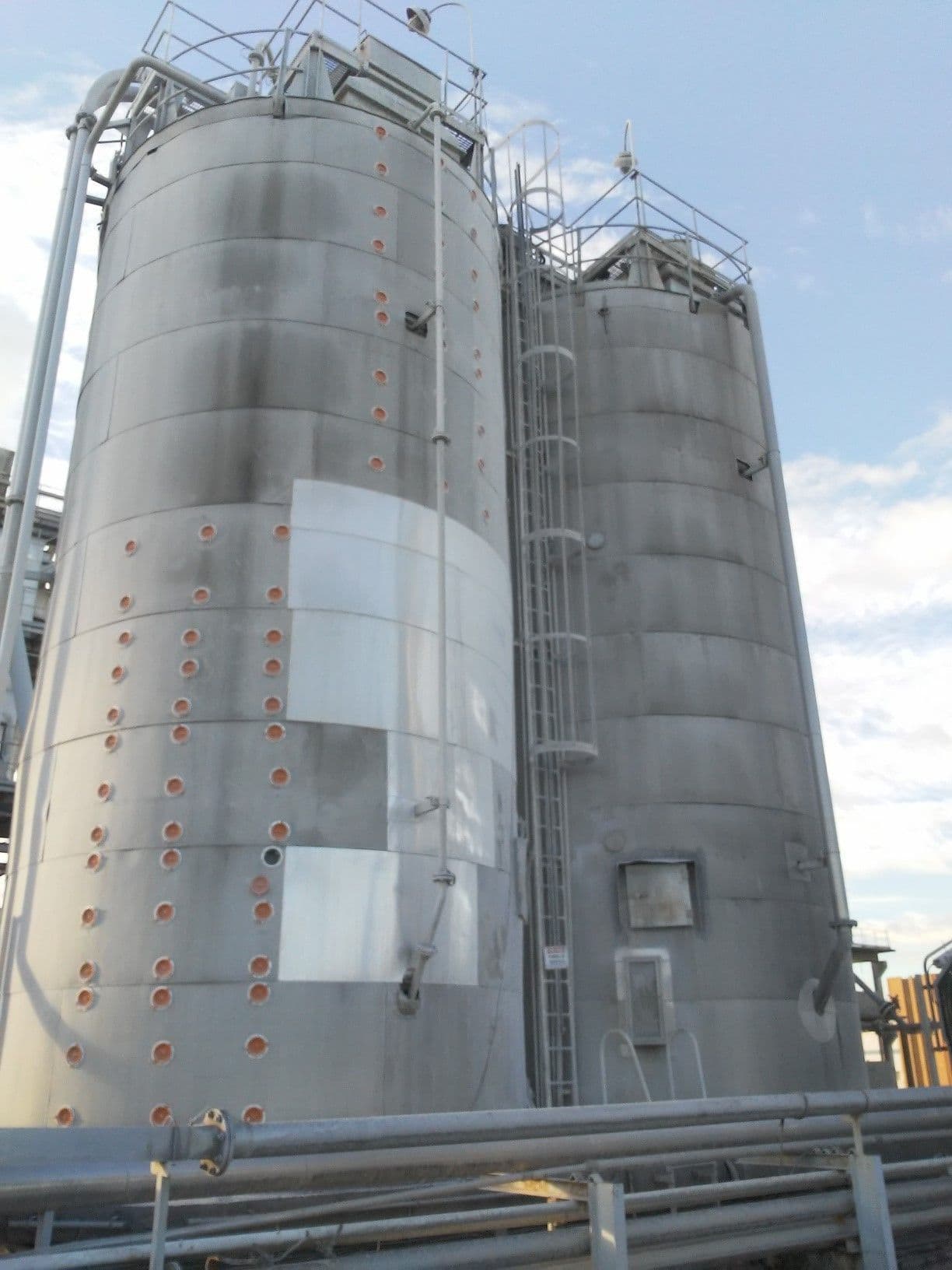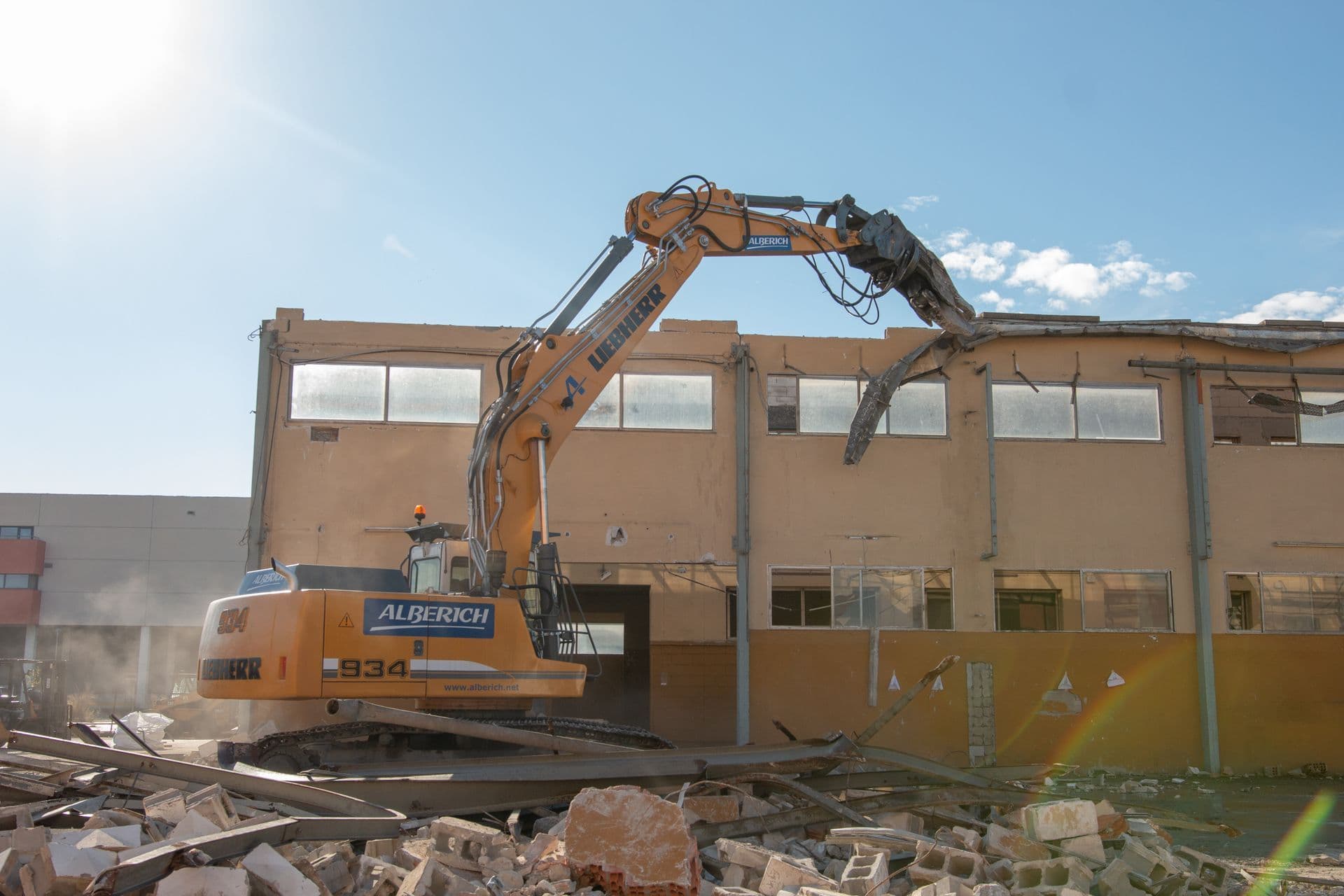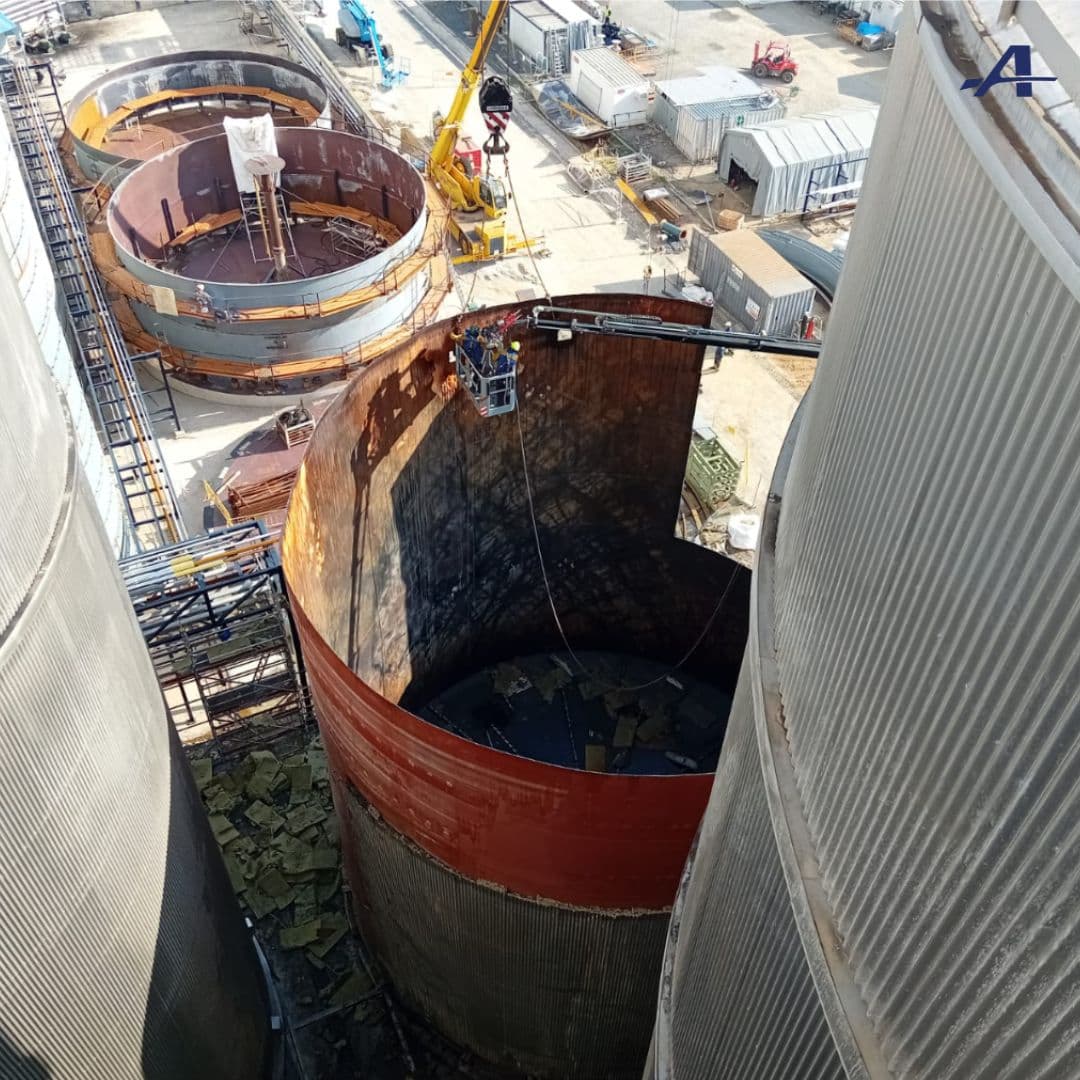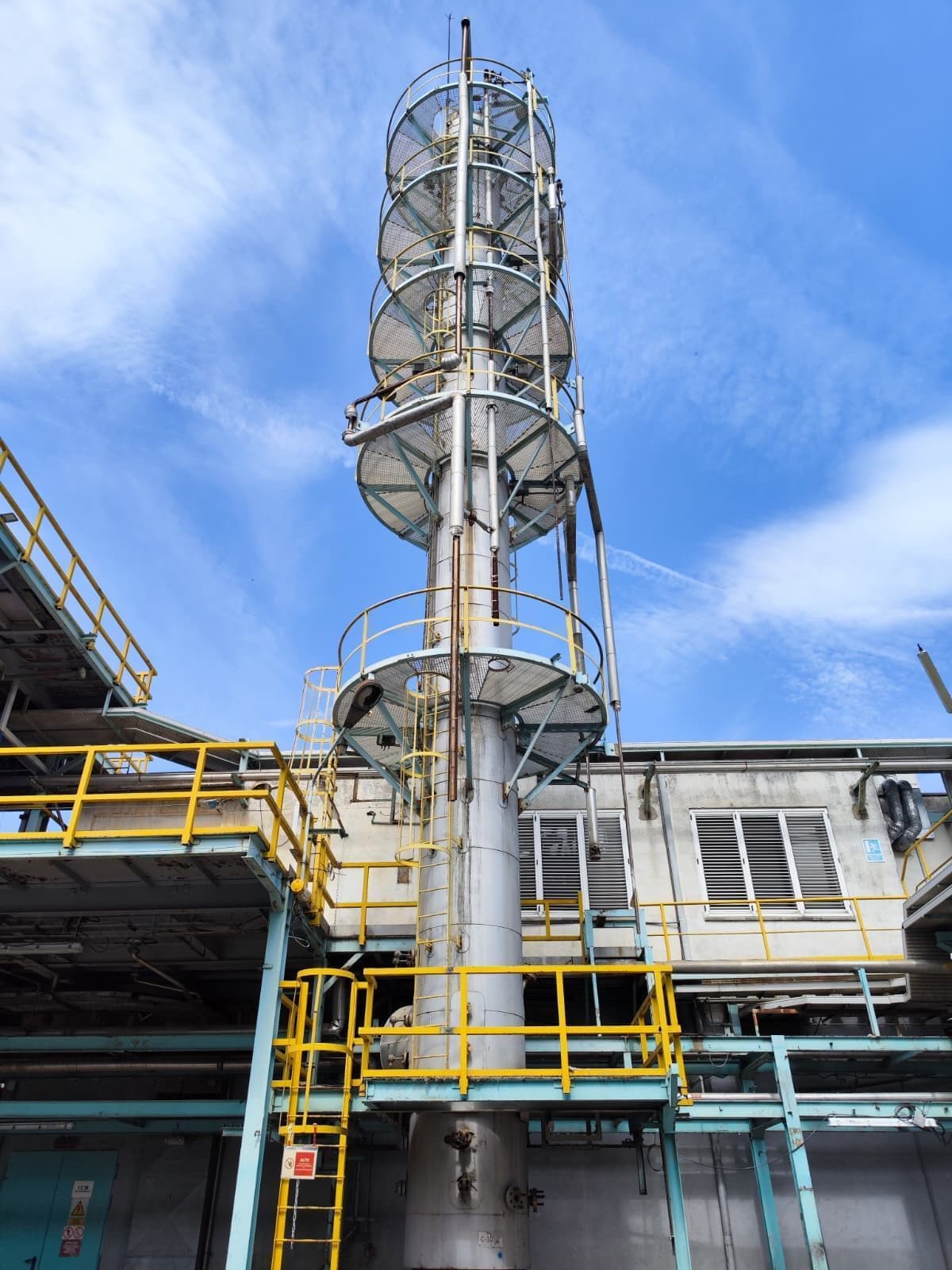
In five days we dismantled a 30-metre distillation column at a chemical plant classified as an ATEX zone, with the rest of the plant running, without incident and recycling 100% of the recovered materials. This is how this distillation column demolition was planned, step by step.

What made this project difficult?
Several things at once: the height, the materials of the column itself and the fact that it stood in an ATEX zone, with a risk of explosive atmospheres. There was also hazardous chemical waste to manage, and the work had to go on alongside activity in the rest of the plant. Because of the client’s production needs, the complete dismantling had to be done in five days.
| Item | Details |
|---|---|
| Sector | Chemicals |
| Height | 30 m |
| Setting | ATEX zone, with the plant in operation |
| Timescale | 5 days |
| Recycling | 100% of recovered materials |
| Incidents | None |
What is an ATEX zone and what does it change in a demolition?
An ATEX zone is an area where an explosive atmosphere can form because flammable gases, vapours or dusts are mixed with air. In Spain, the protection of workers in these environments is governed by Royal Decree 681/2003.
In a demolition, this means that no ignition source can be left uncontrolled: tools and equipment certified for explosive atmospheres, trained personnel, atmosphere monitoring and specific permits for any hot work. A distillation column, which separates liquid mixtures by heating them, can retain product residues inside, so decontamination comes first.
How was the distillation column dismantled?
1. Prior decontamination
Before any cutting, the column was fully decontaminated. This work was done by specialist companies, coordinated within the site plan.
2. ATEX protocol
Everyone involved had ATEX training, and the tools and equipment used were certified for explosive atmospheres.
3. Top-down dismantling in sections
The column was taken down in sections, starting from the top, with the atmosphere monitored continuously. Each section was lowered by crane to the ground, where it could be worked on safely.

4. Managing the waste and the metal
The hazardous chemical waste was removed, with its transfer documentation, to an authorised final treatment facility. The column’s metal was sorted and taken to our plant for processing, so 100% of the recovered materials were recycled.
How was the work carried out with the plant running?
By coordinating each phase with the client so that the work did not interfere with production in the rest of the plant. Isolating the work zone, timing the crane lifts and daily coordination are the same principles we explain in industrial demolition without stopping production.
What is recovered from a distillation column?
Mostly steel. Chemical plants often contain stainless steel and special alloys, which are separated from carbon steel so they can be recovered separately; you can see how we handle recovered stainless steel. For what we do in this sector, from process plants to reactors, see our page on demolition in the chemical and pharmaceutical sector, and this project is one of our industrial demolition case studies.
See the full project fact sheet
Frequently asked questions
Who decontaminates a distillation column before it is dismantled?
Specialist decontamination companies, coordinated with the rest of the work. The column must be empty and free of product residue before the first cut, and the atmosphere continues to be monitored throughout the dismantling.
Can oxy-fuel cutting be used in an ATEX zone?
Only with a hot work permit and when measurements confirm that there is no explosive atmosphere. If that cannot be guaranteed, flameless cutting methods are used or the work is scheduled for when the area is in a safe condition.
How long does it take to dismantle a column of this size?
It depends on the condition of the column, its surroundings and the time windows production allows. On this project, the dismantling was completed within the five days the client’s production allowed.