A safe demolition is determined before the first machine arrives on site: by a preliminary survey of the structure and materials, the disconnection of all services, a demolition sequence that keeps whatever is still standing stable, and measures to make sure dust, noise and falling objects stay inside the site boundary. Here we explain how each of those steps is planned. The legal health and safety obligations (health and safety plan, coordination, training and protective equipment) are covered in our article on health and safety in demolition.
What should a preliminary demolition survey include?
Nothing can be demolished without knowing how it was built. The preliminary survey is led by a qualified professional and brings together the information that everything else depends on:
| What is checked | Why |
|---|---|
| Drawings of the building and its alterations | To know which elements are structural and where there are cantilevers, reinforcements or critical connections |
| Condition of the structure | To detect areas at risk of collapse that must be made safe or propped before work starts |
| Hazardous materials | Asbestos, oils, product residues, transformers: they are removed before the demolition |
| Explosive atmospheres | At chemical or fuel plants, the area may be classified as an ATEX zone and require prior decontamination |
| Surroundings | Party walls, homes, buildings in production, railway lines, overhead line equipment, power lines |
| Access and space | Where cranes, containers and stockpiles will go without blocking walkways and access routes |
All of this goes into the demolition design, which sets the method, the sequence and the resources. If asbestos is found, it is removed by a company registered on the RERA (Spain’s Register of Companies with Asbestos Risk), with a work plan approved by the labour authority, and always before the demolition begins.
Why do services have to be disconnected and isolated before work starts?
An industrial facility is full of stored energy: electricity, gas, pressurised water, compressed air, steam, product lines. Cutting into a pipe with an oxy-fuel torch without knowing what is inside it, or moving a structure with a cable that is still live, are two of the most direct ways to cause a serious accident.
That is why, before any work begins:
- The utility companies are asked to cut off the electricity, gas and water, and this is confirmed in writing.
- Tanks and pipes are emptied and purged, and checks are made to ensure no flammable or toxic residues remain.
- Any equipment that could start up is locked out and tagged out.
- If the plant is still running, the lines that remain in service are physically separated from those being dismantled.
At live plants, any work involving a flame or oxy-fuel cutting also needs a hot work permit from the facility itself.
In what order is a structure demolished so that it stays stable?
The general principle is to dismantle in the reverse order of construction and from the top down, so that each element removed is not supporting another that is still standing. In practice, that means:
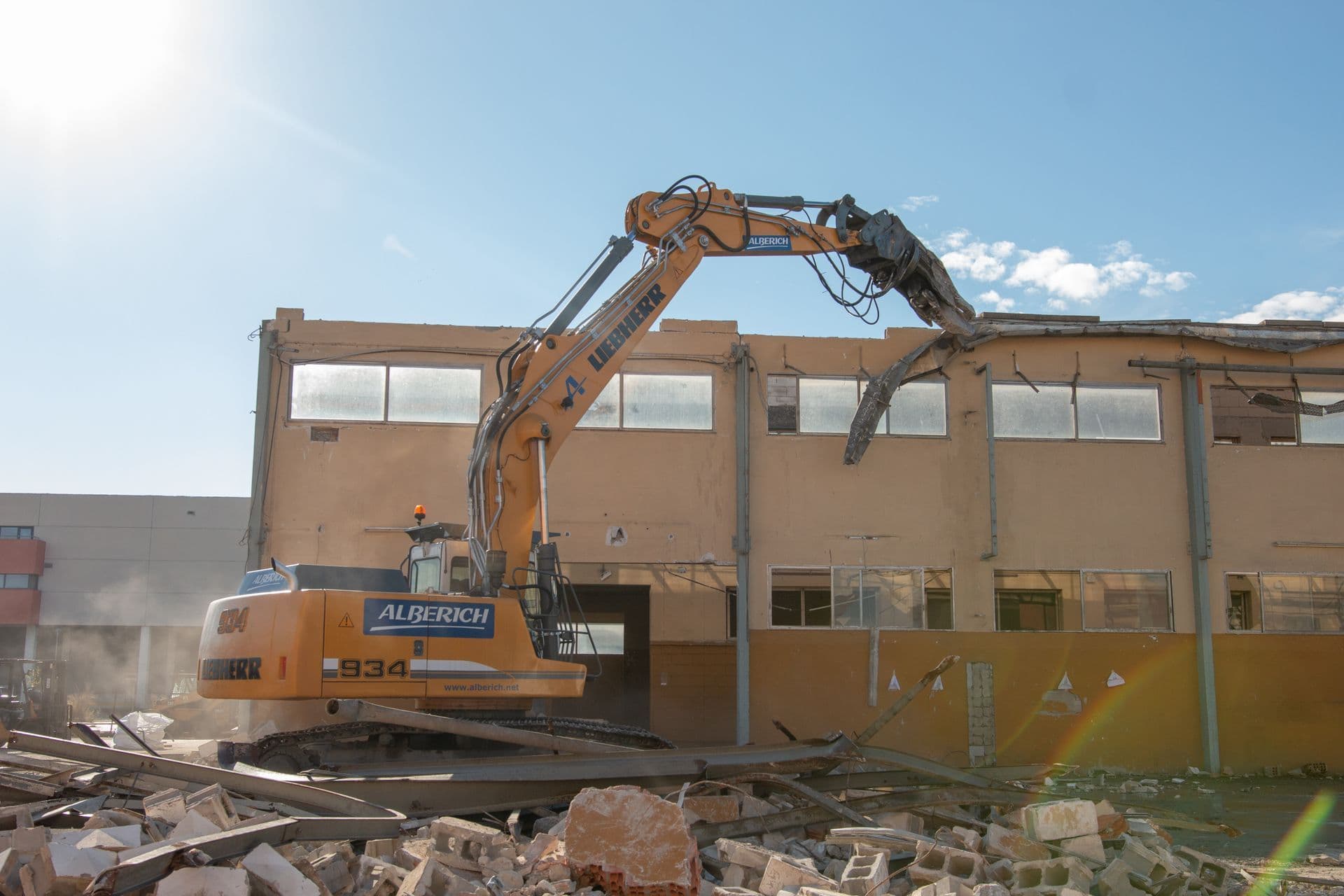
- Non-structural elements first: installations, equipment, lightweight roofing and cladding.
- Tall elements in sections, cut and lowered by crane rather than allowed to fall.
- Never leaving unstable elements at the end of the working day: anything that cannot be finished is propped or braced.
- Not overloading floor slabs or platforms with rubble or cut sections.
- Collective fall protection: where there is a risk of falling more than 2 metres, guardrails or equivalent systems, and fall arrest equipment where these are not possible.
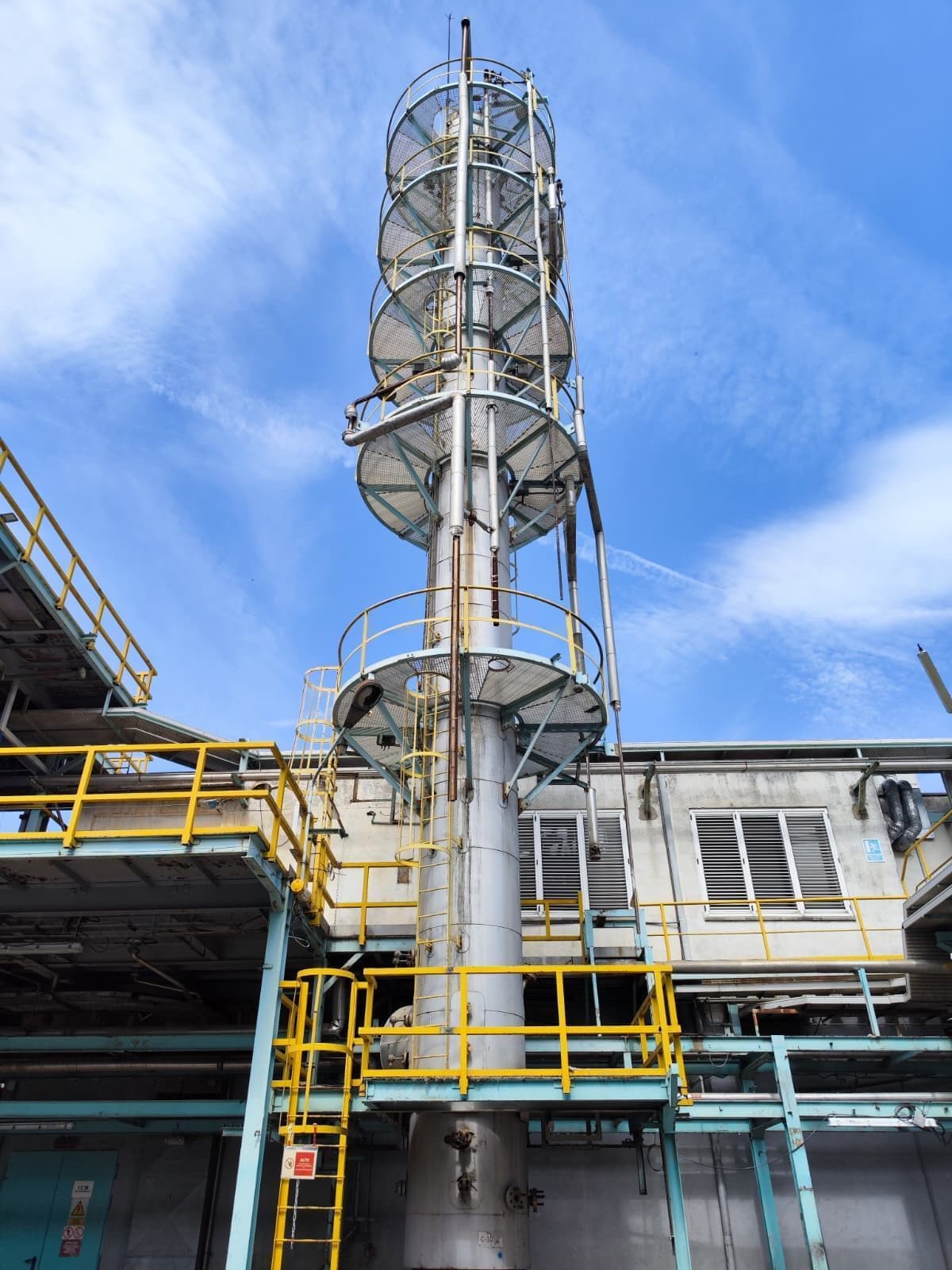
We explain how this sequence works in an industrial building, layer by layer, in our guide to industrial building demolition. On tall structures the method changes little: on the 30-metre distillation column we dismantled at a chemical plant, the work was done in sections from the top down, with constant atmosphere monitoring.
How are dust, noise and vibration controlled?
A safe demolition also has to be safe for people outside the site. These are the usual measures:
| Risk | Measures |
|---|---|
| Dust | Continuous water spraying or misting during demolition, damping down rubble before loading, short drop heights, sheeted containers and lorries |
| Noise | Working hours adjusted to municipal by-laws and to neighbouring activity, cutting with shears rather than breakers where possible, well-maintained machinery |
| Vibration | Cutting and dismantling piece by piece next to sensitive equipment or structures; monitoring when there are delicate installations nearby |
| Pollution | Prior removal of liquids, containment of possible spills and protection of gullies and drains |
In particularly sensitive environments, such as the food industry, the site is also divided into zones to isolate the areas still in production, with industrial cleaning at the end of each phase, as we did when dismantling a food production plant that kept producing in the adjoining areas.
How are third parties and the surroundings protected?
The work area is fenced off and a safety perimeter is set according to the height of the elements and the demolition method. Only authorised personnel are allowed inside. Rubble is removed through chutes or with machinery, never thrown down from height, and openings and edges are protected.
When the job runs alongside another activity, safety depends on coordination with whoever manages it. Two examples from our projects:
- For the demolition of a footbridge over a live railway, the work was carried out on night shifts coordinated with the infrastructure manager, with the overhead line equipment protected throughout.
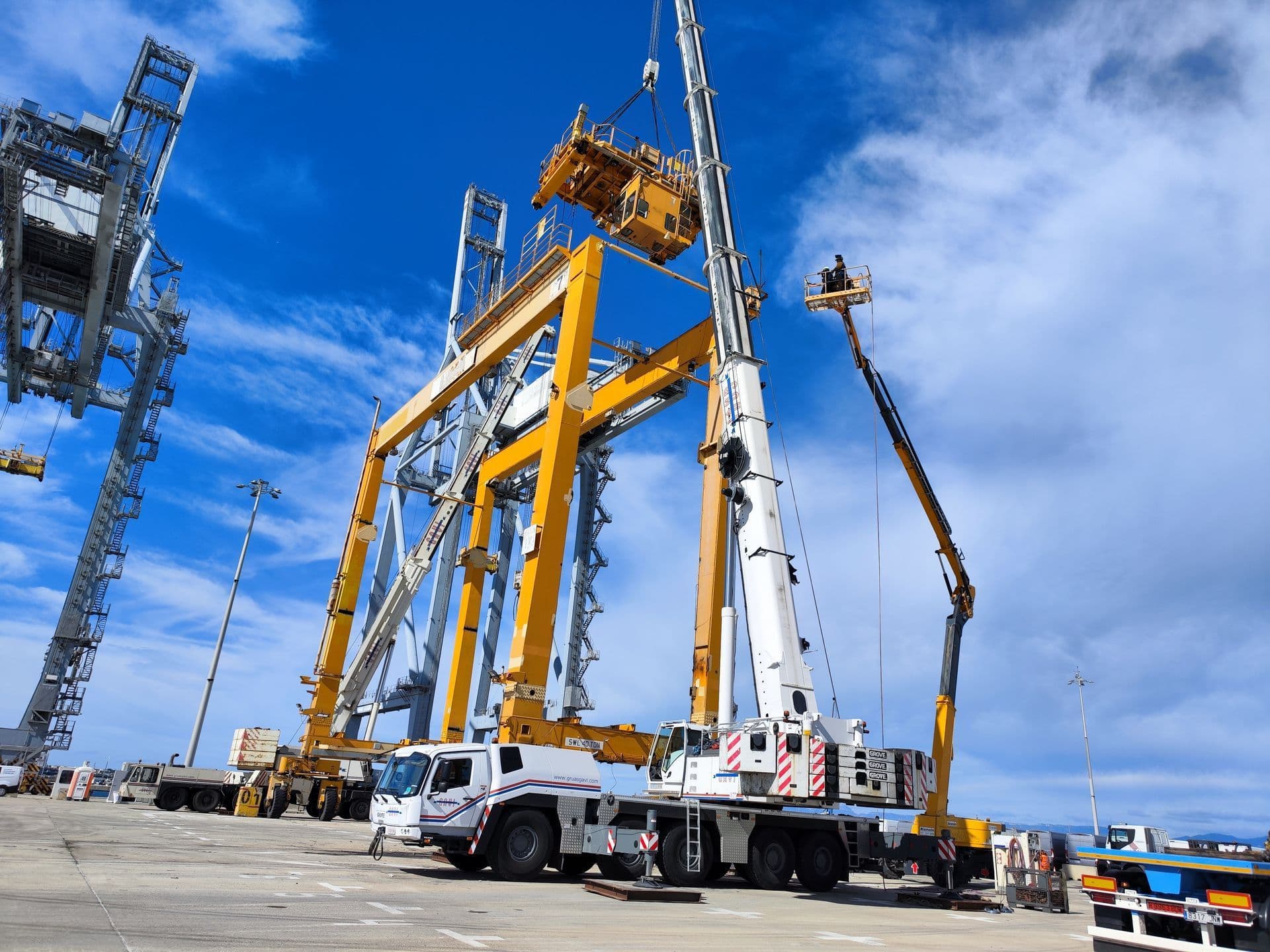
- For the dismantling of two port cranes, safety zones were marked out with the port authority and the work was done in time windows that fitted around port activity.
For plants that cannot stop, our article on working without stopping production explains how the site is divided into zones.
How we plan a safe demolition at Alberich
At Alberich we have an occupational health and safety management system certified to ISO 45001, and at our plants we work with a Zero Accidents culture. We carry out the technical survey with our own team, using metal analysers and thickness gauges, and we execute the work with our own machinery and staff, which lets us control the working method from start to finish.
We have ATEX-trained staff and equipment certified for explosive atmospheres. On the 30-metre distillation column, in an ATEX zone, the dismantling was completed in 5 days without incident. You can see how we work in each sector on our industrial demolition page.
Frequently asked questions
What happens if a hazardous material turns up halfway through the job?
Work stops in that area, the area is marked off and the material is identified. If it is suspected to be asbestos, it is not touched until a company registered on the RERA has assessed it and removed it under its approved work plan.
Does the street have to be closed to demolish an industrial building?
Not always. If the crane, the lorries or the hoarding occupy the public highway, a municipal permit to occupy it is needed, and sometimes temporary road closures for the most delicate manoeuvres.
Can demolition go ahead in rain or wind?
It depends on the task. Strong winds mean crane work and work at height have to be suspended, and rain complicates work on roofs and on slippery surfaces. The site programme should allow for these stoppages so that they compromise neither safety nor the deadline.
Who decides the demolition method?
The professional who draws up the demolition design, based on the preliminary survey. The contractor carrying out the work may propose a different method if it is safer or more effective, but the change must be approved by the technical supervisor of the works before it is applied.
If you are preparing a demolition, ask for the preliminary survey to cover all of these points before you approve the quote: it is the part of the project that does most to protect people and the programme.