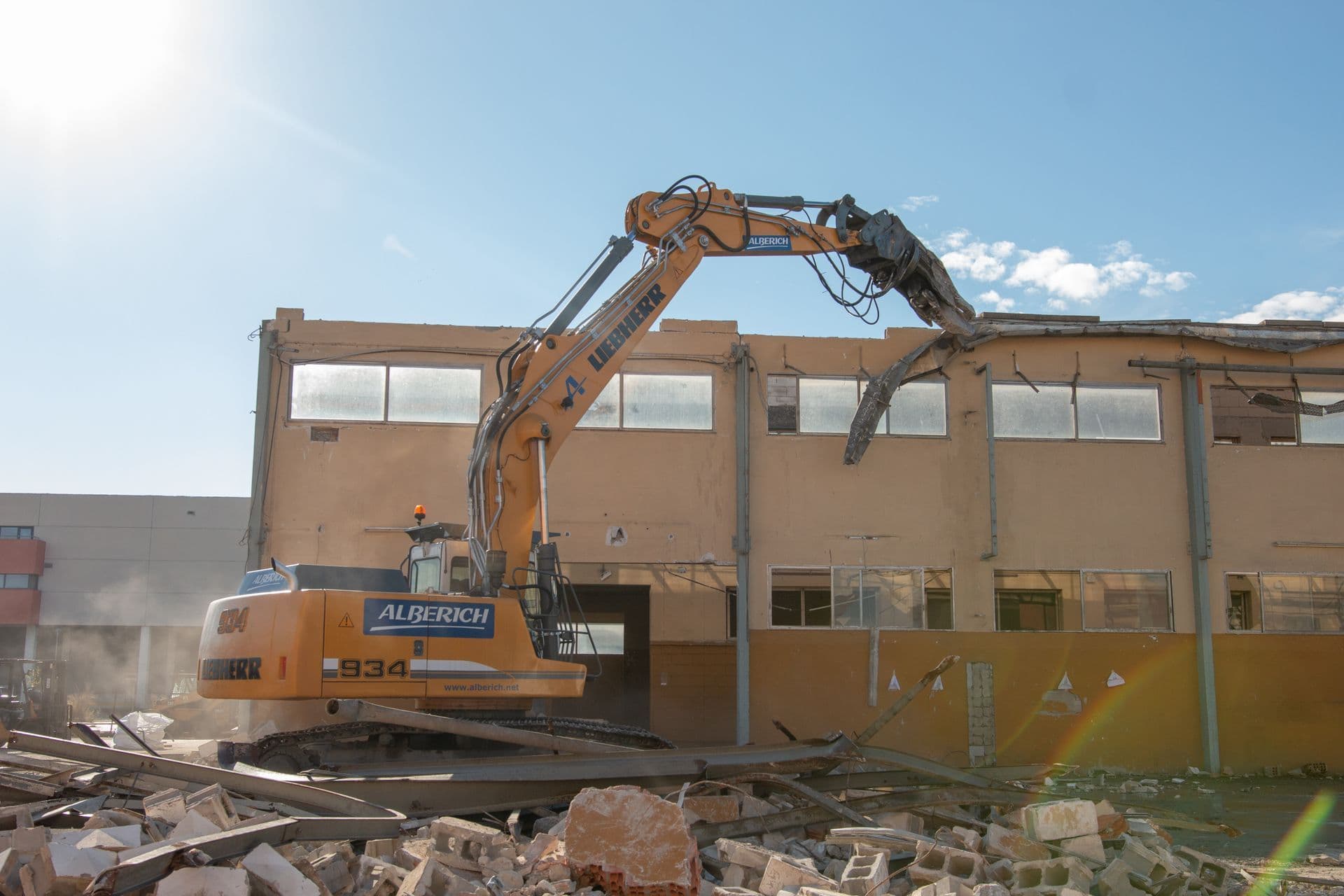
Demolition waste is the material produced when a structure is demolished or dismantled: concrete, brick, metals, wood, glass, plastics, plaster and, on some jobs, hazardous waste such as asbestos. In the European List of Waste, whose codes are known as EWC codes, it makes up chapter 17, together with construction waste, and where it ends up depends above all on one thing: whether it is separated on site. Separated, most of it is recycled; mixed, a good deal of it ends up in landfill.
What types of waste does a demolition produce?
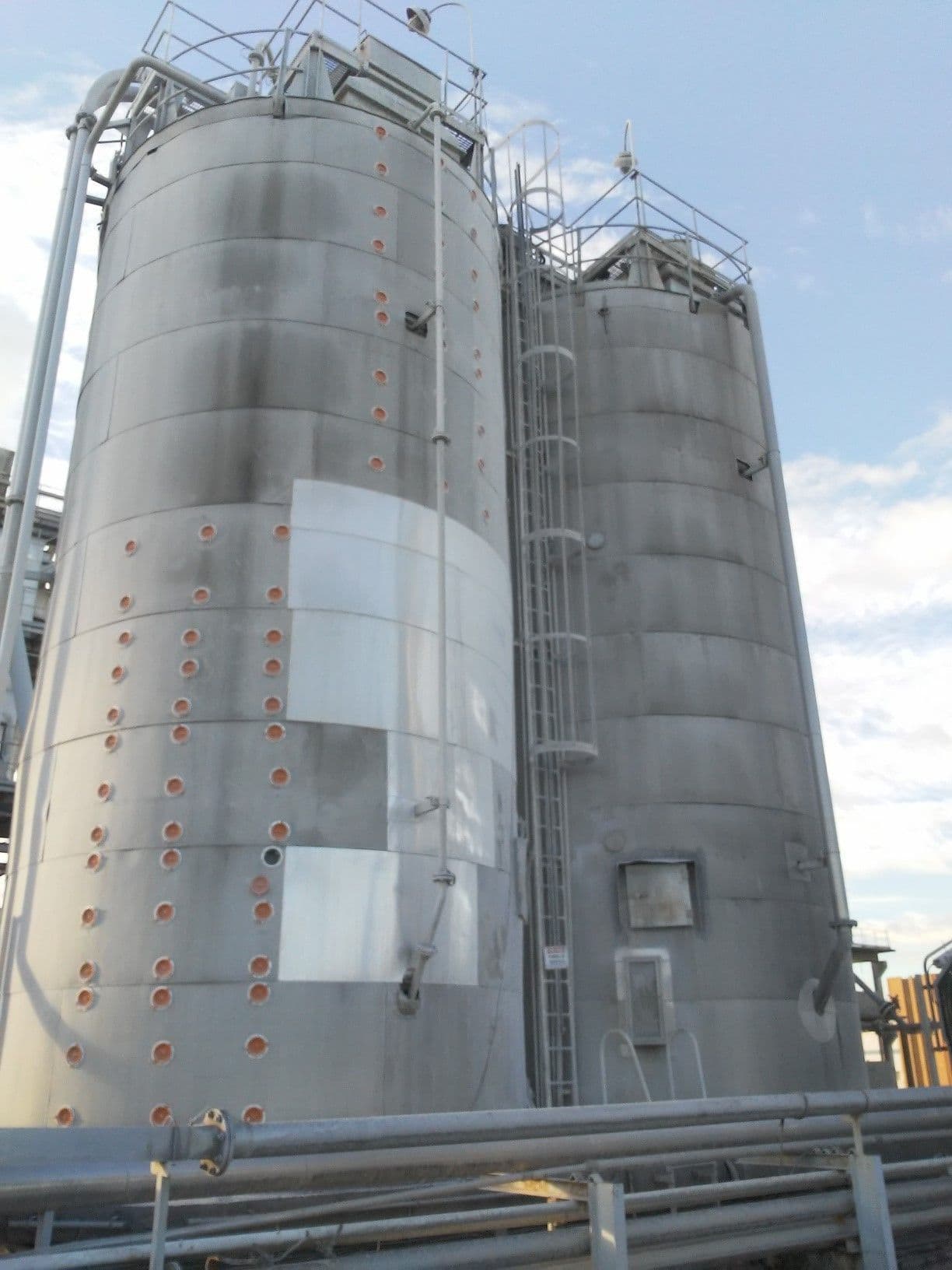
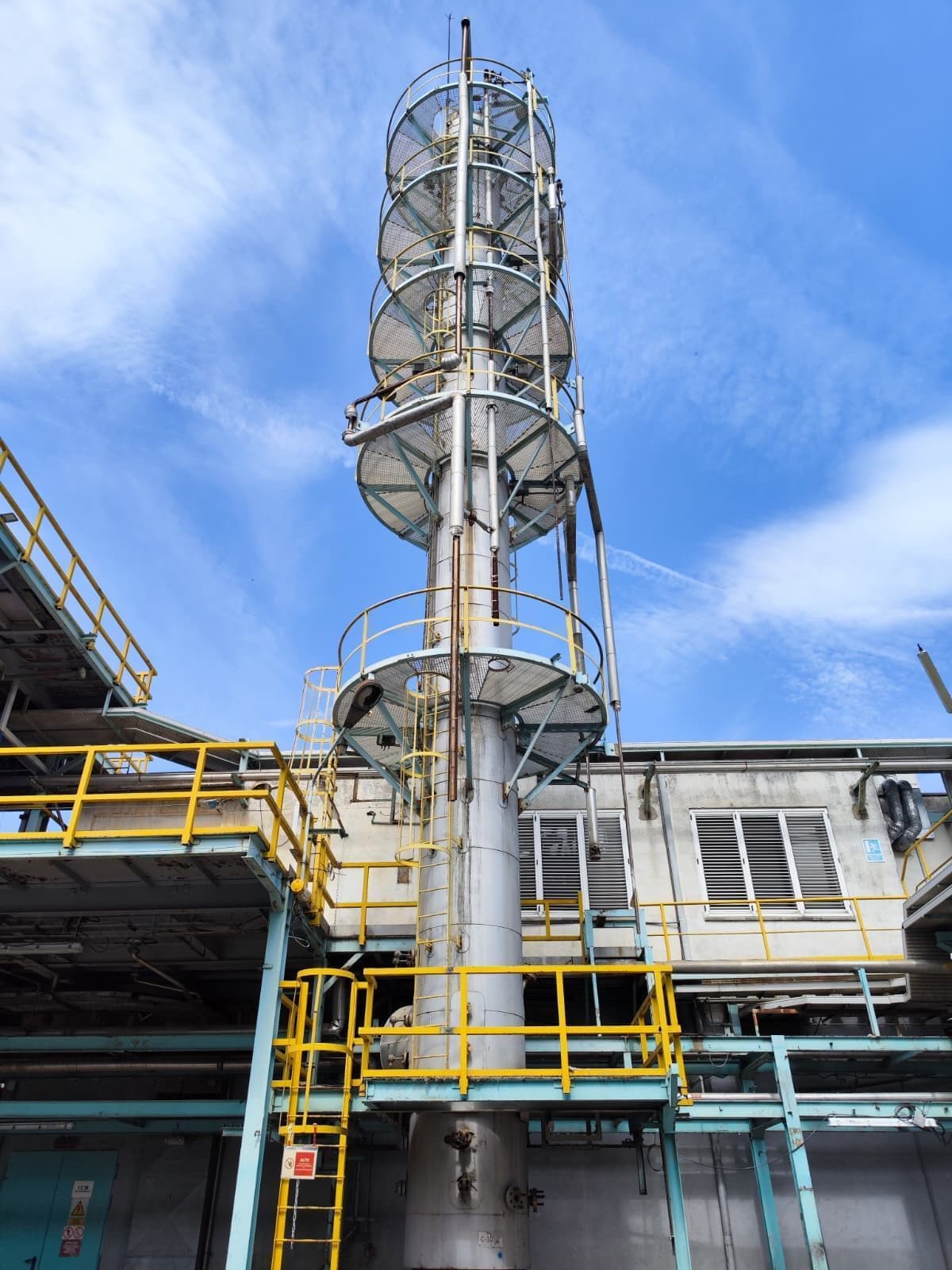
By weight, concrete, ceramics and metals dominate in a demolition. In an industrial demolition, metal also plays a much bigger part than in a residential building: structures, tanks, pipework and machinery. This is the usual classification, with the most common EWC code for each fraction:
| Fraction | Where it comes from | Usual EWC code | Usual destination |
|---|---|---|---|
| Concrete | Structure, ground slabs, precast elements | 17 01 01 | Construction waste plant: recycled aggregate |
| Bricks, roof tiles and ceramics | Walls, partitions, roofs | 17 01 02 / 17 01 03 | Recycled aggregate |
| Iron and steel | Steel sections, sheet, reinforcement, tanks | 17 04 05 | Recycling as ferrous scrap for steelworks |
| Copper, bronze and brass | Pipes, fittings, windings | 17 04 01 | Non-ferrous recycling |
| Aluminium | Window frames, roofing, extrusions | 17 04 02 | Non-ferrous recycling |
| Cables | Electrical installation | 17 04 11 | Granulation to separate the metal from the plastic |
| Wood | Joinery, pallets, formwork | 17 02 01 | Recycling or other recovery |
| Glass and plastic | Windows, rooflights, conduits | 17 02 02 / 17 02 03 | Recycling, depending on quality |
| Plaster | Suspended ceilings, plasterboard partitions | 17 08 02 | Dedicated recycling |
| Mixed waste | Whatever has not been separated | 17 09 04 | Sorting plant or landfill |
Metals are the fraction that keeps the most value. We explain what happens to them on their way back into industry in circular economy and industrial demolition.
Which demolition waste is hazardous?
In the European List of Waste, hazardous waste is marked with an asterisk after the code. In demolition, these are the most common:
- Asbestos: insulation materials (17 06 01*) and construction materials that contain it, such as asbestos cement (17 06 05*). It is removed before the demolition by a company registered on the RERA (Spain’s Register of Companies with Asbestos Risk), with a work plan approved by the labour authority.
- Waste containing PCBs (17 09 02*): old sealants, coatings or capacitors. Transformers containing PCBs have their own management route, which we explain under our electrical transformers service.
- Bituminous mixtures containing coal tar (17 03 01*) and contaminated soil (17 05 03*).
- Residues from the industrial activity: oils, contaminated packaging, chemicals or sludge, which are not construction waste but turn up when the plant is cleared.
All of them are removed before the demolition and kept separate, and each goes to a final treatment facility authorised for that waste. We explain how they are treated in our article on hazardous waste treatment.
Why is separating waste at source so important?
Because once waste is mixed, separating it is expensive and often impossible. Concrete with traces of plaster, wood or plastic is no longer any good for making quality recycled aggregate; steel mixed with rubble loses value and needs additional processing. Mixed waste (17 09 04) is the most likely to end up in landfill.
What is more, since 1 July 2022 separation is no longer optional: Spain’s Law 7/2022 on waste and contaminated soils requires non-hazardous construction and demolition waste to be sorted into at least six fractions, preferably on site. We explain exactly what the law requires and since when selective demolition has been mandatory in our article on the new selective demolition law.
How is separation organised on site?
Separation starts long before the containers are filled. The rule that works best is simple: don’t knock down what you can dismantle.
- Selective dismantling before demolition. Installations, window frames, lightweight roofing and equipment come out whole and clean, before the heavy machinery touches the structure.
- One stockpile area per fraction, clearly marked and with access for loading.
- Containers sized for each material: the volume of cable in an industrial building is nothing like the volume of its concrete.
- Metal cut to size with oxy-fuel cutting or shears, so that it can be loaded and transported efficiently.
- Paperwork for every load leaving the site: the site of origin, quantity, EWC code and receiving waste management company, as required by Royal Decree 105/2008, Spain’s regulation on construction and demolition waste.
That documentation is the basis of traceability, which we cover in depth in our article on traceability in industrial waste management.
What can be reused before it becomes waste?
The best thing that can happen to a demolition material is not to become waste at all. The hierarchy in Law 7/2022 puts preparing for reuse ahead of recycling, and Article 30 requires reusable elements, such as roof tiles, sanitary ware or structural elements, to be sorted, preferably on site.
In an industrial demolition, the clearest candidates are machinery that still has a market, overhead cranes, motors and pumps in good condition, and sound steel sections. For them to be reused, they have to be identified in the preliminary survey and dismantled carefully, not knocked out with an excavator. You’ll find how each construction material is recycled, with more detail on metals, in recycling construction materials.
How we manage the waste from our demolitions at Alberich
At Alberich we segregate at source using containers from 1 to 30 m³ and transport them with our own fleet. The metal goes to our plants: the 600–1,000 t shears prepare heavy scrap, the 4,000 hp shredder at Castellbisbal processes the more complex material, and eddy current and X-ray sorting recover the non-ferrous metals. All material undergoes radiation monitoring on arrival.
The non-metallic fractions go to plants authorised for each type of waste. For hazardous waste, we coordinate the operation and the authorised final treatment facility is named in the documentation. As an authorised waste management company (E-345.97), we issue the waste management certificates that close out the job.
The result is a recycling rate above 90% on most of our projects, with cases of 100% such as the 30-metre industrial storage tank. You can see how this fits into the full service on our industrial demolition page.
Frequently asked questions
Who pays for managing the waste from a demolition?
The project’s waste management study must include an estimate of the cost, shown as a separate item in the project budget. The contractor carrying out the work bears the management costs and gives the owner the certificates that prove the waste has been managed.
What is inert waste?
It is waste that does not undergo any significant physical, chemical or biological transformation: it does not dissolve or burn, and it does not pollute the water or soil it comes into contact with. Clean concrete and brick are the most common examples.
Can demolition waste go to landfill?
Only as a last resort, for whatever cannot be reused, recycled or otherwise recovered, and after prior treatment. Since 2023, landfilling has also been subject to a national tax, which makes not separating more expensive.
How long must waste documentation be kept?
Five years. Royal Decree 105/2008 requires both the owner, as the waste producer, and the contractor carrying out the work to keep the documentation for each calendar year for the following five years, including the waste management certificates.
If you are planning a demolition, ask for the preliminary survey to include an estimate of the waste by fraction: it is the best way to know how much will be recycled and how much it will cost to manage the rest.