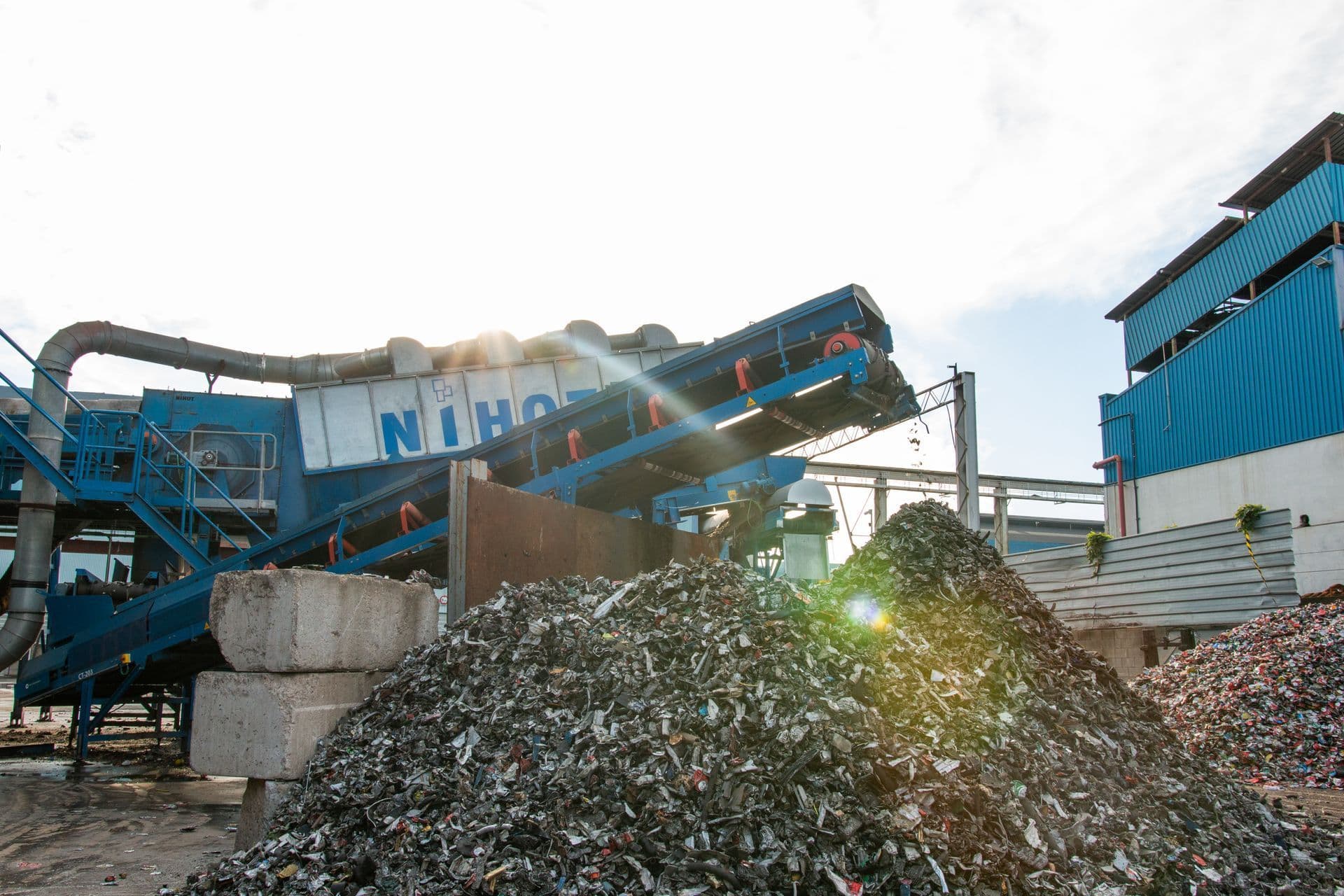
In a recycling plant, separating ferrous and non-ferrous metals is done in sequence. First, magnets and magnetic drums pull out the iron and steel. Next, an eddy current separator ejects the non-ferrous metals from everything else. Finally, X-ray sensors, colour cameras and hand-pickers on the conveyor separate each non-ferrous metal, and spectrometer analysis confirms the alloy where needed.
Here we explain each step using Alberich’s plant in Castellbisbal as the example. If you need the basic definitions first, start with our guide to ferrous and non-ferrous metals; if you have questions about a specific metal, see is copper ferrous or non-ferrous?
Why do ferrous and non-ferrous metals need to be separated?
Because each metal is melted in a different facility, with very specific purity requirements. Ferrous scrap goes to steel mills and iron foundries; aluminium, to secondary aluminium remelters; copper, to refineries and wire-drawing mills. A metal in the wrong furnace isn’t just lost: it can spoil the whole melt. The classic example is copper in steel, which is not removed during melting and makes the steel brittle when it is hot-worked.
Good separation is also what gives scrap its value. A mix is paid for according to what can be recovered from it; each clean metal, according to what it is worth.
What happens to scrap before it is separated?
It all starts at reception. The lorry is weighed on a trade-approved weighbridge, the load goes through radiation monitoring and a technician inspects it for contaminants or hazardous materials. That determines which line it goes to:
- Clean, sorted material (aluminium extrusions, copper, steel offcuts): it is stored by grade and needs very little processing.
- Heavy ferrous scrap (beams, structures, machinery): it goes to the shear.
- Complex, mixed scrap (vehicles, household appliances, equipment containing several metals): it goes to the shredder, which breaks it down into fist-sized pieces so that it can be separated.
The full journey of the ferrous fraction, from reception to the steel mill, is covered in how ferrous metal recycling works.
How is the iron separated from everything else?
With magnetism, the oldest tool and the most effective. In scrap yards it is common to do a rough first sort with grab or magnet cranes. After the shredder, rotating magnetic drums attract the pieces of iron and steel and lift them out of the stream; whatever doesn’t stick carries on.
The ferrous fraction then runs along a conveyor where operatives remove by hand any bits of copper, cable or rubber still caught up in it. This is hand-picking, and it is what keeps the residual elements in the scrap low. The result is 210-211 shredded scrap, the grade that electric arc furnace steel mills ask for.
How does eddy current separation work?
What comes out of the shredder and isn’t magnetic is a mix of aluminium, copper, brass, zinc, lead and stainless steel, together with non-metallic materials: plastics, rubber, foam and textiles. To get the metals out of that mix, an eddy current separator is used.
The principle is simple. At the end of a conveyor, a rotor fitted with magnets of alternating polarity spins at high speed. This changing magnetic field induces electric currents in the pieces of metal, and those currents in turn generate a field that opposes the rotor’s. The result is a repelling force that throws the metal forward, while plastic or rubber simply drops off.
It works best on pieces that are light and highly conductive: aluminium is thrown off easily, whereas stainless steel, a poor conductor, barely reacts. The mix of non-ferrous metals obtained is Zorba, made up mostly of aluminium but also containing copper, brass, zinc and lead.
How are aluminium, copper and stainless steel told apart?
Zorba is still a mix. To separate it metal by metal, several technologies are combined, each based on a different property:
| Technology | What it detects | What it is used for |
|---|---|---|
| Magnetic separation | Magnetism | Removes iron and steel in the first stage |
| Eddy current separation | Electrical conductivity | Separates non-ferrous metals from plastics, rubber and inert material |
| Induction sorting | The presence of metal | Recovers metals that have slipped through, such as stainless steel or pieces of cable |
| X-ray sorting | Atomic density | Separates light metals (aluminium) from heavy ones (copper, brass, zinc, stainless steel) |
| Colour sorting | Colour and brightness | Separates the red metals (copper, brass, bronze) from the grey ones |
| Hand-picking | What an operative can see | Removes contaminants and corrects what the machines can’t resolve |
That combination produces fractions with their own names on the international market: Twitch, shredded aluminium separated from Zorba (in our case, by dry density separation), and Zurik, rich in red metals and stainless steel. They are described under shredded non-ferrous.
The case of stainless steel
Stainless steel is the exception throughout the chain: it is steel, but the austenitic grades (304, 316) are not magnetic, so the drums don’t pick them up and they travel with the non-ferrous metals. They don’t respond well to eddy currents either, because stainless steel is a poor conductor of electricity. They are recovered with induction sensors and concentrated in the Zurik.
Stainless steel that arrives whole (tanks, vessels, process pipework) is not shredded: it is sorted by spectrometer analysis into 304, 316 or the 400 series, because each alloy has its own price and destination. We explain this under stainless steel.
When an analysis is needed
Machines separate by physical properties; to know the exact composition, you need an analysis. Spectrometry identifies the elements in a sample and makes it possible to sort alloys that look identical to the naked eye: two stainless steels, two brasses or two grades of copper.
At Alberich’s cable plant, spectrographic analysis of the copper is part of the production process itself. Each grade of copper granules is stored separately according to the result, so that it can be sold to wire-drawing mills or refineries with a verified composition.
What is Alberich’s separation line in Castellbisbal like?
Everything described above happens in a single facility. The 4,000 hp shredder breaks down the complex scrap; the magnetic drums take out the ferrous fraction, which goes through hand-picking; and the post-shredder separation line receives everything non-ferrous, separates it by size and sorts it using eddy current, induction, X-ray and colour sorting. Radiation monitoring checks every load on its way into and out of the plant.
The output is 210-211 scrap for steel mills, Zorba, Twitch, Zurik and aluminium for secondary remelting. It is the same line that takes the complex scrap from end-of-life vehicles and waste electrical and electronic equipment (WEEE), and the one that allows us to accept mixes and recover each metal they contain separately.
Frequently asked questions
What is fluff, or shredder residue?
It is the non-metallic fraction left after shredding vehicles or household appliances: foam, plastics, textiles, rubber and dust. It is separated by suction and screening, and it has its own treatment route. The better the metals are recovered, the cleaner that residue is and the easier it is to recover value from it.
Can two metals joined together, as in a copper and aluminium radiator, be separated?
Yes, but not on the general line. At Alberich, mixed radiators from vehicles, air conditioning and industry have a line of their own, which separates the copper from the aluminium so they can be sold separately. Electrical cable also has its own plant: it is granulated and the copper is separated from the plastic by density.
What can my company do to make its scrap worth more?
Segregate at source whatever you already know how to separate: iron on its own and, among the non-ferrous metals, copper, aluminium, brass and stainless steel in separate containers. Material that arrives clean doesn’t have to go through the shredder and is paid for by metal, not as a mix.
If you have mixed material and want to know what can be recovered from it, tell us what it is and roughly how much there is; we’ll get back to you within 48 working hours. To organise separation at your company, see our guide to metal waste management, and our aluminium and radiator line for mixed radiators.


