Ferrous metals have iron as their main element: steel, cast iron and wrought iron. Non-ferrous metals contain no iron, or only trace amounts: aluminium, copper, brass, bronze, lead, zinc and tin. Almost every other difference between ferrous and non-ferrous metals follows from that difference in composition: magnetism, the way they corrode, weight, value per kilo and where each one goes when it is recycled.
This guide brings together the definitions, a table of examples and what changes in practice when you have to separate or sell scrap. If you just want to know whether a particular metal is ferrous or not, you’ll find it summarised, metal by metal, in is copper ferrous or non-ferrous?
What are ferrous metals?
They are iron and its alloys. In industry that mainly means steel: iron with a small proportion of carbon (up to around 2%) and, depending on the type, other elements such as manganese, chromium or nickel. When the carbon content goes above that threshold, the material is cast iron, which is harder and more brittle and is used for castings.
These are the groups you come across most often in industry and in scrap:
- Carbon steels: beams, sheet, tube, sections, car bodies and almost all machinery.
- Alloy and tool steels: shafts, gears, moulds and parts subject to wear.
- Stainless steels: these contain at least 10.5% chromium, which protects them from corrosion. They are ferrous, even though many of them don’t react to a magnet.
- Grey and ductile cast iron: machine beds, engine blocks, old radiators, manhole covers.
- Wrought iron: almost carbon-free; today it turns up mainly in railings and old fixtures.
What they have in common is that they are strong, relatively cheap to produce and, for the most part, magnetic. Apart from stainless steel, they corrode easily, and the reddish layer they form, rust, is unique to iron.
What are non-ferrous metals?
Non-ferrous metals (in the Spanish trade they are often called no férricos) are all the metals that are not iron-based. They are chosen precisely for what steel can’t offer: lightness, electrical conductivity, corrosion resistance or ease of shaping. They are usually grouped like this:
- Light metals: aluminium, magnesium and titanium.
- Base metals: copper, lead, zinc, tin and nickel.
- Copper alloys: brass (copper and zinc) and bronze (copper and tin).
- Other alloys: zamak (zinc-based) and aluminium casting alloys.
- Precious metals: gold, silver, platinum and palladium.
When people talk about non-ferrous materials in recycling, all of this is included, from copper cable to drinks cans and aluminium wheels. They are much less abundant than iron and take more energy to extract from ore, which is why their scrap is worth considerably more per kilo.
What is the difference between ferrous and non-ferrous metals?
The underlying difference is composition. Everything else follows from it, but these are the differences that help you identify them and that explain why each family has different uses and markets.
| Characteristic | Ferrous metals | Non-ferrous metals |
|---|---|---|
| Composition | Iron-based | No iron, or only trace amounts |
| Magnetism | Most are magnetic; austenitic stainless steel hardly at all | Non-magnetic, except nickel and cobalt |
| Corrosion | Reddish rust, except stainless steel | No rust: protective patinas or oxide layers |
| Density | About 7.8 g/cm³ | Highly variable: 2.7 g/cm³ for aluminium, 8.9 for copper, 11.3 for lead |
| Electrical conductivity | Low | Very high in copper and aluminium |
| Value as scrap | Lower per kilo; traded in large volumes | Higher per kilo; very sensitive to purity |
| Price benchmark | International steel scrap market | LME prices for the main metals |
| Destination when recycled | Steel mills and iron foundries | Secondary remelters, refineries and wire-drawing mills |
What are some examples of ferrous and non-ferrous metals?
This table lists the metals you come across most often in industry and the form in which they usually reach a recycling plant:
| Metal or alloy | Family | Basic composition | Where it turns up as scrap |
|---|---|---|---|
| Carbon steel | Ferrous | Iron and carbon | Structures, sheet, machinery, vehicles |
| Cast iron | Ferrous | Iron with more than 2% carbon | Machine beds, engine blocks, castings |
| Stainless steel | Ferrous | Iron and chromium; nickel in the 300 series | Food-grade tanks, process pipework, chemical equipment |
| Aluminium | Non-ferrous | Aluminium and its alloys | Window extrusions, cans, wheels, sumps |
| Copper | Non-ferrous | Almost pure copper | Electrical cable, pipe, windings |
| Brass | Non-ferrous | Copper and zinc | Taps, valves, turned parts |
| Bronze | Non-ferrous | Copper and tin | Bushes, bearings, gears, propellers |
| Lead | Non-ferrous | Lead | Batteries, roofing lead, counterweights |
| Zinc and zamak | Non-ferrous | Zinc and its alloys | Gutters, roofing, die-cast parts |
One case that causes confusion: galvanised steel has a coating of zinc, but it is still steel. It is recycled as ferrous scrap.
How can you tell them apart by eye?
In any scrap yard, four checks are done almost without thinking:
- The magnet. If it sticks firmly, it is almost certainly steel or cast iron. If it doesn’t stick, it may be a non-ferrous metal or an austenitic stainless steel, which is ferrous but barely reacts.
- The colour. Copper is reddish; brass, golden yellow; bronze, golden brown; aluminium and zinc, light grey; lead, bluish grey and very soft.
- The weight. For the same size, aluminium weighs just over a third as much as steel, and lead considerably more.
- Corrosion. Reddish rust means iron. Copper develops a dark or greenish patina, and aluminium a whitish powdery film.
None of these tests is conclusive on its own. To confirm an alloy, especially with stainless steels and valuable metals, spectrometer analysis is used. The most misleading cases (stainless steel, nickel, plated or mixed parts) are explained in our metal-by-metal answer.
Why does the difference matter for recycling?
Because ferrous and non-ferrous metals end up in different industries, and a poorly separated mix loses value in both directions.
Ferrous scrap goes to the steel mill, where it is melted in an electric arc furnace to make new steel. There, any trace of copper is a problem: it isn’t removed during melting, it stays in the steel and degrades its properties. That’s why steel mills pay more for scrap with low residuals and penalise scrap that arrives with cable, motors or brass parts.
Conversely, a non-ferrous metal with iron attached (screws, brackets, inserts) is paid for as a lower grade. Clean aluminium extrusions and extrusions with steel fittings are not worth the same, even if they weigh the same.
The practical upshot is simple: if your company separates ferrous from non-ferrous at source, and within the non-ferrous metals keeps copper, aluminium and brass apart, you get paid for each metal according to what it actually is. How to organise this is covered in our guide to metal waste management.
How does Alberich separate ferrous and non-ferrous metals?
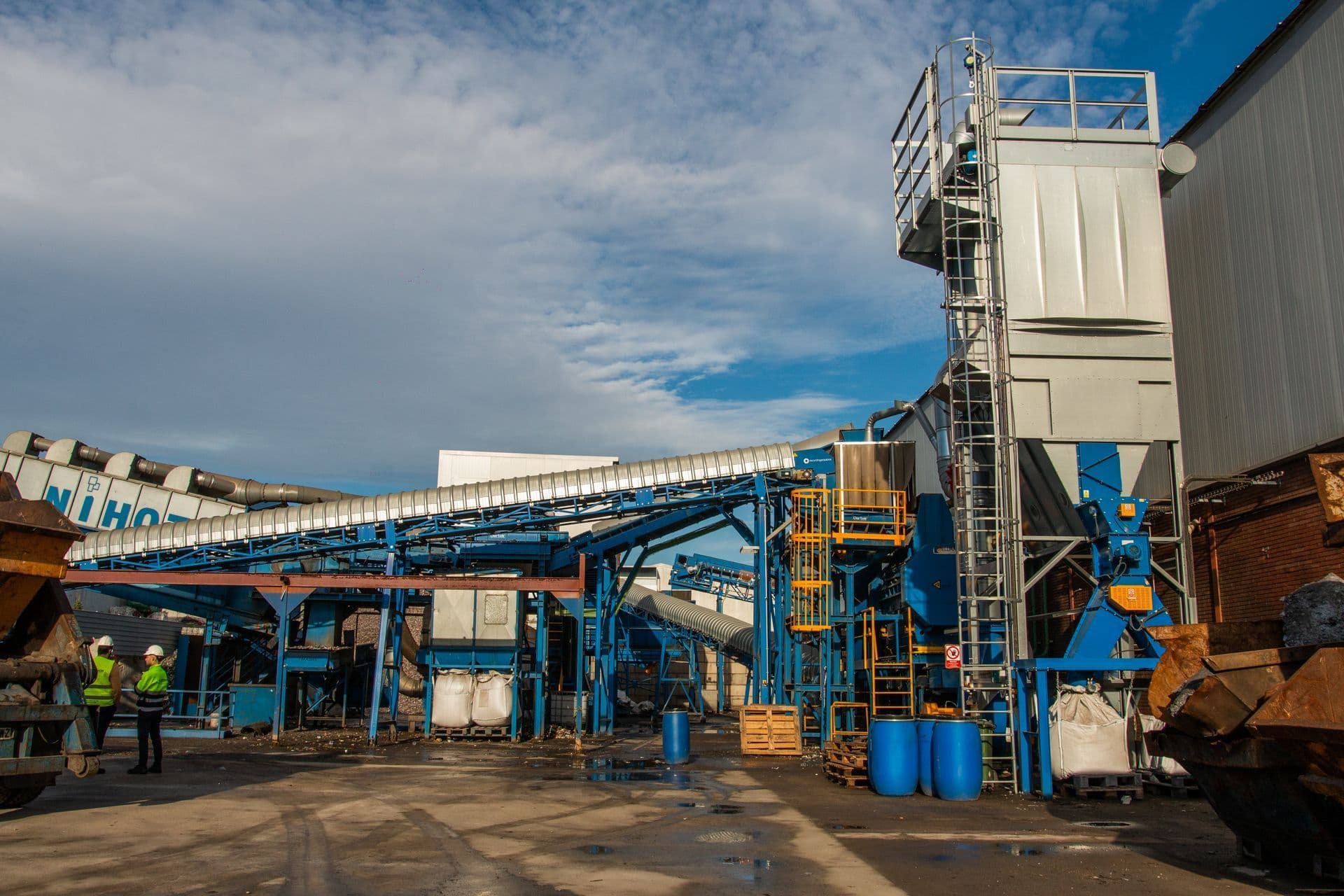
In Castellbisbal, separation is done in sequence. Complex scrap (end-of-life vehicles, household appliances, machinery with parts made of several metals) goes into the 4,000 hp shredder, and magnetic drums remove the ferrous fraction. After hand-picking on the conveyor, it comes out as 210-211 shredded scrap for the steel mills.
Whatever isn’t magnetic moves on to the post-shredder separation line, where eddy current, X-ray and colour sorting separate the aluminium, the red metals and the stainless steel. We explain how each technology works in how ferrous and non-ferrous metals are separated in a plant.
Material that arrives already clean and sorted doesn’t need that whole process: it is weighed, checked and stored by grade. You can see which materials we buy on our what we buy page, and the families we sell to industry under metals.
Frequently asked questions
Is ‘non-ferric’ the same as ‘non-ferrous’?
In practice, yes, but ‘non-ferrous’ is the correct term. In chemistry, ‘ferrous’ and ‘ferric’ describe different states of iron; in Spanish, the scrap and metals trade uses ‘ferroso’ and ‘férrico’ interchangeably, which is why ‘ferric’ and ‘non-ferric’ sometimes turn up in translations. Ferrous metals are those based on iron; non-ferrous metals are all the rest.
Do non-ferrous metals corrode?
Yes, but they don’t rust. Aluminium forms a thin protective oxide film, copper gradually develops a greenish patina and zinc a whitish layer. In general they stand up to the weather better than unprotected steel, which is why they are used for roofing, gutters and outdoor installations.
Is titanium a ferrous metal?
No. Titanium is a light non-ferrous metal, with a density of about 4.5 g/cm³ and very high corrosion resistance. It is used in aerospace, medical implants and chemical equipment. As scrap it is uncommon, and it is always sorted separately from everything else.
Can you sell mixed scrap?
Yes. At Alberich we buy both clean, sorted material and mixes that need to go through post-shredder separation. The difference is in the price: a mix is valued according to what can be recovered from it once it has been separated, and it is always worth less than the same metals delivered separately.
If you have scrap and aren’t sure which family it belongs to or how to separate it, tell us what the material is and roughly how much there is. We’ll get back to you within 48 working hours with a valuation.


