Metal waste management in a business means separating scrap and other metal waste by type, storing it safely, handing it over to an authorised waste management company with the documents the law requires, and making sure it is recycled and, wherever possible, paid for. Done properly, it keeps you within the law, cuts costs and turns waste into income.
This guide follows the process in the order an industrial company goes through it, using the way we organise it at Alberich as an example.
What counts as metal waste?
Any metal material your company gets rid of: production offcuts and surplus, machining swarf, defective parts, disused machinery and tooling, structures from a refurbishment or a dismantling job, metal packaging, cable and motors. Waste electrical and electronic equipment (WEEE) and end-of-life vehicles also contain a lot of metal, but they have their own regulations.
Most metal waste is non-hazardous. It becomes hazardous when it is contaminated: swarf soaked in oil or metalworking fluid, packaging with chemical residues, parts with hazardous coatings, or equipment containing PCBs.
How is metal waste classified?
By two criteria at once: the type of metal, which determines its value, and the EWC code, which determines how it is treated legally.
By type of metal
At a minimum, separate ferrous scrap (iron, steel and cast iron) from non-ferrous metals and, within those, copper, aluminium, brass and bronze, stainless steel and cable. If you’re not sure which group a material belongs to, you’ll find examples in our guide to ferrous and non-ferrous metals.
By EWC code
Each type of waste is identified by a six-digit code from the European List of Waste (the EWC code); hazardous entries carry an asterisk. These are the most common codes for metal waste:
| EWC code | Description | Typical example |
|---|---|---|
| 12 01 01 | Ferrous metal filings and turnings | Steel lathe turnings |
| 12 01 03 | Non-ferrous metal filings and turnings | Aluminium or brass turnings |
| 15 01 04 | Metallic packaging | Empty drums and cans with no hazardous residues |
| 17 04 01 | Copper, bronze, brass | Pipes and fittings from a refurbishment |
| 17 04 02 | Aluminium | Dismantled aluminium windows and doors |
| 17 04 05 | Iron and steel | Structures and steel sections from a dismantling job |
| 17 04 07 | Mixed metals | Unsorted scrap from building work |
| 17 04 11 | Cables other than those mentioned in 17 04 10 | Electrical cable with no hazardous substances |
| 17 04 09* | Metal waste contaminated with hazardous substances | Scrap soaked in oil or chemicals |
The code depends on the activity that produces the waste, so the table is only a guide: the final code is agreed with the waste management company when the waste acceptance form is processed.
How should metal waste be stored, and in what container?
Good storage practice
- In a designated area, signposted, away from pedestrian routes and with access for the lorry.
- One container per fraction, labelled with the type of waste. Mixing everything in a single container does more than anything else to reduce its value.
- Under cover and on an impermeable surface for anything that may leak liquids: swarf with metalworking fluid, oily parts, motors.
- Hazardous waste kept apart, labelled and, if it contains liquids, in a bunded area.
- Without letting it pile up: the regulations limit how long waste can be stored where it is produced, and scrap left outdoors for months rusts and loses value.
Which container do you need?
It depends on the volume, the type of material and how often it is collected. At Alberich we work with containers from 1 to 30 m³, and these are the most common combinations:
| Situation | Typical solution |
|---|---|
| Workshop or factory with a steady flow of offcuts and swarf | Small or medium containers for each fraction, with regular collection |
| Production with a lot of light offcuts | A large container or a mobile baler to bale material at your premises |
| Building work, refurbishment or dismantling | High-capacity containers and, if needed, on-site cutting |
| Valuable non-ferrous metals (copper, brass, cable) | A separate container or bulk bag, so they can be weighed and paid for separately |
These categories are only a guide: the size is set by the volume and the pace of work, not by the type of company. Collections can be weekly, fortnightly, monthly or quarterly. You’ll find the details under logistics and collection.
What documentation does metal waste management require?
Spain’s Law 7/2022 on waste and contaminated soils requires anyone who produces waste to hand it over to an authorised waste management company and to document every shipment. If you produce hazardous waste, or more than 10 tonnes a year of non-hazardous waste, you must also keep a chronological record of the quantity, type, origin, destination and treatment of each waste stream. In Catalonia, all of this goes through the SDR, the online waste documentation system of the Catalan Waste Agency (ARC):
- Producer code: identifies your site as a waste producer.
- Waste acceptance form: the agreement with the waste management company for each type of waste, with its EWC code and destination.
- Tracking sheet: travels with each shipment and records the delivery.
- Weighbridge ticket and delivery note: the actual weight delivered.
- Certificates of treatment or destruction, when the waste requires them or you ask for them.
Hazardous waste also needs labelling and, for transport, ADR documentation (for the carriage of dangerous goods by road). With all of that, you have what you’ll be asked for in an inspection or an ISO 14001 audit.
Why traceability matters so much
Because your responsibility for waste doesn’t end when it leaves the site. Law 7/2022 keeps it in place until the full treatment of the waste has been documented, and if the waste ends up at an unauthorised destination, the company that produced it must be able to prove that it handed it over correctly. Traceability (every kilo having an origin, a documented shipment and a known destination) is that proof. We go into it in more depth in the importance of traceability in industrial waste management.
How is value recovered from metal waste?
Scrap is one of the few types of waste that are paid for as well as recycled. What you’re paid depends on the type of metal, how clean and well sorted it is, the quantity, the logistics and the market at the time: the London Metal Exchange (LME) as the benchmark for copper and aluminium, and the international steel market for ferrous scrap. We don’t publish fixed rates because they change with the market; we’ll give you a specific valuation for your material.
After that, each metal goes its own way: ferrous scrap goes to steelworks after passing through the shear or the shredder; aluminium, to secondary remelters; copper, to refineries and wire-drawing mills. It’s the circular economy in the literal sense: the metal in your waste becomes raw material again. The process for the ferrous fraction is covered in how ferrous materials are recycled, and its environmental impact in recycling ferrous and non-ferrous metals.
How does Alberich manage a company’s metal waste?
With our own machinery and technology, from collection to final destination:
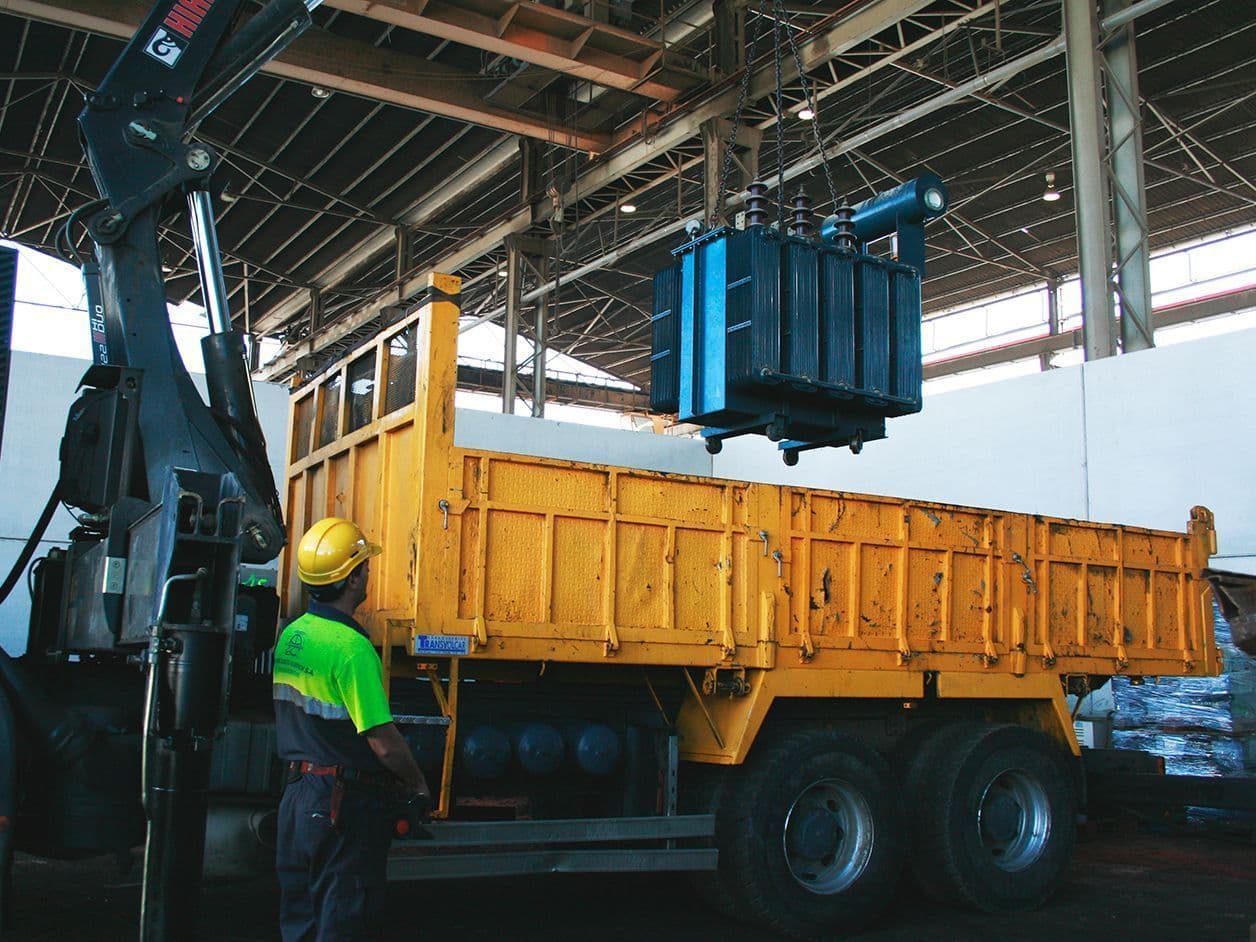
- Collection: containers from 1 to 30 m³, our own fleet and a mobile baler to bale material at your premises.
- Documentation: waste acceptance form, tracking sheet, weighbridge ticket and certificates, filed for audits.
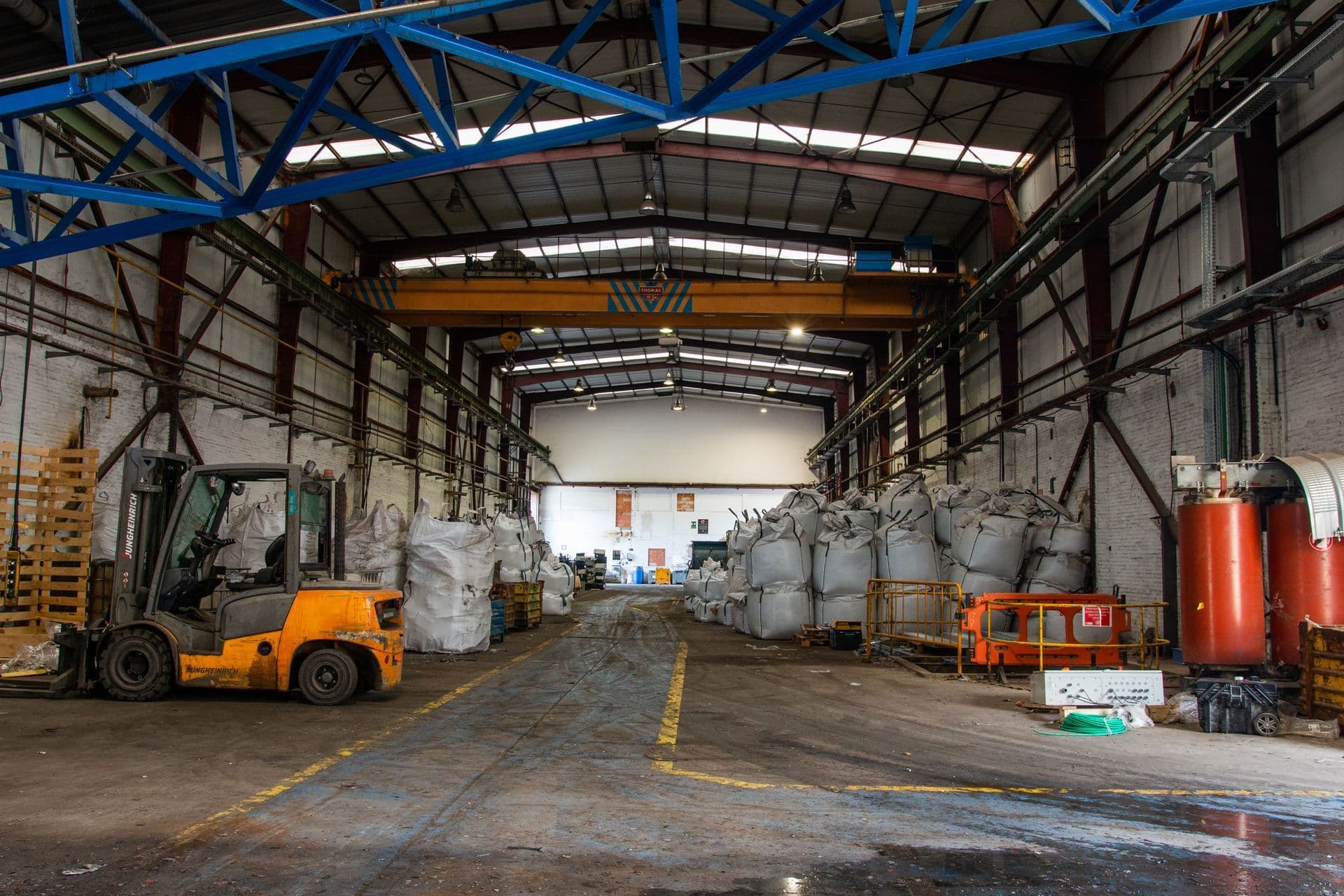
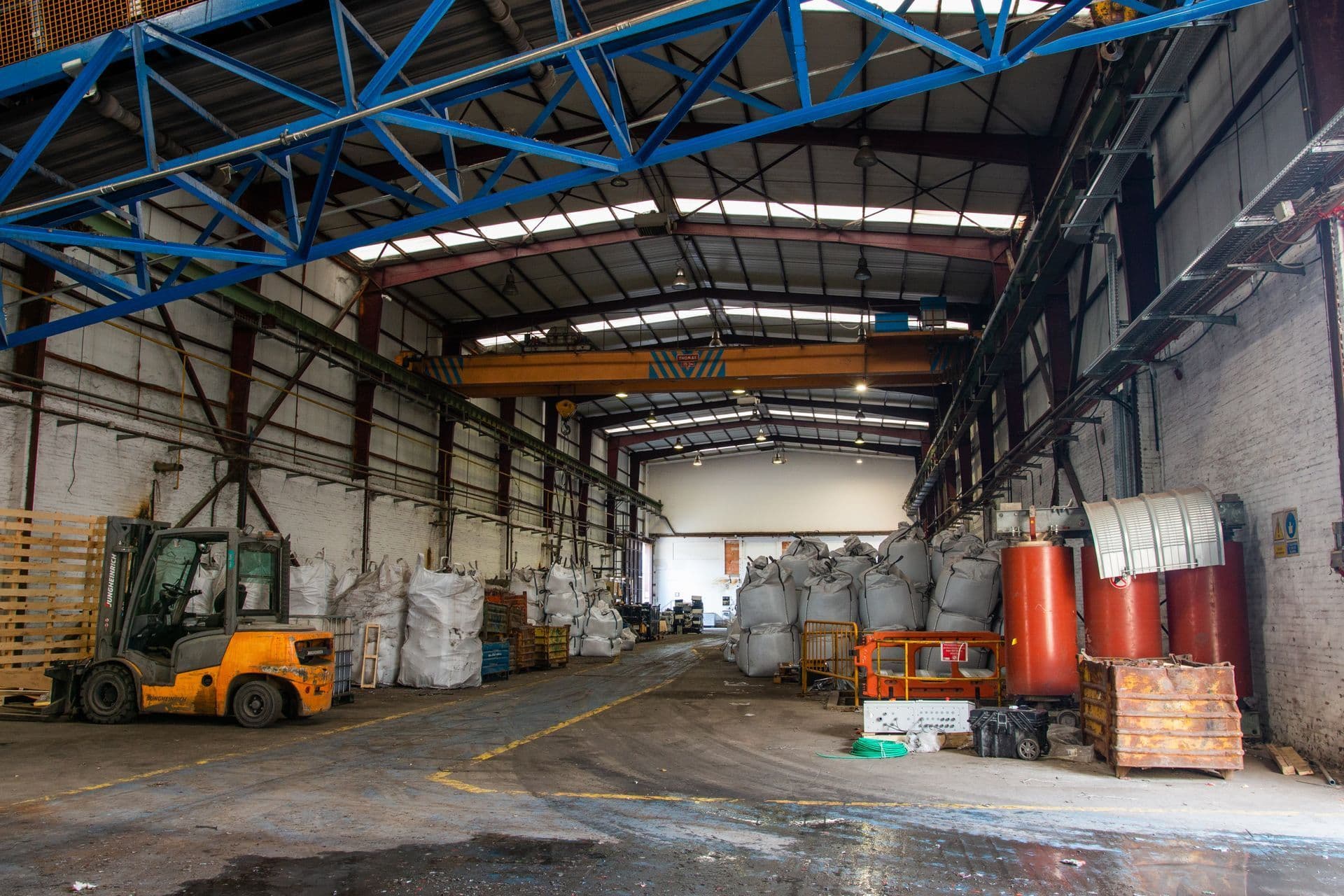
- Treatment: three company-owned sites (Castellbisbal, La Llagosta and Constantí), with the 4,000 hp shredder at Castellbisbal, 600–1,000 t shears, non-ferrous separation and radiation monitoring of incoming and outgoing material.
- Hazardous and other waste: we act as an authorised waste broker. We coordinate the operation and, for hazardous waste, the authorised final treatment facility is named in the documentation. We explain the advantages of this approach in waste broker or final treatment facility.
- Large volumes: in industrial demolition and dismantling projects we handle the scrap from the demolition itself.
We are an authorised waste management company (authorisation no. E-345.97, granted by the Catalan Waste Agency), we hold ISO 9001, 14001 and 45001 certification, and we are members of the BIR (Bureau of International Recycling), the FER (Spanish Recycling Federation) and the Gremi de Recuperació de Catalunya (the Catalan recycling trade association). You’ll find the full service under waste management.
Frequently asked questions
Can I sell my scrap to any buyer?
Only to one that is authorised to manage waste. If the scrap is waste from your business activity and you hand it over to someone without authorisation, the responsibility remains yours. Always ask for the buyer’s waste management authorisation number and the documents for each shipment.
Who pays for metal waste management?
It depends on the waste. Clean scrap metal has a market value, and the company that produces it is normally paid for it. Contaminated metal waste, or the non-metallic waste that comes out with it, has a treatment cost. We work it out case by case when we make the valuation.
Do you manage metal waste outside Catalonia?
Our base is Catalonia, where we have our three sites, our fleet and a documentation process built on the Catalan Waste Agency’s system. Outside Catalonia the documentation framework is different, so we look at each case before committing.
If you’d like to review how your company manages its metal waste today, tell us what you produce and how often. We’ll reply within 48 working hours with a proposal.