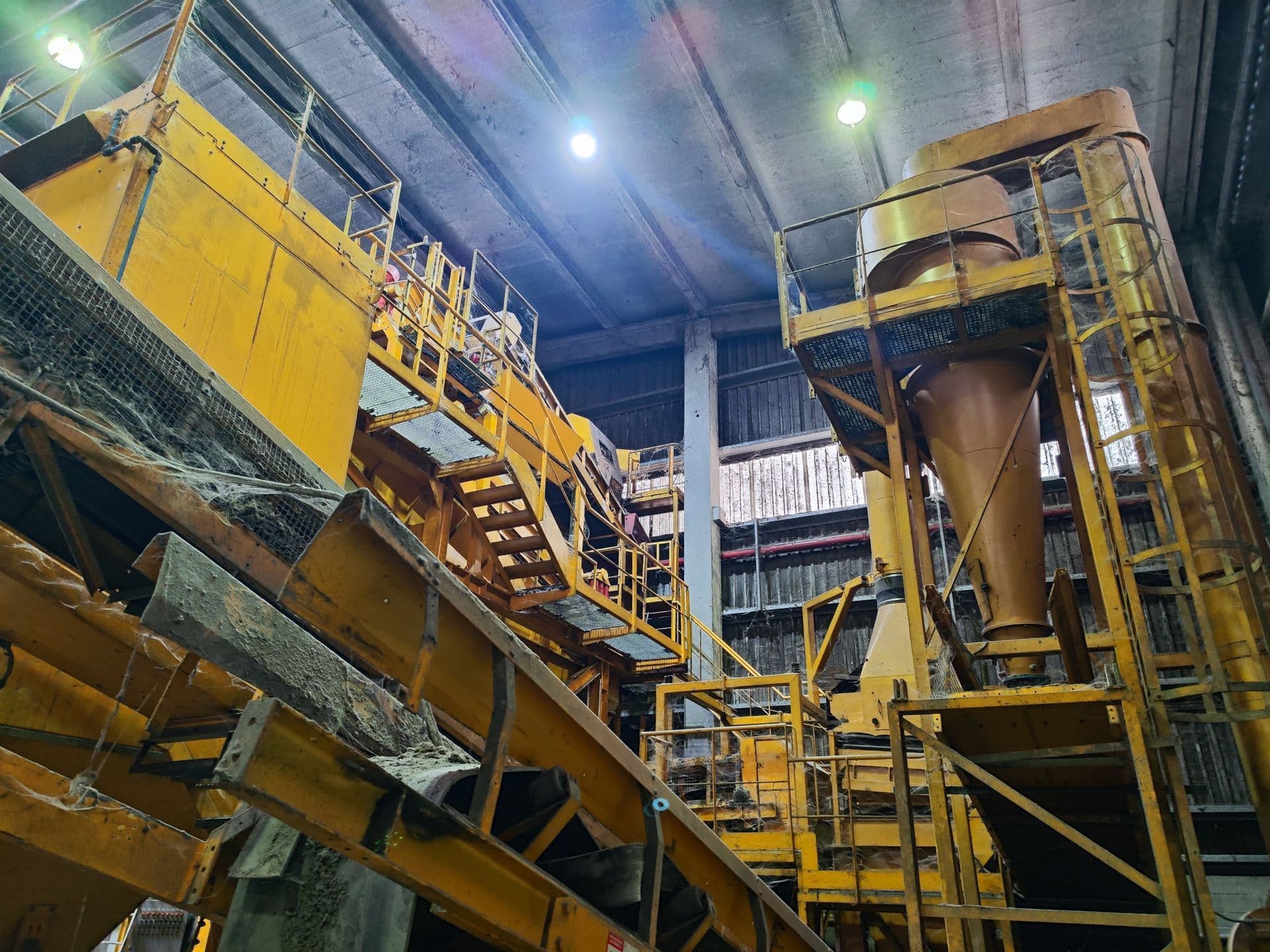
In a metal recovery plant, recovering, reusing and recycling are not synonyms: they are three stages of the same journey. Metal recovery means getting the metal out of whatever it is mixed with. Preparing for reuse means getting it into the exact format needed by whoever is going to use it again. Recycling, in the strict sense, means melting it down to make new metal, and that happens at the steel mill or the foundry. This is what each stage looks like at Alberich.
If you are looking for how to apply these ideas in your own company, we explain that in the three Rs in industry.
What does metal recovery mean?
Recovery means extracting the metallic fraction from waste in which it is mixed with other materials: a car, a fridge, a cable, a radiator or the structure of a demolished industrial building. It is the stage that needs the most machinery.
Reception and checks
Everything that comes in is weighed on a trade-approved weighbridge, inspected and put through radiation monitoring. That is when it is decided which line each lot goes to.
Shredding and separation
Mixed scrap goes into the 4,000 hp shredder in Castellbisbal, which breaks it down into small, dense fragments. Magnetic drums separate the iron and steel; the rest moves on to the post-shredder separation line, where eddy current, X-ray and colour sorting separate the aluminium, copper, brass and other non-ferrous metals. At the end, hand-picking on the conveyor removes anything that has slipped through.
Dedicated lines
Some materials have a line of their own. Electrical cable is granulated and separated by density to free the copper from the plastic. Mixed radiators go through a line that separates the copper from the aluminium. With transformers, once the oil has been removed, the copper or aluminium in the windings and the steel in the core and casing are recovered.
The full process for ferrous metals is described in how ferrous metal recycling works.
What does preparing metal for reuse involve?
Spain’s Law 7/2022 on waste and contaminated soils defines preparing for reuse as checking, cleaning or repairing products that have become waste so that they can be used again without any further processing. In a metals plant, reusing whole items is the exception. With end-of-life vehicles, for example, our job is to depollute them and recover the material, not to sell parts.
What we do is prepare the recovered metal so that industry can reuse it as a raw material without any intermediate steps. Each customer asks for a particular format and specification:
| Recovered material | Preparation | Destination |
|---|---|---|
| Heavy and structural scrap | Cut to steel-mill size in 600–1,000 t shears | Steel mills and foundries |
| Stamping offcuts | Bundles of 300 × 300 to 400 × 400 mm | Steel mills |
| Shredded scrap | 210-211 grade, dense and low in residuals | Electric arc furnaces |
| Copper from cable | Granules with spectrographic analysis | Wire-drawing mills and refineries |
| Aluminium from shredding | Secondary aluminium (FXR2) to a consistent specification | Secondary aluminium remelters |
| Drinks cans | UBC bales | Manufacture of new cans |
Before it leaves, the material goes through radiation monitoring again and, depending on the product, a chemical analysis to guarantee the grade. It is the least visible part of the job, and the part that makes a steel mill trust what it receives.
Where does the metal actually get recycled?
Recycling in the strict sense, melting, happens in the customer’s furnace: steel, in the steel mills’ electric arc furnaces; aluminium, at secondary aluminium remelters; copper, at refineries and wire-drawing mills. A recovery company prepares the raw material, but doesn’t melt it. That doesn’t make its role any less important: without good recovery, the furnace receives a mix it can’t use.
The environmental benefit is realised in that melting. Recycling aluminium takes around 5% of the energy needed to produce it from bauxite, and recovered copper avoids the need to mine and refine new ore. We look at copper in detail in how copper is recycled.
How do the three stages fit together in a real case?
Let’s follow an end-of-life car. First it is depolluted at an authorised treatment facility (ATF): the fluids, the battery and any hazardous components are removed. Then the body shell goes into the shredder, and that is where recovery begins: the steel comes out one way and the non-ferrous mix, Zorba, another.
Next comes preparation. The steel is graded as 210-211 shredded scrap, and the Zorba goes on through post-shredder separation until it yields aluminium for secondary remelting. Finally, recycling: both products travel to the steel mill and the foundry, where they are melted down to make new steel and aluminium.
Whatever isn’t metal (plastics, rubber, textiles) forms a residual fraction that goes through a dedicated plant to separate out whatever can still be used. If you want to see which materials enter this circuit, see what we buy.
Frequently asked questions
Are recovery and recycling the same thing?
No. Recovery means separating the metal from mixed waste and leaving it sorted; recycling means melting it down to make new metal. A plant like Alberich’s recovers and prepares the material; the final melting is done by the steel mill or the foundry.
Does Alberich sell second-hand parts?
No. With end-of-life vehicles and all other materials, our job is to depollute, recover and prepare the metal so that it can go back into industry. We don’t sell parts.
Why is scrap checked for radiation?
Because a radioactive source hidden in a batch of scrap could contaminate the plant and the metal it produces. That’s why Alberich monitors the material for radioactivity both on the way in and on the way out.
What is Zorba?
It is the mix of non-ferrous metals that comes out of post-shredder separation: mainly aluminium, with some copper, brass, zinc and lead. It can be sold as it is or separated further to obtain a more concentrated aluminium fraction.
If you have mixed metal and aren’t sure what it might be worth, send us a description or some photos and we’ll tell you how we would process it.


