Copper recycling means recovering the metal from cables, tubes, windings and components at the end of their service life, sorting it by grade and returning it to industry as a raw material. Copper can be recycled again and again without losing its conductivity or any of its properties, and doing so uses between 85% and 90% less energy than mining and refining it from scratch. Its price is not fixed: it starts from the London Metal Exchange (LME) price and is adjusted for the grade, purity and quantity of each lot.
If what you are looking for is how to prepare cable or separate copper before selling it, we explain it in the guide to stripping copper cable for scrap. Here we focus on what happens to copper once it reaches the plant and on how its price is set.
Which copper can be recycled?
Practically all the copper used in industry, construction and electrical installations is recyclable. What changes from one material to another is how much work it takes to separate the copper from whatever surrounds it, and that is what defines its commercial grade.
| Material | Where it comes from | What needs separating |
|---|---|---|
| No. 1 copper | Bare wire, busbar, bars, catenary wire | Almost nothing: it must be clean and bright, with no varnish, tin or solder |
| No. 2 copper | Plumbing and air-conditioning tube, varnished wire, oxidised copper | Solder, brass fittings, paint, dirt |
| Electrical cable | Installations, building sites, leftover drums, low- and medium-voltage cable | Plastic insulation, connectors, sheathing and metal armouring |
| Windings and transformers | Motors, transformers, alternators | Iron core laminations, oil, insulation |
| Mixed radiators | Automotive, air-conditioning, heat exchangers | Aluminium fins, iron brackets |
Copper alloys such as brass and bronze are also recycled, but they are bought and sorted separately because their composition is different. If you need to tell them apart, see our comparison of copper and bronze.
How is copper recycled, step by step?
Copper recycling has two parts. The first is carried out by the copper recycling centre: receiving, sorting, separating and analysing the material. The second takes place at the foundry or refinery, where the metal is melted and turned back into product.
1. Reception and inbound checks
The material is weighed and undergoes radiation monitoring before it enters the plant. A visual inspection then picks out the most common contaminants: iron, plastics, brass connectors, bits of aluminium or tinned cable.
2. Sorting by grade
Each material is separated according to its commercial grade: No. 1 copper, No. 2 copper, tube, and cable by type. This is the stage with the greatest bearing on the final price, because a mixed lot is valued at the lowest grade it contains.
3. Pre-sorting and cable granulation
Cable needs an extra step. First, anything that must not go into the line is removed by hand: connectors, brass terminals, lead, aluminium and tinned cable. The cable is then chopped into small particles, and the heavier copper is separated from the plastic insulation by density. The result is copper granules.
4. Spectrographic analysis
To establish the grade of the granules, a sample is melted into a button, cleaned up on a lathe and analysed in a spectrometer. The analysis measures elements such as aluminium, lead, tin and zinc in parts per million (ppm). The fewer the impurities, the more demanding the end use the copper can go to.
5. Melting and refining
Once its grade is established, the copper is sold to wire-drawing mills, which turn it into new wire and cable; to refineries, which refine it electrolytically into cathode copper when it contains more impurities; or to foundries that make brass and bronze. From that point on, recycled copper is indistinguishable from mined copper.
What determines the price of recycled copper?
There is no single price per kilo of copper. Each lot is valued on the basis of a market reference and the characteristics of the material itself.
The LME price
The international benchmark is the copper price on the London Metal Exchange. It is quoted in dollars per tonne, so the euro–dollar exchange rate also moves the price in euros. The price changes every day with industrial demand, mine output and the economic situation. We explain those factors in why metal prices fluctuate.
Grade and purity
Bright No. 1 copper with no coatings fetches a better price than No. 2 copper with varnish or solder. With cable, what counts is the yield, that is, the percentage of copper in the total weight. And with granules, it is the ppm of impurities shown by the analysis.
Quantity, regularity and logistics
A large, uniform lot reduces handling and transport costs per tonne, and regular supplies make planning easier. Distance and the type of collection (container, crane lorry or delivery to the plant) also form part of the valuation.
Spot price or yield: how cable is paid for
Cable can be sold at spot price, with a direct valuation based on its visible characteristics, or paid on actual yield: the lot is processed and paid for according to the copper recovered. For large lots, the second option is the most transparent.
Why does copper recycling matter so much?
Because demand for copper is growing with electrification. Power grids, renewables, transformers and electric vehicles need far more copper than their conventional equivalents, and recycled copper covers part of that demand with much less energy and without opening new mines. We go into more detail in the article on metal recycling in the energy sector.
For a company, copper is also usually the metal waste with the highest value per kilo. Separating it properly and handing it over to an authorised waste management company turns a waste management cost into income, with the traceability required by Spain’s Law 7/2022 on waste and contaminated soils.
How does Alberich handle copper recycling?
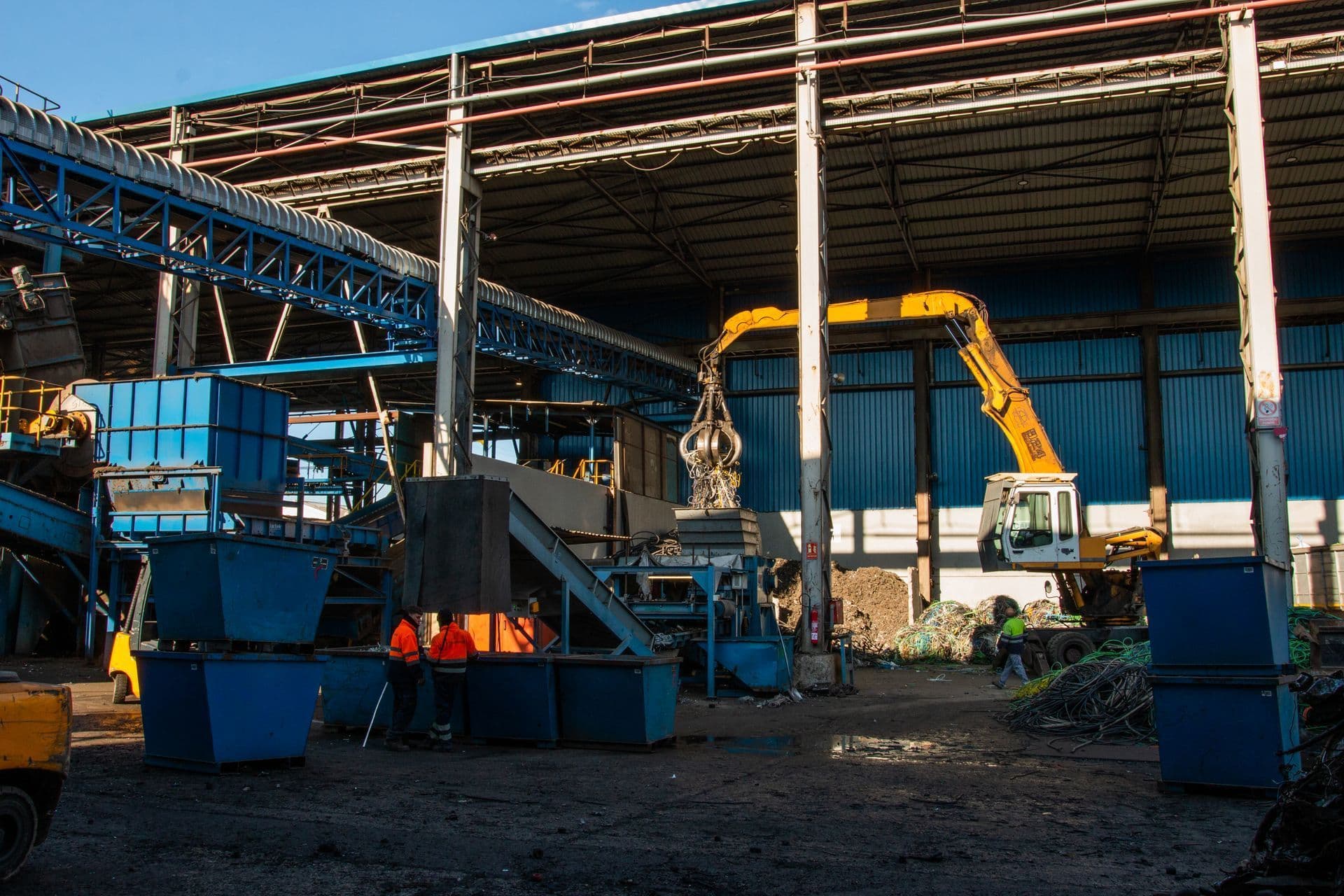
At Alberich we have been recycling metals since 1900, and today electrical cable is our main source of copper. We process it at our own granulation plant: manual pre-sorting, chopping, density separation and spectrographic analysis of the copper as part of the production process. Each grade is stored separately from the moment it is received, and all material undergoes radiation monitoring on arrival and departure.
Besides cable, we recover copper from electrical transformers, from mixed radiators on our aluminium and radiator line and from the red metals fraction produced by post-shredder separation. The copper granules produced from cable go to wire-drawing mills, refineries and the electrical industry.
If you have copper or cable to sell, what we buy lists all the materials we accept and explains how to request a valuation.
Frequently asked questions
What is the difference between No. 1 and No. 2 copper?
No. 1 copper is clean, bright copper with no varnish, tin, solder or oxidation, such as bare wire or busbar. No. 2 copper has some coating or dirt: varnished wire, tube with solder joints or oxidised copper. Both are recycled, but they are valued separately.
Is tinned copper recycled in the same way?
It is recycled, but it should not be mixed with clean copper. Tin is one of the impurities the analysis measures and it lowers the grade of the granules, which is why tinned cable is set aside during pre-sorting.
Can I find out the price of my copper before bringing it in?
Yes. You can request an indicative valuation with a photo, the type of material and the approximate quantity. As the price depends on the LME at the time and on the actual grade, the final figure is confirmed when the material is weighed and graded at the weighbridge.
What does a company need in order to sell copper scrap?
Copper from industrial sources is classed as waste and must be handed over to an authorised waste management company, with its EWC code (European List of Waste) and the relevant waste shipment documents. Alberich holds waste management authorisation no. E-345.97 from the Catalan Waste Agency (ARC) and takes care of the paperwork for the collections it carries out with its own fleet.
If you would like a specific lot valued, tell us what material you have and how much: we’ll reply within 48 working hours.


