You can demolish or dismantle part of a factory without stopping it if four conditions are met: the work zone is physically separated from the rest of the plant, disruptive work is scheduled in agreed time windows, the site has its own access and routes, and there is daily coordination with production. That is how industrial demolition without stopping production is approached, and almost everything is decided before the first team arrives on site.
Here we look at how each of those conditions is met, with examples from Alberich projects at chemical plants, ports, railway lines and food factories.
When does it make sense to demolish without stopping production?
When what is being removed is part of the installation: an obsolete line, a tank, a set of silos, a process column or an adjoining building. Stopping the whole factory for that usually costs more than the demolition itself.
The exception is the utilities that keep production going. If steam, compressed air, electricity or process pipework run through the work zone, temporary shutdowns or diversions have to be agreed in advance. All of this is identified during the initial site survey, along with nearby critical equipment and the risks the work could pass on to the rest of the plant: dust, vibration, noise, sparks or falling objects.
How is the work zone isolated in a running plant?
Isolating the zone means turning the demolition area into a self-contained site within the factory. In practice, it comes down to these measures:
- Enclosure and signage, so that no one from the plant walks in by mistake, with access control for site personnel.
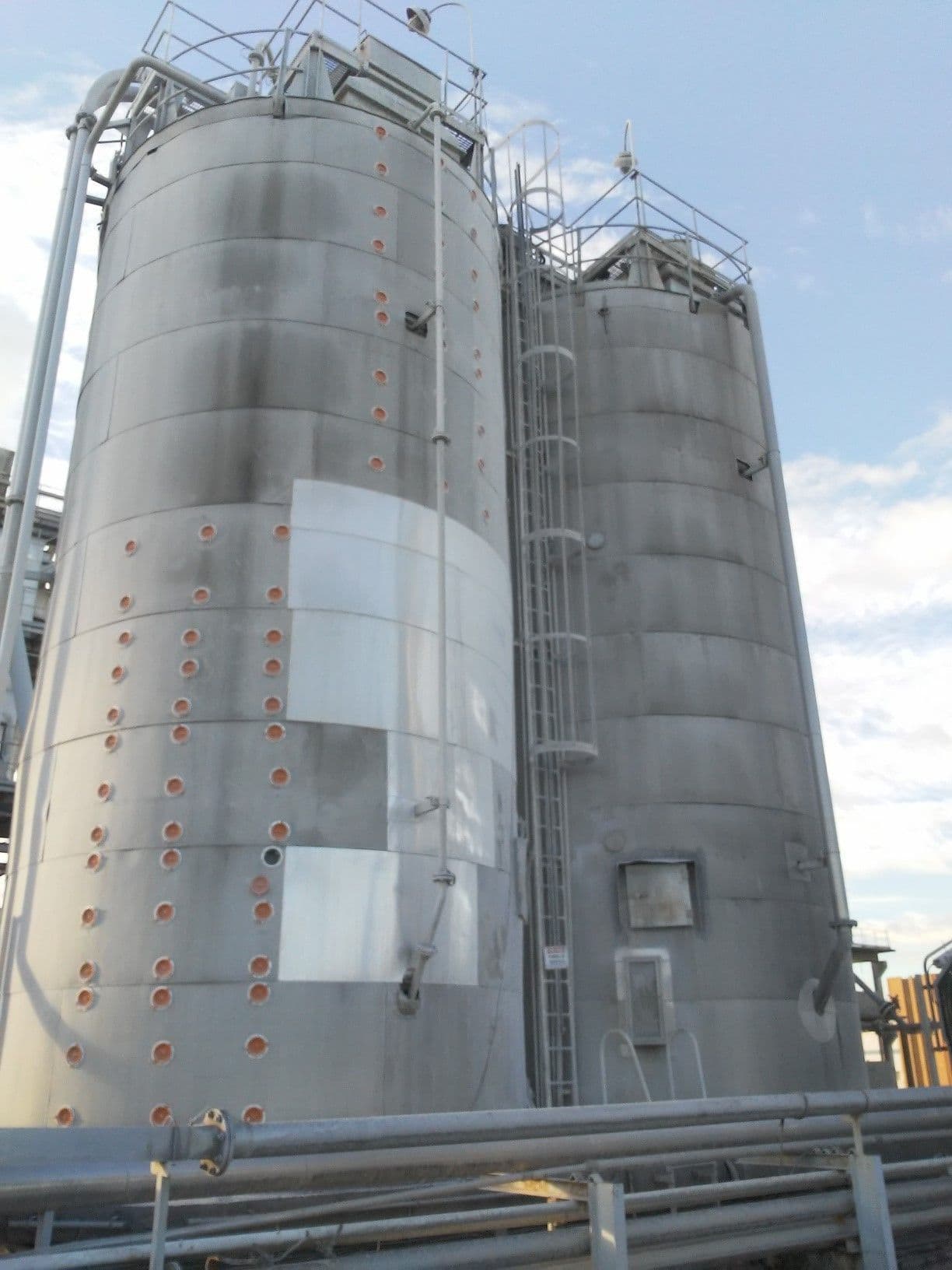
- Dust control with continuous water spraying during demolition, as in the removal of two silos at a food plant.
- Protecting what stays: adjacent pipework, electrical panels and equipment are protected or disconnected before any cutting.
- Dismantling sequence: structures are cut in sections rather than brought down whole, which reduces vibration and dust.
In the food industry, isolating the zone also has a hygiene side. When dismantling a food production plant, we divided the site into zones to isolate the lines that were still producing, applied a cross-contamination protocol and carried out industrial cleaning at the end of each phase.
What hours do you work so as not to interfere with production?
The work is split according to how it affects the plant. Tasks that cause no disruption (interior dismantling, sorting material, cutting in areas already isolated) are done during normal hours. Those that do – crane lifts over walkways, cutting next to live installations, lorry manoeuvres on shared roads – are concentrated in agreed windows: night shifts, weekends or planned shutdowns the plant had already scheduled.
| Setting | Constraint | How it was solved |
|---|---|---|
| Footbridge over a railway line | Line in service during the day and live overhead line equipment | Night shifts coordinated with the infrastructure manager, and protection of the overhead line |
| Two RTG (rubber-tyred gantry) cranes at a commercial port | Daily port operations and the port’s safety rules | Time windows compatible with port activity and safety zones agreed with the port authority |
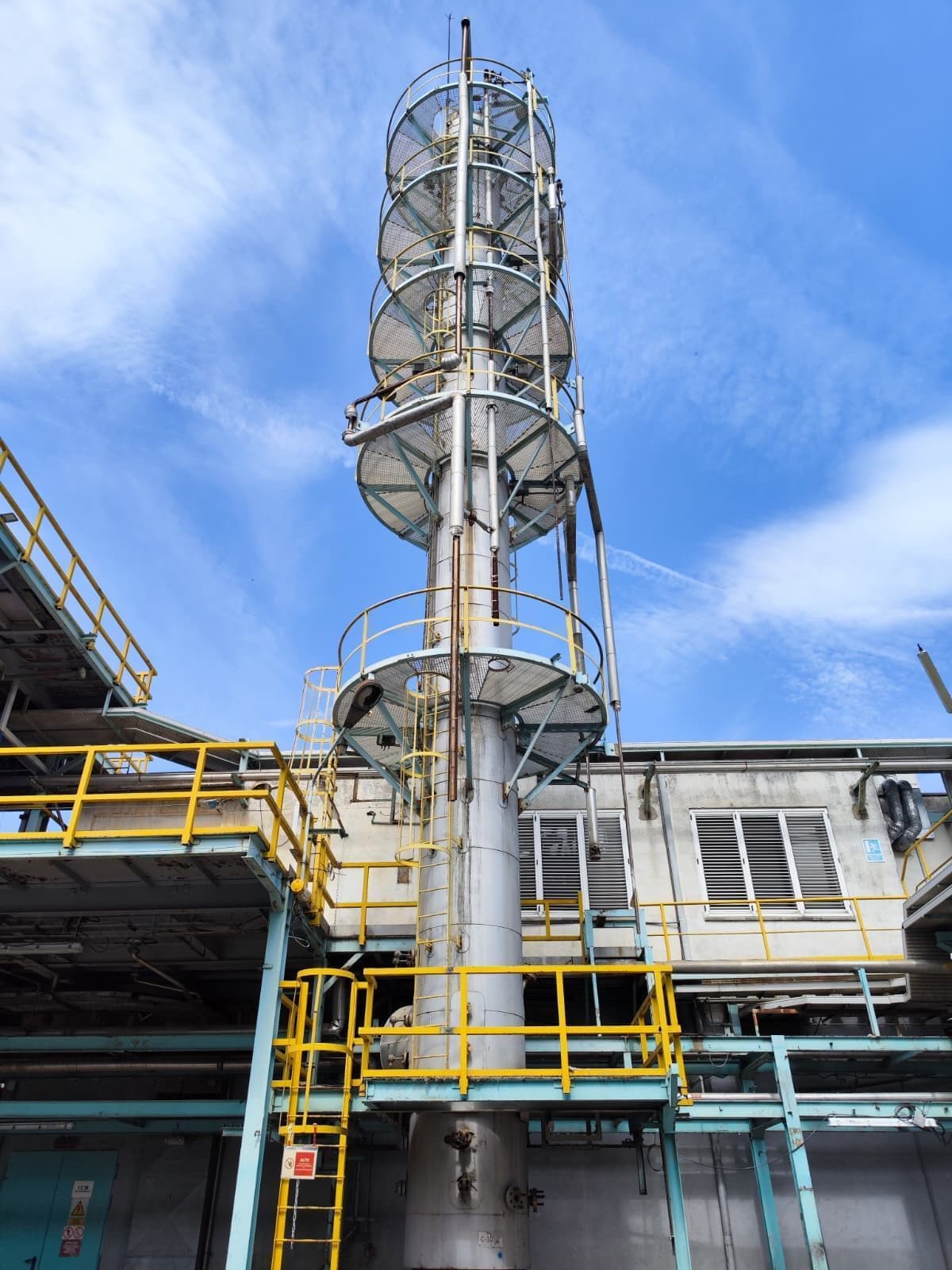
| 30 m distillation column | ATEX zone and only 5 days available because of production | Prior decontamination, certified equipment and dismantling in sections with atmosphere monitoring |
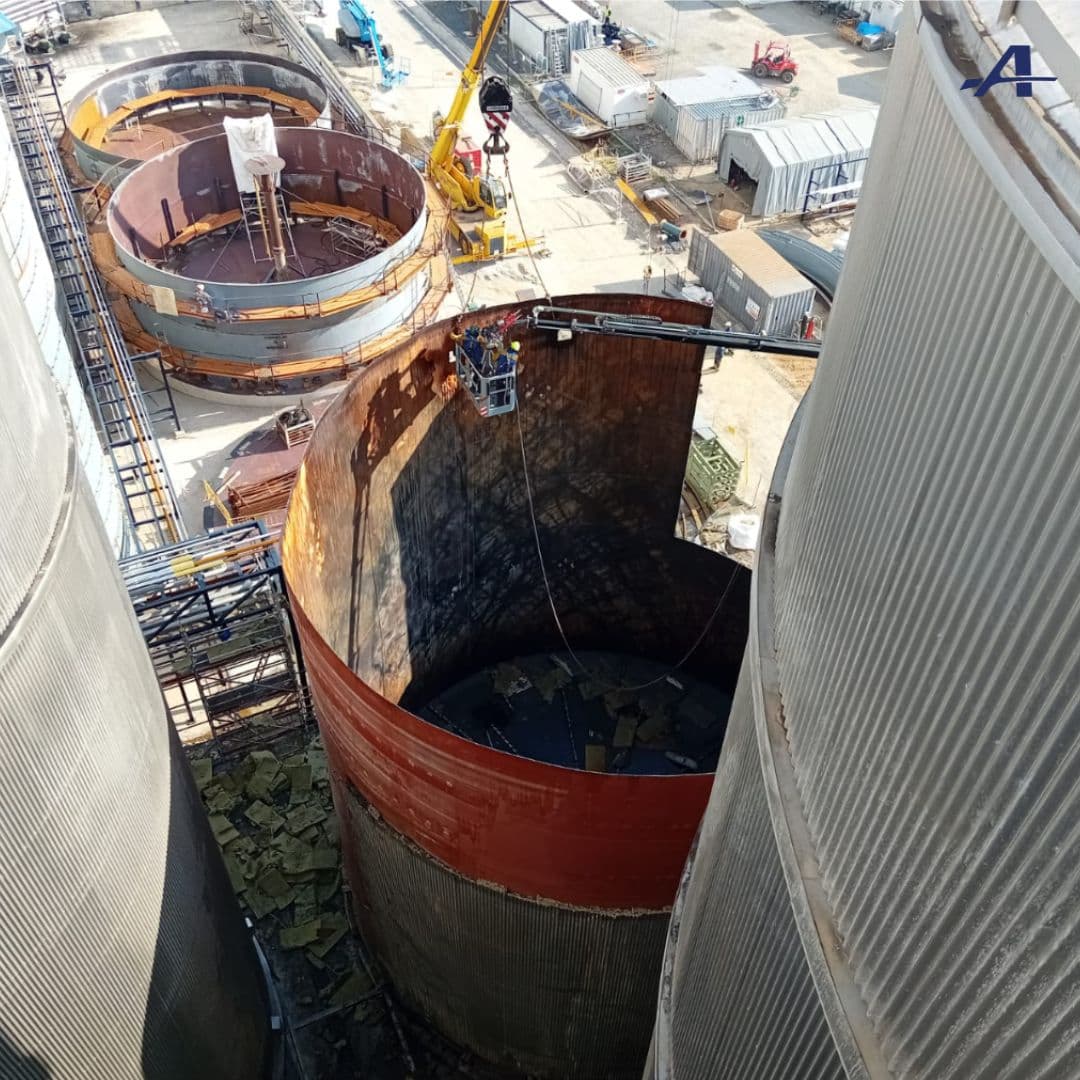
| 1,410 m³ tank | Production facilities right next to it | Top-down dismantling in sections with a mobile crane, after the tank had been decontaminated |
How are site access and logistics organised?
A demolition generates traffic: lorries taking material away, low-loaders bringing in machinery, containers being swapped. If they share roads and loading bays with the factory’s logistics, sooner or later they get in each other’s way. So three things are agreed at the start: an access point and route for site vehicles, kept separate from the plant’s loading bays wherever possible; a dedicated stockpiling and loading area; and lorry arrival and departure times outside peak dispatch hours.
Segregating at source helps here too. Material leaves already separated and is loaded straight away, with no mixed heaps taking up space and requiring more manoeuvres. With containers from 1 to 30 m³ and a mobile baler that bales the metal on site, fewer trips are needed.
Who coordinates the work with production?
There has to be a point of contact on each side: the site’s technical manager and someone from production or maintenance. At the start of each day or each phase, they go over what will be done, what the plant needs that day and what has changed. If production moves a shutdown, the plan is reworked in that meeting, not on site.
When two companies work at the same workplace, health and safety regulations also require the coordination of business activities (known in Spain as CAE), set out in Royal Decree 171/2004: sharing information on risks, emergency measures and work permits. On site, this translates into hot work permits, equipment lockout and, in ATEX zones, trained personnel and equipment certified for explosive atmospheres. We explain this in more detail in our guide to health and safety in industrial demolition.
What mistakes force a plant to stop mid-project?
They are almost never to do with machinery. The most common are:
- Finding out too late about a live service line or waste that wasn’t on the inventory, such as product residues in a tank or asbestos-containing materials. Asbestos can only be removed by a company on the RERA (Spain’s Register of Companies with Asbestos Risk), under a work plan, and that has its own lead times.
- Not reserving windows for crane lifts and having to carry them out while production is running.
- Sharing roads and loading bays with the plant without agreed times.
- Mixing materials on site and building up stockpiles that block routes.
All of them can be avoided with a good preliminary survey. How that affects the cost is covered in how to avoid cost overruns in a demolition.
How does Alberich work with the plant running?
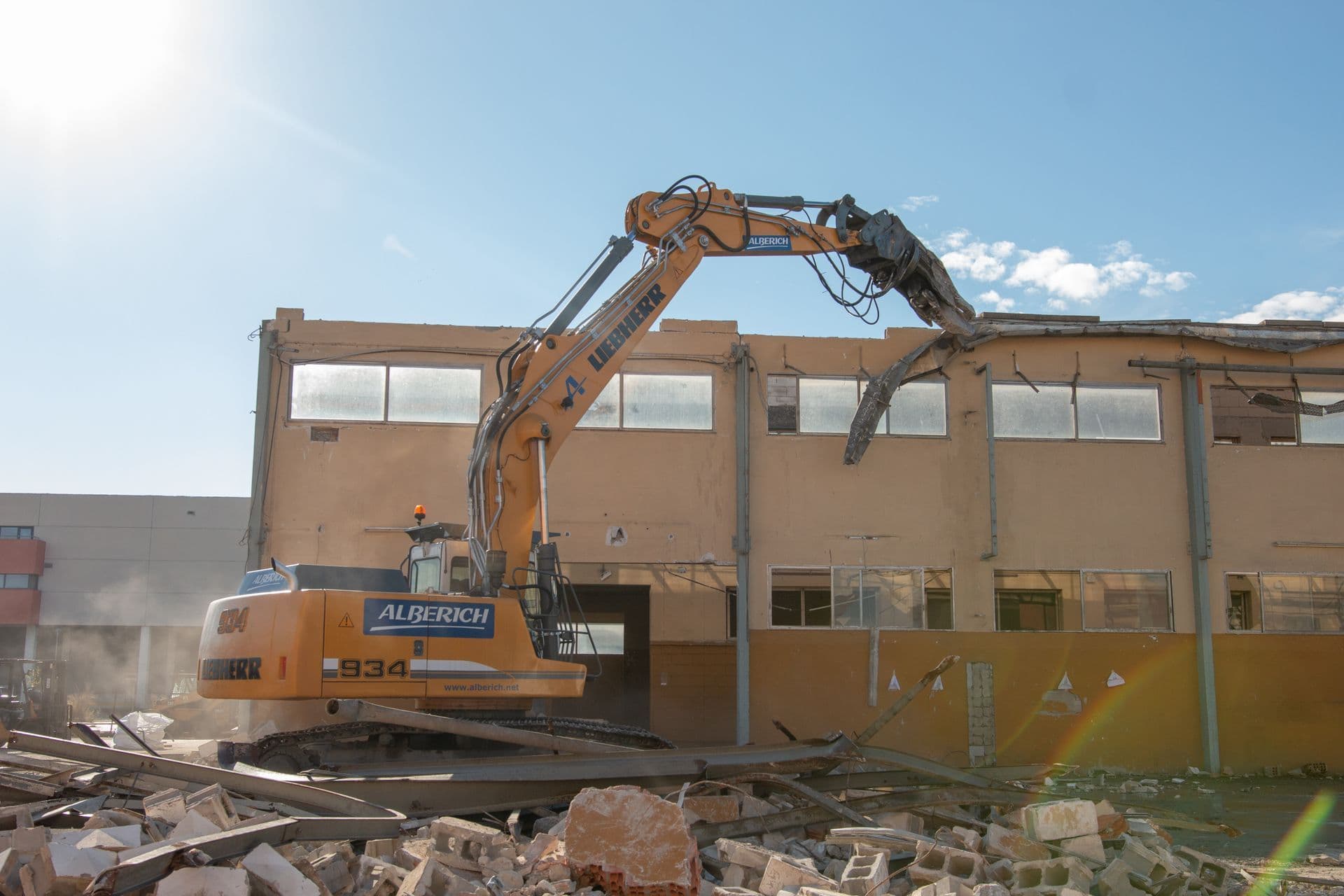
With our own machinery and team: from 45-tonne excavators for large structures to compact machines for working inside buildings (we go through them in our demolition fleet), oxy-fuel cutting equipment and a transport fleet. If production changes a schedule, we can move resources without waiting for anyone.
Before quoting, we carry out an on-site technical survey with metal analysers and thickness gauges, and we prepare the documentation: demolition design, health and safety study, waste management plan and licences. The quote is fixed-price. The recovered metal goes to our Castellbisbal plant and, as an authorised waste management company (authorisation no. E-345.97), we issue the waste management certificates. You’ll find the recycling results for each project in our industrial demolition case studies and on our industrial demolition service page.
Frequently asked questions
What happens if production needs to change the schedule mid-project?
The affected phase is replanned at the coordination meeting. With our own machinery and staff, we can bring forward tasks that don’t interfere or move a shift to nights or the weekend. What you shouldn’t do is improvise the change on site.
Can oxy-fuel cutting be used near installations that are in operation?
Yes, with a hot work permit, protection for everything around it and monitoring during and after cutting. In ATEX zones, the atmosphere also has to be measured and certified equipment used. If the risk cannot be controlled, the cutting is left for a shutdown.
How do you stop dust reaching the production lines?
With enclosures, continuous water spraying during demolition and a dismantling sequence that starts with the interior elements and cuts in sections. In food plants, industrial cleaning is added at the end of each phase.
How far in advance should planning start?
From the moment the decision is made to remove the installation. If the work could fit into a planned shutdown that is already scheduled, it’s worth knowing well in advance so the documentation and licences can be prepared. We reply within 48 working hours to arrange the site survey.
If you have an installation to remove without stopping the factory, tell us what is around it and which time windows you could work in, and we’ll prepare the site survey from there.