The industrial demolition machinery Alberich works with falls into three groups: tracked excavators of various sizes, fitted with interchangeable attachments such as shears, hydraulic breakers or sorting grabs; oxy-fuel cutting equipment for thick steel; and a transport fleet to bring the machinery to site and take the sorted material away. All of it is our own, and it is operated by our in-house team. Here we explain what each machine does and how the equipment is chosen for each job.
Which excavators make up Alberich’s demolition fleet?
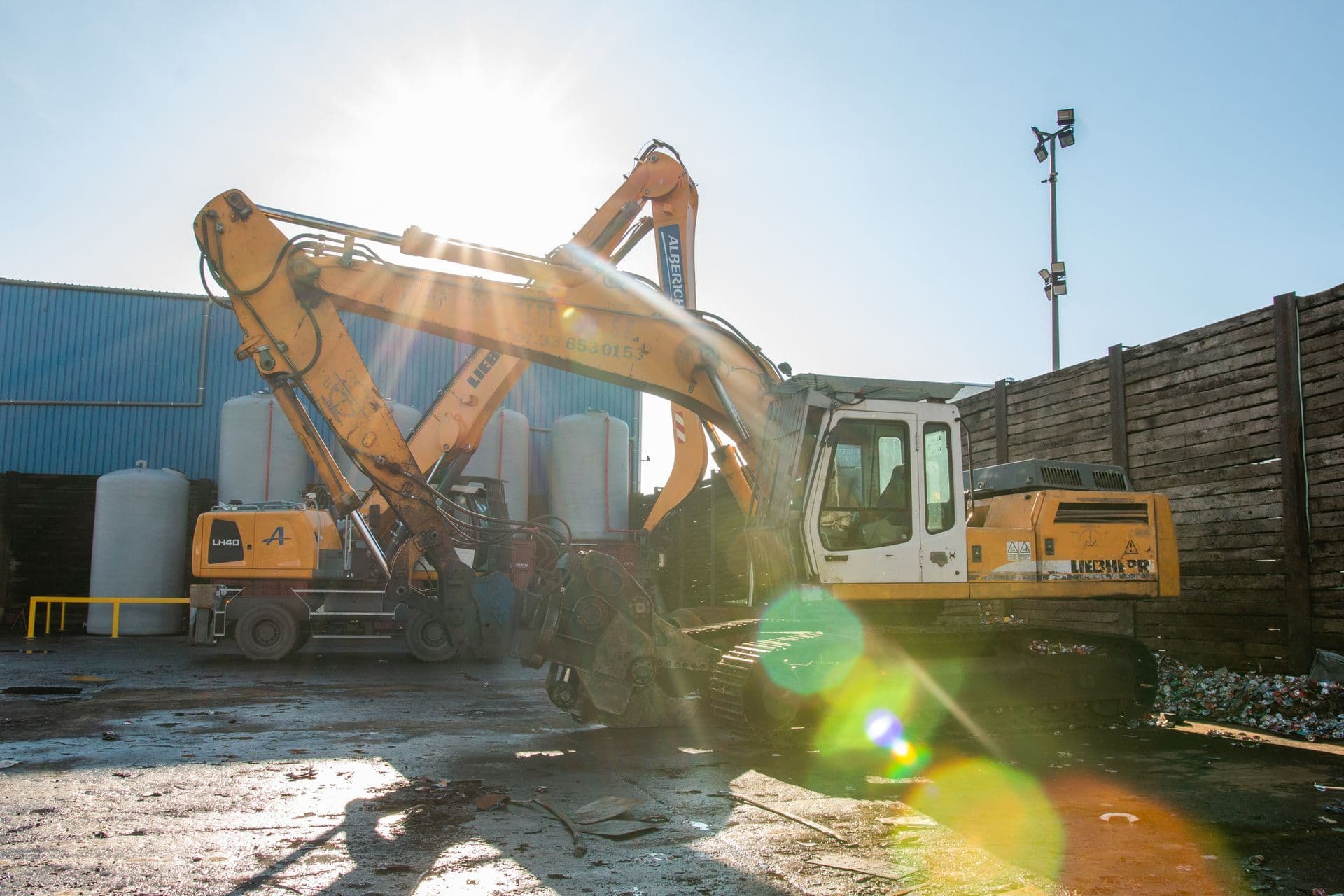
The core of the fleet is tracked excavators. We have them in several weight classes because every job calls for a different size: an industrial building with a heavy structure is not tackled in the same way as the inside of a plant with limited headroom.
| Machine | Main use on site |
|---|---|
| CAT 345 (45 t class) | Large structures: industrial buildings, storage tanks and heavy steel structures |
| CAT 325 (25 t class) | Selective dismantling, when materials have to be separated piece by piece |
| CAT 315 (15 t class) | Tight spaces and building interiors |
| Liebherr 944 | Moving large volumes of material |
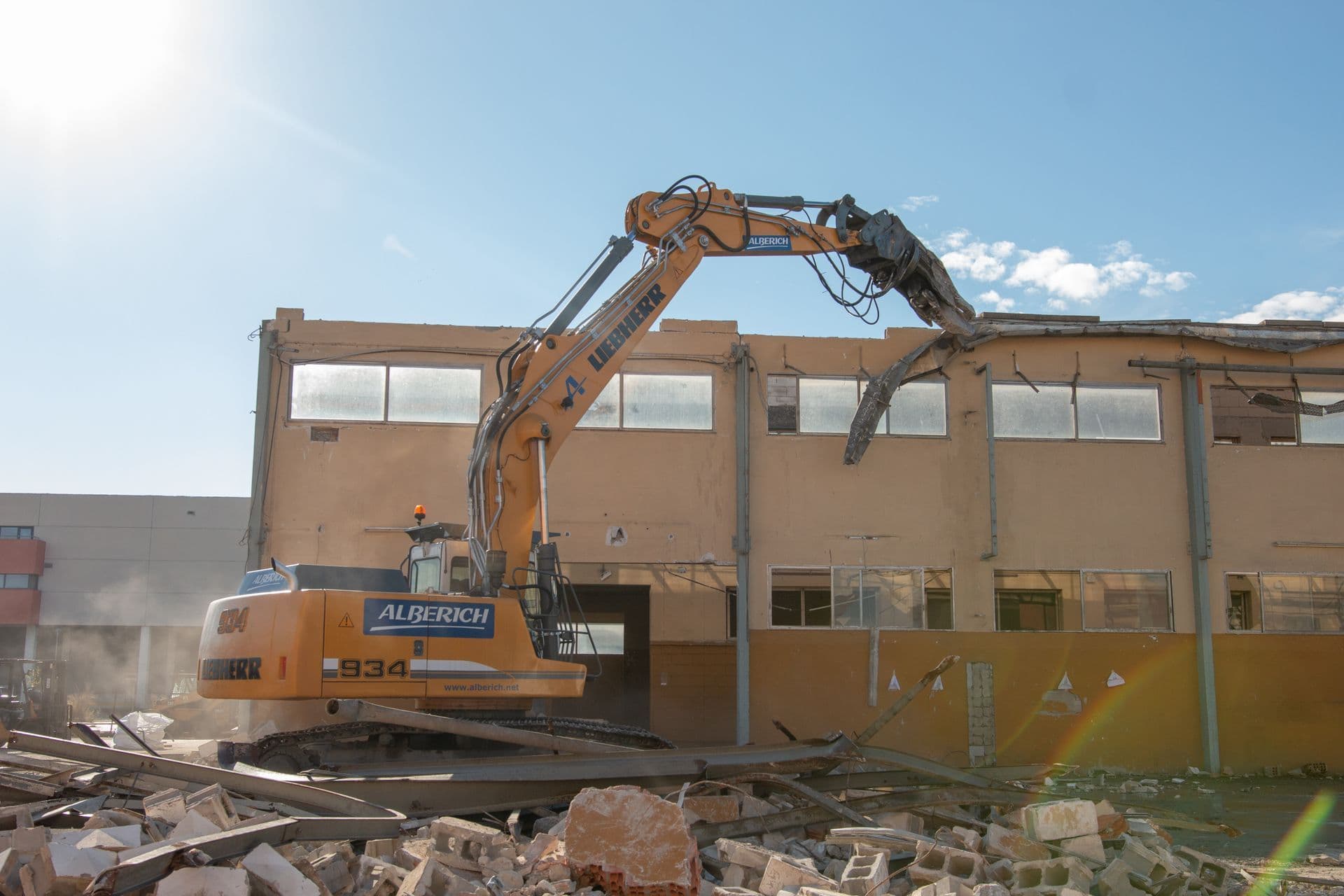
| Liebherr 934 | Selective handling and loading |
The fleet is completed by skid steer loaders for confined spaces, where an excavator won’t fit or can’t manoeuvre.
What is each demolition excavator attachment for?
The excavator is the base; the work is done by the attachment on its arm, which is changed depending on the phase of the job.
| Attachment | What it does | Where it is used |
|---|---|---|
| Demolition shear | Cuts steel beams, sections, plate and pipe | Steel structures, storage tanks and industrial buildings |
| Demolition pulveriser | Crushes concrete and separates it from the steel reinforcement | Walls, floor slabs and concrete bases |
| Hydraulic breaker | Breaks up solid concrete | Ground slabs, foundations and machine bases |
| Sorting grab | Picks up, sorts and loads loose material | Sorting on site and loading lorries |
The shear and the pulveriser have the most influence on recycling: they cut the steel into manageable pieces and separate it from the concrete on site, so each material leaves clean and separate.
When is oxy-fuel cutting used instead of the machine?
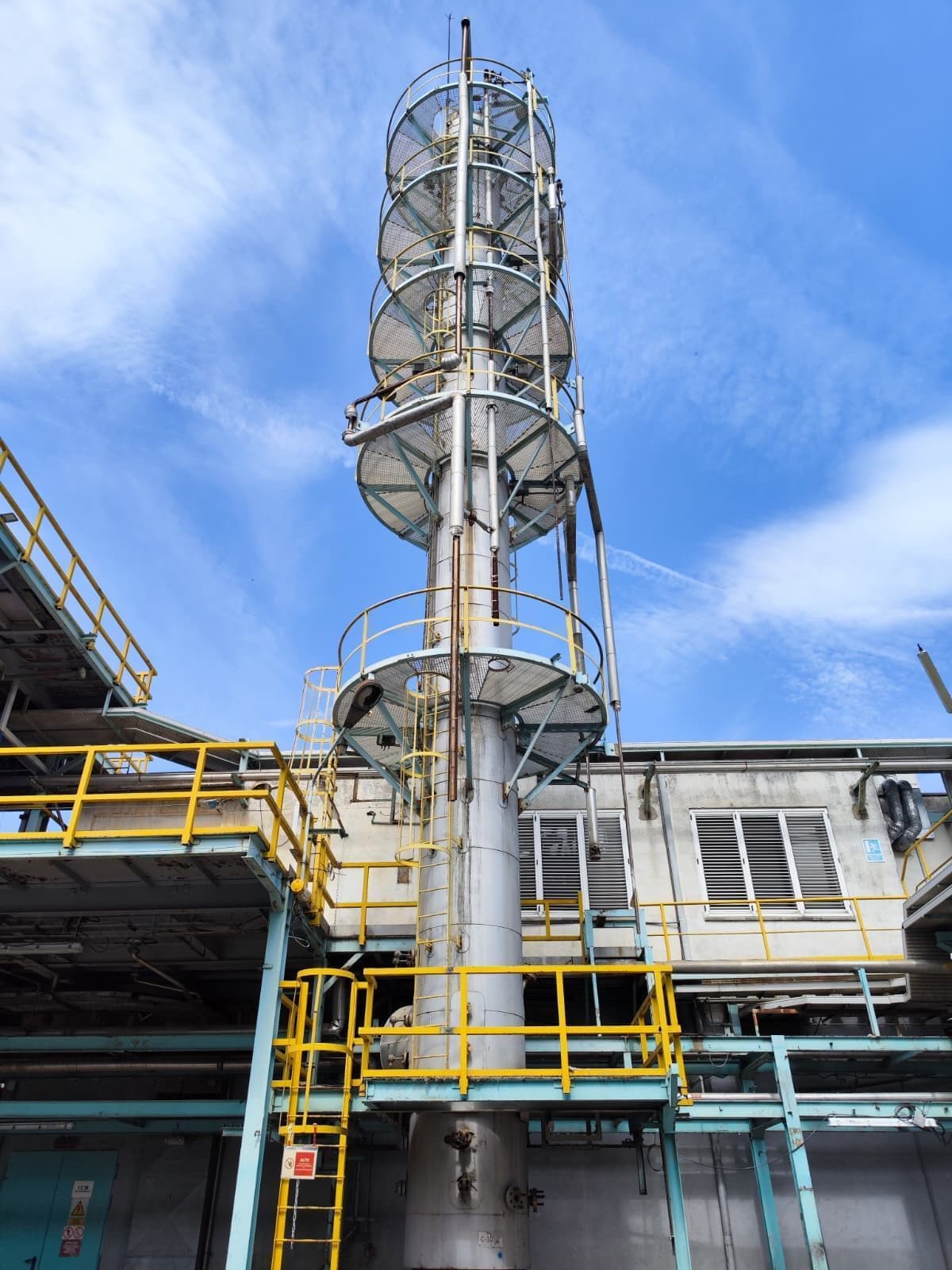
When the steel is too thick for the shear, when cutting has to be done at height so the piece can be lowered by crane, or when the fall of each section has to be controlled to the millimetre. On the 30-metre industrial tank, the sections were cut with oxy-fuel equipment and lowered with a large mobile crane. On the footbridge over a live railway, precision cutting made it possible to control each section without touching the overhead line.
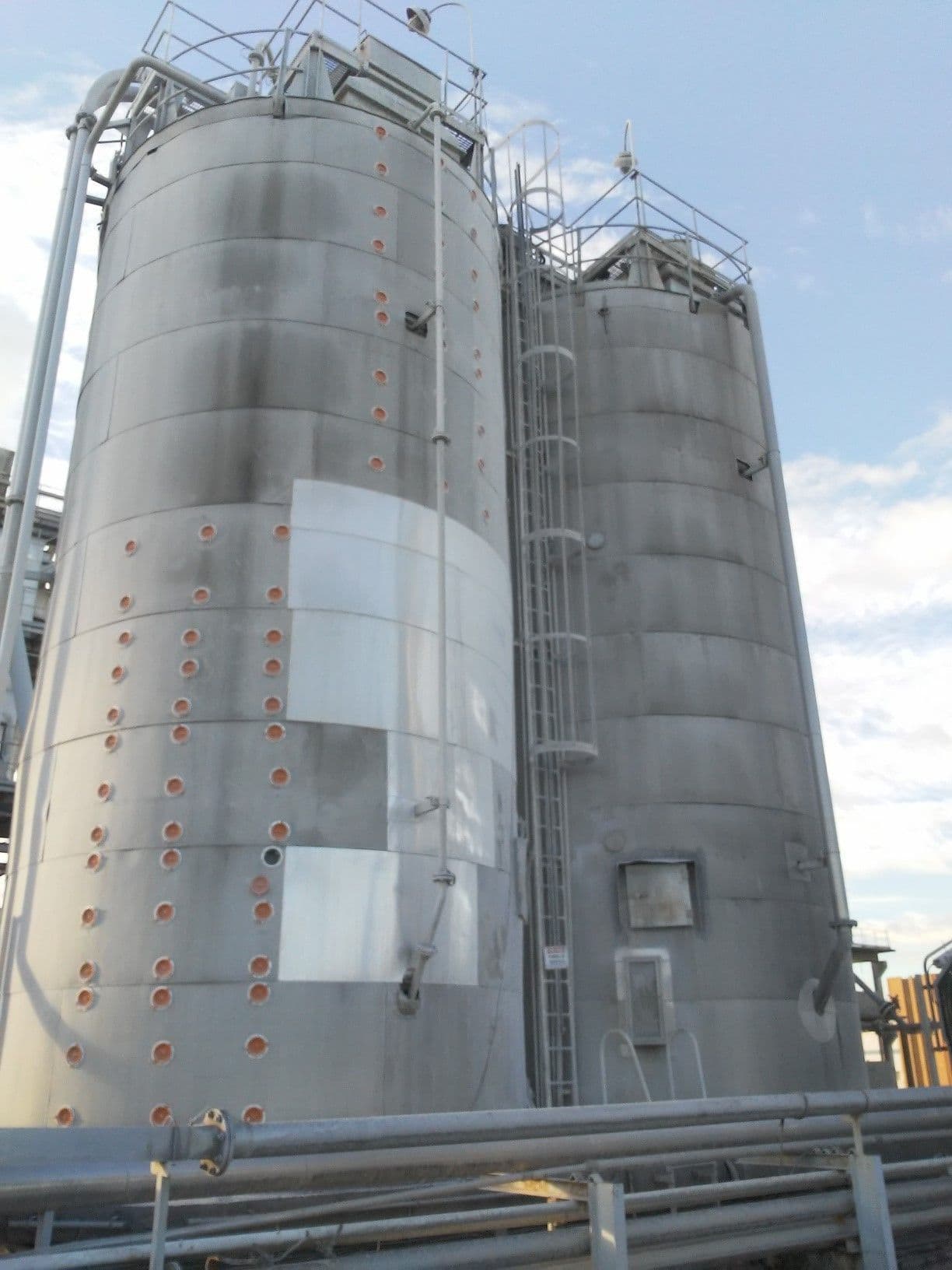
If the structure is tall and there is no safe access for cutting at height, the work is done from the ground with high-reach machinery, as with the two silos at a food plant, which were demolished from the top down.
How is the machine chosen for each job?
During the site survey, before quoting. The choice of equipment depends on:
- Space and access: width of doors, headroom and how much weight the floor can bear.
- Height and type of structure: steel, concrete or mixed, and whether it can be knocked down or has to be dismantled in sections.
- Surroundings: with the plant running, vibration, noise and dust take priority, and a smaller machine making more cuts is usually the better option.
- Timescale: the available windows determine how many machines work at the same time.
We explain how a site is organised next to a line that keeps producing in industrial demolition without stopping production.
How does the machinery get to site and how does the material leave?
With our own fleet of more than 60 GPS-tracked vehicles: low-loaders to move machinery and special loads, skip loader lorries, scrap tipper trailers and ADR-certified vehicles for hazardous waste. On site we leave containers from 1 to 30 m³ and, where it makes sense, a lorry-mounted mobile baler that bales the scrap there and then and cuts down on trips.
We cover Catalonia, the Valencian Community and Aragon directly. For the rest of mainland Spain, we assess each case individually.
What happens to the metal once it leaves the site?
It goes to our Castellbisbal plant, where it passes through radiation monitoring on arrival. Heavy structural scrap is cut in the 600–1,000-tonne shears to the sizes the steel industry requires; complex ferrous material goes through the 4,000 hp shredder; and non-ferrous metals are separated by eddy current and X-ray sorting. As an authorised waste management company (authorisation no. E-345.97), we issue the waste management certificate for the material we receive.
What difference does it make to work with your own machinery?
Availability and control. If a phase is brought forward or a different attachment is needed, the machine is in-house and the person operating it knows it well. The fleet is inspected and maintained on an ongoing basis, and each operative works with the machines they have been trained on. You can see the results on site in our industrial demolition case studies, and the full service on our industrial demolition page.
Frequently asked questions
Is the demolition machinery your own or hired?
Our own, and it is operated by Alberich staff. That includes the excavators, the demolition attachments, the oxy-fuel cutting equipment and the transport fleet we use to move machinery and material.
Can you work inside a building with limited headroom?
Yes. For interiors we use our smallest excavators, in the 15-tonne class, and skid steer loaders for confined spaces. Where no machine can get in, dismantling is done with oxy-fuel cutting and by hand.
What does it take to dismantle a 30-metre structure?
An excavator is not usually enough. On the 30-metre tank and distillation column, we combined cutting in sections from the top with a crane that lowered each piece to the ground, where it was cut up and sorted.
How long does it take for the machinery to reach the site?
It depends on the distance and the machine, which is transported on a low-loader. Its arrival is scheduled in line with the site plan, so that it gets there when the area is ready. We reply within 48 working hours to arrange the site survey.
If you have a job in mind, tell us what the structure is and what the access is like, and that’s enough for us to start working out what equipment it needs.