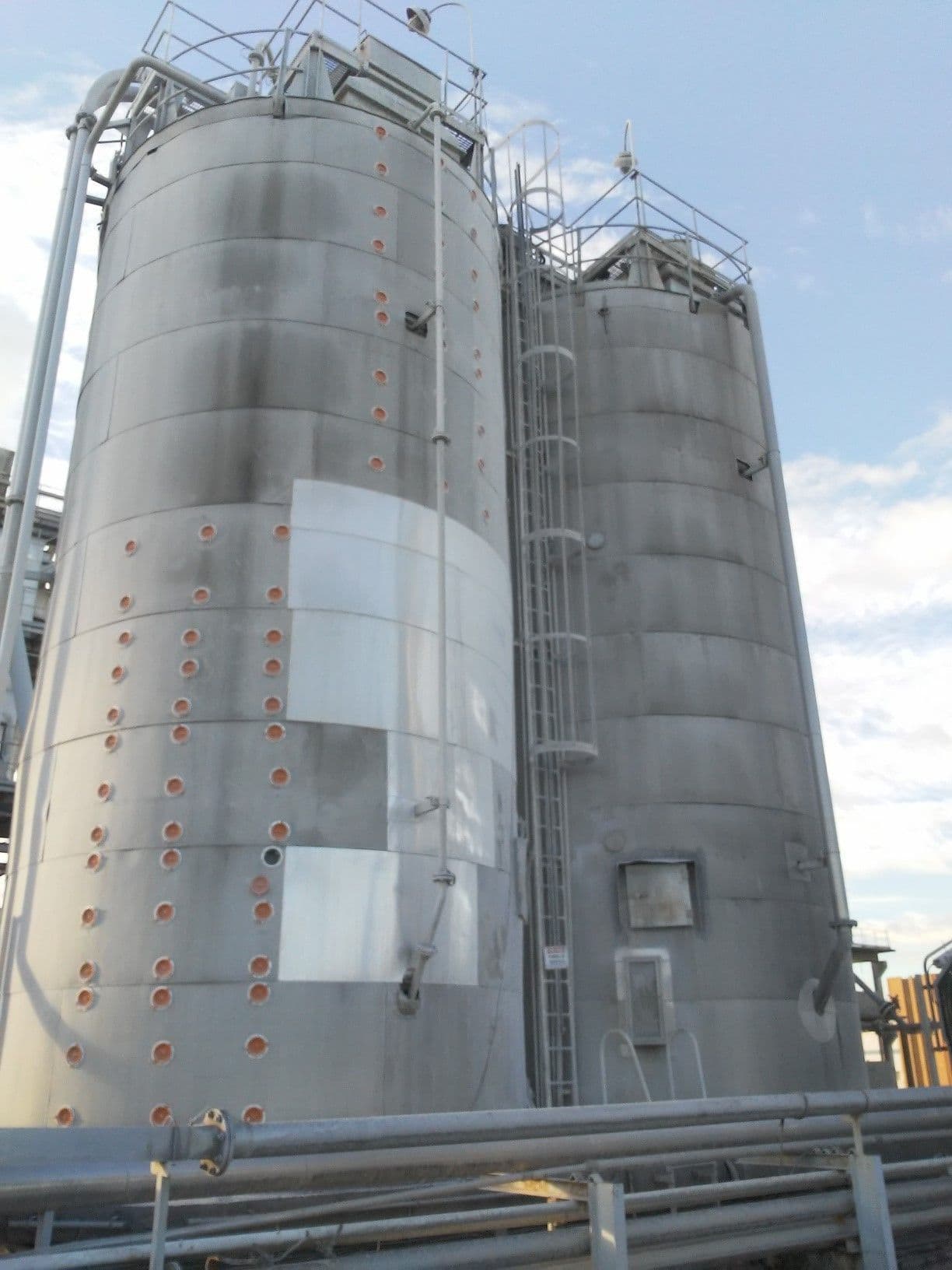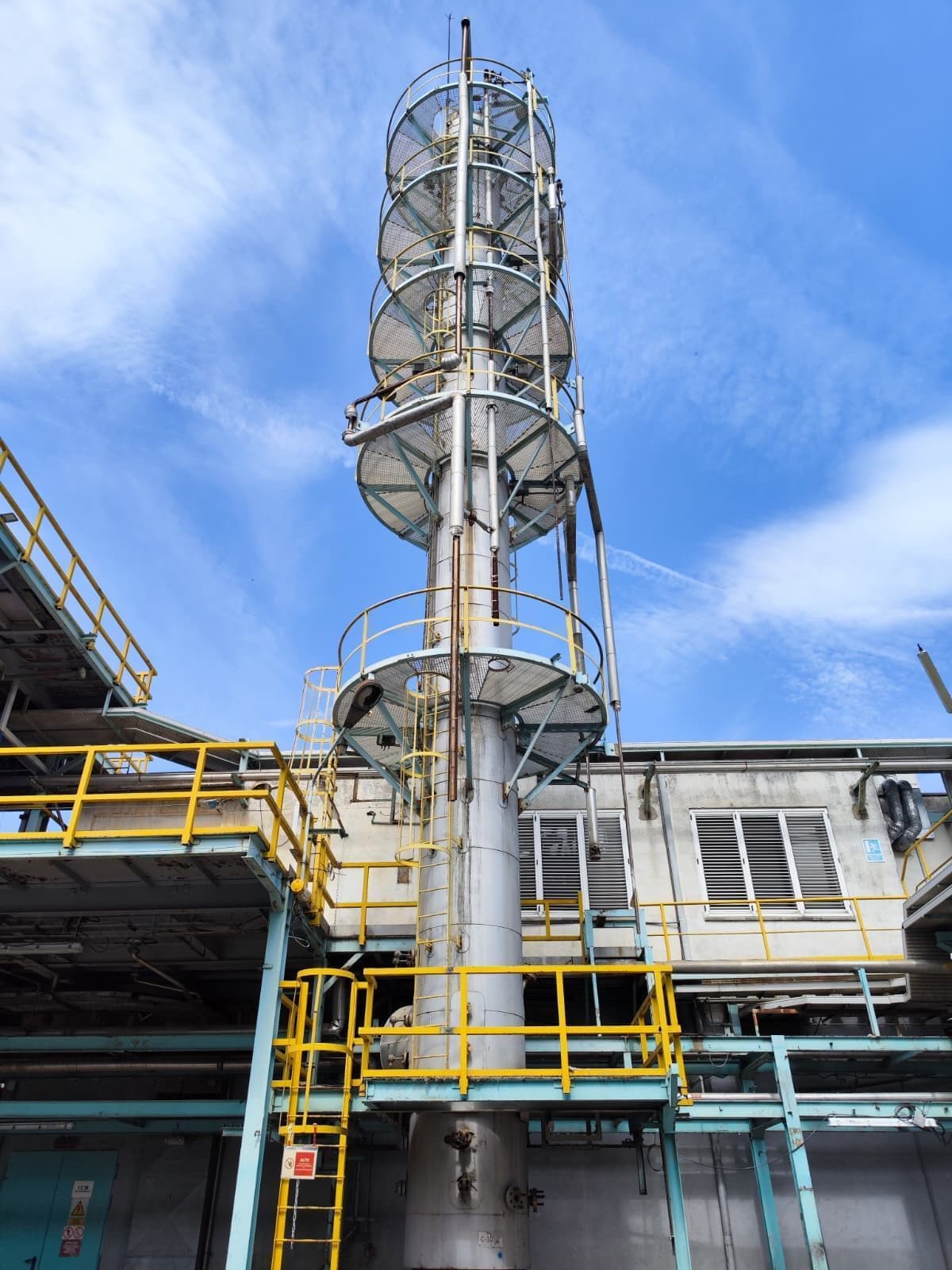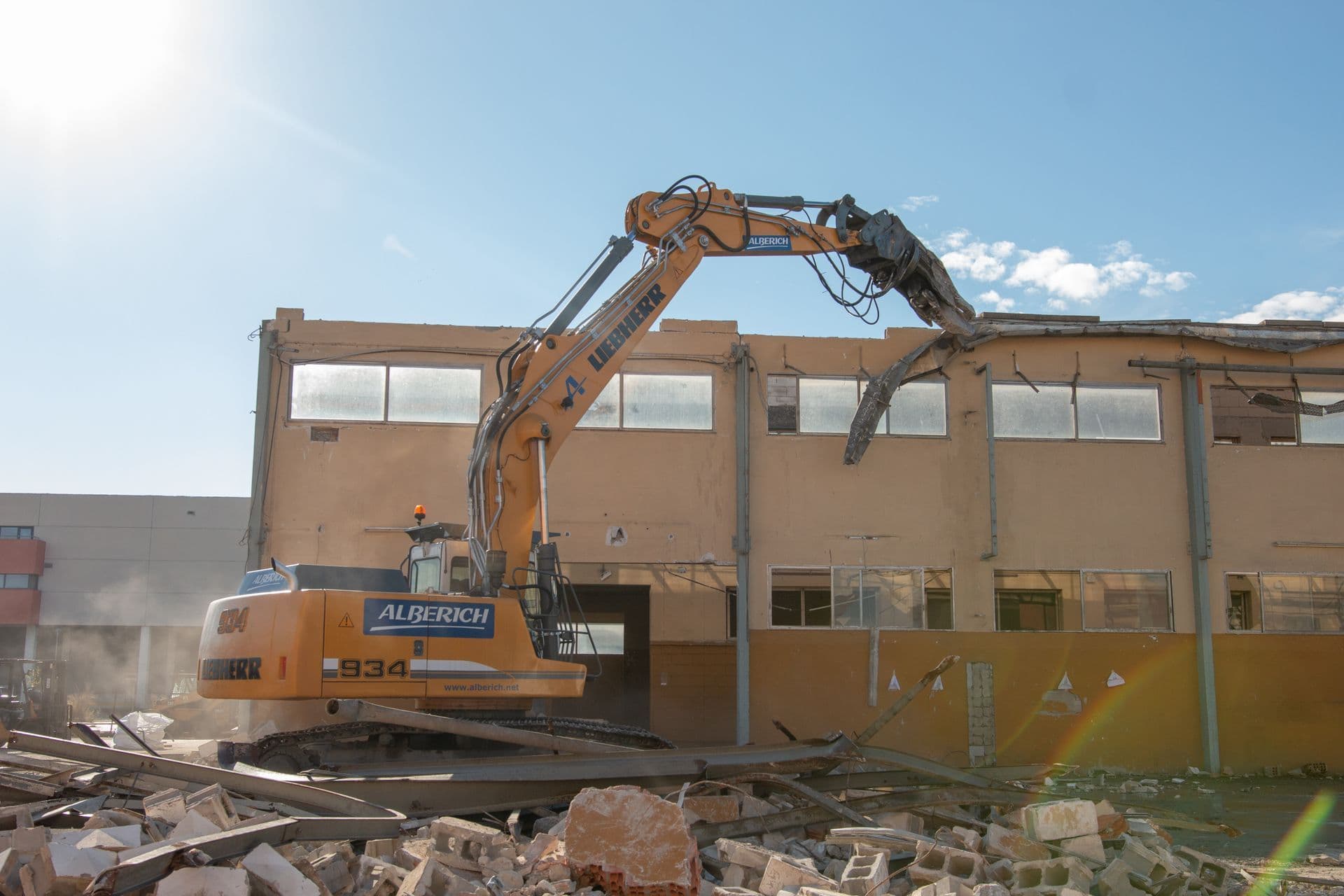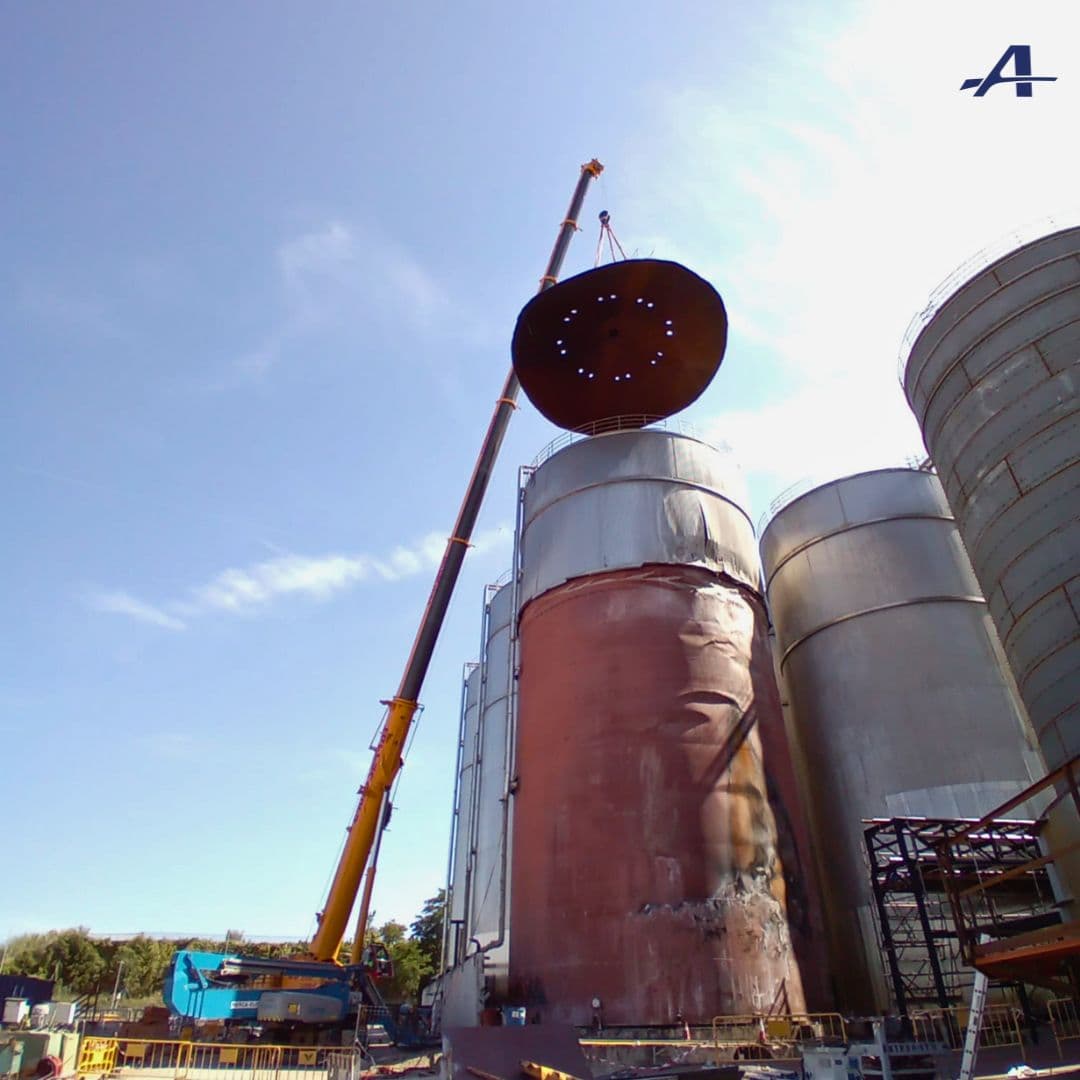
On the six industrial demolition projects documented on our website, the recycling rate was 95% or 100%. These industrial demolition case studies are very different from one another – a chemical storage tank, two port cranes, a food plant, a footbridge over a railway line, a distillation column and two silos – but in every one the result comes down to the same things: a prior inventory of the material, dismantling in sections, sorting on site and processing the metal at our own plant.
Below you’ll find the figures for each project, why some reach 100% and others don’t, and how to read a recycling percentage before comparing quotes.
Which industrial demolition projects have recycled more than 90% of their materials?
| Project | Sector | Scope | Recycling |
|---|---|---|---|
| Industrial tank | Chemicals | 30 m high and 1,410 m³, in 15 days | 100% |
| RTG 03 and RTG 07 port cranes | Ports | 2 cranes 25 m high, in 10 days | 100% |
| Railway footbridge | Rail | 10 m high, over a live railway, in 5 days | 100% |
| Distillation column | Chemicals | 30 m in an ATEX zone, in 5 days | 100% |
| Food production plant | Food | Lines, silos and auxiliary machinery; 15 m, in 15 days | 95% |
| Industrial silos | Food | 2 silos for raw materials | 95% |
Across all our demolition work, the recycling rate is above 90% on most projects. A rate of 100% is achieved on specific jobs, not on every one, and it’s worth understanding why.
Why do some projects reach 100% while others stop at 95%?
Because of what has to be removed. A tank, a port crane, a footbridge or a distillation column is almost entirely steel: if it is cut properly and sorted, practically all the material goes back to the steel industry as scrap. A food plant, or silos with concrete elements, combine steel, stainless steel, concrete, plastics and remnants of installations, and there is always a fraction with no recycling outlet.
That’s why a percentage without context tells you little. What helps is asking what weight it is calculated on, which fractions it includes and what documents back it up: the weighbridge records on arrival at the plant and the waste management certificates for each waste stream, with its EWC code (European List of Waste).
How was the result achieved on each project?
30-metre industrial tank
A 1,410 m³ storage tank at a chemical plant, next to facilities in production and with chemical waste inside. It was decontaminated first, then dismantled in sections from the top with a large mobile crane, using oxy-fuel cutting. All the metal was sorted and taken to our plant. Timescale: 15 days. See the tank fact sheet.
RTG port cranes
Two 25-metre cranes at a commercial port in full operation, with a maximum of 10 days for both. The work was done in time windows compatible with port operations, with safety zones agreed with the port authority, dismantling in sections with an auxiliary crane and oxy-fuel cutting. All the structural steel was recovered. See the cranes fact sheet.
Food production plant
Full dismantling of processing lines, silos and auxiliary machinery while other areas of the plant carried on producing. The work zone was isolated, a cross-contamination protocol was applied and industrial cleaning was carried out after each phase. With a wider mix of materials, the recycling rate was 95%. See the plant fact sheet.
Railway footbridge
A 10-metre-high footbridge over a live railway, next to the overhead line equipment. The work was carried out on night shifts coordinated with the infrastructure manager, with precision oxy-fuel cutting to control the fall of each section. It was removed in 5 days without interrupting rail services, and 100% of the steel was recovered. See the footbridge fact sheet.
Distillation column
A 30-metre column in an ATEX zone, decontaminated before dismantling and taken down in sections from the top with certified equipment and continuous atmosphere monitoring. Five days, zero incidents. We go through it step by step in our article on the distillation column demolition.
Two industrial silos
Two silos for food raw materials, demolished from the top down with high-reach machinery, with continuous water spraying to control dust and with steel, concrete and other materials segregated at source. Recycling rate: 95%. There are more details in the case study on dismantling the two silos.
What do the projects with the highest recycling rates have in common?
Four decisions taken before demolition, not during it:
- Measure the material before quoting. Metal analysers and thickness gauges show how much steel, stainless steel or non-ferrous metal there is and how best to cut it.
- Dismantle in sections. Cutting and lowering pieces in a controlled way, rather than bringing structures down in one go, stops materials getting mixed up and dirty.
- Sort on site. Each fraction leaves separately: clean metal has a recycling outlet, and the rest goes to the relevant waste management company without contaminating anything else.
- Process at our own plant. The 600–1,000-tonne shears and the 4,000 hp shredder at Castellbisbal prepare the steel for the steelworks, and the eddy current and X-ray separation lines recover the non-ferrous metals.
We look at the link between demolition and the circular economy in the circular economy and industrial demolition, and at how it fits with sustainability goals in the SDGs in industrial demolition.
How does Alberich do it?
We provide the complete service with our own machinery and team: on-site technical survey, documentation and licences, execution, transport with our own fleet and recovery at our plant. We are an authorised waste management company (authorisation no. E-345.97) and hold ISO 9001, 14001 and 45001 certification, so the material that comes into our plant is documented with its certificate. You can see all the projects on our industrial demolition service page.
Frequently asked questions
Does 100% recycling include hazardous waste?
The two are not mixed. Hazardous waste that turns up in a demolition, such as chemical residues in a tank, is removed separately and goes to an authorised final treatment facility for treatment. When you compare percentages, always ask how that waste has been accounted for.
Does recovered metal reduce the cost of the demolition?
It can offset a significant part of the cost. How much depends on the type of metal, how clean and well separated it is, the quantity and the market at the time. We explain this in how to avoid cost overruns in a demolition.
What documents prove the recycling percentage?
The weighbridge records on arrival at the plant and the waste management certificates for each fraction, with its EWC code and destination. For material that comes into our plant, we issue them ourselves as an authorised waste management company; for hazardous waste, the certificate comes from the final treatment facility.
Where can I see more data on each project?
Each project has a fact sheet with its figures, the challenges, the technical solution and photos from the start, during the work and at the end. We explain how they came about in our demolition project fact sheets.
If you are preparing to remove an installation, we can help you estimate, before you start, how much of the material can go back into industry.