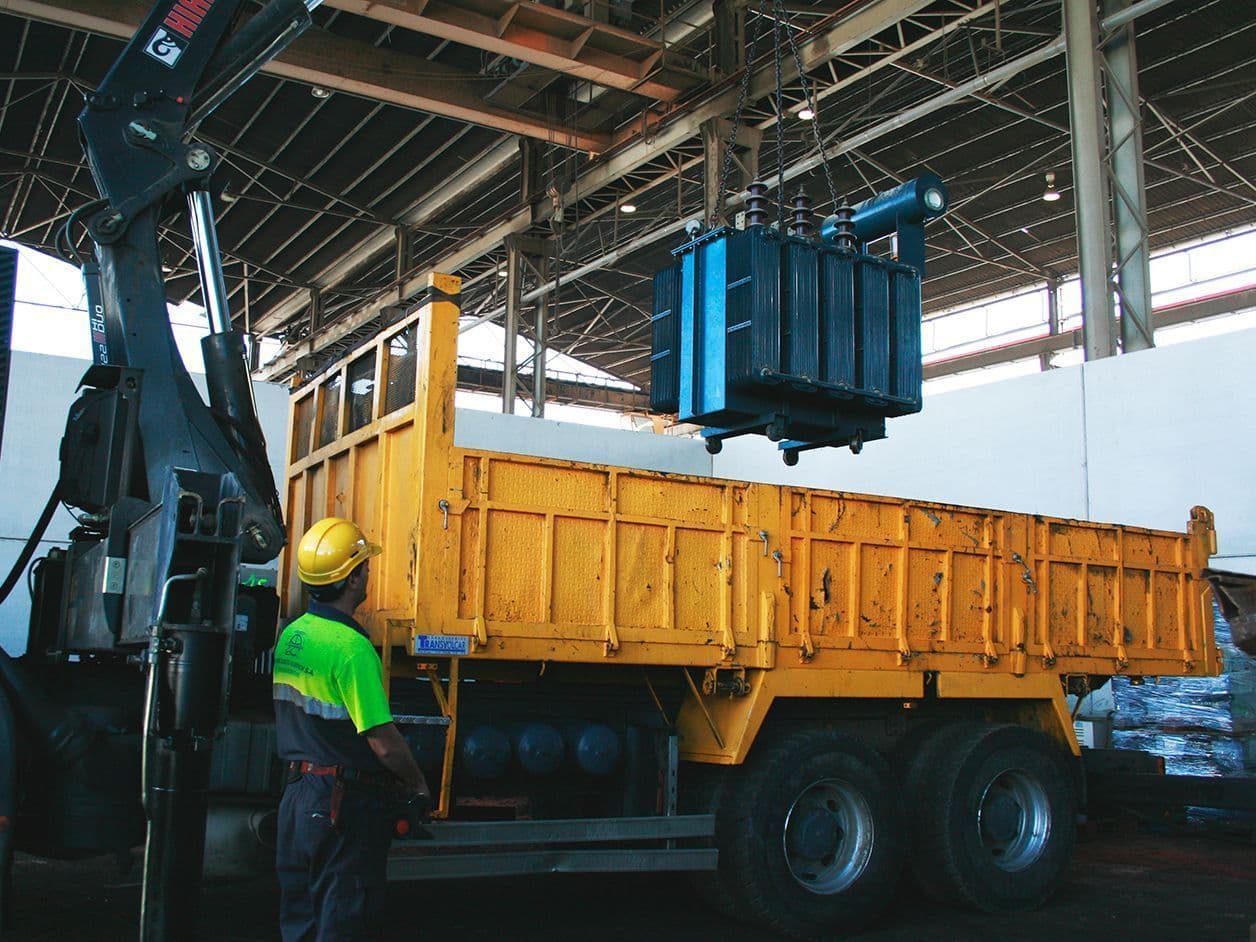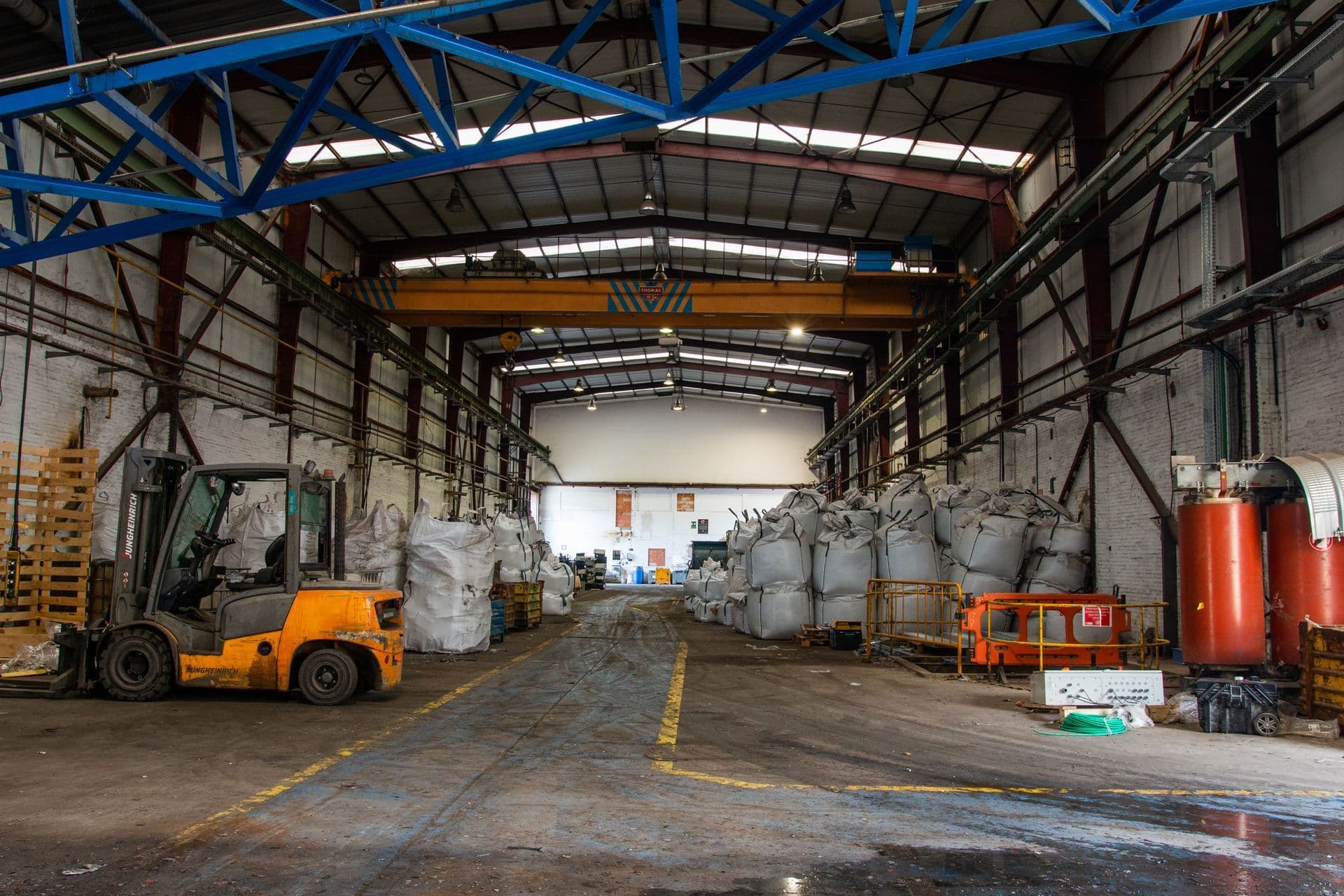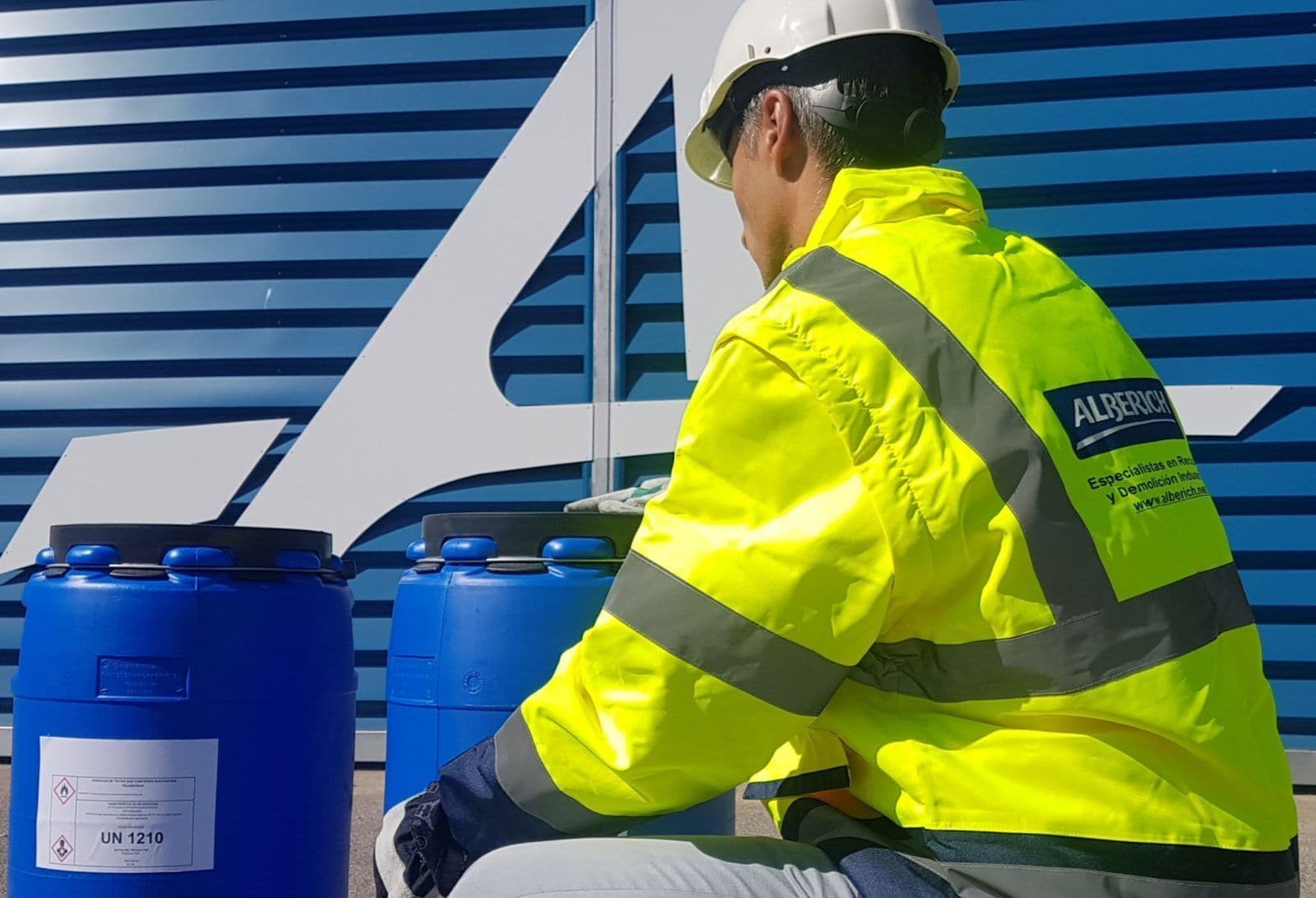
Hazardous waste treatment is the chain of steps that takes toxic, flammable, corrosive or reactive waste from the company that produces it to an authorised facility that recovers or disposes of it safely. The waste is identified by its EWC code (European List of Waste), packaged and labelled, stored for a limited time and transported with the shipment documents (under ADR conditions where they apply). It is then treated by an authorised final treatment facility, which is named in the documents as responsible for the treatment.
What counts as hazardous waste?
Under Spain’s Law 7/2022 on waste and contaminated soils, waste is hazardous if it has one or more of the hazardous properties listed in the law: explosive, flammable, irritant, toxic, carcinogenic, corrosive, infectious or ecotoxic, among others. Packaging containing residues of hazardous substances also has its own hazardous waste code.
Almost every industrial activity produces some:
| Sector | Common hazardous waste |
|---|---|
| Metalworking and machining | Metalworking fluids, used oils, surface treatment sludge |
| Chemicals and pharmaceuticals | Solvents, reagents, active ingredients, process sludge |
| Printing and coatings | Solvent-based inks and paints, varnishes, wash water |
| Automotive and garages | Oils, batteries, brake fluid, filters |
| Any activity | Contaminated packaging and rags, aerosols, WEEE with hazardous components |
How is hazardous waste identified and classified?
Using the European List of Waste, which gives every type of waste a six-digit code according to the activity and process that produce it. Codes marked with an asterisk are hazardous. Some types of waste have two possible codes, one hazardous and one not, depending on what they contain. These are known as mirror entries, and their classification depends on the actual composition, which can often only be established by laboratory analysis.
To classify waste correctly you need to know the process it comes from, the safety data sheets of the products used and, where appropriate, an analysis by an accredited laboratory. A classification error carries through to everything else: the packaging, the label, the transport and the destination.
How should hazardous waste be packaged, labelled and stored?
Packaging. In sturdy, leak-proof containers that are compatible with the waste, and UN-approved for transport when the waste counts as dangerous goods. Hazardous waste must not be mixed with other hazardous waste or with non-hazardous waste: besides being prohibited, a mixture can react, and it makes the whole batch more expensive to treat.
Labelling. Each container must identify the waste (EWC code and description), the producer, the date storage began and the relevant hazard pictograms.
Storage. In a covered area, with a bund or spill containment system, ventilation, fire-fighting equipment and separation between incompatible waste types: acids away from bases, oxidisers away from flammables. As a general rule, Law 7/2022 allows hazardous waste to be stored where it is produced for no more than six months before it is handed over to a waste management company.
How is hazardous waste transported?
Before the lorry leaves, the shipment needs a treatment contract with the destination facility, confirmation from the waste management company that it accepts the waste (the waste acceptance form) and prior notification to the authorities. During the journey, the waste travels with its identification document (DI), or tracking sheet, which is completed once the destination confirms receipt.
If the waste is also classed as dangerous goods under the ADR, the European agreement on the carriage of dangerous goods by road, its requirements apply as well: a driver with an ADR certificate, a vehicle displaying orange plates, UN-approved packaging and its own transport documents. Not all hazardous waste is subject to the ADR, and not all ADR goods are waste, so it has to be checked case by case. What can go wrong at this stage is covered in the risks of transporting waste incorrectly.
What types of hazardous waste treatment are there?
The destination depends on the type of waste and on the hierarchy set by law: first, preparing for reuse and recycling; next, other forms of recovery, such as energy recovery; and only as a last resort, disposal.
| Treatment | What it involves | Typical waste |
|---|---|---|
| Regeneration and recovery | Returning the waste to use or extracting a usable product from it | Used oils, solvents (by distillation), metals from batteries |
| Energy recovery | Using its calorific value as a fuel in authorised facilities | Organic waste with a high calorific value |
| Physico-chemical treatment | Neutralising, separating phases or breaking emulsions | Acids and bases, metalworking fluids, contaminated water |
| Stabilisation and inertisation | Locking the contaminants into a solid, stable matrix | Sludge and ash containing heavy metals |
| Incineration | Controlled thermal destruction, with flue gas cleaning | Toxic organic waste, PCBs, medicines |
| Secure landfill | A dedicated landfill for hazardous waste that has already been stabilised | Whatever cannot be treated any other way |
Each of these treatments is carried out by a final treatment facility holding a specific authorisation for that waste and that operation. It is the final treatment facility that accepts the waste, receives it and is responsible for treating it.
Who is responsible at each step?
| Role | Responsibilities |
|---|---|
| Producer (your company) | Identifying and classifying the waste, storing it properly, handing it over to an authorised waste management company and keeping the documents that prove it has been fully treated |
| Broker or dealer | Organising the management of the waste on the producer’s behalf: destination, documentation and logistics |
| Carrier | Transporting it with the necessary authorisation, suitable equipment and the shipment documents |
| Final treatment facility | Accepting and treating it, and being named in the documentation as responsible for the treatment |
What changes if you work with a broker rather than directly with the final treatment facility is explained in choosing between a waste broker and a final treatment facility.
How we do it at Alberich
For the hazardous waste your business produces, such as solvents, paints, contaminated water, or contaminated packaging and rags, we act as a waste broker authorised by the Catalan Waste Agency (ARC). We don’t treat this waste at our plants: we coordinate the whole operation, and the treatment is carried out by an authorised final treatment facility, which is the one named in the documentation. Our work covers:
- Assessment and characterisation: source process, volume, physical state and EWC code, with accredited analysis where needed.
- Choosing the destination from several approved facilities (distillation, material recovery, stabilisation, incineration or secure landfill), comparing technology, lead times and total cost.
- Documentation: waste acceptance form, tracking sheet, labelling to Spanish UNE standards and ADR documentation.
- Logistics with tankers, leak-proof containers and bulk bags, preparation at your premises and segregation by chemical compatibility.
- Closing each batch, from producer to destination, with suggestions for improvement in the next cycle.
We work in Catalonia, with regular collections or scheduled campaigns, for example during the planned shutdowns in August and December. We are also an authorised waste management company (authorisation no. E-345.97) with our own lines for metals, WEEE and transformers, and we hold ISO 9001, 14001 and 45001 certification.
Frequently asked questions
Can hazardous waste become non-hazardous?
Yes, if its composition genuinely changes, usually because the producer replaces a raw material or modifies a process, and a full laboratory analysis shows that it no longer has any hazardous properties. This is reclassification from hazardous to non-hazardous: a lengthy procedure, but one that improves your environmental indicators and opens up cheaper treatment options.
Do you have to register to produce hazardous waste?
Yes. Companies that produce hazardous waste must notify their regional environmental authority before they start operating. In Catalonia, that’s the Catalan Waste Agency, which assigns each producer its own code.
What should I do with contaminated rags, absorbents and packaging?
They are managed as hazardous waste, with their own EWC code, even if they seem like minor waste. Keep them in a closed, separate container, never with general waste: a solvent-soaked rag in the wrong container can mean the container’s entire contents have to be managed as hazardous.
Do you handle clinical waste?
It isn’t our focus, and it isn’t part of the services we offer directly. Clinical waste needs autoclaving and highly specialised hospital waste systems, and it is handled by dedicated operators. If a case calls for it, we can coordinate with them.
If you produce hazardous waste and want to review its classification, its destination or its cost, send us the source process, the volume and the EWC code if you know it. We’ll reply within 48 working hours.