Sustainability in recycling is measured in verifiable facts: which certifications a company holds, which authorisations it works under, what it does with every tonne that comes in and how it proves where that tonne goes. At Alberich, that environmental commitment rests on ISO 14001 certification, documented traceability for every waste stream and processes that send metal back to industry. And on a simple idea with deep roots: a family business that is more than 125 years old thinks about the next generation.
What does sustainability mean for a recycling company?
Recycling is, by definition, an environmental activity. But that alone isn’t enough to call a company sustainable. In practice, it comes down to three commitments:
- Recovering as much as possible from every material that comes in, so that it goes back to industry instead of ending up in landfill.
- Being able to prove it with documents: what came in, what was done with it and where it went.
- Reducing its own impact: the plant’s energy use, transport and the safety of the people who work there.
We cover the general reasons for recycling in why recycling matters. Here we focus on what Alberich does.
Which certifications and authorisations back Alberich’s environmental commitment?
| Credential | What it certifies |
|---|---|
| ISO 14001 | An externally audited environmental management system |
| ISO 9001 and ISO 45001 | Quality management, and occupational health and safety management |
| Waste management authorisation no. E-345.97 | Authorisation from the Catalan Waste Agency (ARC) to manage waste at our facilities |
| Waste producer code P-07028.2 | Registration as a waste producer with the same agency |
| BIR, FER and Gremi de Recuperació de Catalunya | Membership of the sector’s international, Spanish and Catalan associations; of the BIR since 1960 |
The certifications and the codes for each site are on the certifications page.
What does Alberich do with the material it receives?
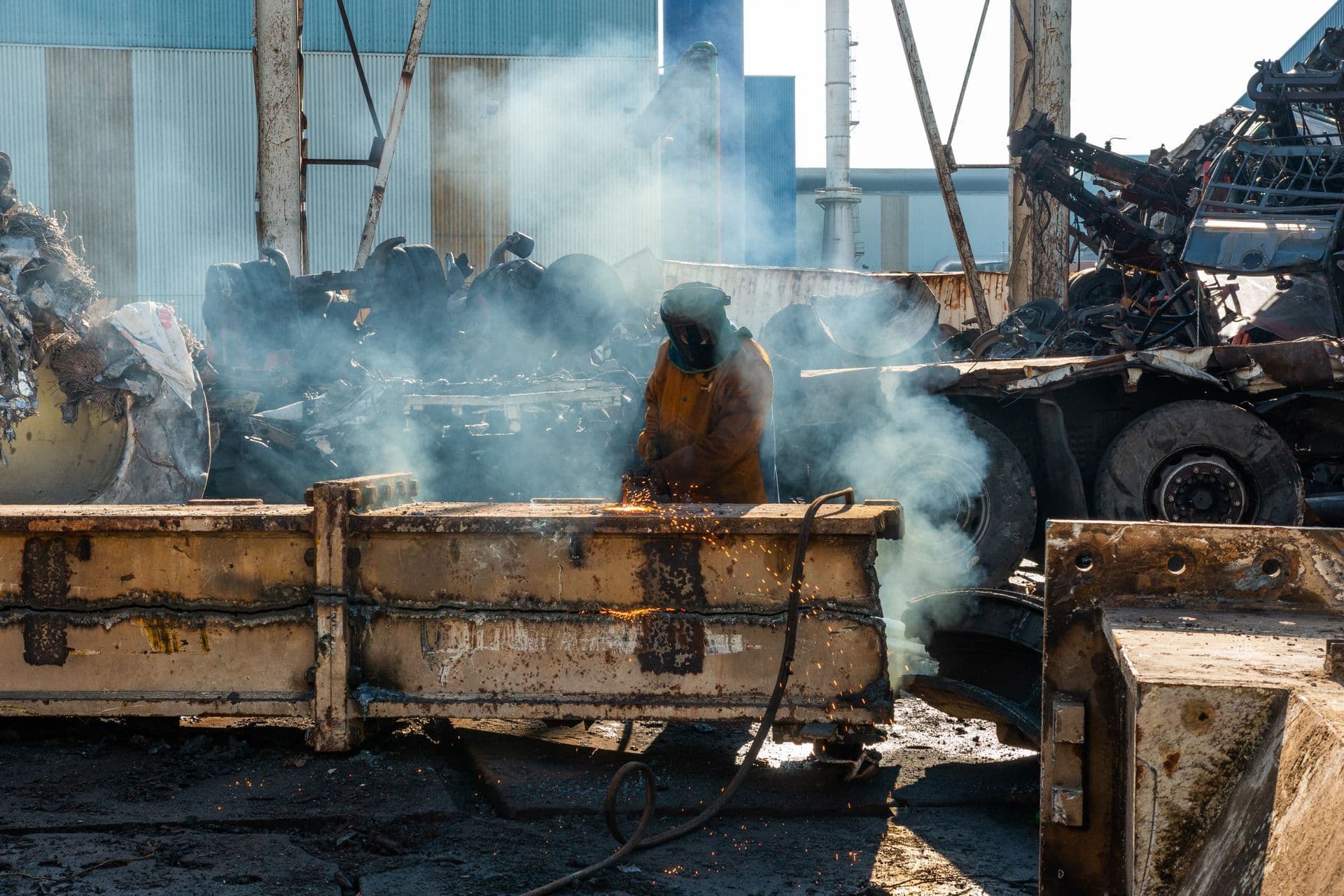
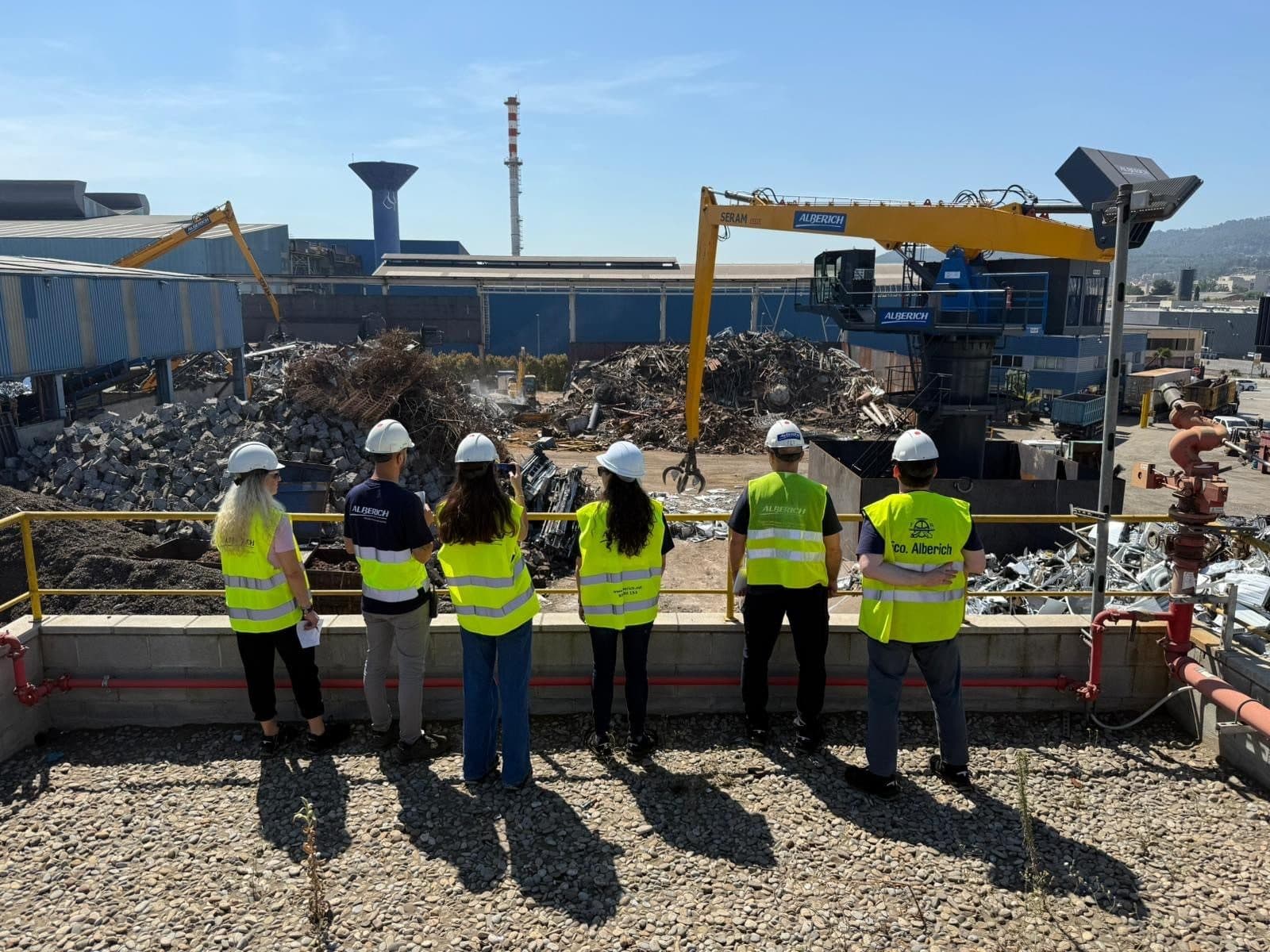
We process more than 300,000 tonnes a year at three company-owned sites: Castellbisbal, La Llagosta and Constantí. Heavy scrap is cut in 600–1,000 t shears; mixed scrap goes through the 4,000 hp shredder, and then eddy current, X-ray and colour sorting separate out each non-ferrous metal.
Our investments in recent years have all gone in the same direction: water-injection shredding in 2009, a fines processing line in 2020, more capacity at the cable plant in 2025 and, in 2026, a radiator plant that separates copper from aluminium, two metals that used to be sold mixed. Every new line means less material lost. The result is products made to specification, such as shredded scrap (ISRI 210/211) or copper granules, which steelworks, foundries and refineries turn into new metal.
How can you prove where each load of waste goes?
With traceability. Everything that comes in is weighed on a trade-approved weighbridge and recorded. Every waste shipment travels with its identification document (DI) and, if the customer needs it to close their file, we issue the certificate of treatment or destruction. For the hazardous waste we coordinate as an authorised waste broker, the documentation names the authorised final treatment facility that carries out the treatment.
The documents and the legal obligations are explained in traceability in industrial waste management.
What do we do to reduce our own impact?
In 2025 we installed solar panels at the main yard to reduce our carbon footprint. For transport, we use our own GPS-tracked fleet, renewed in 2023 with new tractor units and a trailer, and a mobile baler that compacts scrap into bundles at the customer’s premises: a lorry loaded with bundles carries more material than one loaded with loose scrap.
Safety is part of sustainability too. As well as holding ISO 45001, we monitor scrap for radioactivity as it enters and leaves the plant, so that no contaminated material reaches a steelworks.
What role does selective demolition play?
In demolition, sustainability is decided before the first machine goes in. Dismantling in phases and separating the steel, the concrete and the other fractions at source makes it possible to recycle almost everything. In the projects we have documented, the recycling rate has been between 95% and 100%, as in the dismantling of a 30-metre industrial storage tank. Our industrial demolition service covers licences and permits, valuation of the material, execution and waste management.
If you’re interested in how the Sustainable Development Goals apply in this field, we cover it in Alberich’s commitment to the SDGs.
Why do we talk about a legacy?
Because the company has passed from one generation to the next. Brígida Vilalta began recovering materials in 1900; in 1930, Francisco Alberich Vilalta took the business to an industrial scale in Poblenou; 1960 brought demolition, industrial dismantling and membership of the BIR; 1974, the purchase of the Castellbisbal yard; and in 1990 the fourth generation joined the management team. A company like that can’t plan just one year ahead. Looking after the environment we work in is, quite simply, what allows us to keep working in it.
Frequently asked questions
What is ISO 14001?
It’s the international standard that sets out the requirements for an environmental management system: identifying the impacts of the company’s activities, complying with the applicable legislation and improving continuously. Certification is granted by an external body after auditing the company.
What does it mean to be an authorised waste management company?
It means the environmental authority (in Catalonia, the Catalan Waste Agency) has authorised the company to receive and treat certain types of waste at its facilities. Alberich’s waste management authorisation number is E-345.97.
Does recycling metal save energy?
Yes. Melting scrap uses far less energy than producing metal from ore. In the case of aluminium, recycling takes around 5% of the energy needed to produce it from bauxite.
How can I know my waste has been treated correctly?
Ask for the documents: the identification document for each shipment and, at the end, the certificate of treatment or destruction. They are the proof that the waste reached an authorised waste management company and received the intended treatment.
If you’d like to know how your company would fit into this process, tell us what materials you produce and we’ll explain what we would do with each one.