Alberich has been recycling metal since 1900, when Brígida Vilalta Casals began recovering materials in Barcelona’s Poblenou district. That metal recycling experience, built over more than 125 years and five generations of the same family, has taken the company from a family workshop to three company-owned sites, a team of more than 170 people and more than 300,000 tonnes processed a year.
Here are the dates that explain how that know-how was built, and where it shows in day-to-day work.
How did Alberich start?
In 1900, Brígida Vilalta started recovering materials in Barcelona. Thirty years later, in 1930, Francisco Alberich Vilalta took that work to an industrial scale in Poblenou, at the time one of the city’s factory districts.
The principle is the same one the company follows today: what one industry stops using is another industry’s raw material.
When did it make the move into industry?
In 1960. With Pedro Alberich Larguier on board, the company expanded into demolition, industrial dismantling and shipbreaking. That same year it joined the Bureau of International Recycling (BIR), the international recycling federation, and began taking part in the sector’s international development.
In 1974 it became a public limited company (sociedad anónima) and bought the waste management yard in Castellbisbal, which is now its head office and main plant. In 1990 the fourth generation, Pedro and Francisco Alberich de Castro, joined the management team and steered the business towards industrial waste. The La Llagosta yard followed in 1992.
What has Alberich added since 2003?
The investments of these years have always pointed the same way: treating more types of material and separating them better.
| Year | Milestone |
|---|---|
| 2003 | New line of business: recycling construction aggregates |
| 2004 | Electrical cable treatment and recycling plant |
| 2006 | Extended environmental permits for cables, transformers and electronic equipment |
| 2008 | Authorisation as a WEEE (waste electrical and electronic equipment) treatment plant |
| 2009 | Water-injection shredding system |
| 2011 | Launch of SCRAPCENTER and SCRAP XTREM |
| 2012 | Secondary aluminium line for aluminium recovered from Zorba |
| 2015 | Aluminium can recycling and recovery line |
| 2017 | An extra 16,500 m² to expand the Castellbisbal site |
| 2018 | Opening of the Constantí site (Tarragona) |
| 2020 | Fines processing line |
| 2021 | Second phase of the can recycling process |
| 2023 | Expansion and modernisation of the lorry fleet |
| 2024 | New shear at the main yard and a shredding mill for metals |
| 2025 | Solar panels at the main yard and expansion of the cable plant |
| 2026 | Aluminium-copper radiator recycling plant and a new shear at the Constantí site (Tarragona) |
The full timeline, including the investment planned for 2027, is on the Alberich history page. Where the company is heading over the coming months is covered in Alberich’s goals for 2026.
What do 125 years of metal recycling experience teach you?
That the value lies in sorting
The same lorryload of scrap can be paid for as a mix or as metal. The difference lies in separating it properly: the copper from the aluminium in a radiator, the plastic from the copper in a cable, low-residual steel from everything else. Almost every investment in the table is a response to that.
That the supplier and the customer are the same person
The person who sells their scrap today is the one who books a collection, a container or a dismantling job tomorrow. Without raw material there is no recycling, so every relationship is looked after for the long term, with properly explained valuations and clear documentation.
That the market is international
Scrap is bought and sold against global benchmarks, such as the London Metal Exchange (LME) for non-ferrous metals. Membership of the BIR since 1960, of the FER (Spanish Recycling Federation) and of the Gremi de Recuperació de Catalunya (the Catalan recycling trade association) keeps the company up to date with what is happening in the sector and in regulation.
That checks and controls can’t be improvised
Radiation monitoring of incoming and outgoing material, spectrographic analysis of copper and ISO 9001, 14001 and 45001 certification. It’s the least visible part of the trade, and the part that makes it possible to work with steelworks, foundries and demanding industrial customers.
What does Alberich look like today?
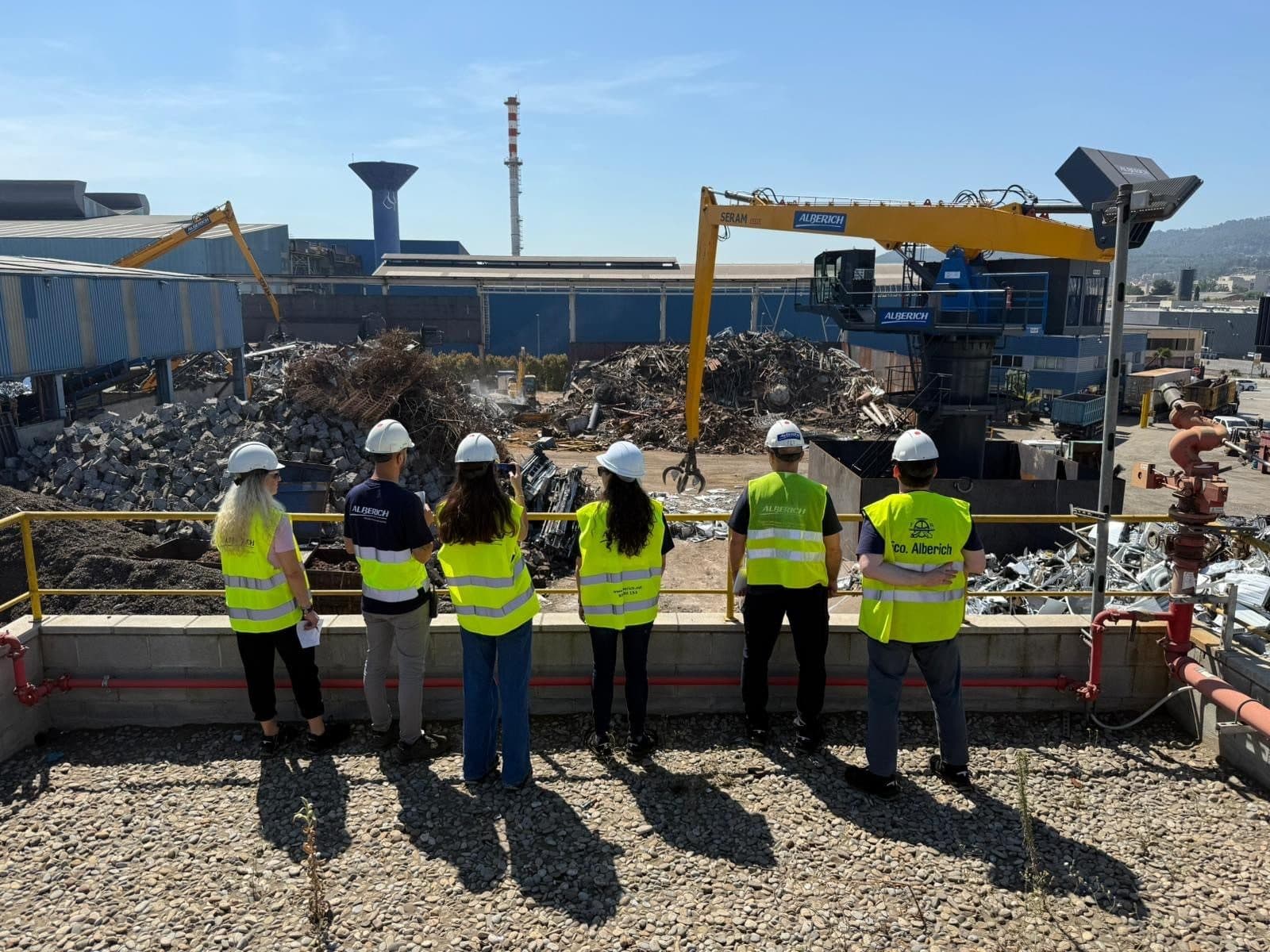
Three company-owned sites, in Castellbisbal, La Llagosta and Constantí, and eight buying points in the Scrap Center network across Catalonia. Castellbisbal is home to the 4,000 hp shredder and to non-ferrous separation by eddy current, X-ray and colour sorting, and the company also works with 600–1,000 t shears and a low-residual scrap line.
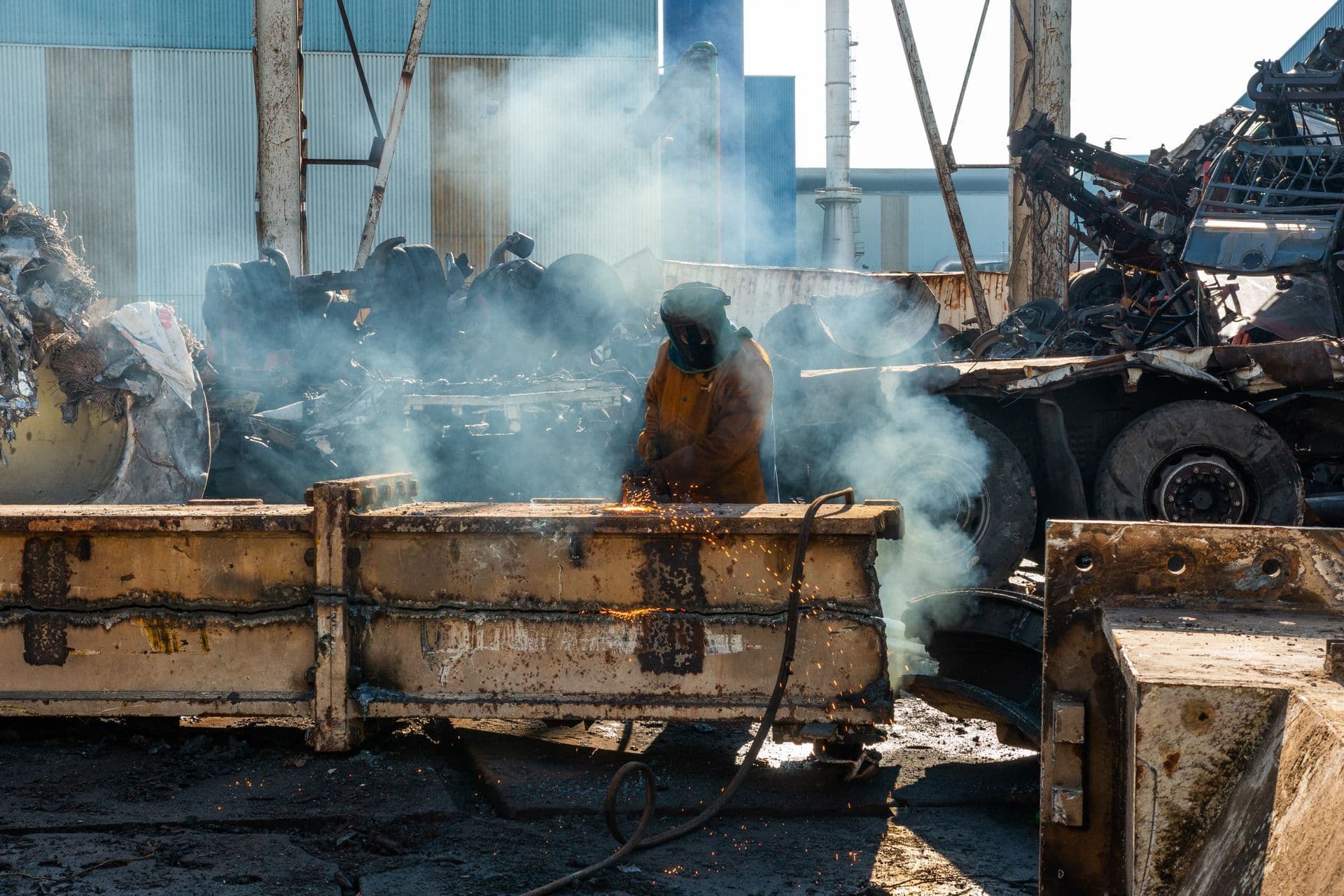
On that basis, Alberich buys scrap and metals of every kind, handles WEEE, end-of-life vehicles and transformers, coordinates industrial waste management and carries out industrial demolition with its own machinery and team. If you’re curious about how this story fits into the history of recycling in general, there’s a short history of metal recycling.
Frequently asked questions
Is Alberich still a family business?
Yes. It has been in the same family for five generations, since Brígida Vilalta Casals started out in 1900, and the company remains firmly rooted in Catalonia.
What is Scrap Center?
It’s Alberich’s network of buying points, launched in 2011. Today it has eight sites, in Badalona, L’Hospitalet de Llobregat, Rubí, Les Franqueses del Vallès, Vilanova i la Geltrú, Igualada, El Vendrell and Malgrat de Mar.
What kind of customers does Alberich work with?
Industrial companies of every size, in sectors such as chemicals, pharmaceuticals, energy, automotive and food. It also works with WEEE producer compliance schemes, sorting plants and private individuals who bring their vehicle or their material to the Scrap Center network.
Where is Alberich’s head office?
At Polígono Industrial Can Pelegrí, C/ Ferro 8, in Castellbisbal (Barcelona). The main plant and the shredder are there too.
If you have metal to sell, or a waste management or demolition project, tell us what you need. We’ll reply within 48 working hours.