A well-executed industrial demolition contributes mainly to four of the United Nations Sustainable Development Goals (SDGs): SDG 12, responsible consumption and production; SDG 9, industry and infrastructure; SDG 8, decent and safe work; and, indirectly, SDG 13, climate action. The link between the SDGs and industrial demolition is measured with data from the site: tonnes recycled, hazardous waste properly handed over and work completed without accidents. This is how we apply it at Alberich.
What are the SDGs and what do they have to do with demolition?
They are the 17 goals of the 2030 Agenda, adopted by the United Nations in 2015, with 169 specific targets. They are designed for countries, but any company can identify which targets its activity influences and measure that contribution. There is no such thing as an ‘SDG certificate’: what counts is being able to show the data behind every claim.
In a demolition, the link is direct. A plant being dismantled is a large amount of material, mostly metal, that can either go back into industry or end up in landfill. And it is work that carries risks for people, which have to be controlled.
Which SDGs is industrial demolition linked to?
| SDG and target | What we do on site | How it is verified |
|---|---|---|
| 12.5: reduce waste through prevention, reduction, recycling and reuse | Selective dismantling, segregation at source and processing of the metal at Castellbisbal | Recycling percentage for each project and waste management certificates |
| 12.4: environmentally sound management of chemicals and waste | Identifying hazardous waste before demolition and handing it over to an authorised final treatment facility | Transfer documents and certificates from the final treatment facility |
| 9.4: upgrade infrastructure and retrofit industries to use resources more efficiently | Removing obsolete installations without stopping the plant, so the client can upgrade it | Deadlines met and production maintained during the work |
| 8.8: safe working environments for all workers | A health and safety plan for each site, training, coordination with the plant and ATEX equipment where needed | ISO 45001 certification and incident records for each site |
| 13: climate action (indirect link) | Returning metal to industry as secondary raw material | Tonnes of each metal recorded on the certificates |
SDG 12: how much material goes back into industry?
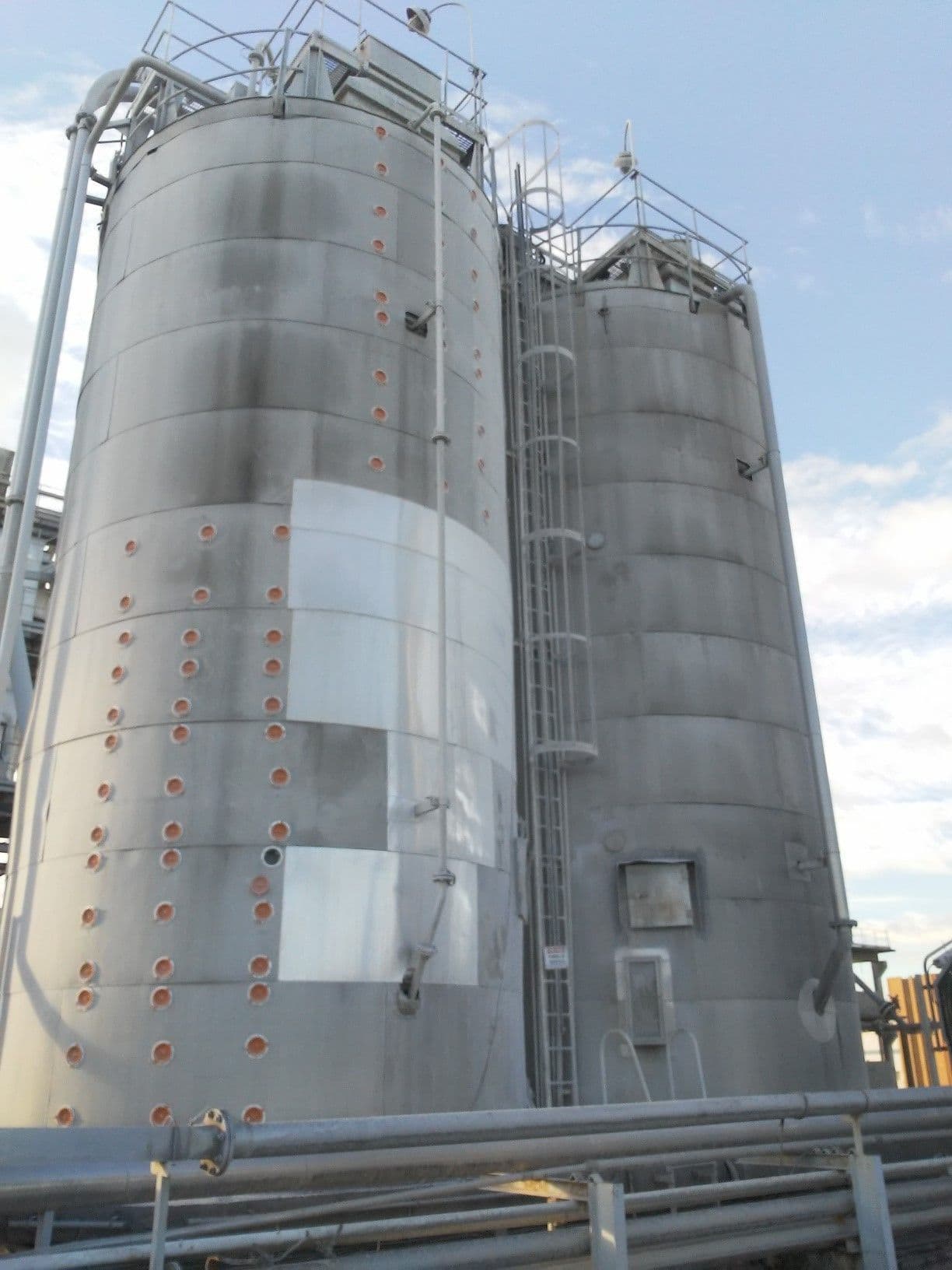
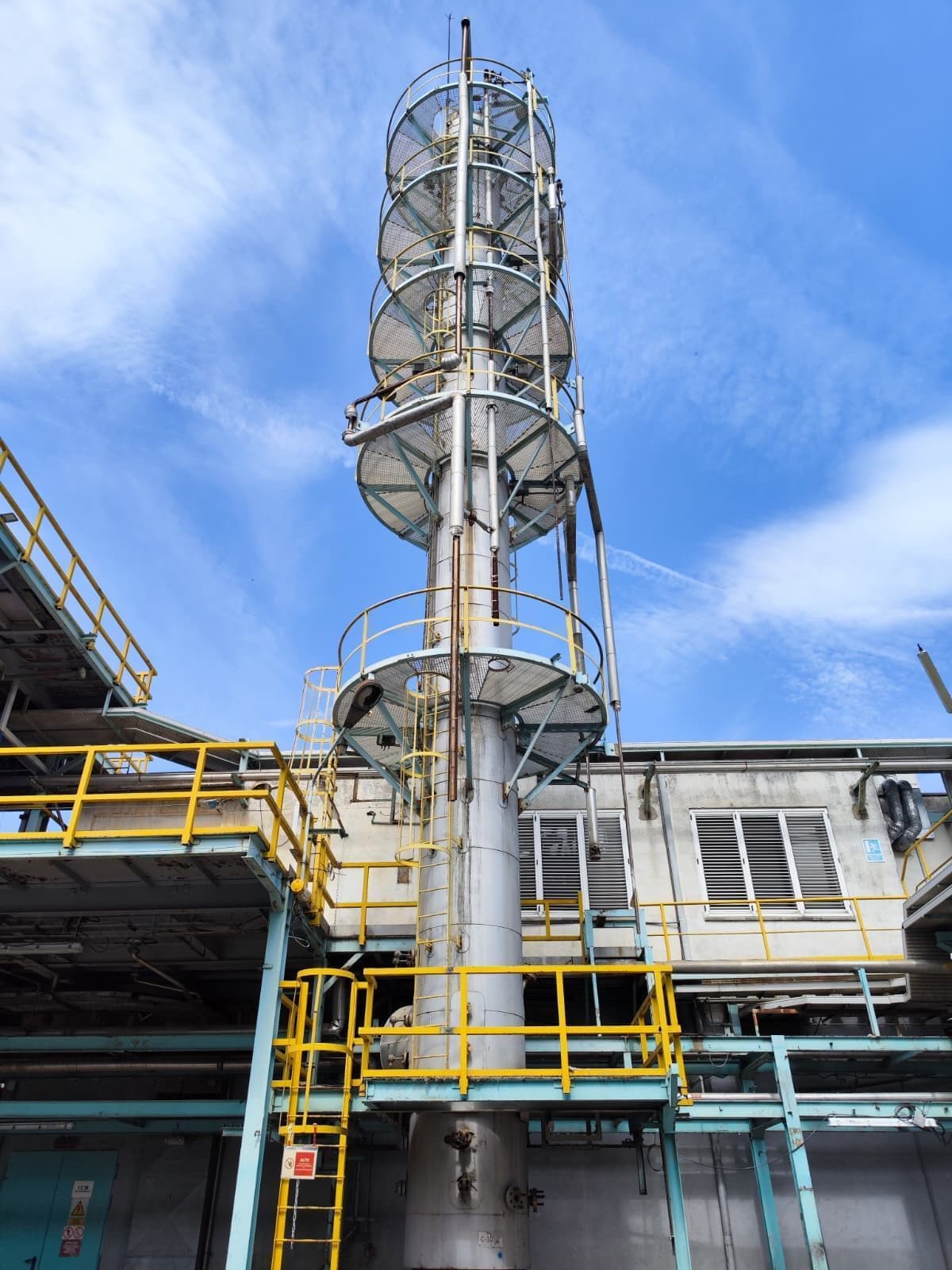
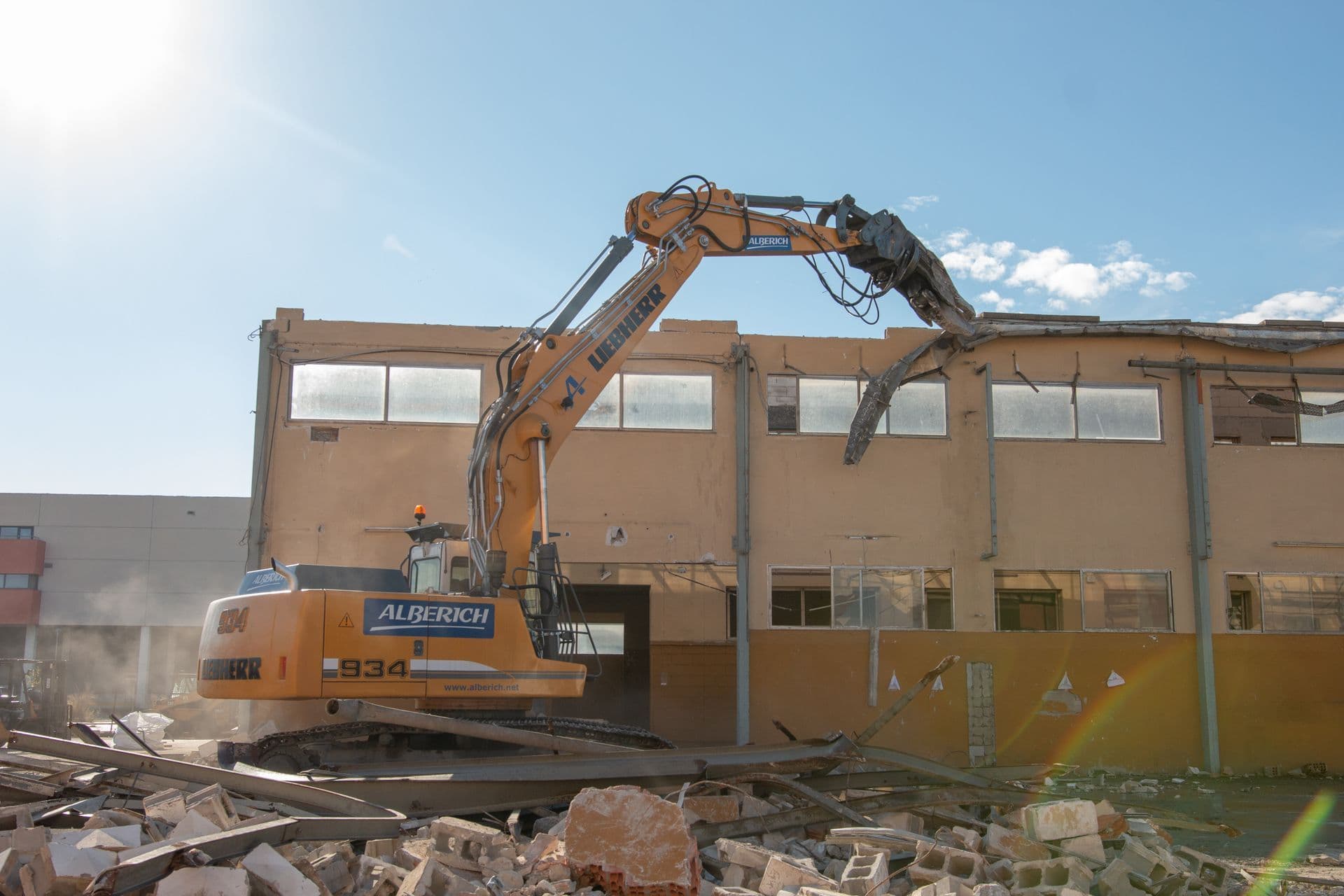
This is our main contribution. On the six demolition projects we document on our website, recycling reached 100% on the industrial tank, the port cranes, the railway footbridge and the distillation column, and 95% on the food plant and the silos. On most of our demolitions we exceed 90%. We explain why some reach 100% and others don’t in our industrial demolition case studies.
That figure is the result of specific decisions: measuring the material before quoting, dismantling in sections, separating on site and processing the metal at our Castellbisbal plant. Across the company as a whole, we process more than 300,000 tonnes of material a year.
Target 12.4 is where hazardous waste comes in. Asbestos is removed by a company on the RERA (Spain’s Register of Companies with Asbestos Risk), with its work plan. With PCB-containing transformers, Alberich acts as a transfer station and the final destruction is carried out by an authorised final treatment facility, as we explain on our electrical transformers page. What matters is that no hazardous waste is mixed with the fractions that are recycled and that each one reaches its destination with its documentation.
SDG 9: why does good demolition help modernise industry?
Many demolitions are the first step in an investment. The two silos we removed at a food plant were obsolete and had to come down so the storage facilities could be modernised. If the factory has to stop for that, the upgrade costs more and is delayed.
That’s why we work alongside live production: isolating the work zone, using time windows and coordinating with the plant every day. We explain how in industrial demolition without stopping production.
SDG 8: how do you show that a demolition is safe?
With a system and with records. We hold ISO 45001 certification for occupational health and safety, every site has its own health and safety plan, and in ATEX-classified environments the work is done by trained personnel with equipment certified for explosive atmospheres. The 30-metre distillation column, in an ATEX zone, was dismantled in five days without a single incident.
We are a team of more than 170 people, with our own machinery and operatives. You’ll find the detail of how risks are prevented on these sites in our guide to health and safety in industrial demolition.
SDG 13: does recycling the metal from a demolition reduce emissions?
Indirectly, yes. The metal we return to steelworks and foundries replaces some of the metal that would otherwise be produced from ore, which uses much more energy. With aluminium, for example, recycling saves up to 95% of the energy needed to produce it from bauxite.
If your company needs to estimate the emissions avoided by a demolition, the reliable starting point is the tonnes of each metal recorded on the waste management certificates. There is nothing to gain from attributing to the project climate targets it has no influence on.
How does Alberich put this into practice?
With more than 125 years in metal recycling, our own plant in Castellbisbal, authorisation as a waste management company (E-345.97) and ISO 9001, 14001 and 45001 certification. Every demolition ends with the documentation needed to check what has been done with the material. The company’s sustainability priorities are set out in Alberich’s objectives for 2026.
Frequently asked questions
Can a demolition count towards my company’s sustainability report?
Yes, as waste management data: tonnes per fraction, the destination of each one and the percentage recovered, with the certificates that prove it. What you shouldn’t do is attribute to it targets that the work doesn’t affect.
Is there an SDG certification for demolition companies?
There is no official SDG certificate. What can be verified are management system certifications, such as ISO 14001 or ISO 45001, authorisations as a waste management company and the documented data for each project.
Is it better to reuse equipment than to recycle it?
Yes, where possible: the waste hierarchy in Spain’s Law 7/2022 puts preparing for reuse ahead of recycling. If a machine or a component has a second life, it is identified in the inventory and dismantled carefully; anything that doesn’t is recycled.
Which SDGs have no connection with industrial demolition?
Most of them. A demolition has no measurable influence on goals such as education or life below water, and there is no point citing them. It is more useful to focus on the three or four where the work really does make a difference, and to measure them properly.
If you need a demolition to provide data for your sustainability report, let us know when you request a quote and we’ll prepare the documentation with that in mind.