Alberich’s goals for 2026 come down to two priorities: strengthening its circular economy and sustainability model, and moving forward with the digitalisation and innovation of its processes to gain efficiency, traceability and quality. These aren’t new directions but a continuation of what the company has done since 1900: recovering metal and returning it to industry.
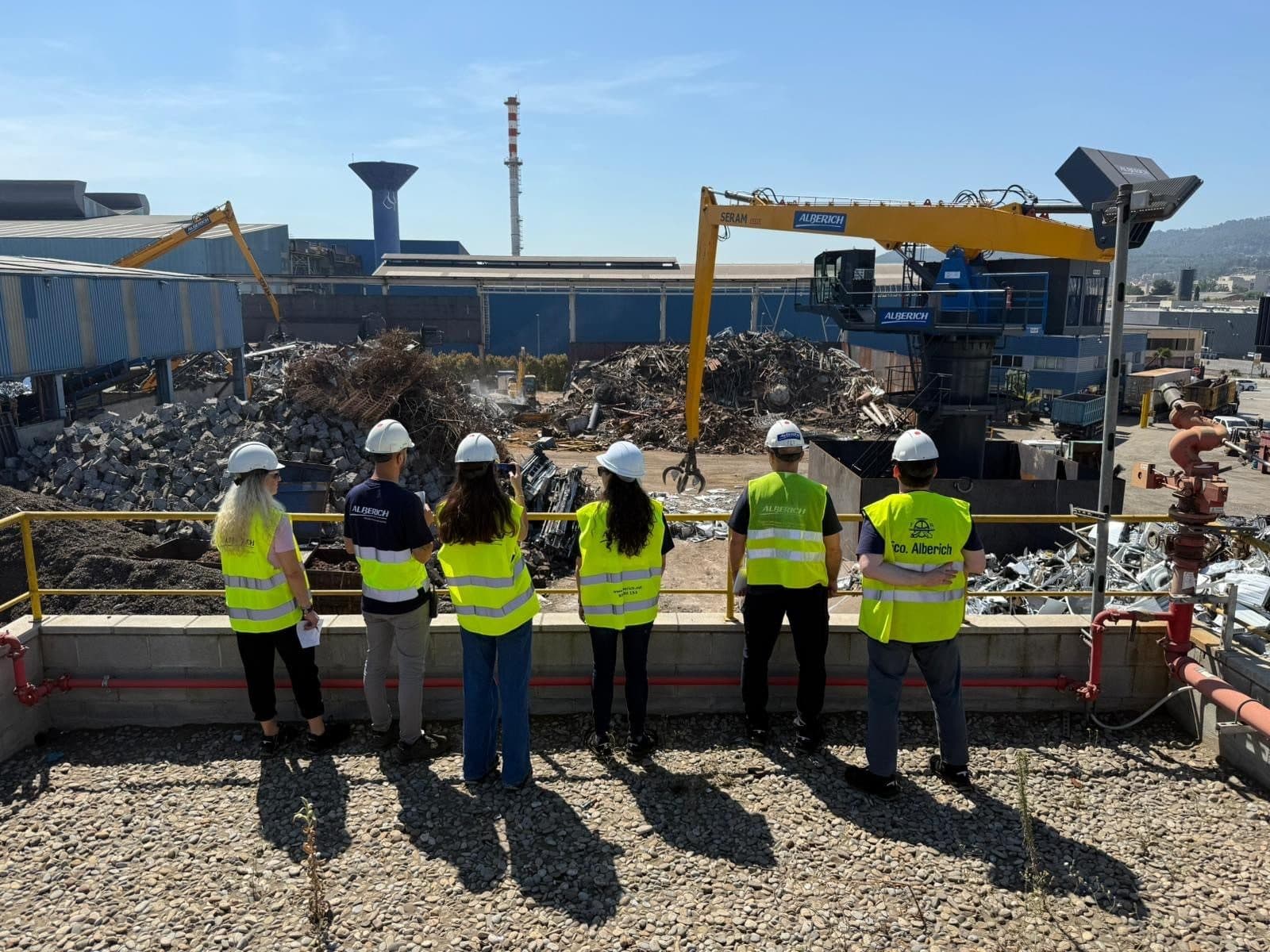
Francisco Alberich, S.A. has its head office in Castellbisbal and sites in La Llagosta and Constantí, processes more than 300,000 tonnes a year with its own machinery and technology, and holds ISO 9001, 14001 and 45001 certification. That is the starting point for this year’s goals.
What are Alberich’s goals for 2026?
| Priority | What it aims to achieve | What the customer notices |
|---|---|---|
| Circular economy and sustainability | Improving processes to recover more material and return it to the production chain as raw material | More material recovered and less environmental impact linked to their activity |
| Digitalisation and innovation | Modernising and digitalising processes with reliable tools | A more responsive, better documented and more transparent service |
What does strengthening the circular economy mean for a recycling company?
For Alberich, the circular economy has been its business from the very beginning, long before it was called that. Recovering, reusing and recycling metal closes the life cycle of products and returns resources to the production system.
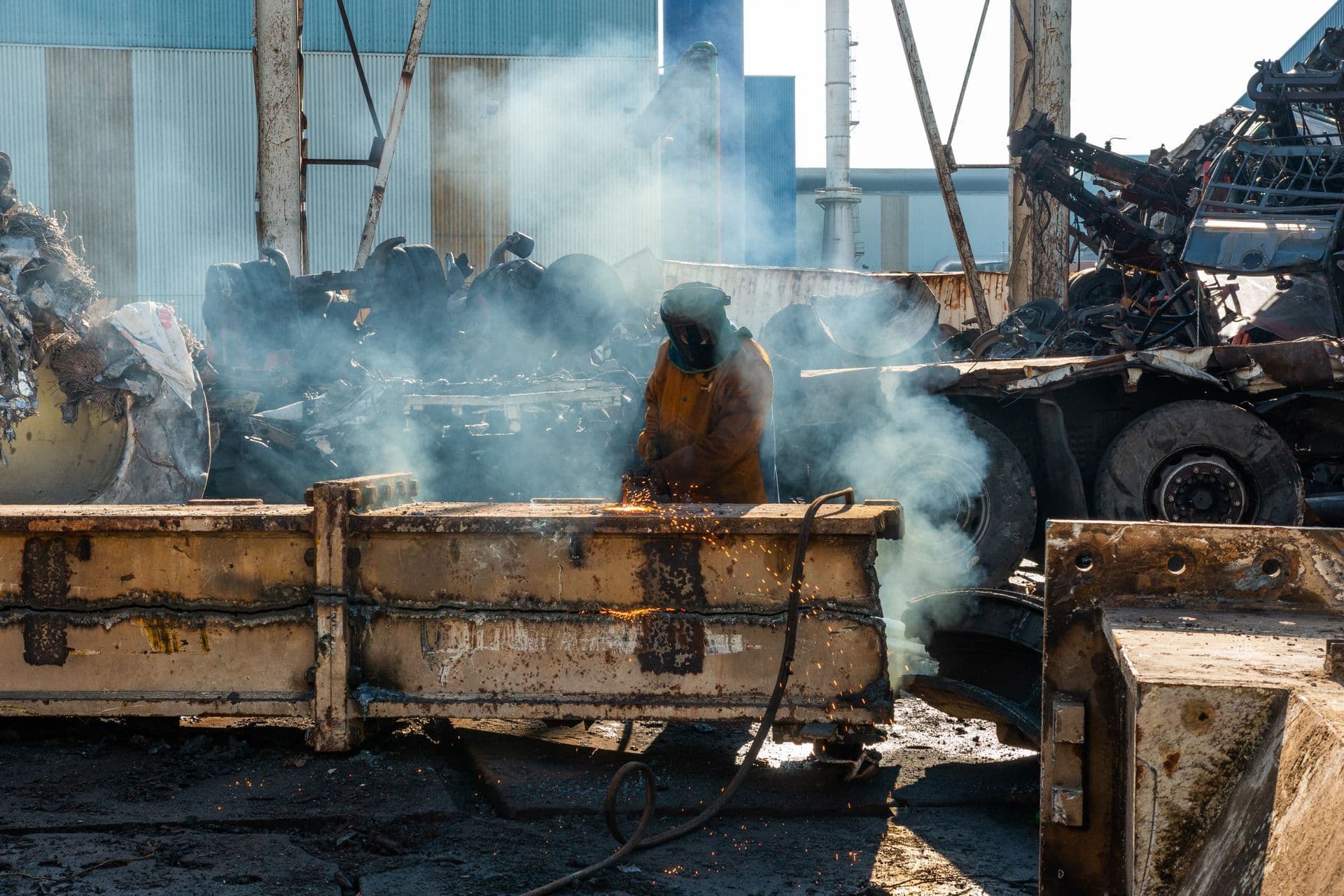
The goal for 2026 is to keep strengthening its industrial waste management model through one specific line of work: improving processes step by step so that as much as possible of each material goes back into the production chain as a recovered resource. Every tonne of ferrous scrap, aluminium, copper or stainless steel processed at the Castellbisbal facilities returns to industry as secondary raw material and avoids the extraction of virgin resources.
Recovery comes first
The priority is to recover every material and put it back to use. In an industrial demolition, for example, good segregation at source is what makes high recycling rates possible.
Working together with customers
Alberich works with companies in sectors such as chemicals, energy, automotive and pharmaceuticals. The aim is for the management of their waste to fit in with their own sustainability and regulatory compliance commitments, because progress in this area is a shared effort.
What will Alberich digitalise, and why?
In 2026, the company is continuing to modernise and digitalise its processes, gradually bringing in tools that help it manage day-to-day operations, analyse information and make better decisions. Always with one principle in mind: in this industry, technology has to add robustness, not complexity.
Operational efficiency
Digitalising workflows makes it possible to coordinate in-house resources (fleet, machinery and technical teams) more effectively and to fine-tune the timing of each service. Some of the groundwork is already in place: Alberich’s own fleet is GPS-tracked, and supplier and operations management runs on the company’s ERP. The goal is for more and more steps of the service to be handled digitally.
Document traceability
Managing the documentation for each operation digitally gives control over the whole process, from collecting the material to its final recovery, and provides legal and operational certainty for Alberich and its customers. We explain why this matters so much in the importance of traceability in industrial waste management.
Service quality
Analysing operational information helps to identify improvements, anticipate needs and offer a service that is more transparent and in line with good practice in the industry.
Digitalisation is a tool for maintaining the standard of service in an industrial environment that is changing fast.
Why do the two priorities go together?
Because they reinforce each other. Technology makes it possible to recover more from materials, document every process more precisely and use data to show the effect of responsible management. And sustainability gives direction to every investment in technology: the point isn’t to digitalise for the sake of it, but to make every operation more efficient, safer and more environmentally sound.
Two investments in 2026 follow that approach: the new recycling plant for aluminium and copper radiators, which separates the two metals so that each can be recovered separately, and a new shear at the Constantí site (Tarragona). We tell the story of how we got here in over 125 years of experience in metal recycling, and the wider context for the industry in the future of metals.
Frequently asked questions
Does Alberich only work with large industrial companies?
No. It has experience in large-scale projects, but it works with companies of all sizes and in all sectors: chemicals, pharmaceuticals, energy, automotive, food and general industry. Every project is approached with the same method, whatever its scale.
Why does it matter that a waste management company has its own resources?
Having its own fleet, machinery, technical teams and recycling plant means it can control every stage of the service, fine-tune timescales and take direct responsibility for the whole operation.
Where does Alberich operate?
From its three sites in Castellbisbal, La Llagosta and Constantí, and from the eight buying points in the Scrap Center network, spread across Catalonia. Logistics are handled with its own fleet and containers from 1 to 30 m³.
How do you start working with Alberich?
Tell us what material or waste you have, how much of it and where it is, by phone or through the contact form. We’ll reply within 48 working hours with a proposal.
In 2026, Alberich keeps building on what it has always done: recovering as much as possible from every material, documenting it properly and working with each customer for the long term. If you’d like to get to know the company better, start with about us.