The importance of recycling for a business goes beyond the environment: the law requires waste to be managed properly, recycling cuts costs and, in the case of metals, it turns waste into income. It also returns raw materials to industry and gives you the data your customers and auditors increasingly ask for.
If your company generates scrap metal, cable, electrical equipment, vehicles or industrial waste, here are the reasons and some concrete examples.
Why is recycling important for a business?
For four reasons, summed up here:
| Reason | What it means | Example |
|---|---|---|
| Legal compliance | The company is responsible for ensuring its waste is managed correctly | Separating, handing over and keeping the paperwork for every collection |
| Costs | Whatever is recycled doesn’t incur landfill costs, and metals can be sold | Ferrous scrap, cable or aluminium, separated and sold |
| Raw materials | Recovered metal replaces ore and saves energy | Recycling aluminium needs around 5% of the energy required for primary aluminium |
| Reputation | Customers and auditors ask for evidence of responsible management | Documentation and traceability for every waste stream |
What does the law require of a business regarding its waste?
Spain’s Law 7/2022 on waste and contaminated soils makes the producer responsible for ensuring that its waste is treated properly. In practice, that means separating it, storing it in suitable conditions, handing it over to an authorised waste management company and being able to prove it with documents. If the waste is hazardous, the labelling, storage and record-keeping obligations are stricter.
The law also ranks the options: first prevention, then preparing for reuse, recycling, other recovery and, only at the end, disposal. And since 2023, landfilling and incinerating waste have been subject to a specific tax, so whatever is recycled no longer adds to that bill.
For hazardous waste, many companies prefer someone to coordinate management from start to finish. We explain how that works in our article on why you should hire a waste broker.
Does recycling save a business money?
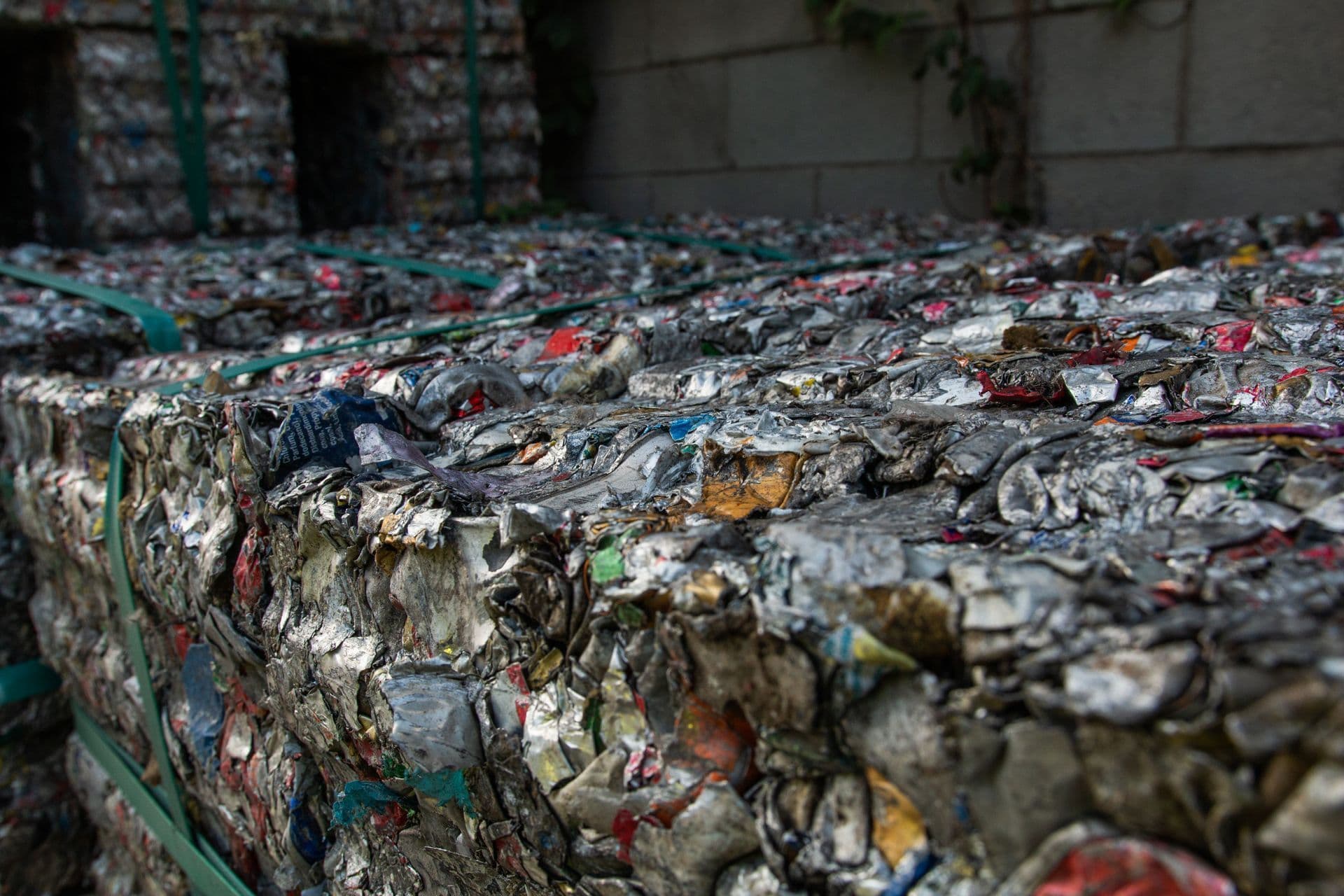
Yes, and with metals it does so directly, because scrap can be sold. Its price depends on the market price of the metal, the grade, how clean it is, the quantity and the logistics, but one rule always holds: separated is worth more than mixed.
- Copper cable is paid for according to the copper it contains, so it’s worth keeping it apart from other scrap.
- Mixed copper-aluminium radiators, which used to be sold as a mix, can now be paid for by metal thanks to a line that separates them.
- Ferrous scrap free of contaminants such as plastics, wood or soil is graded and valued more highly.
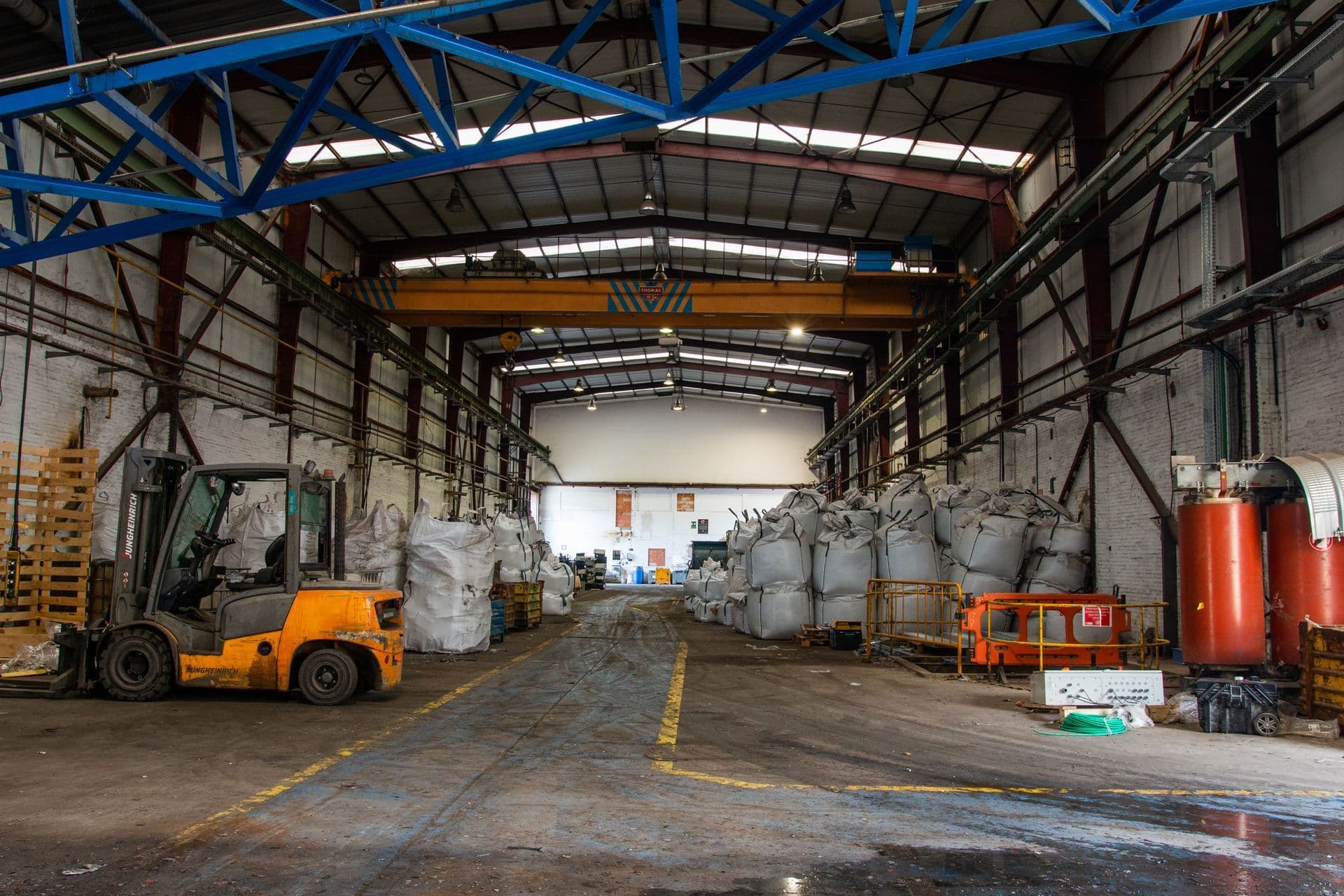
So that separating doesn’t become a space problem, Alberich places containers from 1 to 30 m³ at your premises and collects them with its own fleet. You’ll find more ideas in how to turn your business waste into profit.
Why does recycling secure raw materials?
Because every tonne of recovered metal is a tonne that doesn’t have to be mined, transported and refined. Recycling aluminium needs around 5% of the energy required for primary aluminium, and recycling copper can save around 85% of the energy needed to produce it from ore. Ferrous scrap, for its part, is the basis of the steel made in electric arc furnaces.
For a European industry that imports much of its ore, the metal already in circulation is a reserve. We go into this in the future of metals.
Does recycling improve a company’s reputation?
When it can be proved, yes. Customers, auditors and sustainability reports increasingly ask for data: what waste the company generates, who manages it and where it goes. A collection with complete paperwork answers those questions without any extra work.
The opposite also counts. Badly managed waste can lead to a fine or an awkward question from a customer, and in companies certified to ISO 14001, waste management is one of the points the audit checks. The basis for all of this is traceability, which we cover in the importance of traceability in industrial waste management.
What materials can a business recycle with Alberich?
| Material | Examples | How it is handled |
|---|---|---|
| Ferrous scrap | Structures, obsolete machinery, stamping offcuts, turnings | Shear or shredder, then sold to steel mills and foundries |
| Non-ferrous metals | Copper, brass, bronze, stainless steel, aluminium, lead, zinc | Sorted by alloy and analysed |
| Electrical cable | Construction and installation cable, cable drums, offcuts from cable runs | Granulated at our own plant |
| WEEE | Household appliances, IT equipment, air-conditioning | Authorised treatment plant; solar panels and electric water heaters are not accepted |
| End-of-life vehicles | Cars, vans, company fleets | Authorised treatment facility (ATF): deregistration with the DGT (Spain’s traffic authority) and certificate of destruction in 5 working days |
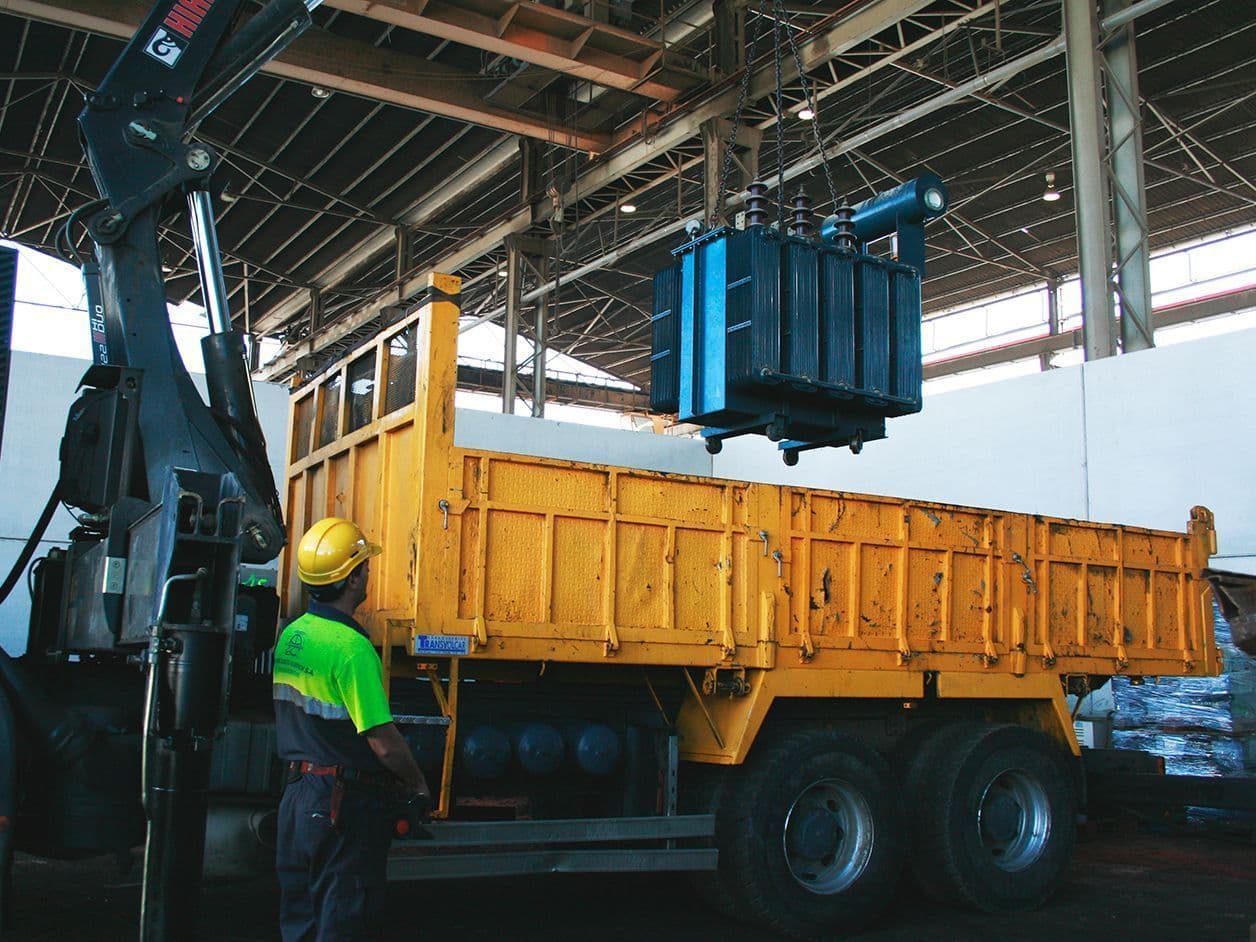
| Transformers | Oil-filled without PCBs, oil-filled with PCBs, and dry-type | Waste management authorisation no. E-345.97; for units with PCBs, transfer station (T62) and destruction by an authorised final treatment facility |
| Other industrial waste | Hazardous and non-hazardous | Alberich coordinates management as an authorised waste broker, and the authorised final treatment facility is named on the documents |
You’ll find the details in what we buy, WEEE recycling and waste management. If what your company generates most is iron and steel scrap, you may also be interested in why recycling ferrous material matters.
Frequently asked questions
What happens if a business doesn’t manage its waste properly?
It is exposed to the penalties set out in Law 7/2022, which can be high in the case of hazardous waste, and to liability for any damage the waste causes. It also loses the value of the materials it could have sold.
Can a small business sell its scrap too?
Yes. You don’t need to generate large volumes: you can start with a small container or by taking the material to one of the eight Scrap Center sites. The key is to separate it properly from the start.
What documents should a business keep?
Those that prove it has handed its waste over to an authorised waste management company: the treatment contract, the identification document (DI) for each shipment and, where applicable, the waste management certificates or certificates of destruction. If it generates hazardous waste, or more than 10 tonnes a year of non-hazardous waste, it must also keep a chronological record.
If you’re not sure where to start, tell us what waste your company generates and in what quantities. We’ll suggest how to separate and collect it, and we’ll get back to you within 48 working hours.