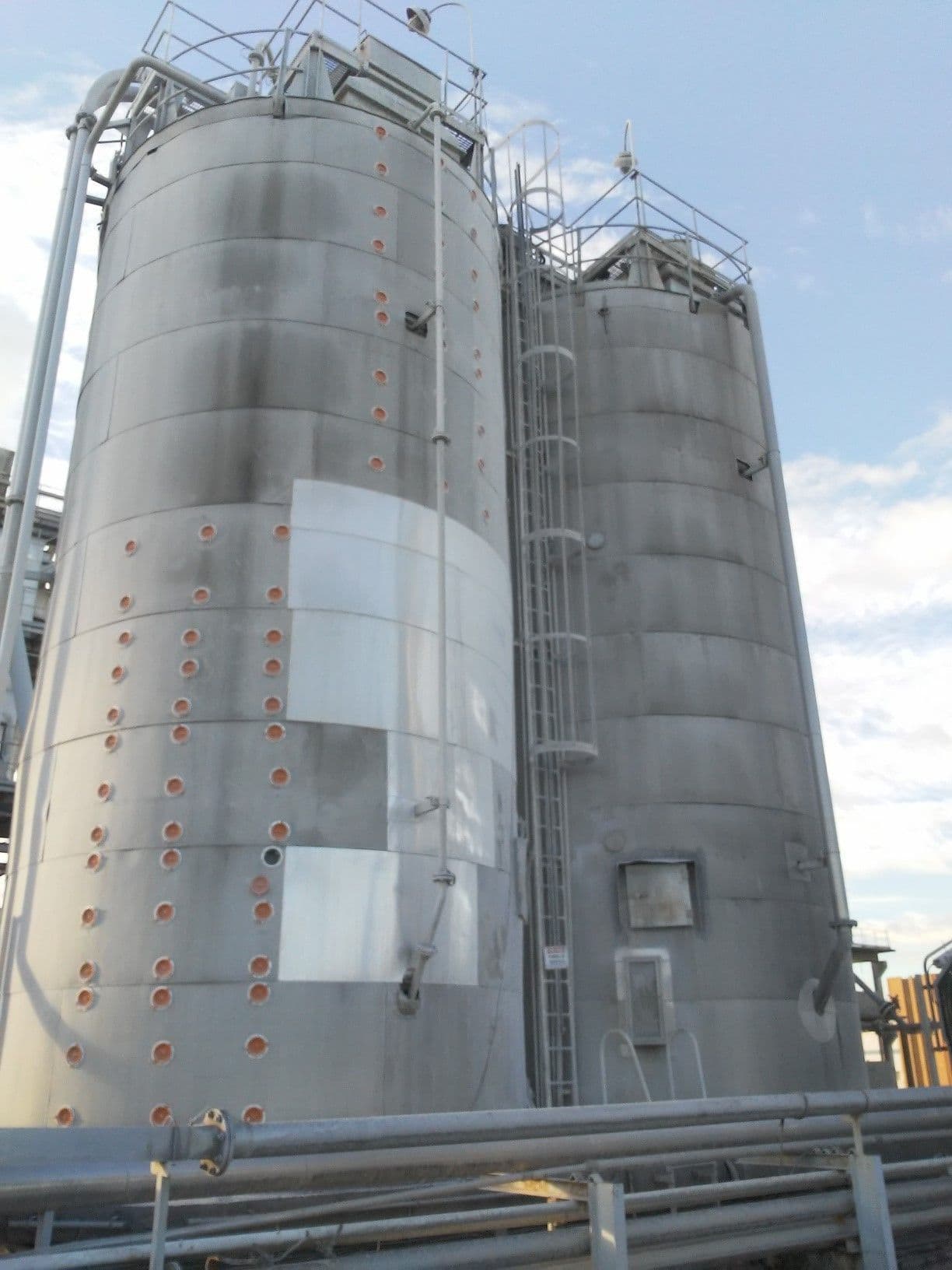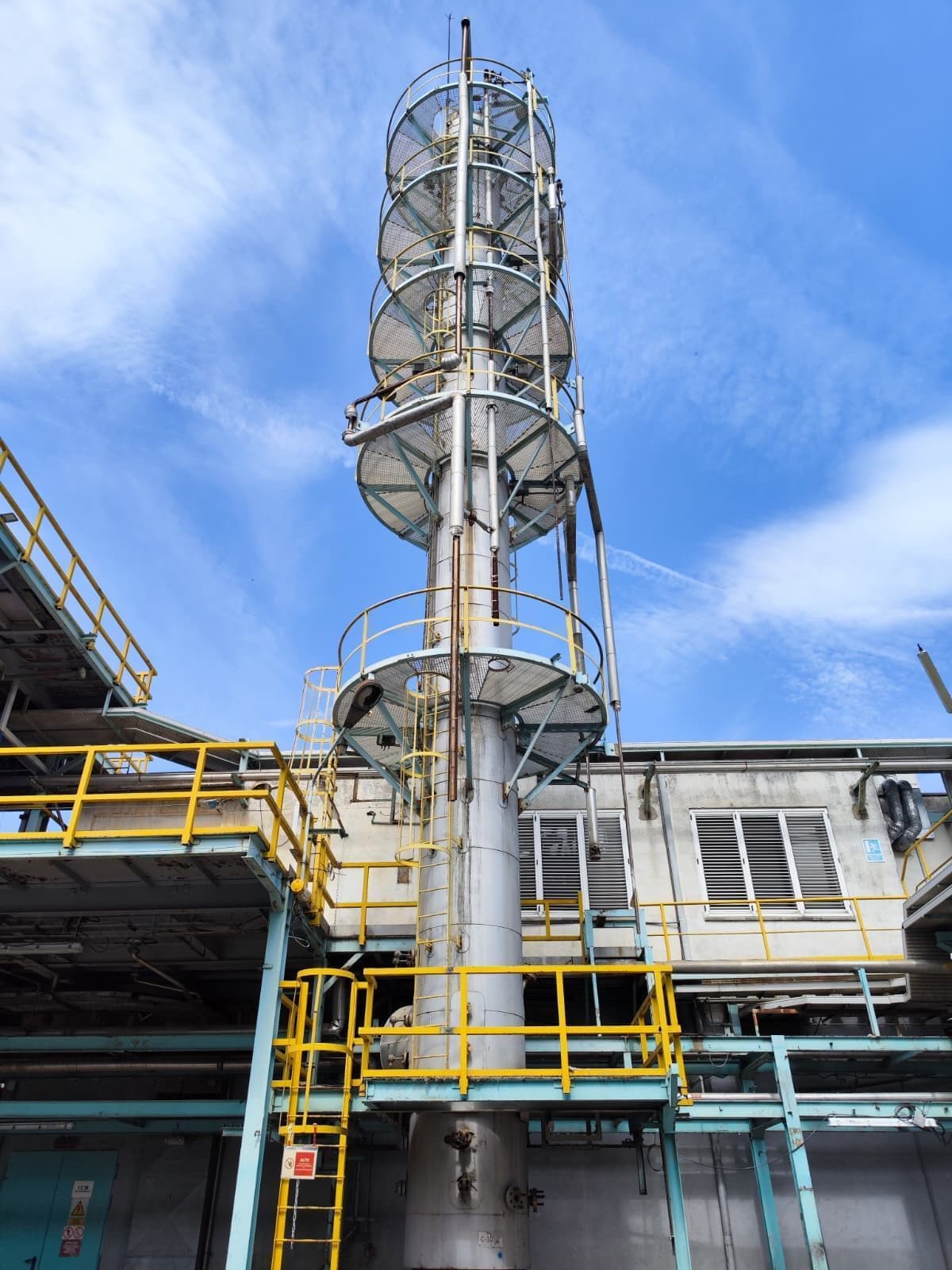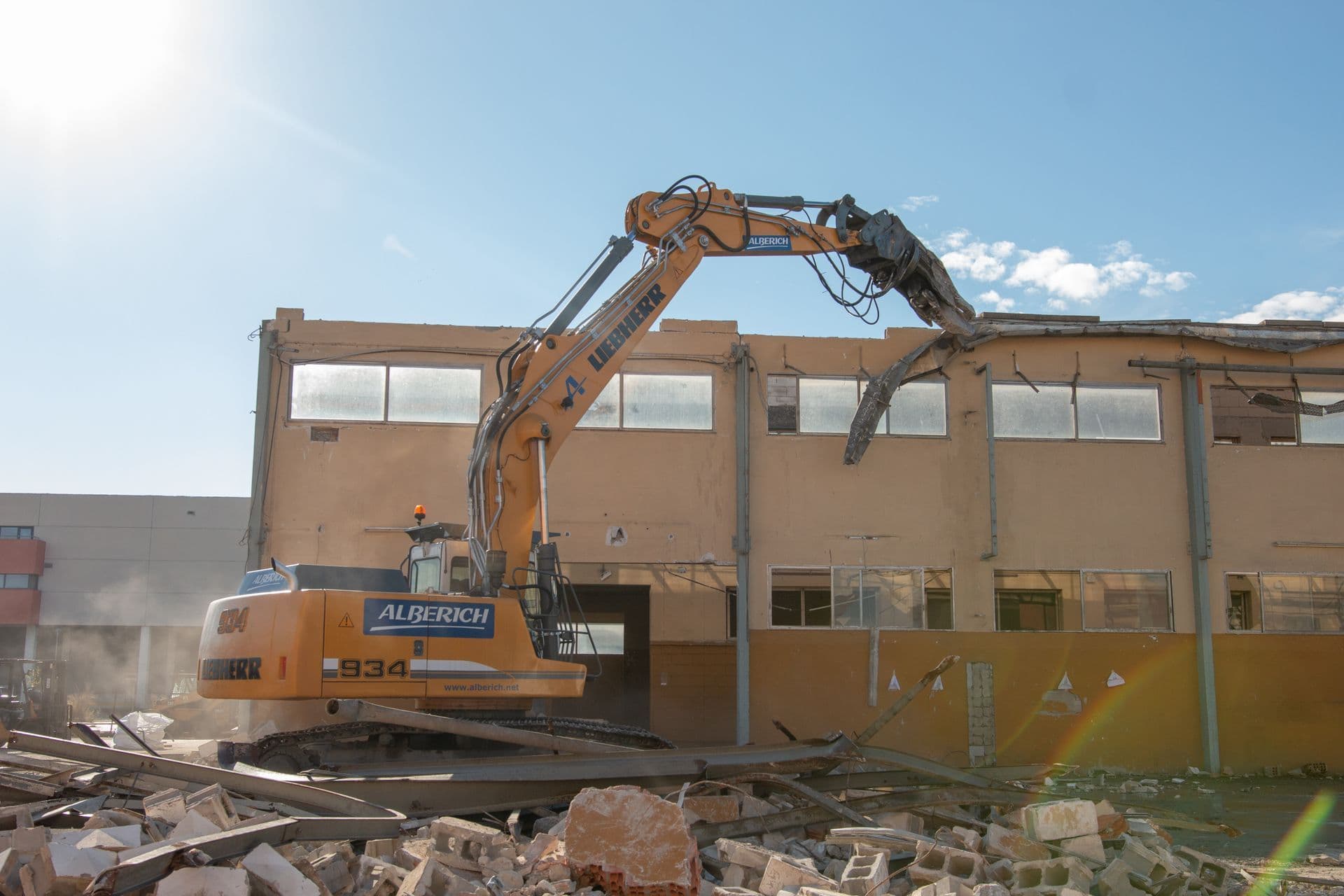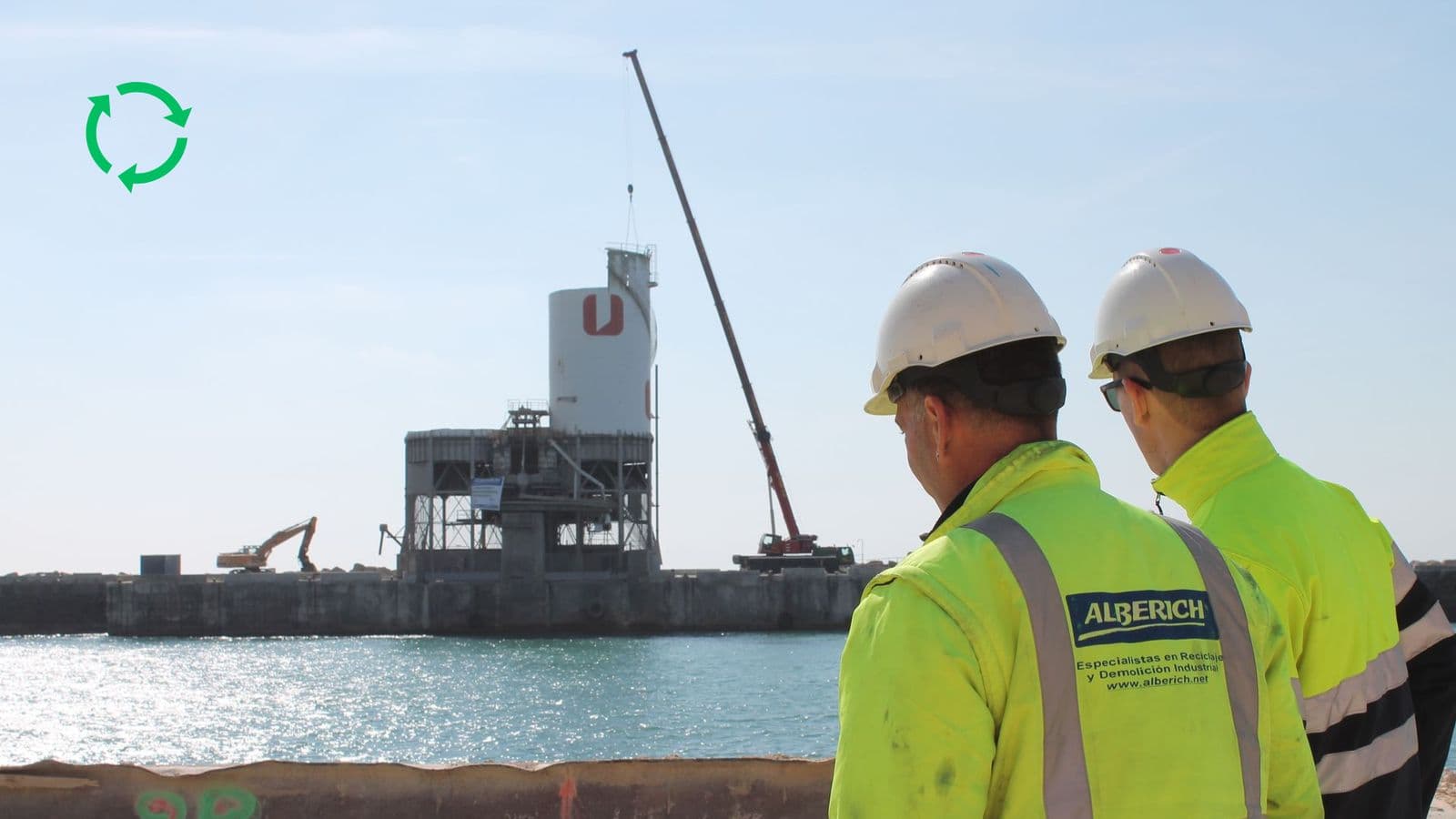
The future of industrial demolition in Spain is being shaped by four changes that are already visible on site: more selective demolition and segregation of waste at source, driven by Spain’s Law 7/2022; more digital tools for planning and documentation; a circular economy in which metal goes back into industry as raw material; and higher safety standards. We look at each one and what it means for anyone commissioning a demolition.
Why is industrial demolition changing?
Because industry is changing. Plants that close or relocate production, lines replaced to automate processes and factories adapting to new environmental requirements are generating more and more partial dismantling projects, often with the plant still running.
At the same time, waste regulations and clients themselves are asking for more: to know what happens to each material, to prove it with documents and to reduce what ends up in landfill.
What do the rules on selective demolition require?
Spain’s Law 7/2022 on waste and contaminated soils for a circular economy is the current framework. For demolition, these are the most relevant points:
- Waste hierarchy: prevention first, then preparing for reuse, recycling, other forms of recovery and, only as a last resort, disposal.
- Segregation at source: since July 2022, non-hazardous construction and demolition waste has had to be sorted into fractions (wood, minerals, metals, glass, plastic and gypsum), preferably on site, with hazardous waste removed separately.
- Selective demolition: mandatory since 2024, with the orderly dismantling that makes this separation possible.
- Taxation: since 2023 there has been a national tax on landfilling and incinerating waste, which makes sending mixed material more expensive.
On top of this come regional legislation and municipal by-laws, which may add requirements of their own. We explain this in more detail in the new selective demolition law.
What does digitalisation bring to a demolition?
Above all, information before starting and traceability at the end. The sector is making growing use of 3D scanners and drones to inspect hard-to-reach structures, take measurements and plan the dismantling sequence and the crane lifts. And waste documentation is now electronic: since Royal Decree 553/2020, waste transfers within Spain have had to be accompanied by an electronic identification document.
For whoever commissions the work, this means being able to follow each waste stream to its destination. We explain why that matters in traceability in industrial waste management. At Alberich, digitalisation is one of the pillars of our objectives for 2026, and we already publish data on our projects in project fact sheets.
How does the circular economy change the value of a demolition?
It turns the installation being removed into a stock of materials. If the steel, stainless steel, copper or aluminium come out clean and separated, they go back to steelworks and foundries as secondary raw material, and their value can offset part of the cost of the work. The environmental saving is real too: recycling aluminium saves up to 95% of the energy needed to produce it from bauxite.
The practical consequence is that a demolition is planned with the destination of each material in mind, not just to bring things down quickly. We go into this in the circular economy and industrial demolition.
What is changing in safety?
The aim is to reduce people’s exposure. Remote-controlled machinery and demolition robots are being used more widely for work in areas with a risk of explosive atmospheres or with toxic substances, and prior decontamination is carrying more weight in planning. Documentation requirements for the coordination of business activities (CAE, the Spanish rules for coordinating health and safety between companies that share a workplace) are also growing when the work goes on alongside the factory’s own workforce.
Our colleague Magda Gall analysed these challenges in the 2025 Yearbook of AEDED, the Spanish demolition association; we summarise them in decontamination and the circular economy in industrial demolition. Health and safety on site is covered in our guide to health and safety in industrial demolition.
What does this mean for anyone commissioning a demolition?
| Trend | What to ask for |
|---|---|
| Selective demolition | A waste management plan with the expected fractions and their destination |
| Hazardous waste | An inventory before quoting; asbestos removed by a company on the RERA (Spain’s Register of Companies with Asbestos Risk) |
| Digitalisation | Electronic transfer documents and waste management certificates for each fraction |
| Circular economy | The valuation of recoverable material itemised in the quote |
| Safety | A site-specific health and safety plan and proven experience in settings like yours |
How is Alberich preparing?
We have more than 125 years’ experience in metal recycling and our own plant in Castellbisbal, we are an authorised waste management company (authorisation no. E-345.97) and we hold ISO 9001, 14001 and 45001 certification. In demolition, we provide the complete service with our own machinery and team, separate materials on site and exceed 90% recycling on most projects. You can see how we work on our industrial demolition page.
Frequently asked questions
Is selective demolition mandatory in Spain?
Yes. Law 7/2022 has made it mandatory since 2024 and requires non-hazardous construction and demolition waste to be sorted into fractions, preferably on site. The details of how it is applied may vary from one autonomous community (region) or municipality to another.
Does selective demolition make the work more expensive?
It adds dismantling and sorting work, but it reduces what you pay to manage mixed waste or send it to landfill, and it allows clean metal to be recovered. The balance depends on each installation and is assessed before quoting.
Will robots be used on every demolition?
No. Remote-controlled machinery makes sense where the risk to people is high, such as areas with toxic substances or explosive atmospheres. On most industrial sites, the work will remain in the hands of trained operatives with excavators and cutting tools.