Moving waste without an authorised carrier, the right vehicle or the documents the regulations require exposes your company to three risks: an accident or spill on the road, an administrative fine, and being left with no proof that your waste reached an authorised waste management company. Waste transport is part of your responsibility as the waste producer, and that responsibility doesn’t end when the lorry leaves your gate: it ends when the full treatment of the waste has been documented.
What are the risks of not transporting waste correctly?
| Risk | How it happens | Consequence |
|---|---|---|
| Safety | Packaging that doesn’t seal, incompatible waste in the same load, crushed batteries, a poorly secured load | Leaks, chemical reactions, fires, accidents involving the driver or third parties |
| Environmental | Uncovered containers, tankers in poor condition, spills during loading or unloading | Spills onto soil or into water, and lightweight material blowing away |
| Legal | A carrier without authorisation, a shipment without documents or with details that don’t match | Penalties under Spain’s Law 7/2022 on waste and contaminated soils, for both the producer and the carrier |
| Traceability | A shipment document that isn’t completed, or an unauthorised destination | You can’t prove what happened to your waste |
With hazardous waste, all of this carries more weight: a leak or substances mixing in transit can affect people’s health, not just your records.
What documents does a waste shipment need?
Within Spain, waste shipments are governed by Royal Decree (RD) 553/2020. In short, they require:
- A treatment contract with the destination facility, signed before the shipment. The waste management company also confirms, through the waste acceptance form, that it accepts that specific waste.
- An identification document (DI), that is, the waste tracking sheet, which travels with the waste and is completed at the destination.
- Prior notification to the authorities, mandatory for hazardous waste and in other cases set out in the regulations, at least ten days in advance.
Law 7/2022 adds the principles of proximity and self-sufficiency: waste, especially waste destined for disposal, must be treated at a suitable facility as close as possible to where it was generated. We explain why this chain of documents protects whoever generates the waste in our article on the importance of traceability in industrial waste.
When does waste transport require ADR?
When the waste is also classed as dangerous goods under the ADR, the European agreement governing the carriage of dangerous goods by road. In that case you need a driver with an ADR certificate, a vehicle marked with orange plates and equipped for the load, UN-approved packaging or tanks, hazard labels and specific transport documents.
Not all hazardous waste is ADR dangerous goods, and not everything carried under ADR is waste. What decides it is the composition, which is why the waste is classified before you book the lorry, not on the loading bay. We explain how hazardous waste is classified in our article on how hazardous waste is treated.
Who is responsible during transport?
Each party for its own part. The producer is responsible for classifying the waste correctly, packaging it and handing it over to an authorised carrier and an authorised destination. The carrier is responsible for the load and the journey. The receiving waste management company checks that what arrives matches what was accepted and records it. If it doesn’t match, it can reject the load, and then another destination has to be found or the waste has to be sent back, with all the cost and delay that involves.
How do you get it right?
- Classify the waste and confirm its EWC code (European List of Waste) before booking the collection.
- Get the waste acceptance form from the destination and check that the carrier is authorised.
- Use closed, labelled packaging, and covered containers for lightweight material.
- Keep incompatible materials apart in the load and secure heavy items properly.
- Keep the completed waste tracking sheet and the proof of delivery for every shipment.
How we do it at Alberich
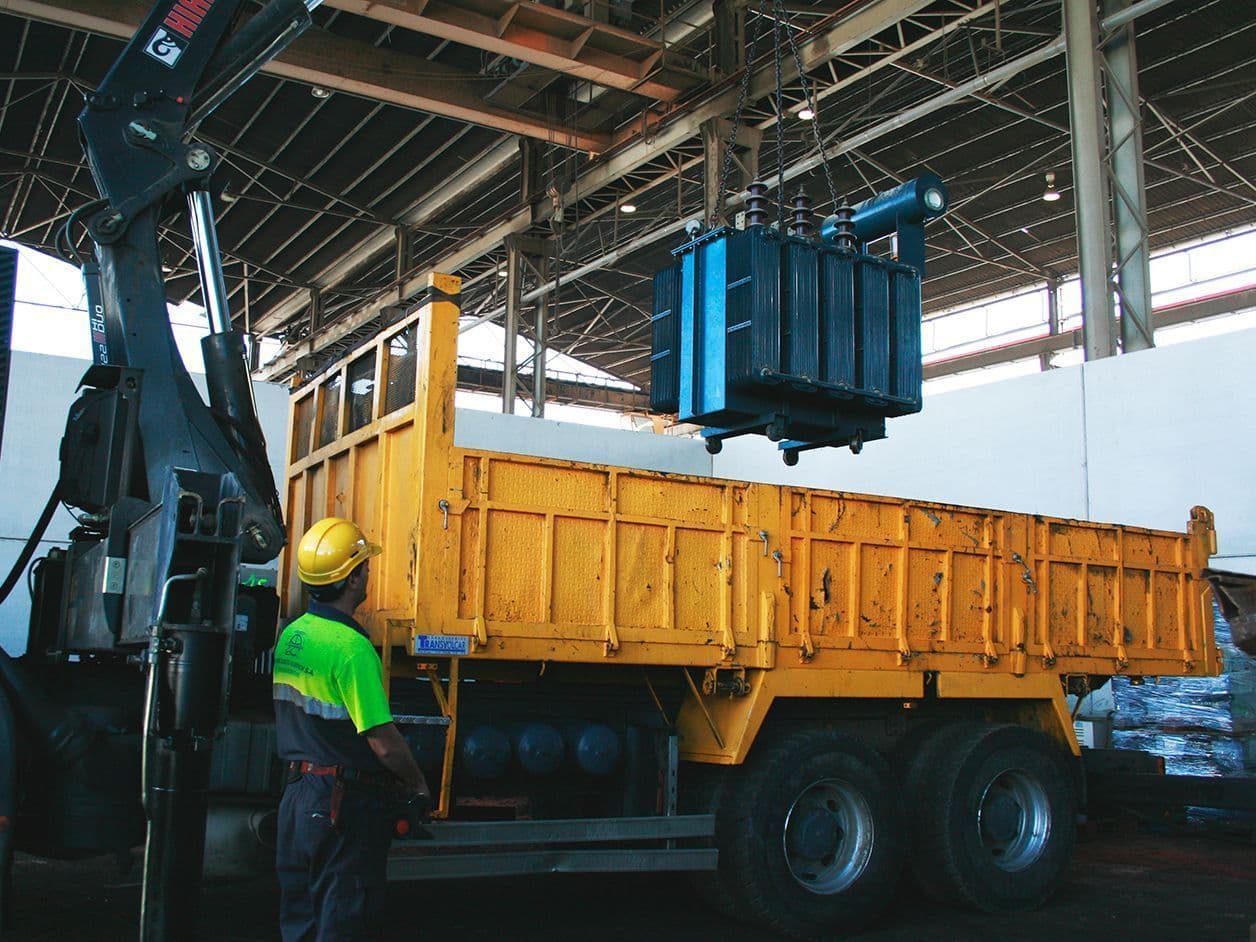
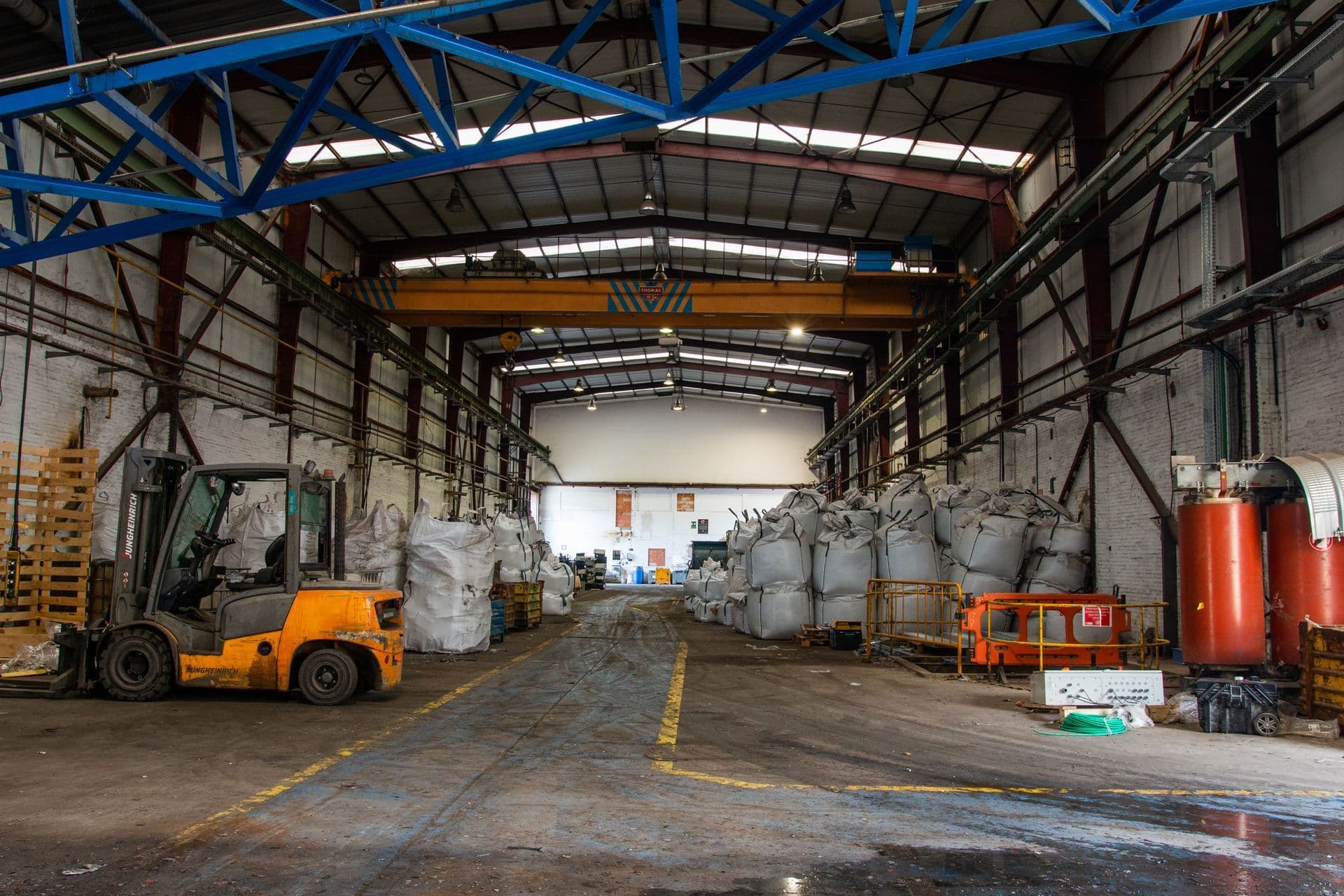
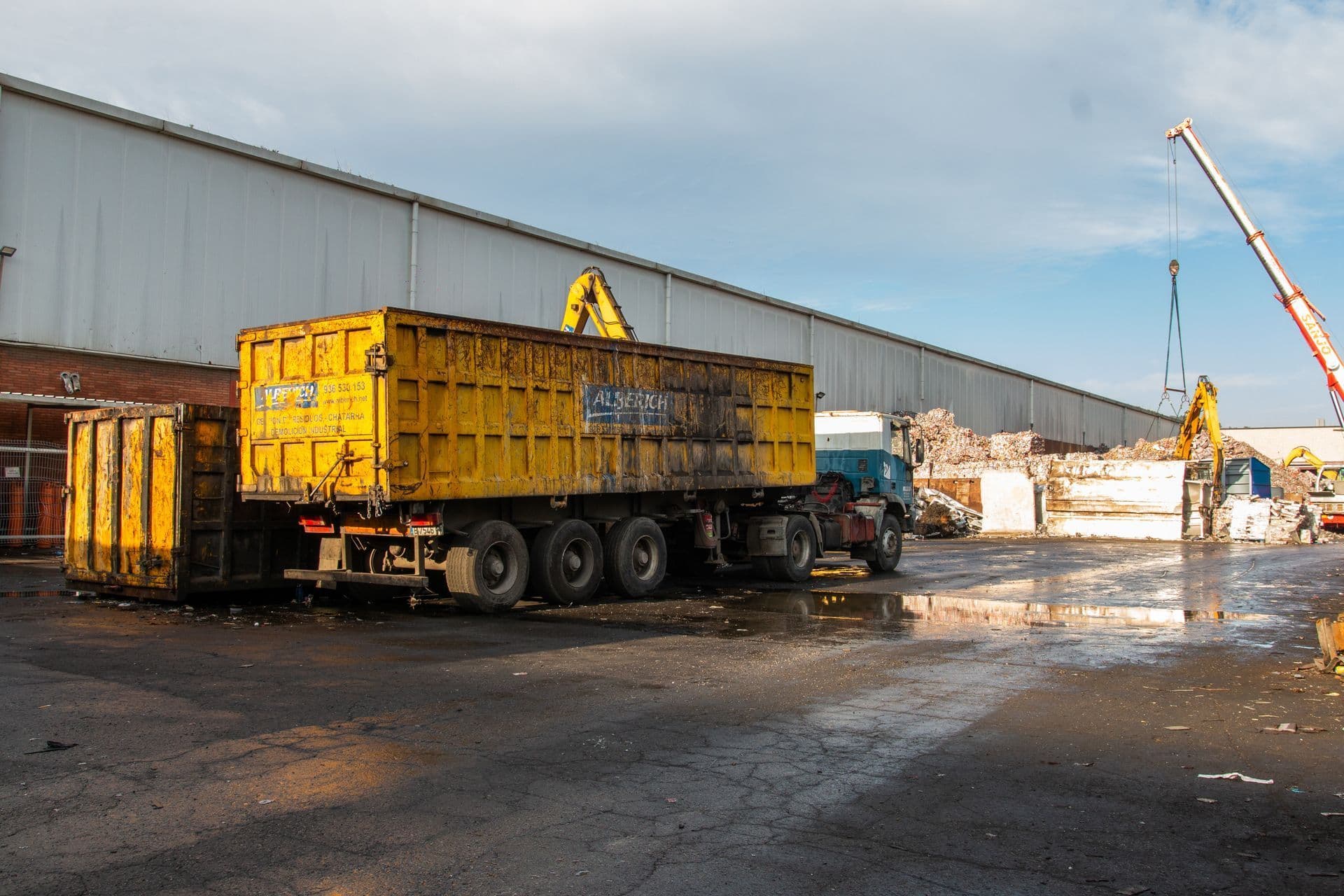
We provide logistics and collection with our own GPS-tracked fleet: hook-lift lorries, flatbed lorries, crane and grab lorries, articulated lorries and low-loaders for heavy items such as transformers or machinery. We place containers from 1 to 30 m³ at your site and, with our mobile balers, we can bale the material before loading it. Every job goes out with its paperwork: waste acceptance form, waste tracking sheet, labelling to Spanish UNE standards and, where the regulations require it, ADR documents. For hazardous waste we coordinate the shipment with the authorised final treatment facility, which is the one named on the documents. We operate from our sites in Castellbisbal, La Llagosta and Constantí and cover the whole of Catalonia.
Frequently asked questions
Can any haulage company transport my waste?
No. Carrying waste professionally requires notifying the environmental authorities of the activity and being entered on their register, and waste that is also dangerous goods must comply with ADR as well. Ask the carrier for their registration number before loading.
What should I do if there’s a spill while loading at my site?
Stop loading, contain the spill with absorbent material or a spill tray, and keep it from reaching drains or unpaved ground. The used absorbents become waste themselves (hazardous waste if what was spilled was hazardous) and have to be managed accordingly.
What information do you need to arrange a collection?
The type of material or waste, the estimated volume in tonnes, litres or cubic metres, how often you need collections, the address and the access conditions: room to manoeuvre and any height or weight restrictions. With that, we can propose the right vehicle and container.
If you’d like to review how waste leaves your plant today, tell us what you generate and how often, and we’ll get back to you within 48 working hours.