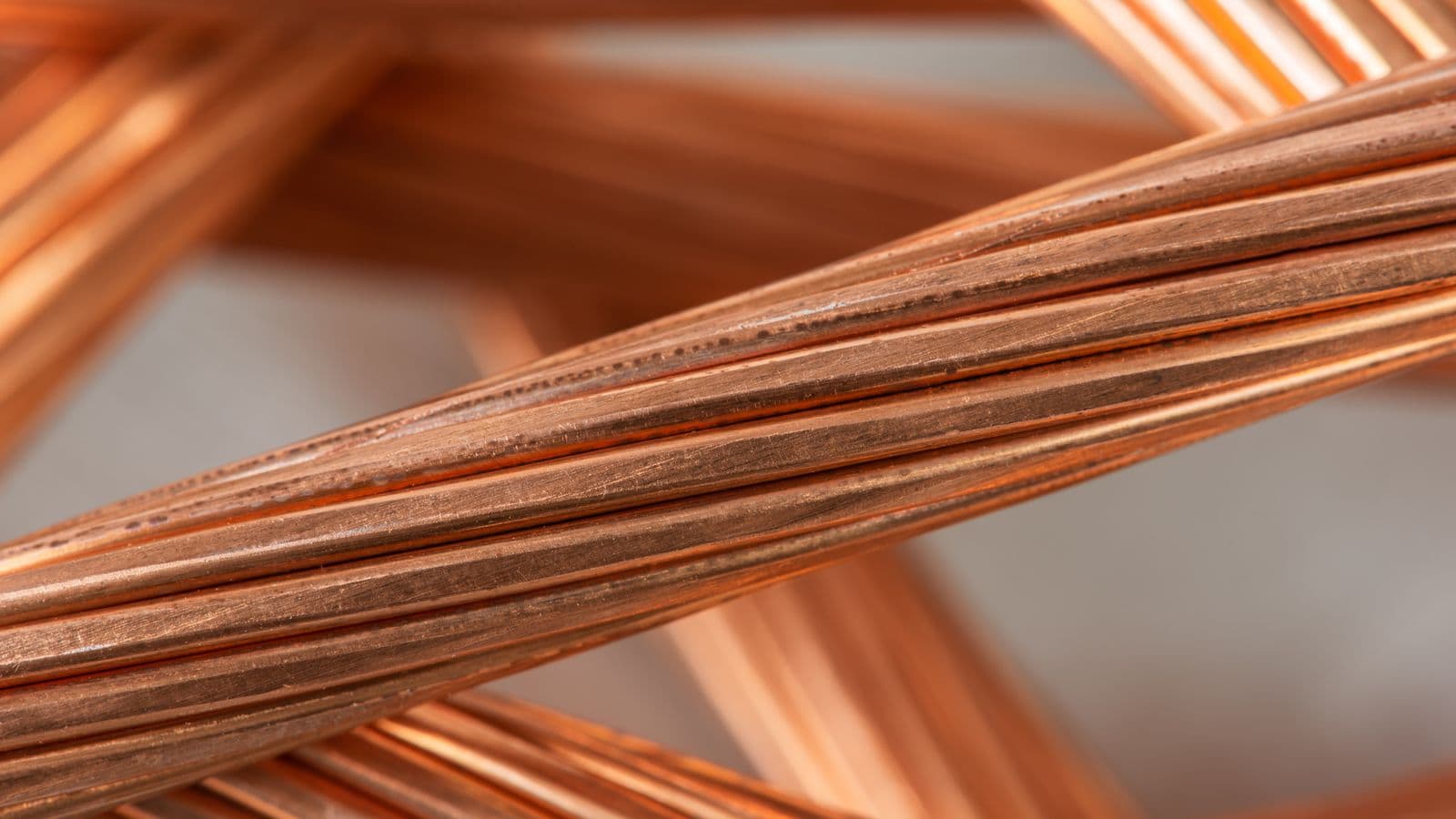
Copper is a pure metal with a reddish-orange colour; bronze is an alloy of copper and tin with a golden-brown colour. Everything else in the copper vs bronze comparison follows from that difference in composition: copper conducts electricity and heat better, while bronze is harder and stands up better to wear and seawater. That’s why copper and bronze rarely compete for the same job: the first goes into cables, windings and tubes; the second into bearings, gears, propellers and sculptures.
At Alberich we have been working with both for more than 125 years. This guide sums up what bronze is, its composition, the colour of bronze and copper, their properties and how to tell them apart.
What is bronze?
Bronze is an alloy whose main component is copper and whose second element, in classic bronze, is tin. It was the first alloy humans produced on a large scale, so much so that it gave its name to the Bronze Age, more than 5,000 years ago: adding tin to copper produced tools and weapons that were much harder than those made of copper alone.
Today the term also covers copper alloys in which the main alloying element is aluminium or silicon, such as aluminium bronze, as well as tin bronzes with small additions, such as phosphor bronze. What is not called bronze is copper alloyed mainly with zinc: that is brass. If you’re interested in that comparison, you’ll find it in brass and bronze: differences and uses.
What is bronze made of?
The composition of bronze varies with its use. Classic bronze is around 88% copper and 12% tin, and in general the tin content ranges from 3% to 20%. Other elements are added in small amounts to improve a particular property:
| Type of bronze | Approximate composition | What it’s used for |
|---|---|---|
| Tin bronze | Copper with around 10–12% tin | Gears, worm wheels, bushes, cast parts |
| Phosphor bronze | Copper and tin with a small addition of phosphorus | Springs, electrical contacts, connectors |
| Aluminium bronze | Copper with aluminium and, often, iron and nickel | Propellers, seawater valves, non-sparking tools |
| Bell metal | Copper with around 20% tin | Bells and cymbals |
| 85-5-5-5 bronze | 85% copper, 5% tin, 5% zinc and 5% lead | Valves, pumps, cast plumbing fittings |
Because each type is handled differently at the foundry, in recycling they are separated by alloy wherever they can be identified.
Copper vs bronze colour: what’s the difference?
Bronze colour is a golden brown, duller than gold and less red than copper. Freshly polished or freshly cut copper has a very recognisable reddish-orange tone, verging on pink in the body of the metal. When they are used as colour names, graphic design usually takes #CD7F32 as the reference for bronze and #B87333 for copper.
| Feature | Copper | Bronze |
|---|---|---|
| Clean or freshly filed surface | Reddish orange, bright | Golden brown; paler the more tin it contains |
| Reference colour (hex) | #B87333 | #CD7F32 |
| Aged indoors | Dark brown, almost chocolate | Dull dark brown |
| Weathered outdoors | Green patina over the years | Brown patina, then greenish, as on statues |
The colour of bronze changes with its composition. With little tin it leans towards a reddish gold; as the tin content rises it becomes paler and greyer, like bell metal. Aluminium bronze is a golden yellow reminiscent of brass, and the finish (polished, patinated or antiqued) can change the appearance of any of them considerably. So, to compare the colour of bronze and copper, it’s best to file a small area and look at it in natural light.
What properties does bronze have compared with copper?
The properties of bronze come down to tin, which hardens copper at the expense of its conductivity. This table sums up the differences using general values; each specific alloy has its own figures.
| Property | Copper | Bronze |
|---|---|---|
| Composition | Pure element (Cu) | Alloy of copper and tin or other alloying elements |
| Electrical conductivity | Second only to silver | Considerably lower |
| Thermal conductivity | Very high | Moderate |
| Hardness | Soft and very ductile | Harder and stronger |
| Wear and friction | Wears easily | Highly wear-resistant; low friction against steel |
| Corrosion | Good | Excellent, even in seawater |
| Melting point | 1,085 °C | Lower than copper’s: around 850–1,050 °C depending on the alloy |
| Magnetism | Non-magnetic | Non-magnetic (some aluminium bronzes containing iron, very slightly) |
Advantages of bronze over copper
Bronze is harder and copes much better with friction, which is why it is used for bearings, bushes and gears that run against steel parts. It resists corrosion better in marine environments, withstands repeated loads better and fills moulds well when cast, which makes it possible to produce complex parts by casting. Some bronzes containing lead or graphite are also self-lubricating. And its ringing tone makes it irreplaceable for bells and cymbals.
Where copper wins
Wherever conductivity matters. Copper is the reference material for cables, motor windings, transformers, heat exchangers and water and air-conditioning pipework. An electric car can contain several tens of kilos of copper, and no bronze could take its place without a loss of performance.
Copper and bronze in industry: where is each one used?
Their properties divide the uses between them with almost no overlap. This table sums up where you’ll find each metal in industry:
| Sector | Copper | Bronze |
|---|---|---|
| Electricity and energy | Cable, windings, transformers, switchboard busbars | Phosphor bronze springs and contacts |
| Construction and building services | Water, heating and air-conditioning pipework, roofing and gutters | Valves, architectural features |
| Machinery | Heat exchangers, motors | Bearings, bushes, gears, gearbox worm wheels |
| Automotive | Wiring, motors and batteries in electric vehicles | Bushes and friction parts |
| Marine | Pipework and fittings on board | Propellers, pumps and seawater valves |
| Art and heritage | Roofing and cladding that develop a green patina | Sculptures, bells, commemorative plaques |
Which lasts longer, copper or bronze?
In mechanical parts, bronze. Being harder, it resists wear, fatigue, cavitation in pumps and valves and saltwater corrosion better, and it holds its dimensions better over time. We recover bronze parts from industrial machinery and marine installations that have been in service for decades.
In electrical applications the question doesn’t arise: copper is the only one of the two that does the job. In a well-built installation, its service life is also measured in decades.
Which is worth more, copper or bronze?
As scrap, clean copper is usually valued above bronze. Copper has its own price on the London Metal Exchange (LME) and a direct outlet in wire-drawing mills and refineries. Bronze has no price of its own: it is valued on its copper and tin content, the type of alloy and how clean and well separated it arrives.
In both cases the price depends on purity, the form of the material, quantity and the market at the time. We explain this in detail in how copper is recycled and what its price depends on.
How can you tell whether a part is copper or bronze?
File or scrape a small area and compare the colour: reddish orange for copper, golden brown for bronze. Then test the hardness with a centre punch or a screwdriver: copper marks easily and bronze holds up much better. A magnet won’t help you tell them apart, because neither is magnetic; if the part sticks, there’s steel inside it.
When a visual check isn’t enough, the composition is confirmed by spectrometer analysis. If what you need is to separate bronze from brass in a scrap lot, you’ll find step-by-step tests in how to identify brass and bronze.
How do we sort copper and bronze at Alberich?
All material goes through radiation monitoring on arrival. Copper is sorted by grade (No. 1 copper, No. 2 copper, tube, cable) and cable is processed in our own granulation plant, with spectrographic analysis of the copper as part of the production process. Bronze and brass are sorted by alloy before being sold to specialist foundries.
You can see the grades we work with under copper and brass and bronze.
Frequently asked questions
Can bronze replace copper in an electrical installation?
No. Bronze conducts electricity, but much less well than copper, so in cables, windings or transformers energy would be lost as heat. It is only used in electrical parts where elasticity matters more than conductivity, such as phosphor bronze springs and contacts.
Does bronze rust?
Not the way iron does: over time it forms a surface patina, brown and later greenish, that protects the metal underneath. The problem comes with chlorides, near the sea for example, which can cause active corrosion in the form of pale green, powdery spots.
Is it worth recycling small amounts of bronze?
Yes, because bronze keeps the value of its copper and tin even in small quantities. To get the most out of it, keep it separate from brass and iron and take it to a waste management company that sorts it by alloy.
What does a company need in order to hand over copper or bronze scrap?
It has to be handed over to an authorised waste management company, with the appropriate EWC code (European List of Waste) and the waste transfer documentation. Alberich is an authorised waste management company (authorisation no. E-345.97) and carries out radiation monitoring on all material entering its facilities.
If you have copper, bronze or a mix of the two and want to know what it’s worth, tell us what you have and how much.


