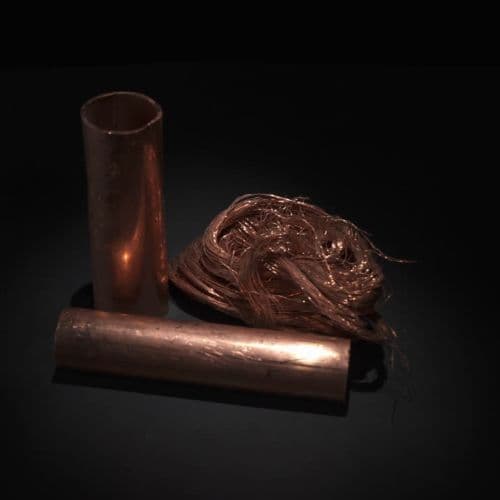
Stripping copper wire for scrap is only worth it with thick cable that has few conductors and comes in quantity, and always with a hand tool or a wire stripping machine, never by burning it. With thin installation cable, multicore flex or data cable, the time you spend stripping it is rarely recovered: a granulation plant separates the copper from the plastic better and faster. What always increases the value of your copper is bringing it in separated by type and free of impurities.
Is it worth stripping copper wire for scrap?
It depends on the cable. The rule of thumb: the thicker the conductor and the fewer strands it has, the easier it is to strip and the more copper you get from each cut. With fine strands the opposite is true: a lot of work, little copper, and some of the metal stays caught in the insulation.
| Type of cable | Strip it? | Why |
|---|---|---|
| Large cross-section power cable, single-core or with few cores | It can be worth it, with a wire stripper | Lots of copper per metre and insulation that is easy to open. If it comes out clean and bright, it is graded as No. 1 copper. |
| Domestic and building installation cable | Usually not | Little copper per metre and a lot of work. It is sold as cable. |
| Multicore cables and fine flexible cable | No | Lots of fine strands that are lost when stripping. Granulation recovers them in full. |
| Data, telephone and coaxial cable | No | Very thin conductors and little copper in proportion to the plastic. |
| Armoured, screened or old cable | Don’t open it | It may have steel armour, a lead sheath or oil-impregnated paper insulation. Set it aside and mention it when you ask for a valuation. |
If you have a large batch of cable, the alternative to stripping it is to sell it on actual yield: the plant granulates it and pays you according to the copper recovered. That way you don’t lose value by not having stripped it, and you save yourself the work.
Why shouldn’t you burn cable to remove the plastic?
Burning off the insulation is the quickest way to ruin the copper and to get yourself into trouble. When it burns, cable plastic, especially PVC, gives off toxic fumes such as hydrogen chloride and dioxins. And burning waste outside an authorised facility is prohibited and can lead to penalties.
It doesn’t pay, either. Burnt copper oxidises, loses its shine and is no longer valued as No. 1 copper. In a professional plant there is no need for fire: granulation chops up the cable and separates the plastic by density, without heat.
How should you sort copper before taking it to a scrap yard?
Mixed copper is paid for at the lowest grade in the pile. Separating it in the workshop or on site is what adds the most value, and it doesn’t need any special tools. These are the groups worth making:
- Clean copper: bare wire, busbar and bar with no enamel, tinning or solder.
- Coated copper: enamelled winding wire, tube with soldered joints, painted or oxidised parts.
- Insulated cable, grouped by type: power, installation, multicore and data.
- Copper tube from plumbing and air conditioning, with the brass fittings removed.
- Radiators and mixed parts of copper and aluminium, always kept apart.
If you don’t know which group an item belongs in, put it to one side. A small pile of doubtful items is better than a whole batch downgraded as mixed.
What impurities reduce the value of copper?
Anything that isn’t copper adds weight on the weighbridge and then has to be separated out. These are the most common ones and how to remove them:
| Impurity | Where it turns up | What to do |
|---|---|---|
| Brass | Fittings, lugs, terminals, connectors | Cut them off and sell them separately as brass |
| Iron and steel | Clamps, screws, cable armour | Remove them; a magnet will help you find them |
| Tin and solder | Soldered tube, tinned cable | Keep it apart from clean copper |
| Aluminium | Aluminium cable, radiator fins | Don’t mix it in: aluminium is grey inside and much lighter |
| Oil, soil and loose plastic | Windings, cable from building sites | Drain it and clean off what you can |
The brass from fittings and terminals has a value of its own if you separate it properly. We explain how to recognise it in our guide to identifying brass and bronze in scrap.
What safety precautions should you take?
Before cutting a cable, make sure the installation is disconnected and dead, especially in refurbishments, dismantling jobs and building work. To strip by hand, wear cut-resistant gloves and use a tool designed for the job, not a makeshift craft knife: freshly cut copper strands are sharp and can cut and puncture skin.
If the cable comes from an old installation and has a lead sheath or oil-impregnated paper insulation, don’t open it or cut it into pieces. And if you are going to store cable at your company, keep it under cover, in labelled containers and away from walkways.
How do we handle copper cable at Alberich?
At Alberich we buy copper electrical cable of any yield and process it in our own granulation plant: manual pre-sorting to remove connectors, brass, aluminium and lead, chopping, density separation and spectrographic analysis of the copper. You can sell it to us at spot price or on actual yield. The full process, and what determines the price, is explained in how copper is recycled.
If your company generates cable or copper regularly, we can leave containers from 1 to 30 m³ with you and collect them with our own fleet, with all the waste documentation. For small quantities, you can drop by our sites or the Scrap Center buying points. Under what we buy you’ll find the full list of materials.
Frequently asked questions
Do you get paid more for stripped copper than for whole cable?
Per kilo, yes: stripped copper is valued as copper, and cable according to the copper it contains. But the difference reflects the plastic you remove and the time you put in, so it only pays if you strip quickly and the cable has a lot of copper in it.
How can I tell whether a cable is copper or aluminium?
Cut the cable and look at the conductor: copper is reddish inside as well, while aluminium is silvery grey and a good deal lighter. Watch out for tinned copper, which is silvery on the outside but reddish when you cut or scrape it.
What is a cable’s yield?
It is the percentage of copper it contains relative to its total weight. Depending on the type of cable, it usually ranges from 20% to 60%, and the higher it is, the more each kilo of cable is worth.
Can you sell cable with the connectors still on?
You can, but it is valued lower, because connectors and terminals are usually brass or steel and have to be removed before granulation. If you have time, cut them off and sell them separately as brass.
Got a batch of cable and not sure whether it’s worth stripping? Send us a photo and the approximate quantity and we’ll value it for you.


