Buildings are demolished when keeping them costs more, or carries more risk, than replacing them. In industry there are five usual reasons for demolition: the facility has reached the end of its useful life, the business is relocating or closing, there is a structural safety problem, there has been an incident such as a fire or a flood, or the land is being put to a new use. Understanding why industrial buildings are demolished helps you choose the right option: demolish the whole building, demolish part of it or refurbish.
Why are industrial buildings demolished?
End of useful life
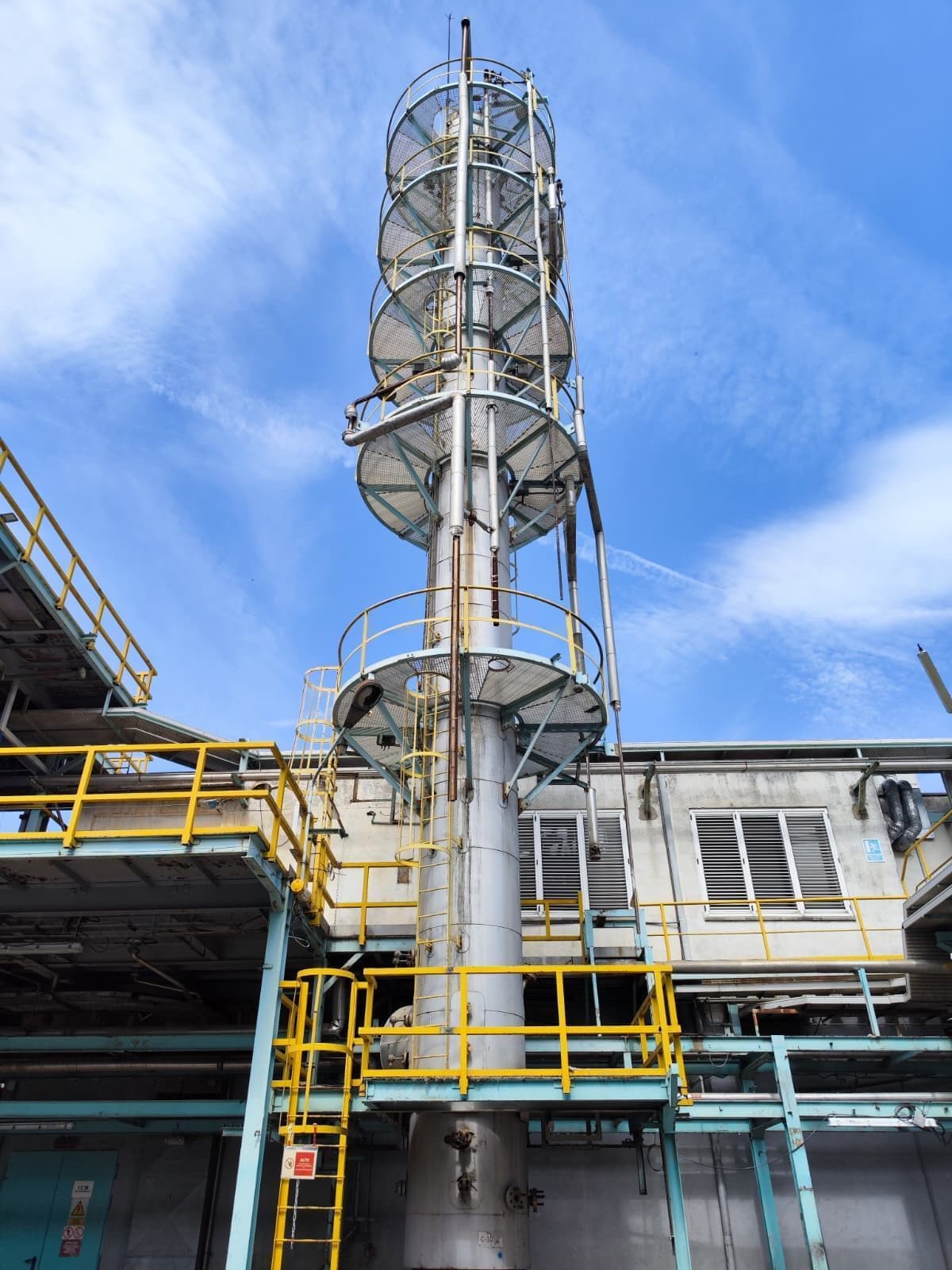
An industrial building or plant ages in two ways. Physically: corrosion in steel structures, cracks in the concrete, leaking roofs. And functionally: clear heights that are no longer adequate, floors that cannot take the loads of today’s machinery, installations that do not meet current fire safety or energy efficiency regulations. When adapting the building means rebuilding almost all of it, demolition is usually the sensible option.
Relocation or closure
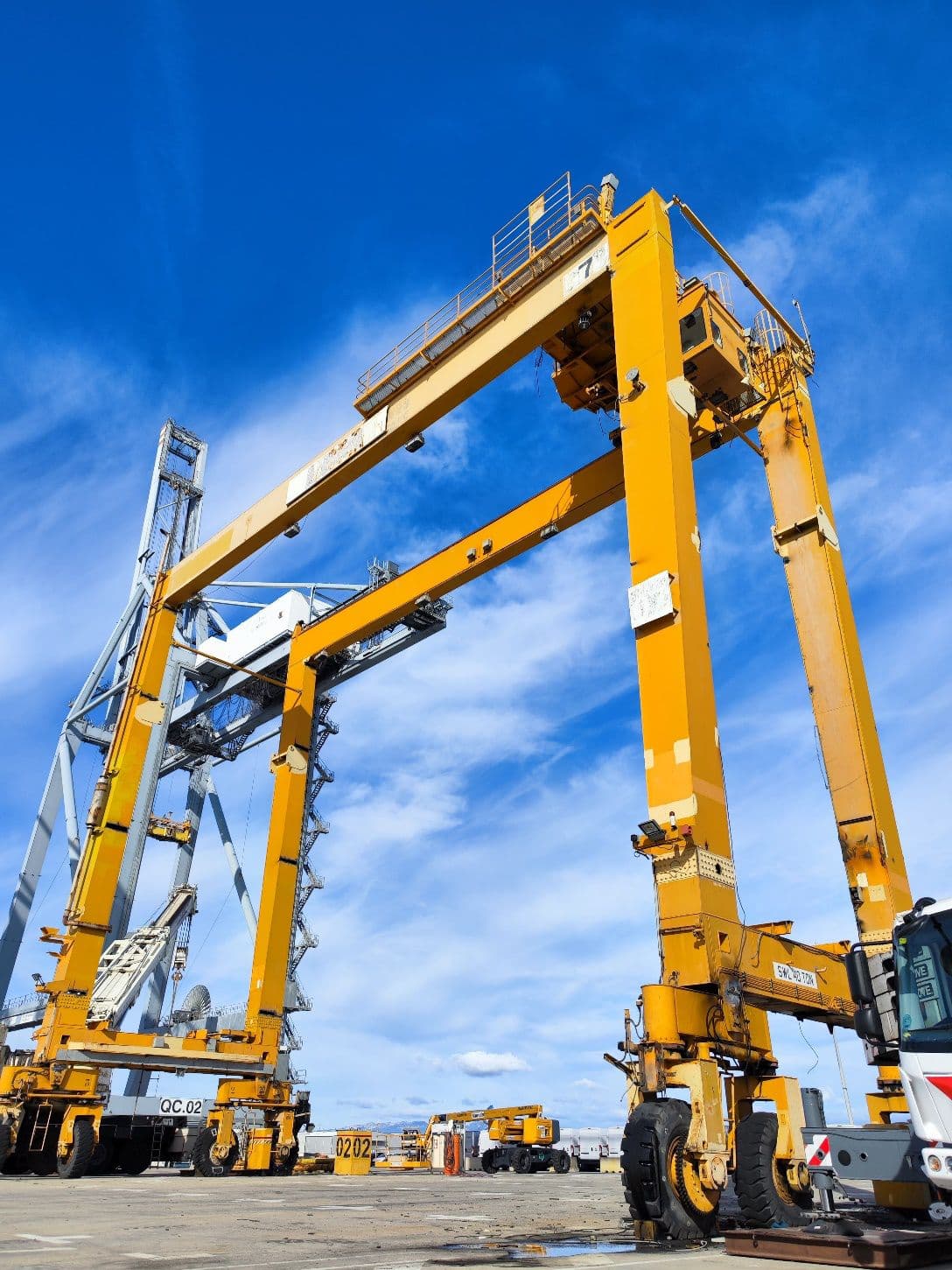
A company that concentrates production at another plant, moves to a better-connected industrial estate or closes a line is left with facilities it no longer uses. Keeping them empty has a cost (security, insurance, taxes) and a risk of deterioration. In these cases the usual starting point is to dismantle the machinery and equipment, which have value, and then decide what to do with the building.
Structural safety
A damaged structure can put both the people working inside and passers-by at risk. If repair is not viable, demolition removes the risk. This often happens with buildings that have stood unused and unmaintained for years.
Incidents: fire, explosion or flood
After an incident you have to act quickly and methodically: stabilise what is still standing, remove anything that could fall, document the damage for the insurer and manage waste that is often mixed or contaminated. The demolition is often partial, which means the part of the plant that has not been affected can be saved.
New land use
In urban areas this is one of the most common reasons. Industrial land rezoned for residential or commercial use, a factory expansion that needs a new building where the old one stood, industrial estates being redeveloped. Here the demolition is part of a larger project and its timetable depends on that of the new build.
Demolish or refurbish? How to make the decision
There is no general answer. But there are criteria that, set side by side, usually make the decision clear:
| Criterion | Points to refurbishment | Points to demolition |
|---|---|---|
| Condition of the structure | Sound, with localised, repairable damage | Widespread damage, corrosion at connections, foundations affected |
| Fit with the new use | Heights, spans and loads work for the new activity | The geometry or load-bearing capacity has to change |
| Regulations | The building can be brought into line with manageable alterations | Bringing it into line means rebuilding almost everything |
| Planning protection | The building or a feature of it (a chimney, a façade) is listed | There is no protection |
| Timescale | The refurbishment fits the project timetable | A new build can be completed sooner than a complex refurbishment |
| Net cost | Refurbishing costs clearly less than demolishing and rebuilding | The value of the recovered materials greatly reduces the cost of demolishing |
Asbestos weighs on both options: if the work affects materials that contain it, the asbestos has to be removed first, whether the building is refurbished or demolished, and always by a company registered on the RERA (Spain’s Register of Companies with Asbestos Risk) with a work plan approved by the labour authority.
Are there alternatives between demolishing everything and leaving it untouched?
Yes, and they are very common in industry:
- Internal strip-out. Production lines, machinery and installations are removed and the building is kept for another activity.
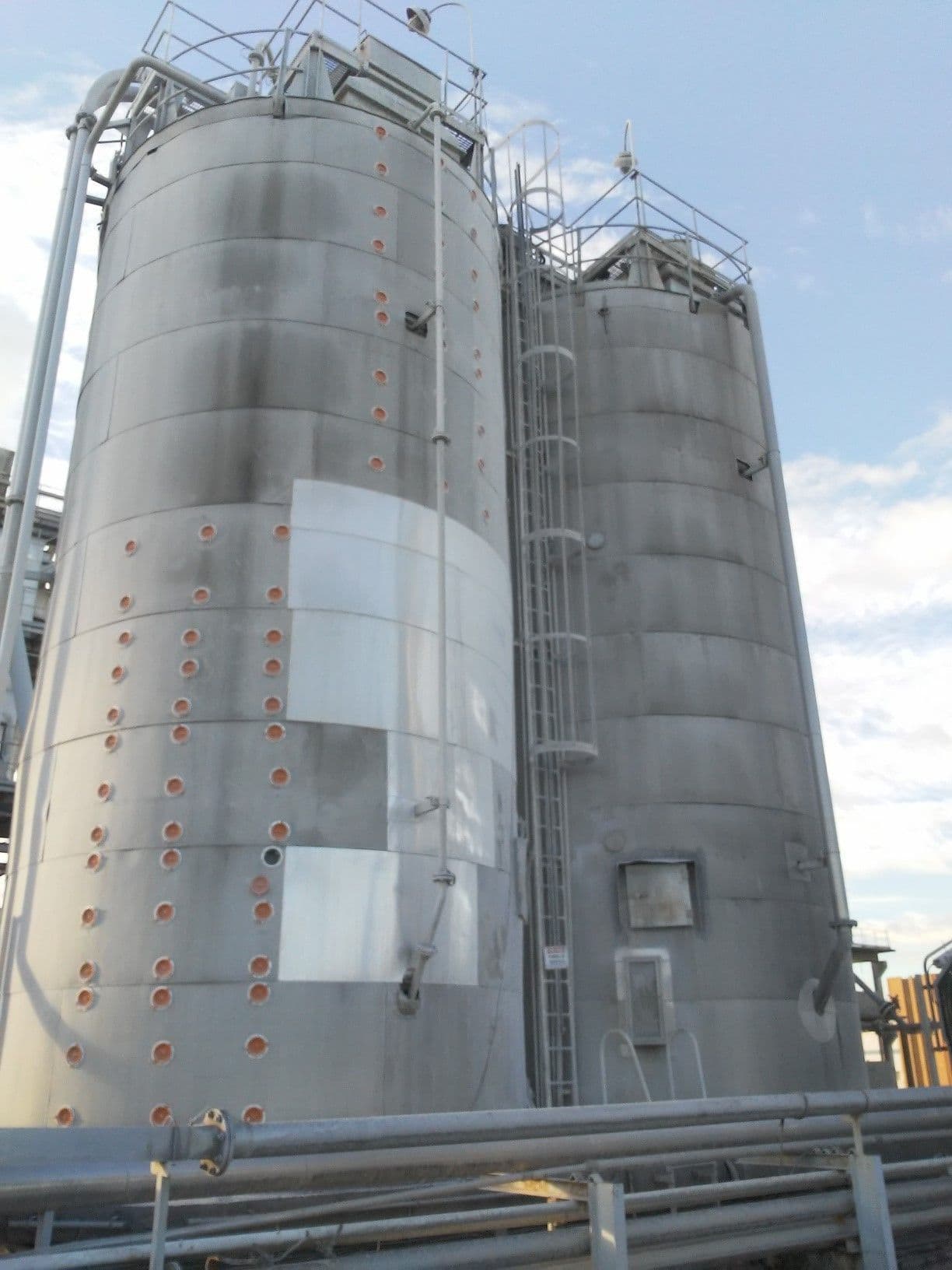
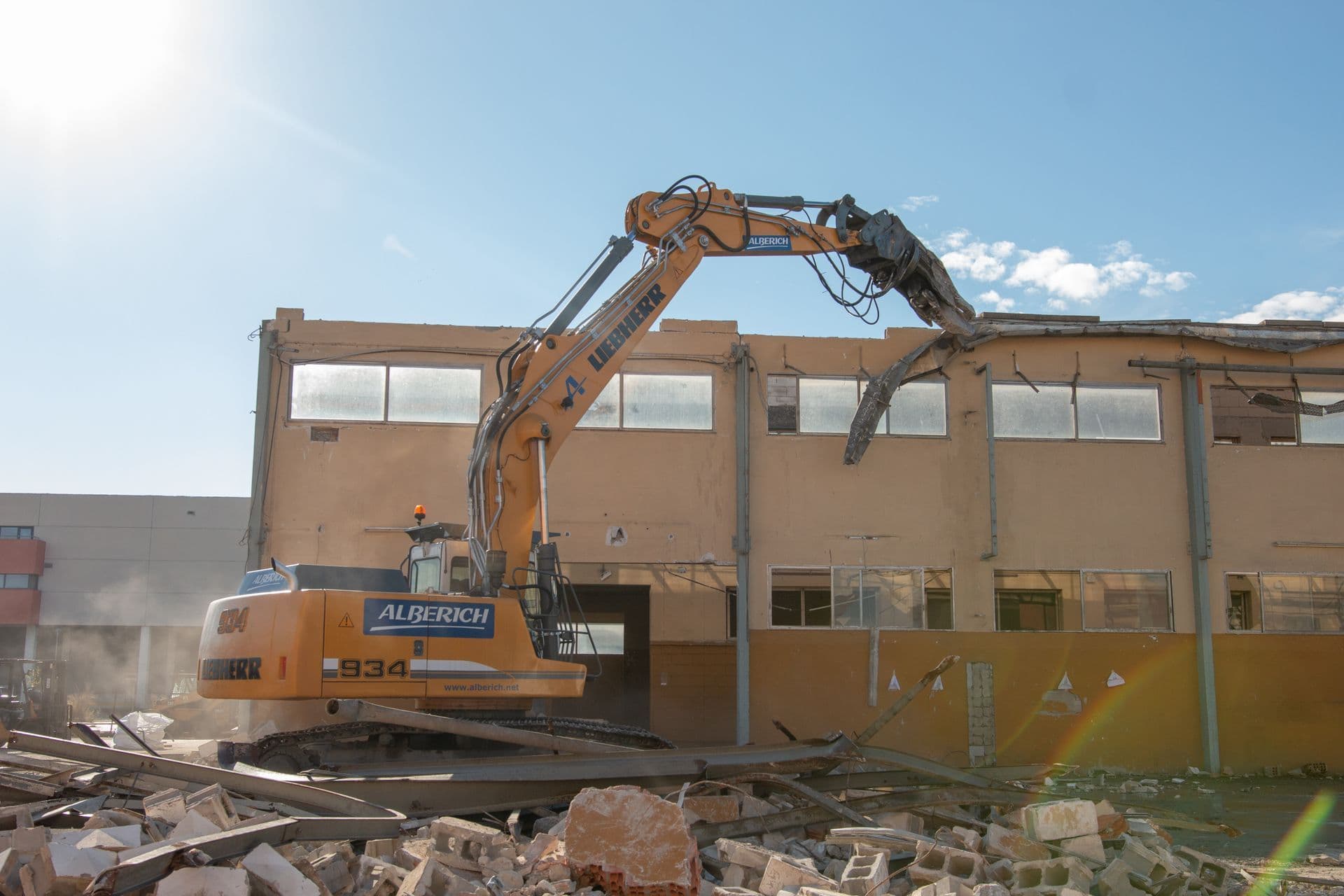
- Partial demolition. An adjoining building, an auxiliary structure or a silo is taken down and the rest of the site is kept.
- Phased demolition. The work proceeds area by area so that activity does not stop, as we explain in our article on working without stopping production.
All of them apply the same logic of separating materials as a full demolition. If the final choice is to take down an entire industrial building, the process is explained step by step in industrial building demolition.
What information do you need to decide?
A decision like this is made with four pieces of information on the table:
- A structural assessment, carried out by a qualified professional.
- An inventory of hazardous materials: asbestos, oils, product residues, transformers.
- The planning position: what the local plan allows on the plot and whether any features are protected.
- The cost of each option, including the value of the materials that can be recovered. Our guide to financial planning for demolition projects explains which cost items to take into account.
How we help you decide at Alberich
When we are asked to assess a demolition, we carry out an on-site technical survey with metal analysers and thickness gauges. It allows us to quantify how much steel, stainless steel, copper or aluminium there is in the facility, which is usually the part of the calculation that surprises people most: income from recovered materials can offset a significant part of the cost of the demolition.
With that figure and a defined scope we give a fixed-price quote and, if the owner decides to go ahead, we take on the whole project, as we explain in end-to-end demolition management. We work in 12 industrial sectors, including work after industrial fires and accidents, where we coordinate the job with the insurers and provide photographic records and loss adjuster documentation.
Frequently asked questions
Can the council force me to demolish a building?
If a building poses a safety risk, the authorities can order the owner to carry out maintenance work or, if the building is in a state of ruin, to demolish it. The procedure depends on the planning legislation of each Spanish region (autonomous community) and each municipality.
What should be done with the debris from an industrial fire?
It must not be treated as ordinary rubble. Fire debris can contain hazardous substances, so it is characterised before it is removed and each fraction goes to the appropriate authorised waste management company.
What happens to machinery that still works?
If there is a market for it, it can be sold or reused before the plant is dismantled. If not, it is dismantled and its metals are recycled. Either way, it is best to decide early, because idle machinery loses value over time.
Does a partial demolition need a licence too?
Yes. Taking down part of a building is demolition work and requires the relevant municipal authorisation. The project also has to define how the parts that remain will be left: party walls, external walls and installations that stay in service.
If you have a facility in any of these situations, a site survey will give you the information you need to decide whether to demolish, dismantle or refurbish.