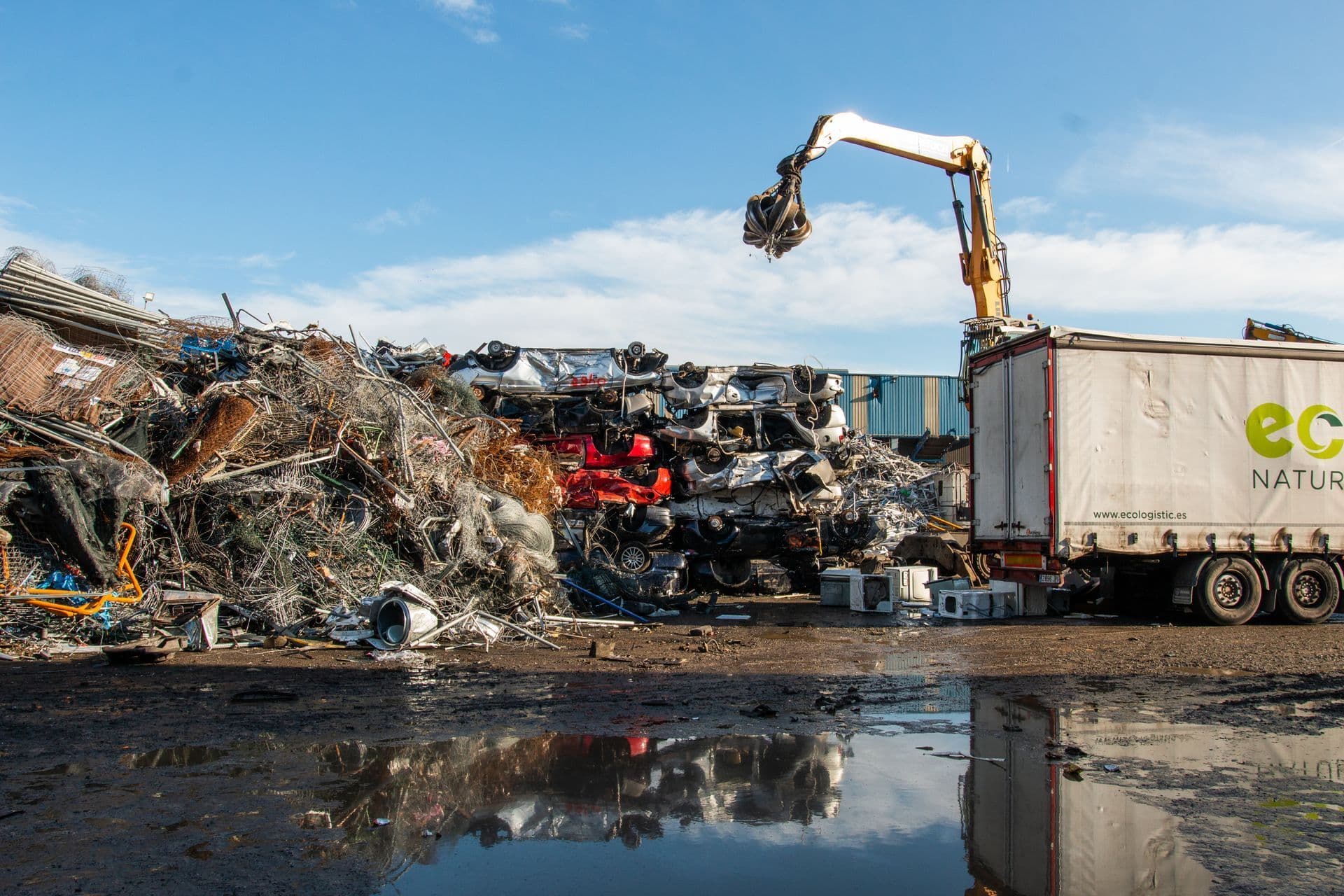
Car recycling starts at an authorised treatment facility (ATF). There, the fluids and hazardous parts are removed, the body is shredded, and the steel, aluminium, copper and other materials are separated so they can go back into industry. Taking your old car to an authorised facility is what the law requires before it can be permanently deregistered, and it is what guarantees that it won’t pollute.
Here we explain why it’s worth doing it this way and what can be recovered from a vehicle. The paperwork (documents, timescales and where to drop the car off) is covered in our step-by-step guide to deregistering a vehicle.
Why take your old car to an authorised facility?
For three reasons. The first is legal: only an ATF can issue the certificate of destruction, which is what allows the vehicle to be permanently deregistered with the DGT (Spain’s traffic authority). Without that document, the car stays in your name, along with its road tax and insurance.
The second is environmental. A car at the end of its life still contains engine and transmission oil, fuel, brake fluid, coolant, air-conditioning gas and a lead battery. If it is abandoned or dismantled without any controls, all of that ends up in the ground, in the drains or in the air.
The third is economic. Most of a car’s weight is metal, and metal has value. At an authorised facility, that value goes back to industry as raw material and, at Alberich, the vehicle is paid for according to its weight and its suitability for recovery.
What gets recycled from a car?
Almost all of it, although each material follows its own route:
| Material | Where it is in the car | What happens to it |
|---|---|---|
| Steel and iron | Body, chassis, suspension, brake discs and part of the engine | Shredded, separated with magnets and sent out as scrap to make new steel |
| Aluminium | Alloy wheels, sump, cylinder head, gearbox and radiators | Separated on the post-shredder line and used as secondary aluminium |
| Copper | Wiring, starter motor, alternator and electric motors | Recovered together with the other non-ferrous metals |
| Lead and fluids | Battery, oils, fuel, coolant and air-conditioning gas | Removed before shredding and handled separately by authorised waste management companies |
| Plastics, rubber, textiles and glass | Dashboard, bumpers, upholstery, seals and windows | They make up the light shredder residue (fluff), which is treated to recover whatever still has an outlet |
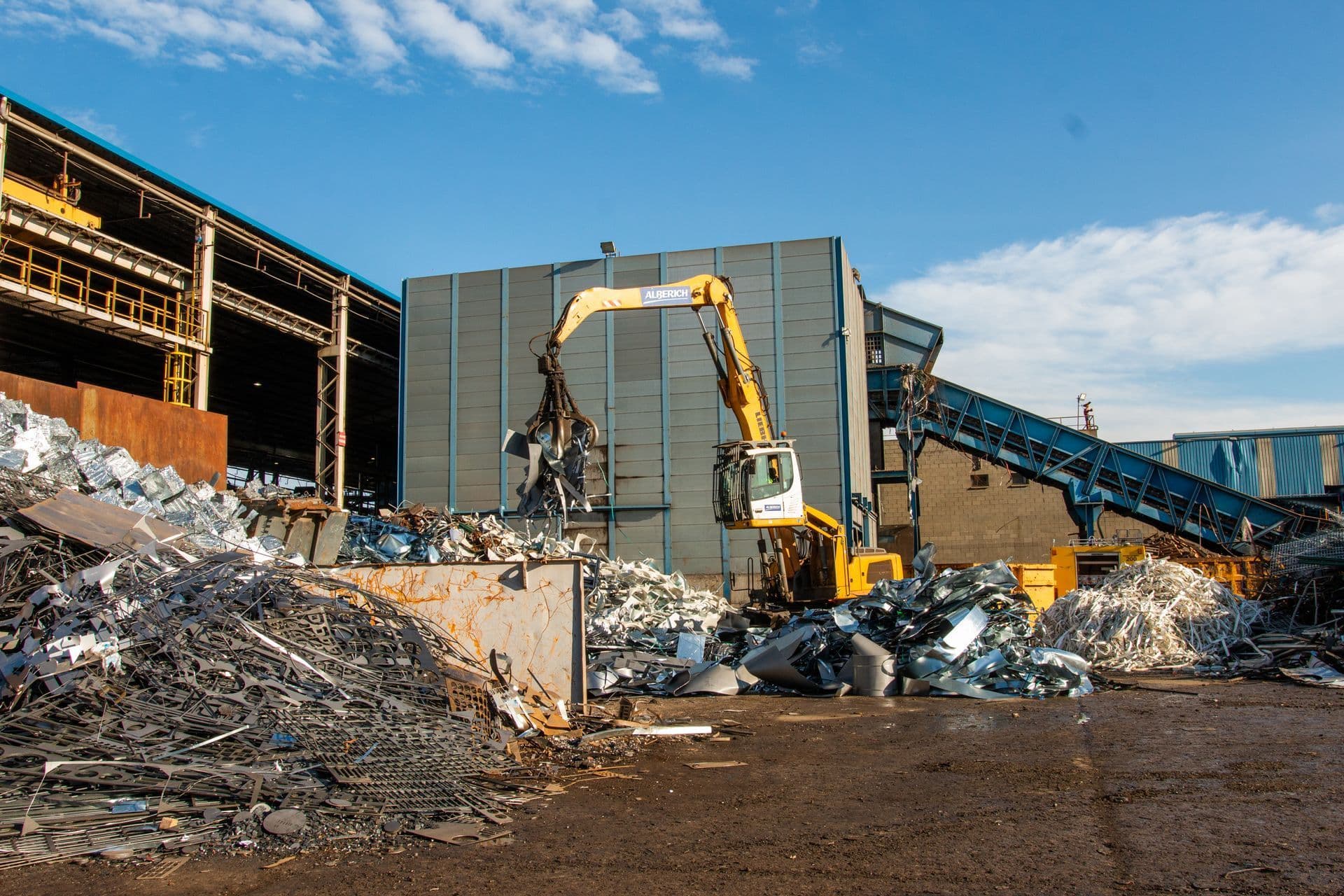
The steel becomes shredded scrap for steel mills. The non-ferrous metals that come out of the shredder mixed together make up Zorba, from which the aluminium is recovered on the secondary aluminium line.
How does car recycling work at Alberich?
In three stages, in this order.
1. Depollution
A shredder can’t tell metal from oil. If a car goes in with its fluids, they mix with the metal fractions, and what could have been raw material becomes contaminated waste. That is why the rule is clear: nothing is shredded until it has been fully depolluted. On a petrol or diesel car, we remove the lead-acid battery, the engine, transmission and power-steering oils, the fuel, the coolant and the air-conditioning gas. As the regulations require, the airbags are also removed or neutralised, because they contain a pyrotechnic charge.
2. Shredding
The depolluted body shell goes into the 4,000 hp shredder at Castellbisbal, which breaks it down into small, dense fragments. The system uses water injection, which keeps dust down. Magnetic separation then extracts the steel and iron.
3. Non-ferrous separation
Whatever isn’t magnetic moves on to the post-shredder separation line, where eddy current separation, X-ray sorting and colour sorting recover the aluminium, the copper and other alloys. What is left after that, the fluff, is treated at a dedicated plant.
The scrap leaving the plant is melted down at steel mills and foundries to make new metal. We explain the full ferrous scrap cycle in our article on why ferrous scrap is much more than waste.
How much of a car can be recycled?
Since 2015, the EU End-of-Life Vehicles Directive (2000/53/EC) has required that, on average, at least 95% of a vehicle’s weight is reused or recovered and at least 85% is reused or recycled. Metal is the easy part: steel can be melted again and again, and recycled aluminium needs around 5% of the energy required to make primary aluminium.
The challenge lies in everything else: the plastics, foams, textiles and rubber that come out of the shredder all mixed together. That is why separation after shredding matters as much as the shredding itself, and why a properly depolluted car is easier to recycle.
Frequently asked questions
Does it cost anything to take a car for recycling?
No. The vehicle is valued on its weight and its suitability for recovery. If you’re a private individual, you’re paid on the spot at a payment kiosk using the barcode on your delivery note; if you’re a business, it is invoiced under your trade account.
What types of vehicle can be recycled?
Cars, vans, motorcycles and mopeds, commercial vehicles such as tractor units and HGVs, buses and coaches, and entire company fleets. Fire- or flood-damaged write-offs can also be recycled, as long as the VIN (chassis number) is legible.
What happens to the battery from an electric or hybrid car?
The traction battery is removed in a dedicated depollution bay, following certified electrical safety protocols, and is never processed at the plant: it goes to an authorised waste management company that specialises in batteries. Each battery is linked to the vehicle’s VIN and comes with its waste management certificate.
Can the steel from my car end up in another product?
Yes. Shredded scrap is melted in electric arc furnaces to make new steel, such as structural sections and bars for construction. Steel doesn’t lose its properties when it is recycled, provided it arrives properly separated from other metals such as copper.
If you have a car sitting idle that you won’t use again, the next step is to deregister it. You’ll find everything about the service on our end-of-life vehicles page.