Contents
Aluminium can recycling prepares UBC (used beverage cans) for the remelter. On the line they are sorted by cleanliness, passed under a magnet and through an eddy current separator, and leave baled or shredded, depending on the customer.
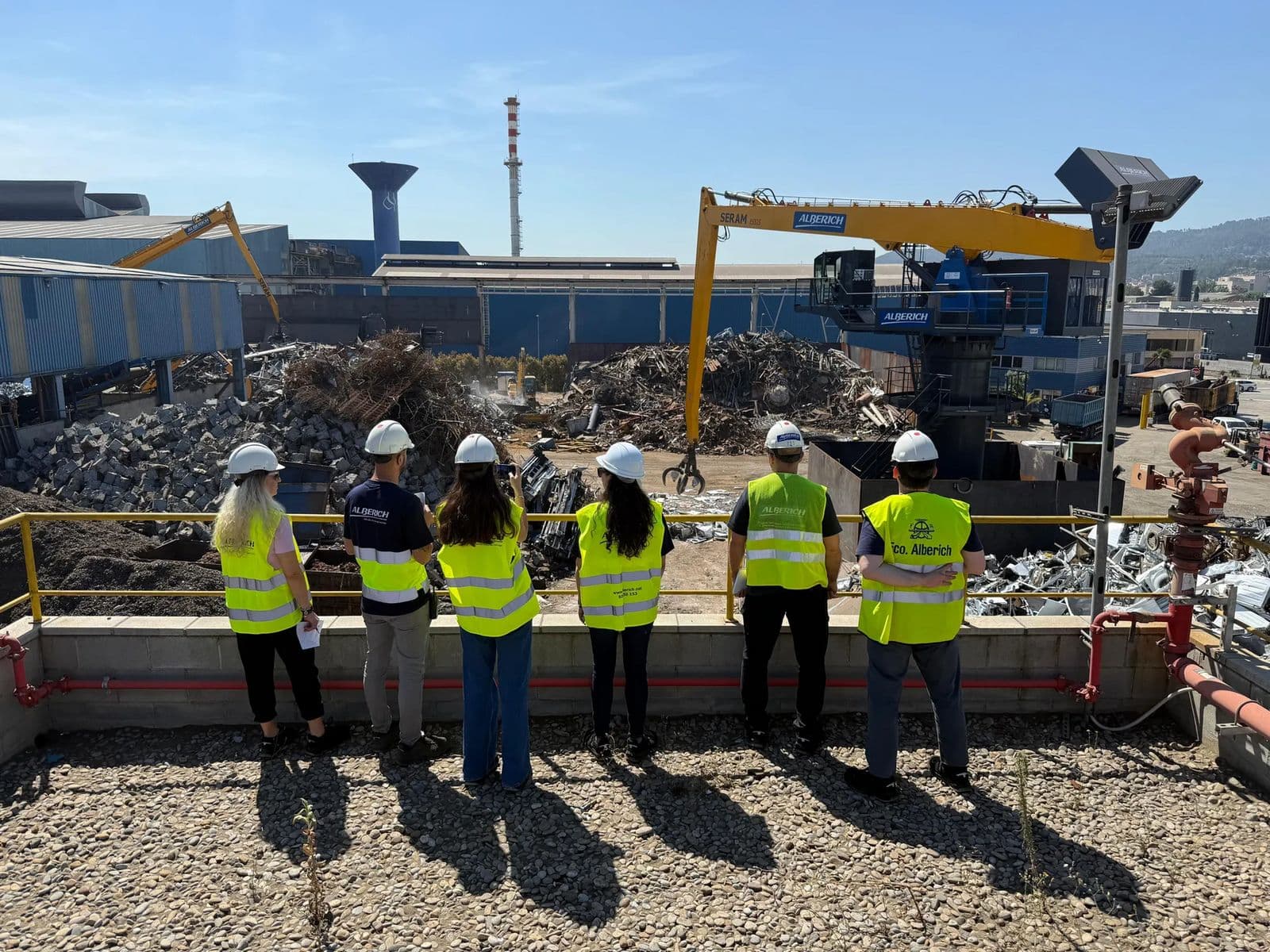
If you collect aluminium cans, aluminium can recycling doesn’t start in a furnace. It starts on a line that clears the UBC of iron and other metals and delivers it in the format the remelter asks for. At Alberich we have had a dedicated can line since 2015. In 2021 we upgraded it with a second phase.
What is aluminium can recycling?
UBC (used beverage cans) is scrap made up of aluminium drinks cans. The European standard EN 13920-10 defines it as whole cans, including those that don’t come from consumer collection, once emptied of liquid. That product is what we buy, not the bare alloy. Cans go on the same list as windows, copper tube and cable.
A can isn’t made from a single aluminium alloy. The International Aluminium Institute describes two alloys: 3004 or 3104 for the body and 5182 for the lid. They differ in their magnesium and manganese content. By weight, the body accounts for around 80% and the lid for around 20%. Depending on the size of the can, the split ranges from 85/15 to 70/30.
Aluminium can be melted down several times without the metal losing its properties. European Aluminium and Metal Packaging Europe treat it as a permanent material. In 2022, 580,000 tonnes of drinks cans were recycled. The rate was 74.6% across the European Union, the United Kingdom, Switzerland, Norway and Iceland. The figure comes from their press release of 10 February 2025.
That explains a foundry’s interest in a batch of cans. The alloy already contains the magnesium and manganese a new can needs. If the batch is mixed with other aluminium, those elements are no longer any use for making cans and start getting in the way.
What does the plant check when a lorry of cans comes in?
Every load is weighed on a trade-approved weighbridge. The ticket shows gross, tare and net weight. All material undergoes radiation monitoring on the way in and again on the way out. Each grade is checked as it is unloaded. We look for contaminants, signs of contamination and hazardous materials, such as a battery mixed in with the scrap.
With a batch of cans, the first sort is by cleanliness. Leftover liquid, labels and plastic aren’t aluminium. They add weight on the weighbridge and then have to be removed. That’s why UBC is sorted according to how it arrives, not against a single standard.
Iron is the contaminant that slips in most often. A steel food tin sticks to a magnet. An aluminium drinks can doesn’t. If you mix them, the magnet on the line has to take the steel out later on. Separating them beforehand leaves the batch cleaner.
How does the UBC line work?
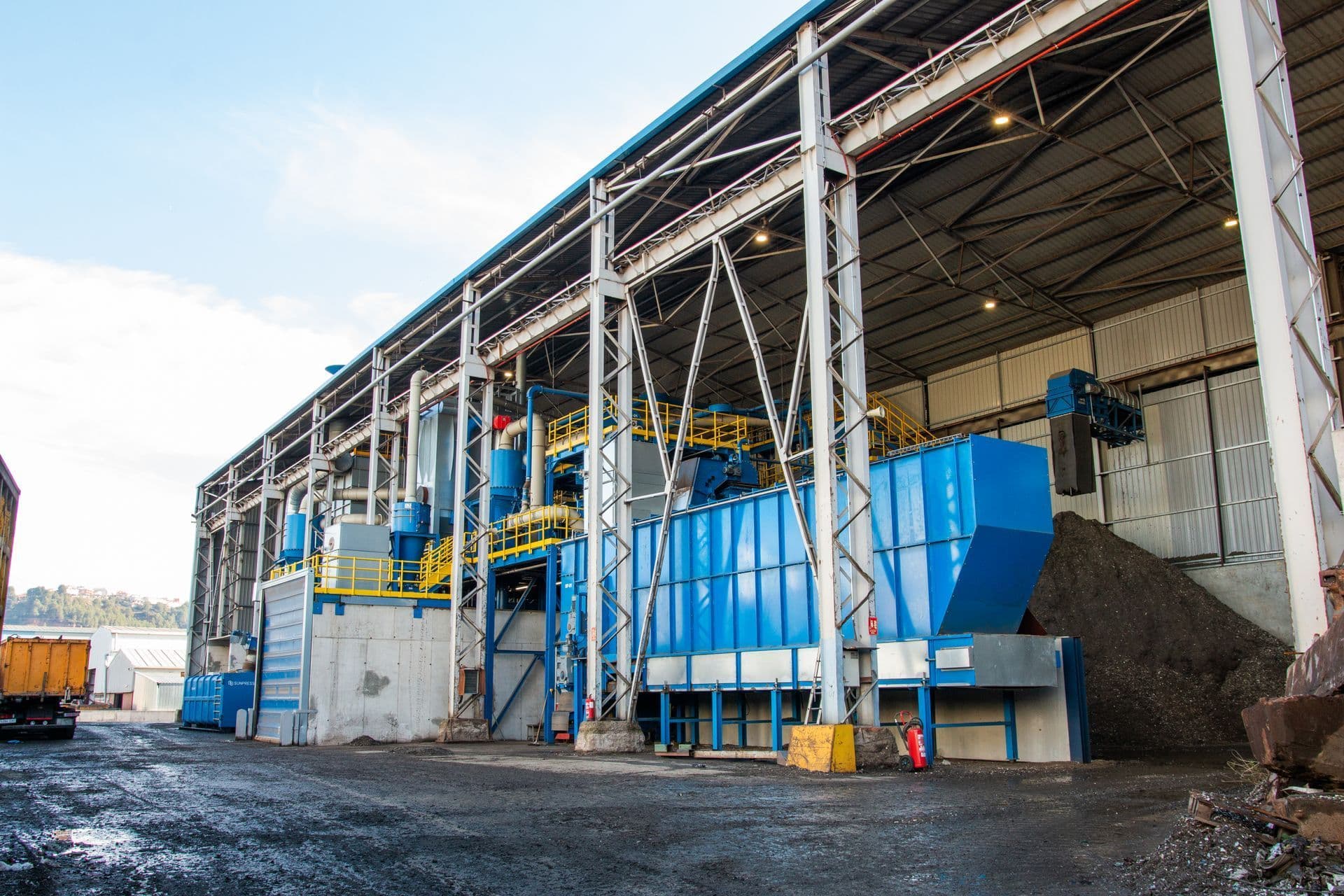
Our aluminium processing line handles UBC and extrusions. It is one of our seven in-house processing lines, one for each material family. UBC and extrusions are not mixed. They are different alloys and leave by different routes.
This is the UBC route as we describe it publicly.
- Sorting by cleanliness
The batch is separated according to leftover liquid, labels, plastic and other visible contaminants. - Magnetic separation
A magnet removes ferrous contaminants, such as a steel can or a piece of iron. - Eddy current separation
The separator removes other non-ferrous metals that contaminate the can aluminium. - Baling or shredding
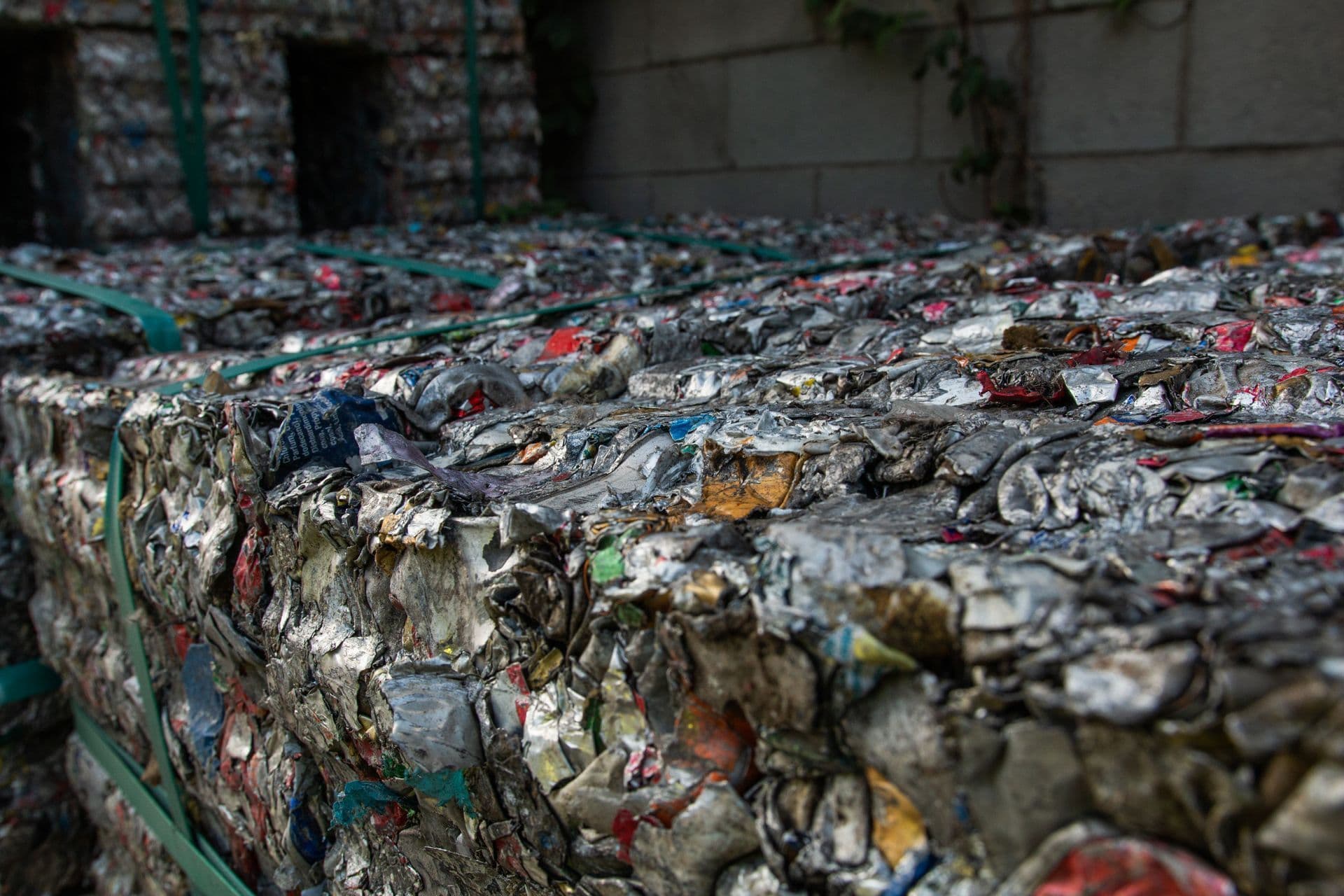
The UBC is pressed into bales or shredded, depending on what the customer asks for.
The eddy current separator is not the shredder. The 4,000 hp shredder is at Castellbisbal and breaks down complex scrap. Among other fractions, it produces Zorba: a mix of non-ferrous metals, mostly aluminium, with copper, brass, zinc and lead. Since 2012 we have been preparing that aluminium for secondary remelting on a different line. A batch of cans doesn’t go through that machine.
The second phase in 2021 upgraded this process. Here we don’t go into which machine was added or which step changed. What we can describe is the result, the sequence listed above: cleanliness, magnet, eddy currents, then bales or shredded material.
The line doesn’t melt the cans or cast them into ingots. It leaves the material ready. Delacquering (using heat to strip off lacquers and paints) and melting are the job of the remelter that receives the UBC. The new can is made further down the chain, by the rolling mill and the can maker.
Bales and shredded material aren’t loaded the same way. A bale concentrates weight and takes up less room on the lorry. Shredded material arrives at the remelter already in pieces. We don’t publish which buyer asks for which format. That is set by the receiving plant’s specification and agreed when the batch is valued. What is fixed is the order of the line: cleanliness first, then the magnet, then eddy currents, and finally the format.
Why aren’t cans mixed with windows or engines?
Because it isn’t the same alloy. A window, an engine block and a can are each made from a different aluminium alloy. We buy them, separate them and sell each one to the plant that uses it. Putting them in a single pile mixes two grades. The remelter can no longer treat the batch as cans.
| Material | Which alloy it is | What the plant does |
|---|---|---|
| Drinks can (UBC) | Body 3004 or 3104, lid 5182 | UBC line: cleanliness sort, magnet, eddy currents, baled or shredded |
| Window extrusion | A different alloy, the one used in joinery | Segregated from the UBC and follows its own route |
| Engine block | A different alloy, a casting alloy | Segregated: it doesn’t go into a batch of cans |
Extrusions have their own page under aluminium extrusions, and UBC under aluminium cans (UBC). Both grades sit under aluminium. Zorba, which does come out of the shredder, is under shredded non-ferrous.
If you sell cans, the most helpful thing you can do is not mix them with extrusions, sheet or engine parts. Even a magnet at your own premises will pick out the steel cans.
How much energy does recycling aluminium take?
Recycling aluminium takes only 5% of the energy needed to produce primary aluminium. European Aluminium publishes that figure in its March 2025 scrap strategy, and it is the figure we use.
The International Aluminium Institute puts it in terms of savings. Using 2019 data, primary aluminium took 186 gigajoules per tonne, from mine to casting. Recycled aluminium took 8.3. The saving they calculate is 95.5%. The details are in their note on energy savings.
That figure applies to aluminium in general; it is not an energy balance for our UBC line. It helps explain why a clean can is worth having: the metal has already been made. It is no substitute for the quality of the batch. A can with iron, plastic or water in it still carries extra weight, even if the aluminium it contains needs little energy to melt.
What determines the value of a batch of cans?
There is no single rate and no published euro-per-kilo price. Each deal is valued separately. The benchmark for aluminium, as for other non-ferrous metals, is the LME (London Metal Exchange) price.
On top of that benchmark, the purchase price depends on the LME price and the dollar–euro exchange rate. It also depends on the grade, the density or cleanliness, the volume and frequency, and logistics. With cans, cleanliness and format carry a lot of weight. A dense bale isn’t handled like a sack of loose cans with liquid still inside. We go into this in more detail in what the scrap aluminium price depends on.
You can bring the material to one of our sites or ask for our fleet to collect it. The list of what we buy, UBC included, is under what we buy.
Frequently asked questions
Can aluminium cans be recycled?
Yes. UBC is prepared on our own line, running since 2015 and upgraded in 2021. We sort by cleanliness, remove iron with a magnet and other metals by eddy current separation, then bale or shred to suit the customer.
What does UBC stand for?
Used beverage cans: used aluminium drinks cans. EN 13920-10 uses UBC for whole cans once emptied, including those that don’t come from consumer collection.
Does the line melt the cans?
No. The line leaves them baled or shredded. Delacquering and melting are done by the remelter that receives the material. We don’t cast the cans into ingots.
What does the magnet remove, and what does eddy current separation remove?
The magnet removes ferrous contaminants, such as a steel can. Eddy current separation removes other non-ferrous metals that aren’t can aluminium. Before that, the cleanliness sort removes liquid, labels and plastic.
Is there a price per kilo for cans?
We don’t publish one. Each batch is valued on the LME price, the exchange rate, cleanliness, format, volume and logistics. If you tell us what the material is, how much there is and where it is, we’ll reply within 48 working hours.
If you want to see the line together with the output format, the next step is the aluminium cans (UBC) page. Extrusions, which shouldn’t go in the same batch, are under aluminium extrusions. Everything we buy is listed under what we buy.
Sources cited
- International Aluminium Instituteinternational-aluminium.org
- press release of 10 February 2025european-aluminium.eu
- European Aluminiumeuropean-aluminium.eu
- note on energy savingsinternational-aluminium.org