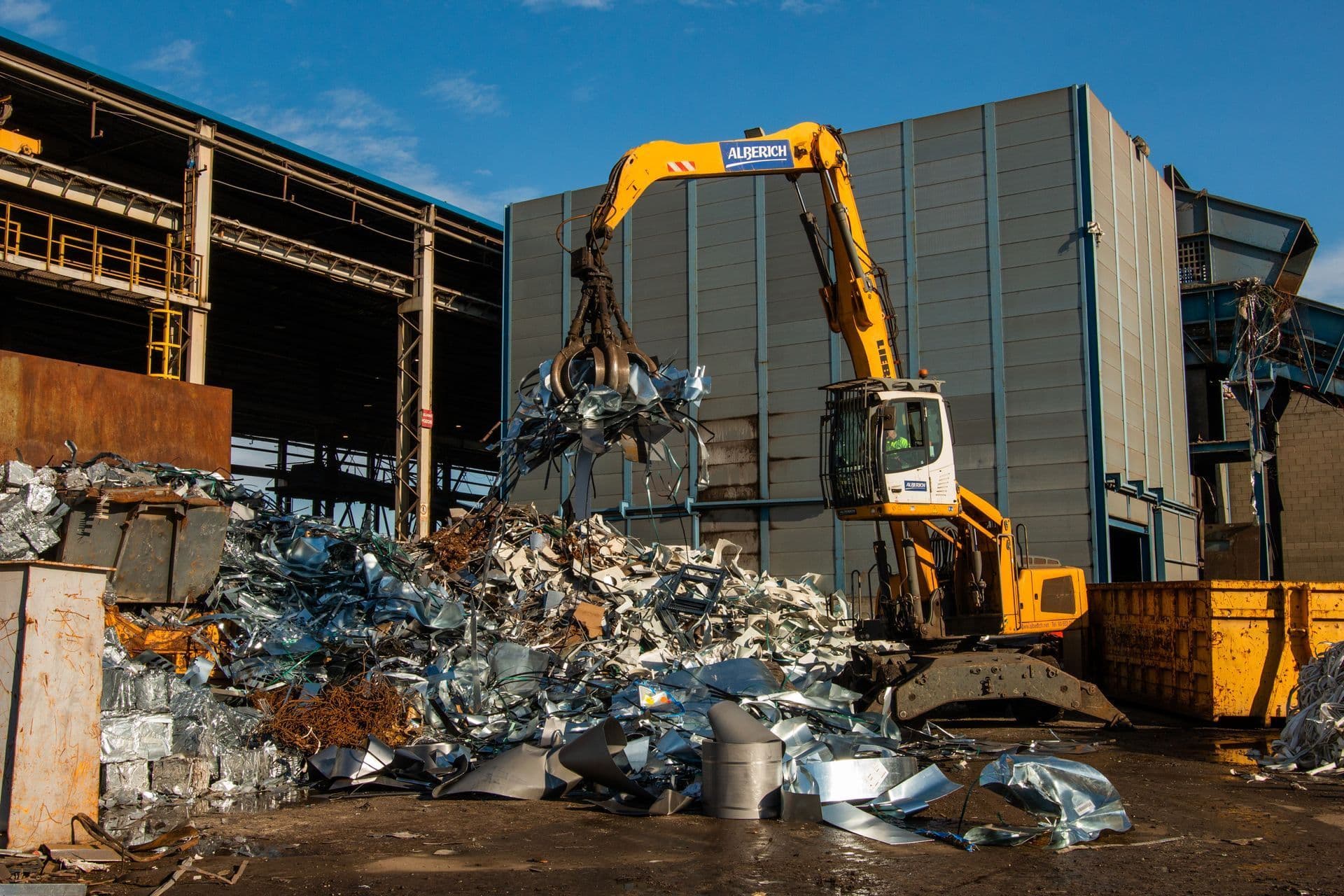
Recycling metals, both ferrous and non-ferrous, is one of the most effective ways of reducing industry’s environmental impact: it avoids mining, saves much of the energy it takes to extract metal from ore, and cuts emissions and the waste that ends up in landfill. In non-ferrous metal recycling the savings are even greater: producing aluminium from scrap takes around 5% of the energy needed to obtain it from bauxite.
But the benefit isn’t automatic. It depends on the scrap arriving separated, clean and decontaminated. Here we go through the impact of each family of metals and the practices that make it possible.
What is the environmental impact of producing new metal?
Getting metal from ore is a long process: open-pit or underground mining, crushing and concentrating the ore, transport and, finally, chemical reduction or electrolysis, which is where most of the energy use and emissions are concentrated. Along the way it leaves behind spoil heaps and tailings ponds, and uses a considerable amount of water. With metals such as copper, where the metal content of the ore is low, large quantities of rock have to be moved for every tonne of metal.
Scrap skips almost all of that. The metal has already been extracted and reduced: it only has to be separated, prepared and melted.
How much does recycling ferrous metals save?
For steel, the most widely cited figure comes from the World Steel Association: every tonne of scrap used to make steel avoids around 1.5 tonnes of CO₂ and the use of about 1.4 tonnes of iron ore. The reason is that electric arc furnace steelworks melt scrap directly, without going through the blast furnace. We explain this in more detail in why recycling ferrous material matters.
Steel is also the most recycled metal by volume, and it can be remelted indefinitely. The most common ferrous waste in industry (structures, machinery, offcuts, turnings) can almost all be sold on as scrap if it arrives unmixed.
How does non-ferrous metal recycling work and what does it save?
It follows the same logic, with bigger savings, because producing these metals from ore takes much more energy per tonne:
| Metal | How it is produced if not recycled | Benefit of recycling it |
|---|---|---|
| Aluminium | Bauxite refined into alumina and reduced by electrolysis | Takes around 5% of the energy of primary aluminium |
| Copper | Low-grade ores, concentration, smelting and refining | Between 85% and 90% less energy than mined copper |
| Brass and bronze | Mined copper alloyed with zinc or tin | Remelted as alloys, keeping the value of the copper they contain |
| Lead | Lead ores | Avoids mining and keeps a toxic metal out of the soil; most of it comes from batteries |
The process is more delicate than with steel. Non-ferrous metals usually arrive mixed with each other or with plastics, and they have to be separated by eddy current, X-ray and colour sorting before being sent on to their destination: aluminium to secondary refiners and remelters, copper to refineries and wire-drawing mills. We explain how that separation works in how ferrous and non-ferrous metals are separated in a plant.
Why does recovering ferrous and non-ferrous metals protect soil and water?
Many metal products contain hazardous substances: oil in engines and transformers, refrigerant gases in fridges and air-conditioning units, batteries, or PCBs in older equipment. If they end up in landfill or in an unregulated scrapyard, those contaminants reach the soil and water. The recovery of ferrous and non-ferrous metals at an authorised facility starts precisely by removing them.
That’s what happens with end-of-life vehicles, which are depolluted before being shredded, and with electrical and electronic equipment, from which gases, batteries and hazardous components are removed. With transformers containing PCBs, Alberich acts as a transfer station (T62) and final destruction is carried out by an authorised final treatment facility.
Then there is the question of space: recycled metals take up no room in landfill, and the non-metallic fraction separated during shredding (plastics, rubber, foam) has its own treatment route.
Which good practices multiply the environmental benefit?
The real impact of recycling depends heavily on what happens before the scrap leaves your company. What counts most:
- Separate at source ferrous metal, copper, aluminium, stainless steel and cable. Every mixed metal means energy spent later on separating it, or metal that ends up as an impurity in another.
- Decontaminate before scrapping: drain oils and fuels, remove batteries and keep equipment containing gases or PCBs out of the scrap.
- Store under cover anything that may leak fluids, such as turnings with cutting fluid or oily parts, so that rain doesn’t wash them into the ground.
- Work with authorised waste management companies and keep the paperwork, which is your guarantee that the waste has ended up where it should.
- Fine-tune your logistics: containers of the right size and planned collections avoid half-empty journeys.
We cover the organisational side (sorting, containers, EWC codes and paperwork) in our guide to metal waste management.
How does Alberich approach metal recovery?
Alberich has been recovering materials in Catalonia since 1900. Today it processes more than 300,000 tonnes a year across its three sites (Castellbisbal, La Llagosta and Constantí), with a 4,000 hp shredder, 600–1,000 t shears, non-ferrous separation by eddy current, X-ray and colour sorting, and radiation monitoring on the way in and on the way out. Its environmental management is certified to ISO 14001, alongside ISO 9001 and ISO 45001.
The metals that come out of these processes go back to industry as raw material: ferrous scrap for steel mills, aluminium for secondary remelting, copper for refineries and wire-drawing mills. You can browse each metal family and see what we buy.
Frequently asked questions
Does recycling metal also pollute?
It has an impact, like any industrial activity: it uses energy for shredding and melting, generates dust and noise, and produces non-metallic waste. But it is far smaller than the impact of producing the same metal from ore and, at an authorised facility, emissions, wastewater, noise and waste are controlled under the environmental permit.
Which metals can’t be recycled?
Almost all metals can be recycled. The limits are set by the state they arrive in: parts contaminated with hazardous substances, metals bonded to materials that can’t reasonably be separated, or very small amounts spread through other products, as happens in some electronic components.
How much of a car is recycled?
European legislation requires at least 95% of the average weight of end-of-life vehicles to be reused or recovered. Most of it is steel, which ends up as shredded scrap; the rest is aluminium, copper, plastics, glass and fluids, which are removed and managed separately.
If you’d like to review how your company manages its metal waste, tell us what you generate and how much. We’ll get back to you within 48 working hours.


