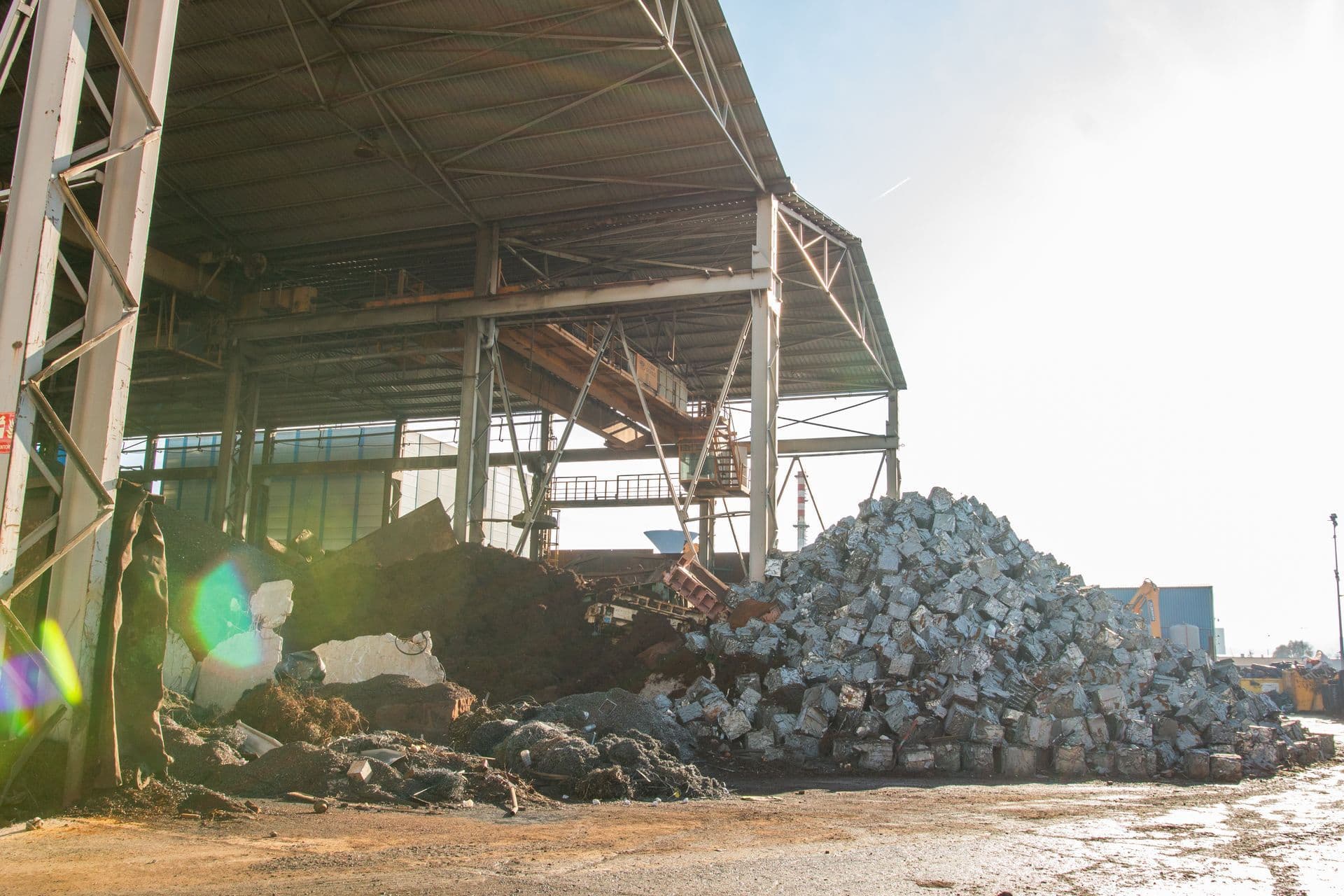
Recycling ferrous material (in other words, recycling steel and iron) means new steel can be made without mining iron ore or burning the coal that a blast furnace needs. According to the World Steel Association, every tonne of scrap used to make steel avoids around 1.5 tonnes of CO₂ emissions and the use of about 1.4 tonnes of iron ore, 740 kg of coal and 120 kg of limestone. And steel can be recycled indefinitely without losing its properties.
What exactly is ferrous material?
It is any metal based on iron: carbon steel, alloy and stainless steels, and cast iron. Aluminium, copper, brass and bronze are not ferrous, even though they often come up in the same conversation. If you are unsure about a particular metal, we answer that in is copper ferrous or non-ferrous?
Why does recycling steel save energy and raw materials?
There are two ways of making steel. The integrated route starts from iron ore: the ore is reduced in a blast furnace using coke, which is made from coal, and the resulting pig iron is converted into steel (some scrap is also added at that last stage). It is the route that uses the most raw material and emits the most CO₂, mainly because of the chemical reduction of the ore.
The electric arc furnace route melts mainly scrap, using electricity. Because the iron in scrap has already been reduced, that step disappears, and with it much of the coal consumption and the emissions. That’s why well-sorted scrap is so valuable to steel mills: it is iron that has already been through the most costly part of the process.
Does steel lose quality when it is recycled?
No. Iron doesn’t degrade when it is remelted. What limits the quality of recycled steel are the elements that arrive mixed in with the scrap and aren’t removed in the furnace, especially copper and tin. That’s why separating beforehand matters so much: copper-free scrap can be used for demanding steels, while contaminated scrap is only suitable for less demanding uses. It is the reason grades such as low-residual scrap exist.
What can a company do with its ferrous scrap?
A good deal more than leave it piling up in a corner of the yard:
- Separate it at source: iron and steel in one container; copper, aluminium and stainless steel kept apart.
- Keep it clean: no wood, plastics, oils or sealed containers.
- Hand it over to an authorised waste management company, with the environmental documentation for each collection.
- Sell it: ferrous scrap has a market value and, when it is well separated, it is paid for according to its grade.
At Alberich we place containers from 1 to 30 m³ at your premises and collect them with our own fleet; if you only have a small amount, you can take it to one of the 8 Scrap Center sites. You’ll find a guide to organising this in our article on metal waste management, and the path your scrap follows through the plant is described in how ferrous metal recycling works.
Frequently asked questions
Why don’t steel mills make all their steel from scrap?
Because there isn’t enough scrap to meet all the demand. Steel spends decades in buildings, vehicles and infrastructure before it becomes scrap, and world demand for steel is greater than the amount of scrap generated each year. That’s why the two routes coexist, and why every tonne that is recovered counts.
Can galvanised or painted steel be recycled?
Yes. The paint burns off during melting, and the zinc from the galvanising volatilises and is captured in the steel mill’s dust, from which it is recovered. It is delivered with the rest of the ferrous scrap.
How do I know what my ferrous scrap is worth?
It depends on the grade (heavy, light or low-residual), how clean it is, the quantity, the logistics and the market at the time. We don’t publish a fixed price because it changes with the market: tell us what you have and we’ll give you a specific valuation within 48 working hours.
If you want to start separating and selling your ferrous scrap, tell us what you generate and how often: we’ll suggest the container and collection arrangement that suits you best.


