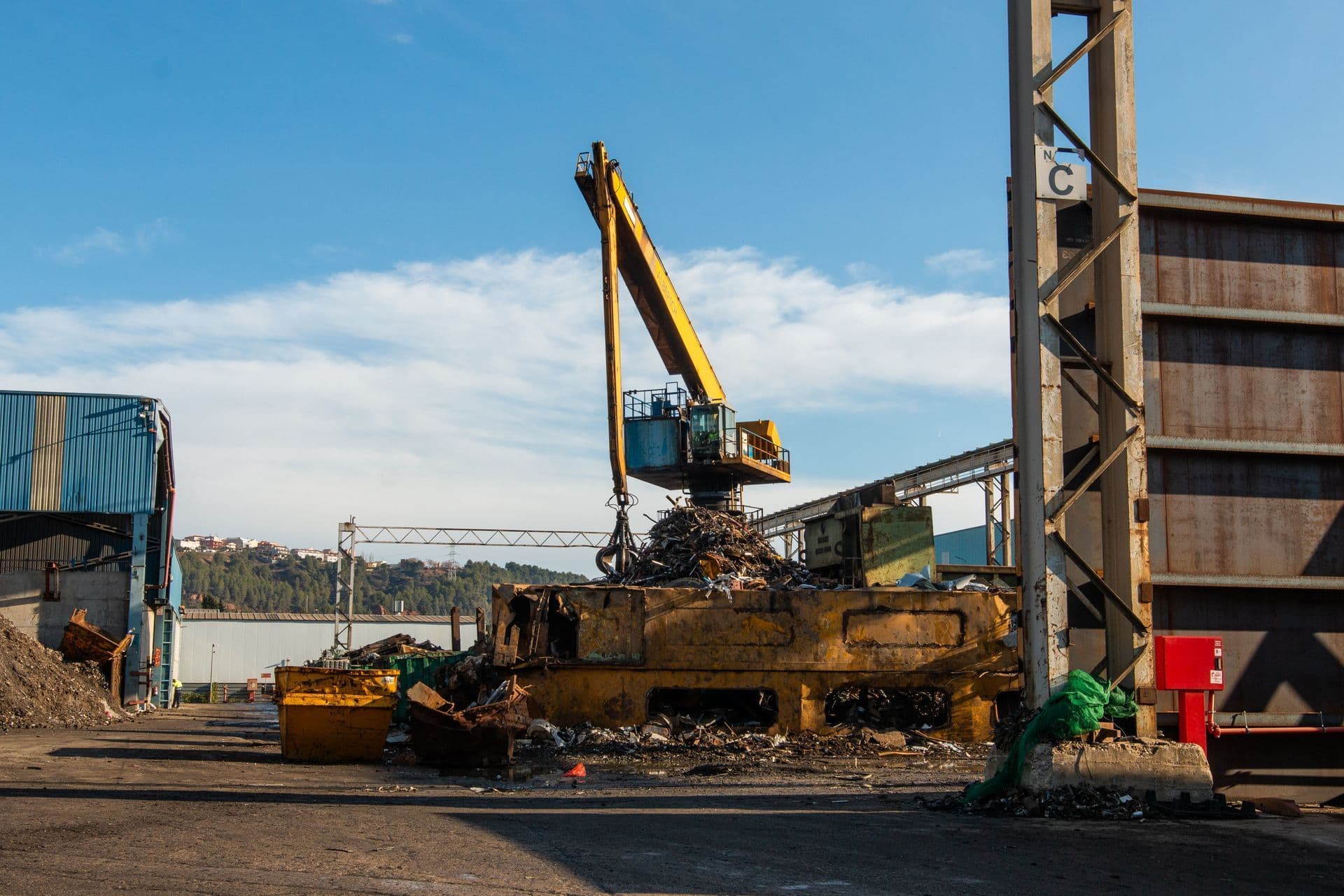
Metal recycling is almost as old as metalworking itself: for as long as people have melted metal, they have remelted whatever broke or stopped being useful. What has changed over the centuries is the scale, the technology and the rules, to the point where it is now an industry that supplies raw material to steel mills and foundries all over the world.
This is a short tour of that history and of where Alberich, which has been recycling metals in Barcelona since 1900, fits into it.
How long have metals been recycled?
Since at least the Bronze Age. Hoards of broken axes, spearheads and ingot fragments have been found at sites all over Europe, gathered together, according to many archaeologists, to be melted down again. Bronze was expensive to produce, because it required copper and tin, which are rarely found in the same place. Throwing it away made no sense.
What was recycled in the ancient world?
Almost anything made of metal. Most of the great Greek and Roman bronze statues have not survived to the present day for a practical reason: they were melted down for their metal.
The best-known case is the Colossus of Rhodes, a bronze statue toppled by an earthquake in the 3rd century BC. According to the Byzantine chronicler Theophanes, its remains were sold as metal in the 7th century, almost nine centuries after it fell.
How did metal recycling change with printing and industry?
With movable-type printing, in the mid-15th century, remelting became a workshop routine: worn lead-alloy type was melted down to cast new type.
The big change came with modern steelmaking. From the 1860s, the Siemens-Martin furnace made it possible to charge scrap together with pig iron to make steel, and in the early 20th century the electric arc furnace appeared, capable of producing steel mainly from scrap. Since then, ferrous scrap has been a raw material for the steel industry, not waste.
Aluminium came later. Industrial production began in 1886 with the Hall-Héroult electrolytic process, and recycling it became widespread over the course of the 20th century for a compelling reason: remelting it takes only a small fraction of the energy needed to extract it from bauxite.
When did it become an organised industry?
Between the late 19th century and the 20th century. In 1877 the London Metal Exchange (LME) was founded in London, and it still sets the price benchmark for non-ferrous metals today and, with it, much of the value of copper, aluminium and zinc scrap. We explain how that benchmark works in BIR Academy and the LME.
During both world wars, several countries organised scrap collection drives among the public to supply industry. In 1948 the Bureau of International Recycling (BIR) was founded, the industry’s first international federation, and the decades that followed saw the establishment of the commercial grades and benchmark markets that still govern the metals trade today.
In Spain, the current framework is Law 7/2022 on waste and contaminated soils, which gives recycling priority over disposal and requires waste to be handed over to authorised waste management companies.
Where does Alberich fit into this history?
Alberich dates back to 1900, when Brígida Vilalta Casals started her salvage business in Barcelona’s Poblenou district, an area that had earned the nickname ‘the Catalan Manchester’ in the 19th century for its factories. In 1960 the company joined the BIR, twelve years after the BIR was founded.
Today it processes more than 300,000 tonnes a year across Castellbisbal, La Llagosta and Constantí. The dates that explain that journey, from salvage to demolition, shredding, cable, WEEE and radiators, are set out in more than 125 years of experience in metal recycling. What we buy today is listed under what we buy, and how iron and steel scrap is recycled these days is explained in how ferrous metal recycling works.
Frequently asked questions
Do ‘reciclado’ and ‘reciclaje’ mean the same thing?
Yes. Both Spanish words mean recycling, the process and its result, and the dictionary of the Royal Spanish Academy (RAE) lists both. In the trade they are used interchangeably.
What is the most recycled metal?
By volume, steel. Industry associations regard it as the most recycled material in the world, because it is easy to separate with magnets and can be melted again and again.
Why is metal recycled more than other materials?
Because it holds its value. A well-separated metal can be remelted without losing its essential properties, and recycling it uses much less energy than producing it from ore: in the case of aluminium, the saving can be as much as 95%.
If you have metal to sell, tell us what the material is and how much you have. We’ll get back to you within 48 working hours.


