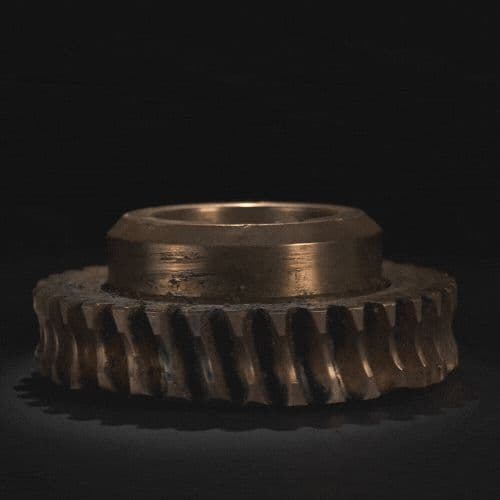
To identify brass and bronze in scrap metal, three tests are usually enough: the colour of a filed spot, a magnet and the weight in your hand. Brass is golden yellow and bronze golden brown or reddish; neither sticks to a magnet, and both are clearly heavier than the aluminium or zamak they are sometimes mistaken for. If there is still any doubt, an analysis confirms the alloy. Separating them properly before you sell is what adds most value to a lot.
This is a practical guide, written for anyone who has to sort parts in a warehouse, a workshop or on a decommissioning job. If you’re looking for the technical difference between the two alloys and their uses, you’ll find it in brass and bronze: differences and applications.
Why do brass and bronze need to be separated?
Because each one goes back to a different foundry. Brass is copper with zinc and bronze is copper with tin, and whoever remelts them needs to know the composition of what goes into the furnace. A mixed lot has to be re-sorted or sold as mixed, and it is valued below what the two parts would be worth separately.
The same goes for any other impurities: iron, plastic, rubber, oil or parts made of another metal. All of it adds weight on the weighbridge and has to be removed before melting.
How can you identify brass and bronze by eye?
Surface colour is misleading, because both alloys darken over time. File or scrape a small area until you see clean metal and look at it in natural light, ideally next to a piece you’ve already identified.
| Clue | Brass | Bronze | Copper |
|---|---|---|---|
| Colour when filed | Golden yellow, sometimes pale | Reddish brown or golden brown | Reddish orange, verging on pink |
| Aged surface | Dull dark brown, with greenish patches | Dark brown or greenish | Chocolate brown or green |
| Hardness under a punch | Medium | High, hard to mark | Soft, marks easily |
| Typical parts | Taps, fittings, valves, terminals, locks, cartridge cases | Bushes, bearings, worm wheels, propellers, bells, sculptures | Cable, tube, busbar, windings |
Where a part comes from also helps. A bush running on a shaft or the worm wheel of a gearbox is almost always bronze; a plumbing fitting or an electrical terminal is almost always brass.
What quick tests can you do in the warehouse?
The magnet test
Neither brass nor bronze is magnetic. If a gold-coloured part sticks to a magnet, it is brass-plated steel or has steel inside: a shaft, a spring, an insert or fasteners. Some aluminium bronzes containing iron may show a very weak attraction, but nothing like the pull of steel.
The file and the angle grinder
The file shows you the true colour of the metal. The angle grinder helps you rule out steel: when it touches the disc, steel throws out a shower of sparks, whereas brass and bronze hardly spark at all. Do this test wearing safety glasses and gloves, well away from flammable material.
Weight in the hand
Brass and bronze are heavy: between 8.4 and 8.9 kg per cubic decimetre. Zamak, used in cheap taps and handles, is around 6.6, and aluminium 2.7. A part that looks like brass but feels light for its size is probably chrome-plated or gold-finish zamak.
What are brass and bronze mistaken for?
Most sorting mistakes come from coated parts or from alloys that look alike on the outside:
| Material | Why it gets confused | How to tell it apart |
|---|---|---|
| Copper | Reddish tone similar to some bronzes | Redder and pinker when filed; also much softer |
| Chrome-plated or gold-finish zamak | Looks like brass on taps and hardware | Lighter, and grey inside |
| Brass-plated steel | Yellow surface on fasteners and hardware | Sticks to a magnet |
| Chrome- or nickel-plated brass | Silver on the outside | Scratching reveals the yellow underneath |
| Aluminium bronze | Golden yellow, like brass | Harder; confirmed by analysis |
How is the exact alloy confirmed?
With a composition analysis. Two techniques are mainly used in the industry: handheld X-ray fluorescence (XRF) analysers, which give the composition in a few seconds without damaging the part, and spark optical emission spectrometry, which is more accurate and needs a clean surface. Both easily tell brass from bronze and identify the specific type of alloy.
If you generate scrap, you don’t need that equipment: just separate what is clear-cut and set aside anything doubtful for the buyer to confirm.
How should you prepare brass and bronze for recycling?
A few steps at source make all the difference to how the lot is valued:
- Separate by alloy: brass, bronze and doubtful parts, each group in its own container or bulk bag.
- Remove anything that isn’t brass or bronze: steel shafts and screws, springs, plastic, rubber and seals.
- Set chrome- or nickel-plated parts apart from clean ones.
- Keep turnings dry and clean, free of cutting fluid and oil, and don’t mix them with steel or aluminium turnings.
- Label each group and note the approximate quantity so you can request a valuation.
If copper turns up in the same lot, separate that too: it has its own value and its own grades, as we explain in how to prepare copper for recycling.
How does Alberich handle brass and bronze?
We buy brass, bronze and zamak and sort them by alloy before sending them to specialist foundries. Some of this material comes to us from industrial decommissioning jobs, where valves, pumps, bushes and heat exchangers turn up mixed with other metals.
Parts that arrive mixed or embedded in other materials go through the 4,000 hp shredder and the downstream separation plant, where eddy current, X-ray and colour sorting separate red metals, such as copper and brass, from aluminium and everything else. All material undergoes radiation monitoring on the way in and on the way out.
If you generate brass or bronze on a regular basis, we can place containers of 1 to 30 m³ at your premises and collect them with our own fleet. You can see how we recover value from brass and bronze and check the other materials we buy.
Frequently asked questions
Can you sell brass with iron parts in it?
You can, but the iron is deducted or the lot is valued as mixed, because it has to be separated before melting. If the steel parts come off easily, like screws or shafts, it pays to remove them first.
What should I do with parts I can’t identify?
Put them to one side, in a separate ‘doubtful’ group, and mention it when you request a valuation. That’s far better than mixing them in with the brass or bronze and downgrading the whole lot.
Are brass turnings valued the same as solid parts?
Not usually: on the market, turnings are valued separately. They have more exposed surface, often carry cutting-fluid residue, and lose value if they arrive wet or mixed with turnings from other metals.
Do you need to be a company to sell brass and bronze?
No. Private individuals can bring small quantities to our sites or to the Scrap Center buying points. Companies also receive the waste documentation, because scrap from industrial sources has to be handed over to an authorised waste management company.
Do you have a batch of brass, bronze or mixed metals? Tell us what’s in it and how much, and we’ll get back to you within 48 working hours.


