What is WEEE? It stands for waste electrical and electronic equipment: any appliance that needs electric current or electromagnetic fields to work (a fridge, a laptop, a drill, a fluorescent tube) once its owner discards it, together with its components and consumables. WEEE is managed separately from other waste because it combines hazardous substances, such as refrigerant gases or batteries, with metals and plastics that can be recovered, which is why the law requires it to be handed over to an authorised waste management company.
What is WEEE and which appliances count as WEEE?
The legal definition starts from electrical and electronic equipment (EEE): equipment that runs on electric current or electromagnetic fields at a voltage of up to 1,000 V AC or 1,500 V DC, plus equipment used to generate, transfer or measure those currents. When one of these items becomes waste, it becomes WEEE. In Spain the acronym is RAEE, which stays the same in the singular and the plural, although in everyday speech you often hear ‘RAEEs’ or ‘raees’.
The regulations distinguish between two sources:
- Household WEEE: WEEE from private households, and also from shops, offices or industry where, because of its nature and quantity, it is similar to household WEEE, such as the microwave in the staff room or an office monitor.
- Professional WEEE: everything else, that is, equipment for exclusively professional use, such as laboratory equipment, machinery with electronic components or industrial air-conditioning.
The distinction matters because it changes who organises and pays for collection and which code each intake is registered under. If you’re looking for specific examples of household appliances and what is recovered from each one, see our guide to recycling household appliances.
What are the WEEE categories?
The EU WEEE Directive (2012/19/EU) groups equipment into six categories by type and size, and Spanish legislation adds a seventh for large photovoltaic panels. The 50 cm limit refers to the item’s longest external dimension.
| Category | Examples |
|---|---|
| 1. Temperature exchange equipment | Fridges, freezers, air-conditioning units, heat pumps |
| 2. Screens, monitors and equipment containing screens larger than 100 cm² | Televisions, monitors, laptops |
| 3. Lamps | Fluorescent tubes, discharge lamps, LED lamps |
| 4. Large equipment (more than 50 cm) | Washing machines, dishwashers, cookers, ovens, large photocopiers |
| 5. Small equipment (up to 50 cm) | Microwaves, vacuum cleaners, toasters, power tools, toys |
| 6. Small IT and telecommunications equipment (up to 50 cm) | Mobile phones, routers, keyboards, mice, small printers |
| 7. Large photovoltaic panels (more than 50 cm) | Solar panels |
Day to day, a treatment plant also works with more practical streams: small appliances, large appliances, cooling appliances, air-conditioning units and IT equipment. Each one follows its own treatment route.
Why can’t WEEE go in with scrap metal or general rubbish?
For two reasons that go hand in hand: what it contains that is hazardous and what it contains that is valuable.
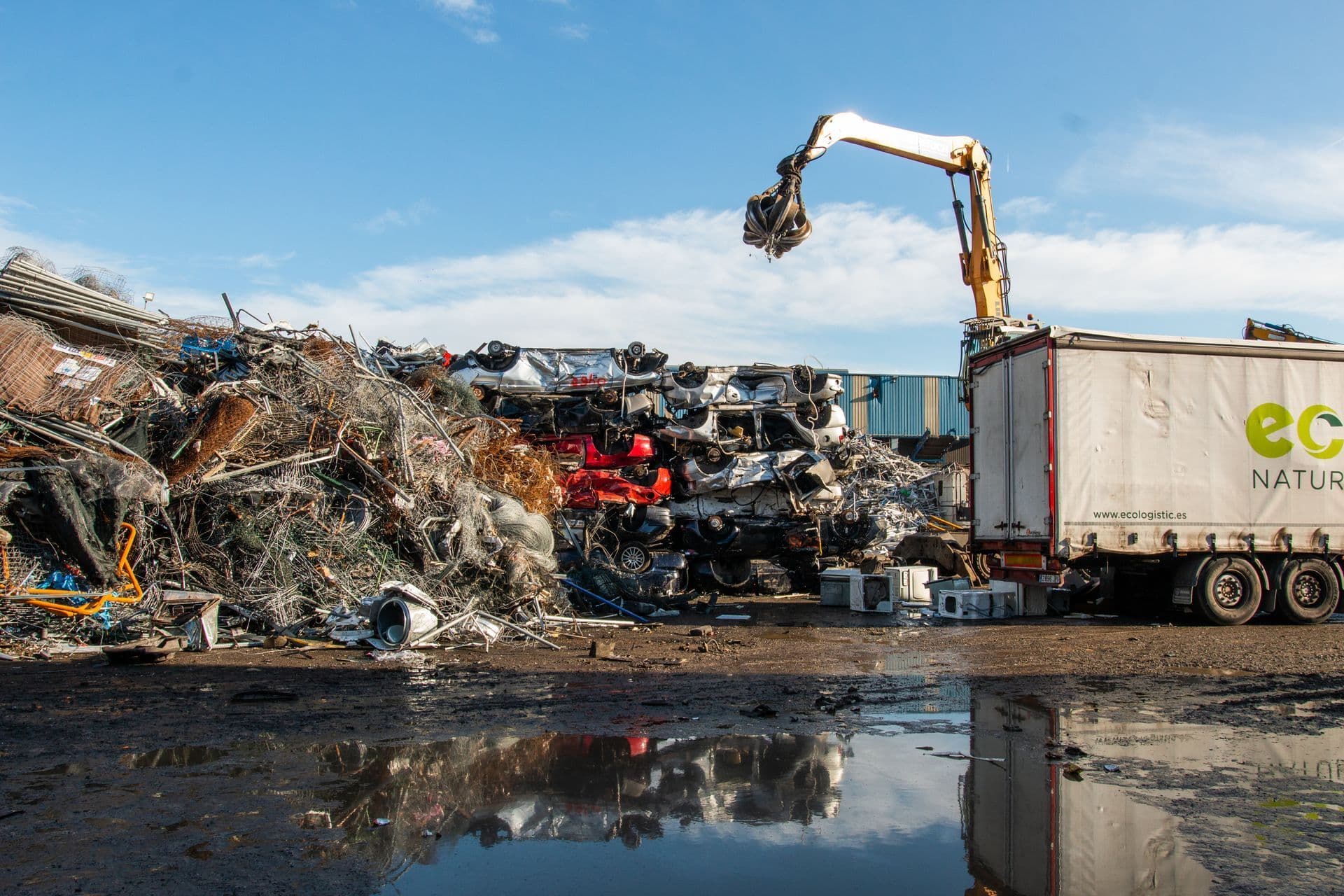
On the hazardous side are the refrigerant gases in fridges and air-conditioning units, the oil in some compressors and equipment, batteries (lithium batteries can catch fire if they are crushed or punctured), the mercury in some lamps and older screens, and certain capacitors in old appliances. If an appliance goes whole into a baler or a shredder, all of it is released uncontrolled.
On the valuable side are the iron and steel in casings and frames, copper from motors and cables, aluminium, engineering plastics and circuit boards containing small amounts of precious metals. Recovering them avoids extracting new raw materials, and it can only be done properly if the appliance arrives complete at a plant equipped to separate them.
Then there is the legal side: WEEE legislation requires depollution before shredding, and every intake to be recorded and reported. Mixing WEEE with ferrous scrap breaks that chain.
Where can you take WEEE?
If you’re a private individual
You have three free options: your local household waste recycling centre; the shop where you buy an equivalent new appliance, which has to take the old one back; and shops with at least 400 m² of sales space for electrical equipment, which must accept very small items (no external dimension over 25 cm) even if you don’t buy anything.
If you’re a business: authorised WEEE management companies
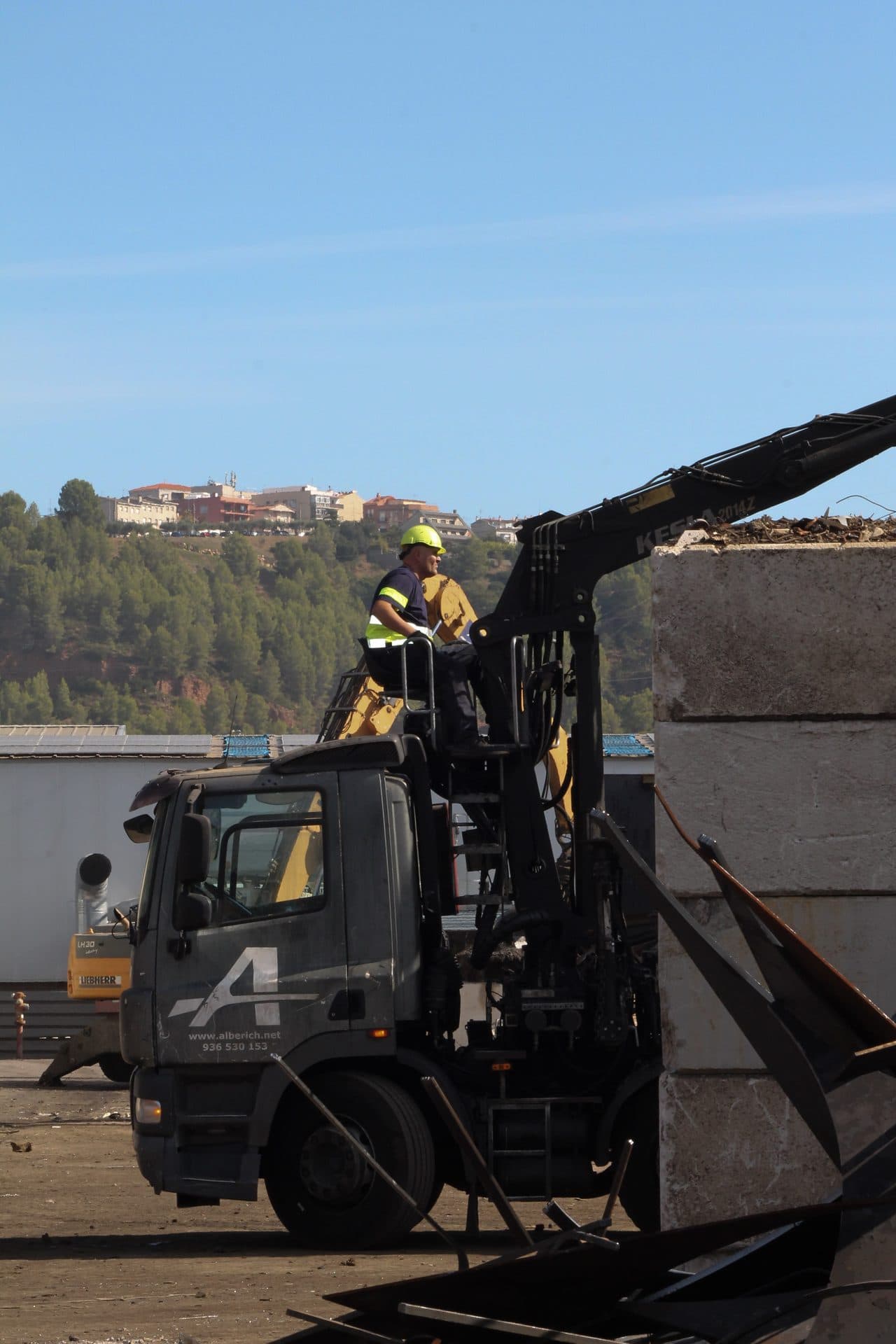
You have to hand it over to an authorised WEEE management company, either directly or through the scheme organised by the equipment’s producer. A WEEE management company is a facility with specific authorisation from the regional government (in Spain, the autonomous community) to collect, store or treat this waste; in Catalonia you can check this in the register of waste management companies kept by the Catalan Waste Agency (ARC). We explain the documentation requirements, traceability and the difference between delivering through a producer compliance scheme (known in Spain as a SCRAP) and delivering directly in our guide to WEEE management for businesses.
What happens to WEEE when it reaches a treatment plant?
The order is always the same: first it is checked and depolluted, then it is shredded and separated.
- Reception. Weighing on a trade-approved weighbridge, a check that the paperwork matches what has arrived, and registration of each appliance or batch with its code.
- Sorting. Items with hazardous components are separated from the rest, and a decision is made on whether each stream is treated at the plant itself or transferred to a specialist operator.
- Manual depollution. Gases, oils and batteries are extracted, and cables, large plastic parts, glass and the concrete counterweights from washing machines are removed.
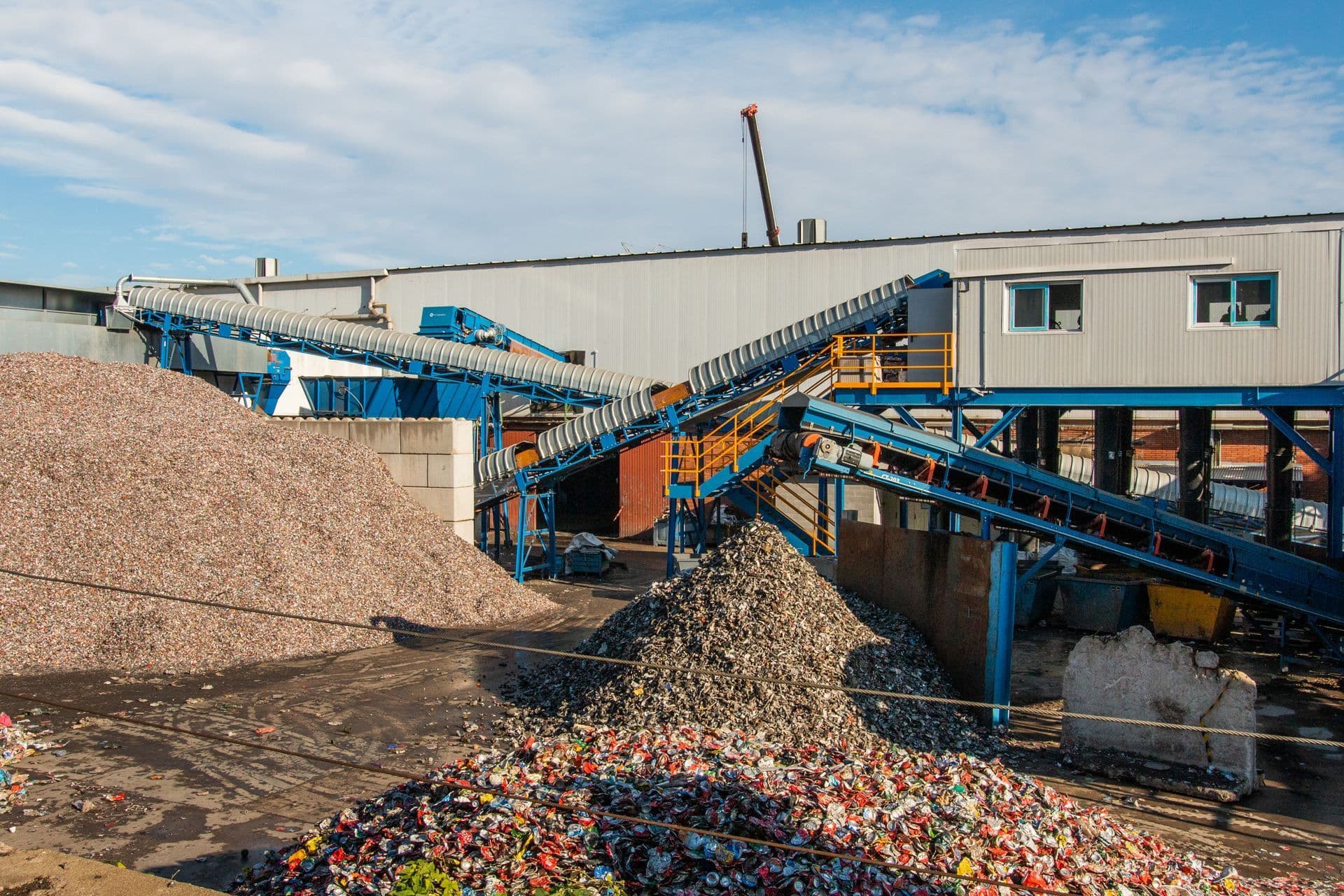
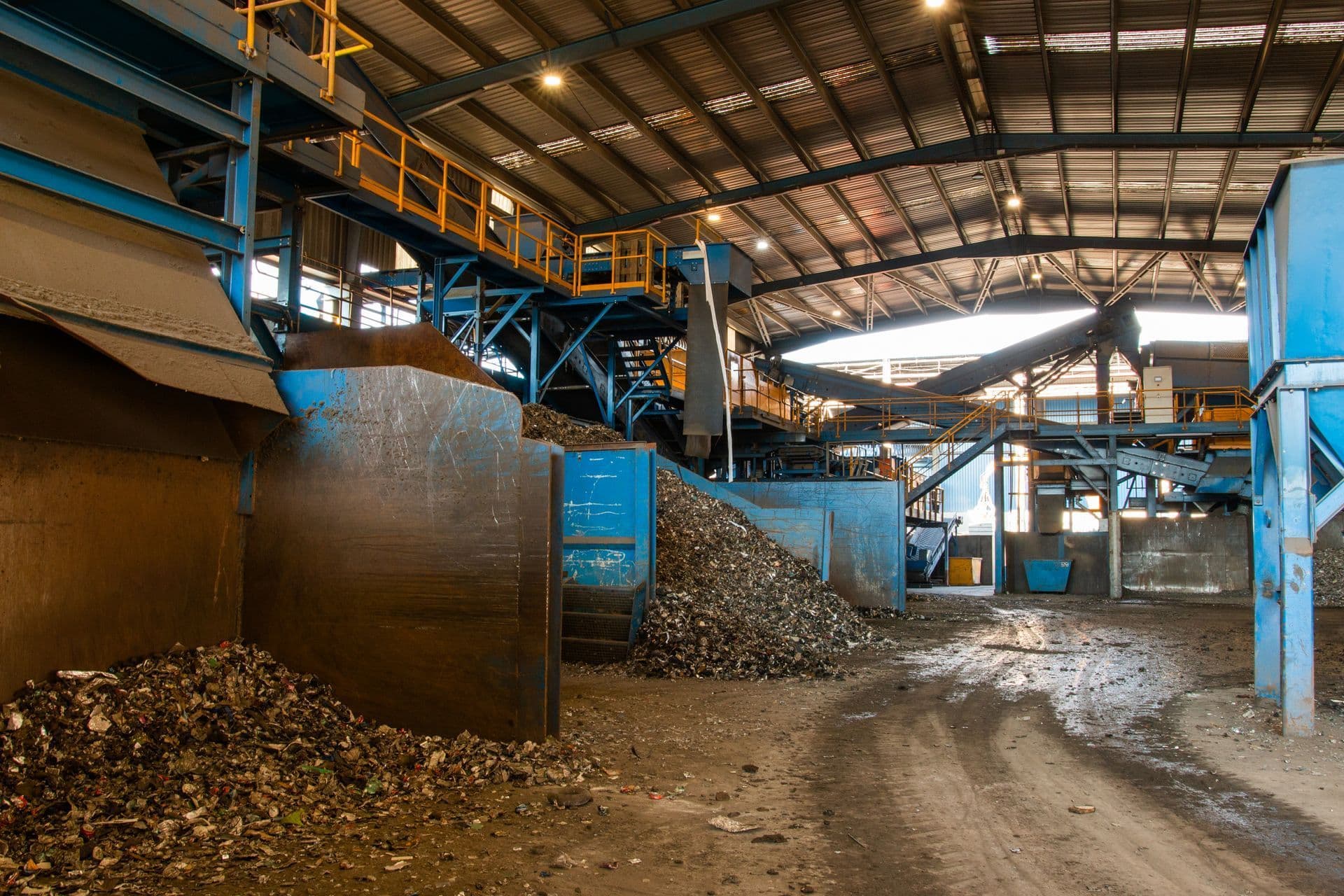
- Shredding and separation. The depolluted appliance is shredded and the materials are separated using magnets, eddy current separators, X-ray sorting and optical sensors.
- Output streams. Each material goes to the industry that turns it back into raw material.
| Fraction | Where it comes from | Destination |
|---|---|---|
| Ferrous | Casings, chassis, frames | Steel mills and foundries, as scrap |
| Non-ferrous | Aluminium, copper, brass, stainless steel | Secondary refiners and remelters, sorted by metal |
| Cable | Internal wiring and power leads | Granulation to separate the copper from the plastic |
| Plastics | Drums, casings, internal parts | Authorised plastics recyclers |
| Hazardous components | Gases, oils, batteries | Specialist operators for each one |
| Residual fluff | Rubber, foams and mixed materials that can’t be separated | Inert waste landfill, with the laboratory analysis required by law |
How we do it at Alberich
We are an authorised final treatment plant for WEEE, and our authorisation covers every stream: small and large appliances, cooling appliances, air-conditioning units, IT equipment and installation equipment. Some we treat at our own facilities; others, such as cooling appliances, we transfer to specialist operators. The equipment reaches us from the leading compliance schemes in the sector, from municipal recycling centres, from retailers’ distribution centres and from businesses that bring it in themselves or ask us to collect it.
Depollution is done by hand before shredding, with particular care over lithium batteries, which we never treat in-house: they go to a specialist battery operator. The metal fractions then go through the same separation technology we use for scrap (eddy current, induction, X-ray and colour sorting), and the cable goes to our own copper granulation line. Every intake is reported on the WEEE platform of Spain’s Ministry for the Ecological Transition (MITECO), in the Catalan Waste Agency’s system and, if it comes through a compliance scheme, on that scheme’s platform. We hold ISO 9001, 14001 and 45001 certification.
We don’t accept solar PV panels or electric water heaters.
Frequently asked questions
What is the difference between EEE and WEEE?
EEE is equipment in use; WEEE is the same equipment once it has become waste. The laptop on your desk is EEE; when you decide to get rid of it because it no longer works, it becomes WEEE and is subject to waste management rules.
Who pays for WEEE recycling?
Manufacturers and importers, through extended producer responsibility. Most of them meet this obligation by joining collective compliance schemes (SCRAPs in Spain), which fund the collection and treatment of the equipment they place on the market. That is why handing in household WEEE at a recycling centre costs members of the public nothing.
Is a broken or incomplete appliance still WEEE?
Yes. An appliance that is faulty, has no plug or has broken parts is handled in exactly the same way. What you shouldn’t do is take it apart to salvage the copper or the motor: appliances have to reach the plant complete so that depollution can be carried out properly.
Are loose batteries WEEE?
No. Batteries and accumulators have their own legislation and their own collection system. Those inside an appliance are removed during WEEE depollution and sent to a battery waste management company.
If your company has WEEE piling up or wants to set up regular collections, tell us what type of equipment and what volumes you handle: we’ll get back to you within 48 working hours.